• F3
  • F1
  • F2
  • F4

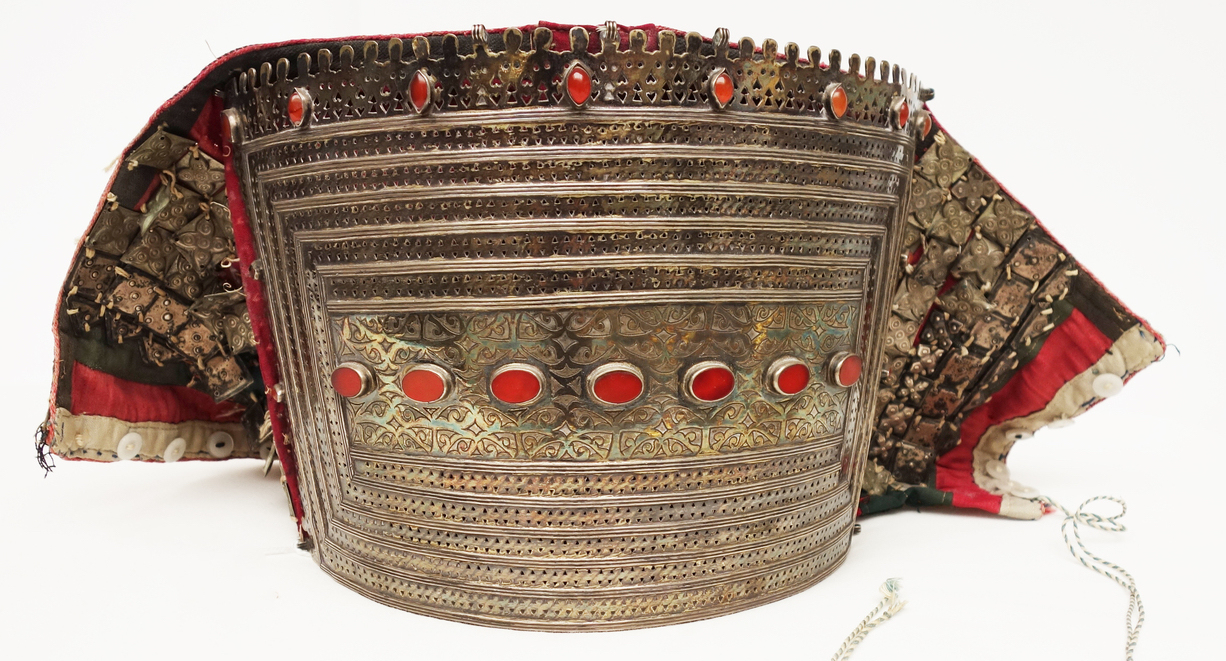
The British magazine Jewellery History Today (autumn 2024) has just published an article by Gillian Vogelsang-Eastwood and Emilie Lambert about a collection of Afghan jewellery donated to the TRC by May and Rolando Schinasi from Nice, France.

Teke Turkmen headpiece for a woman, early 20th century (TRC 2024.0321). Donated by May and Rolando Schinasi.Teke Turkmen headpiece for a woman, early 20th century (TRC 2024.0321). Donated by May and Rolando Schinasi.

Both have a fascinating history. Rolando, an Italian born in Egypt before the Second World War, initially went to Afghanistan in 1957 as an importer and exporter. May, French by birth, studied Persian and its Afghan dialect (Dari) while living with her uncle, Daniel Schlumberger, director of DAFA (Délégation Archéologique Française en Afghanistan). The couple met in Kabul in 1964, married in France in 1965, and lived in Afghanistan until 1977.

The full article, in PDF-format, can be downloaded here.

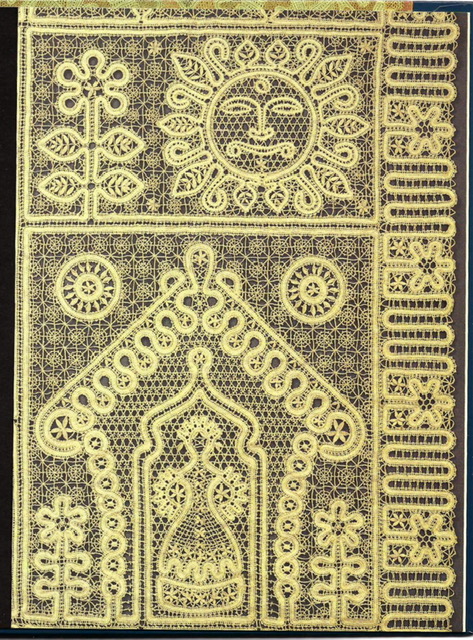
Voorbeeld van Russisch bandkant.Voorbeeld van Russisch bandkant.Russisch bandkant werd veelal in Vologda en omstreken gemaakt, ongeveer 450 km ten noorden van Moskou. Vologda is het beroemdste kantcentrum in Rusland met een heel karakteristiek type kant. Het motief bestaat uit een bandje in linnenslag, vaak met een sierdraad er in en met opvullingen er in en er omheen. Over het algemeen worden die vullingen slechts met twee paren van klosjes gemaakt. Dat vergt vooraf overleg en inzicht hoe dit gedaan moet worden. De mooiste ontwerpen uit Vologda zijn vrij ingewikkeld, omdat er vaak grotere oppervlakken moeten worden gevuld.

Tijdens deze workshops maken we eenvoudige kleine figuratieve ornamenten. Net als in de echte Vologda kanten vormt het bandje het motief en zijn de vullingen een versierend onderdeel.

De instructeur is Gon Homburg. Zij leerde kant maken van haar moeder en is vanaf 1983 officieel geregistreerd als kloskantleraar. Ze geeft les aan liefhebbers en geeft workshops aan diverse ambachtsscholen, waaronder de TRC. De cursus wordt gegeven op drie woensdagen, op 2,16 en 30 oktober 2024, van 10.00-13.00 uur. Na het traject van drie volgt nog een serie van drie workshops waarin enkele eenvoudige kerstkantversieringen worden gemaakt in verschillende technieken, waaronder Russische tapekant.

Lokatie: TRC Leiden, Hogewoerd 164, 2351 HW Leiden. Docent: Gon Homburg. Taal: Nederlands/Engels. Kosten: 40 euro per woensdag (per individuele workshop op de dag zelf te betalen). Materiaal/koffie/thee is aanwezig. Max. aantal deelnemers: 8. Minimaal: 5. Graag ruim van tevoren aanmelden: Dit e-mailadres wordt beveiligd tegen spambots. JavaScript dient ingeschakeld te zijn om het te bekijken.

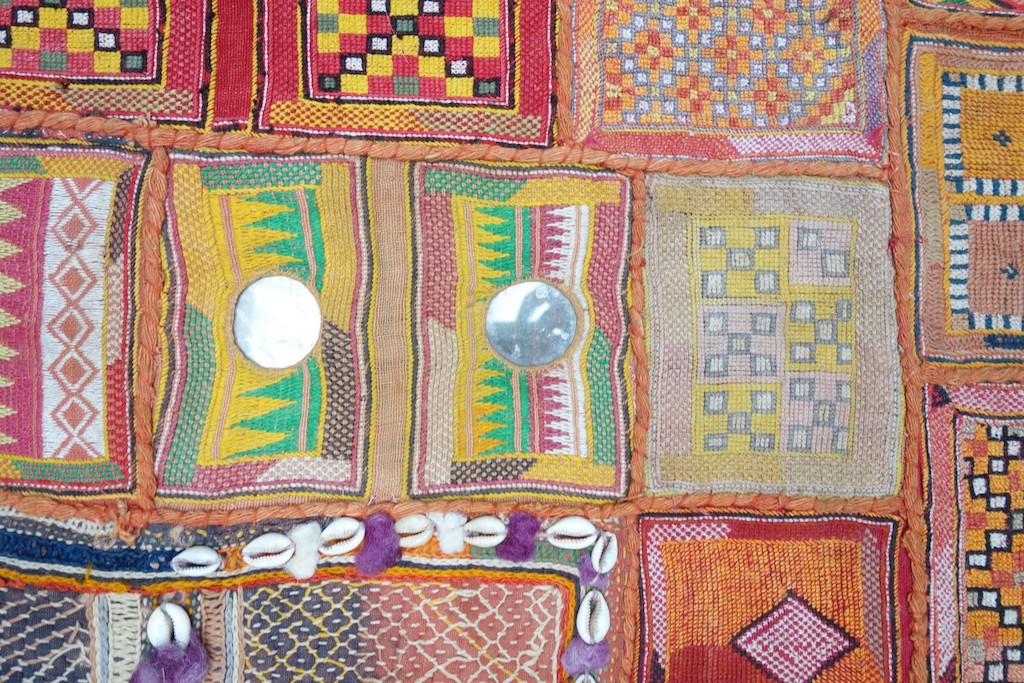
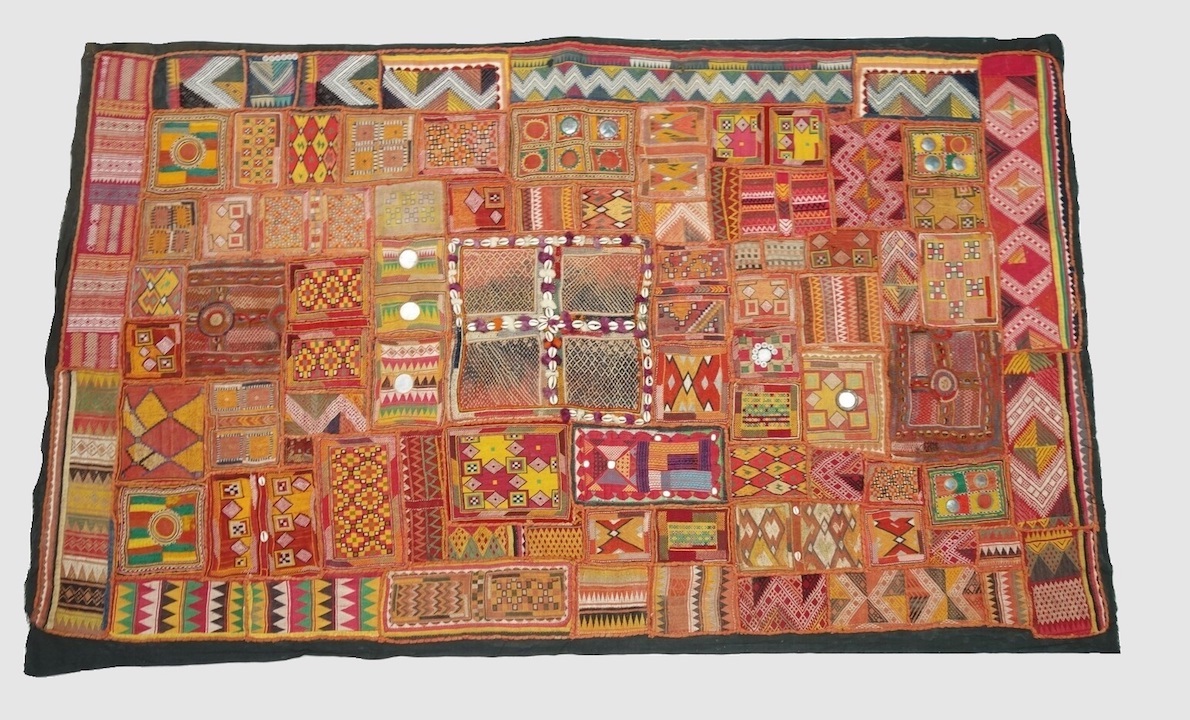
Detail of TRC 2024.2190.Detail of TRC 2024.2190.(5 August 2024) Among the textiles recently given to the TRC by Hélène van Spaendonck, Belgium, there is a large patchwork cloth (TRC 2024.2190) from India that is made up of numerous pieces of Banjara embroidery.

This type of Indian patchwork is often dyed by dealers, and others, in a dull brown, dark grey, black or a red colour, which makes it virtually impossible to see the original colours or patterns. Fortunately this cloth has not been subjected to this undignified treatment.

Patchwork of various squares and rectangles of (mainly) Banjara embroidery with a wide variety of repeating, geometric patterns in various colours. India, 20th century (TRC 2024.2190).Patchwork of various squares and rectangles of (mainly) Banjara embroidery with a wide variety of repeating, geometric patterns in various colours. India, 20th century (TRC 2024.2190).

Moroccan kaftan made from a Japanese obi (sash), 1950s (TRC 2001.0074).Moroccan kaftan made from a Japanese obi (sash), 1950s (TRC 2001.0074).Gillian Vogelsang, Director TRC, 13 July 2025.

The TRC collection of textiles, clothing and accessories from around the world was started in 1997 with 43 pieces from Afghanistan, Egypt and Syria. Since then it has grown to nearly 51,909 items (16 September 2025), most of which are online (click here for the online catalogue).

The items come from very diverse backgrounds with respect to time and place. Some of the items in the collection have been purchased, but the vast majority has been collected during fieldwork or very kindly donated by various institutions and private donors. The TRC  is a good example of Citizen Culture and Heritage at work!

The collection has no boundaries with respect to geography or time. It ranges from Afghan embroidery, German Lederhosen, Indonesian batiks, historical textiles from Leiden, to delicate silks from Renaissance Italy and spinning and weaving equipment from the Andes.

by Martine Benot-Teunissen, costume historian, 14 June 2024

I am proud to announce the publication of a book about recent archaeological textile finds in the Netherlands: Textiel uit Hollandse bodem. Archeologische vondsten uit de 17de en 18de eeuw ('Textiles from Dutch soil. Archaeological finds from the 17th and 18th century'). The book can be ordered here. Last week I was very happy to present a copy of the book to Dr Gillian Vogelsang-Eastwood, Director of the TRC.

The initial plans for this book were developed following the rediscovery of a large number of textiles that were excavated in the 1980s at the Waterlooplein (Vlooienburg), in Amsterdam. Some of these textiles were not yet properly identified and registered, and as a result remained unknown to the general public. It soon became clear that there were more textile treasures housed elsewhere in other depots!

Together with archaeologist Marijn Stolk we embarked upon a project to unlock and investigate archaeological textiles from the seventeenth and eighteenth century which are housed in various depots. This project has now resulted in a beautifully illustrated publication.

by Shelley Anderson, long-time volunteer and supporter of the TRC, with a special interest in textile crafts, including  American quilts. She was born in the USA, and now lives in the Netherlands. 1 May 2024.

Hamilton, Missouri, is a typical small town in the American Midwest. This means a small population (in Hamilton’s case, around1,600 people), and a much smaller pool of local jobs.

At least that was the case until 15 years ago, when a passionate quilter named Jenny Doan opened the Missouri Star Quilt Company on the town’s small main street. Today, the company runs quilting shops in 35 of the town’s buildings. Some of the shops are pop-ups, selling , for example, only Halloween- or Christmas-themed fabrics during these holidays. The business now makes about US$ 20 million a year. An estimated 8,000 people visit Hamilton every month to shop for quilt-related materials, especially fabrics; to take quilting classes; and to tour the large murals of quilts painted on the town’s buildings.

Quilt with an appliqué design of large, stylised flowers and leaves in various materials. USA, 1850s-1860s (TRC 2019.2402).Quilt with an appliqué design of large, stylised flowers and leaves in various materials. USA, 1850s-1860s (TRC 2019.2402).

Zoals velen van u weten groeit de TRC-collectie, en dat geldt ook voor de hulpmiddelen die we gebruiken. Steeds meer mensen ontdekken textiel en willen er meer over weten! We zijn actief in gesprek met de Gemeente Leiden en anderen over meer ruimte, financieringsmogelijkheden etc. Dit vergt allemaal veel tijd, en ons gebouw aan de Hogewoerd raakt langzamerhand overvol.

Daarom hebben we hier in de regio Leiden gezocht naar opslagruimte waar we allerlei spullen, die we niet dagelijks nodig hebben, kunnen opslaan, zoals paspoppen, dozen met boeken voor de verkoop, tentoonstellingskasten, enz., om zodoende meer ruimte vrij te laten voor het catalogiseren van de Collectie, het geven van lessen, het werken in de bibliotheek, etc.

Vandaar ons weinig glamoureus verzoek! Voor extra opslagruimte nabij het TRC  hebben we € 2.000,- per jaar nodig en we zoeken hulp om dit bedrag bijeen te krijgen, in eerste instantie voor een periode van een jaar, maar met een kans van twee jaar. Bent u bereid om te helpen, laat het ons dan weten via Dit e-mailadres wordt beveiligd tegen spambots. JavaScript dient ingeschakeld te zijn om het te bekijken., of maak een donatie over op de TRC-rekening, bankrekeningnummer (IBAN) NL39 INGB 000 298 2359, ten name van de Stichting Textile Research Centrum. BIC-code is: INGBNL2A. Geeft u daarbij ook aan dat het bedrag is bestemd voor Opslag.

Ook kunt u, als u een iDEAL-app heeft, heel eenvoudig via de iDEAL-knop het steunbedrag invullen dat u wilt doneren met de notitie dat het bedrag bedoeld is voor de opslagruimte.

Omdat de TRC officieel erkend is als Algemeen Nut Beogende Instelling (ANBI), zijn donaties van Nederlandse belastingbetalende burgers en bedrijven fiscaal aftrekbaar, voor 125% voor particulieren, en voor 150% voor commerciële bedrijven. Voor meer informatie, klik hier.

We did it! Thanks to the help of many, very kind people and groups, we have raised in a short period of time the money needed to acquire the Japanese garments ollection that was recently offered to the TRC. This was done via crowdfunding (Voordekunst), as well as public and private donations!

Inside of a man's haori (jacket), turned inside out, showing the decorative lining. Japan, 20th century.Inside of a man's haori (jacket), turned inside out, showing the decorative lining. Japan, 20th century.

Not only did we raise the money, but the garments have already been sent to Leiden and will start appearing on the TRC Collection database next week! The owner, Marianne Kooimans, had faith in the TRC and its supporters and sent the garments earlier than planned.. The pieces date from the early to mid-20th century and include both men and women’s garments in a variety of very different forms and techniques.

Subcategorieën

Zoek in TRC website

Contact

Boerhaavelaan 6
2334 EN Leiden.
Tel. +31 (0)6 28830428  
office@trcleiden.org

facebook 2015 logo detail


instagram vernieuwt uiterlijk en logo


Bankrekening

NL39 INGB 0002 9823 59, t.a.v. Stichting Textile Research Centre.

Openingstijden

Het TRC is gesloten tot maandag 4 mei vanwege de verhuizing naar de Boerhaavelaan. We blijven bereikbaar via email (office@trcleiden.org) of telefoon: 06-28830428.

Financiële giften

Het TRC is afhankelijk van project-financiering en privé-donaties. Al ons werk wordt verricht door vrijwilligers. Ter ondersteuning van de vele activiteiten van het TRC vragen wij U daarom om financiële steun:

Giften kunt U overmaken op bankrekeningnummer (IBAN) NL39 INGB 000 298 2359, t.n.v. Stichting Textile Research Centre. BIC code is: INGBNL2A

U kunt ook, heel simpel, indien u een iDEAL app heeft, de iDEAL-knop hieronder gebruiken en door een bepaald bedrag in te vullen: 


Omdat het TRC officieel is erkend als een Algemeen Nut Beogende Instelling (ANBI), en daarbij ook nog als een Culturele Instelling, zijn particuliere giften voor 125% aftrekbaar van de belasting, en voor bedrijven zelfs voor 150%. Voor meer informatie, klik hier