• F4
  • F1
  • F2
  • F3

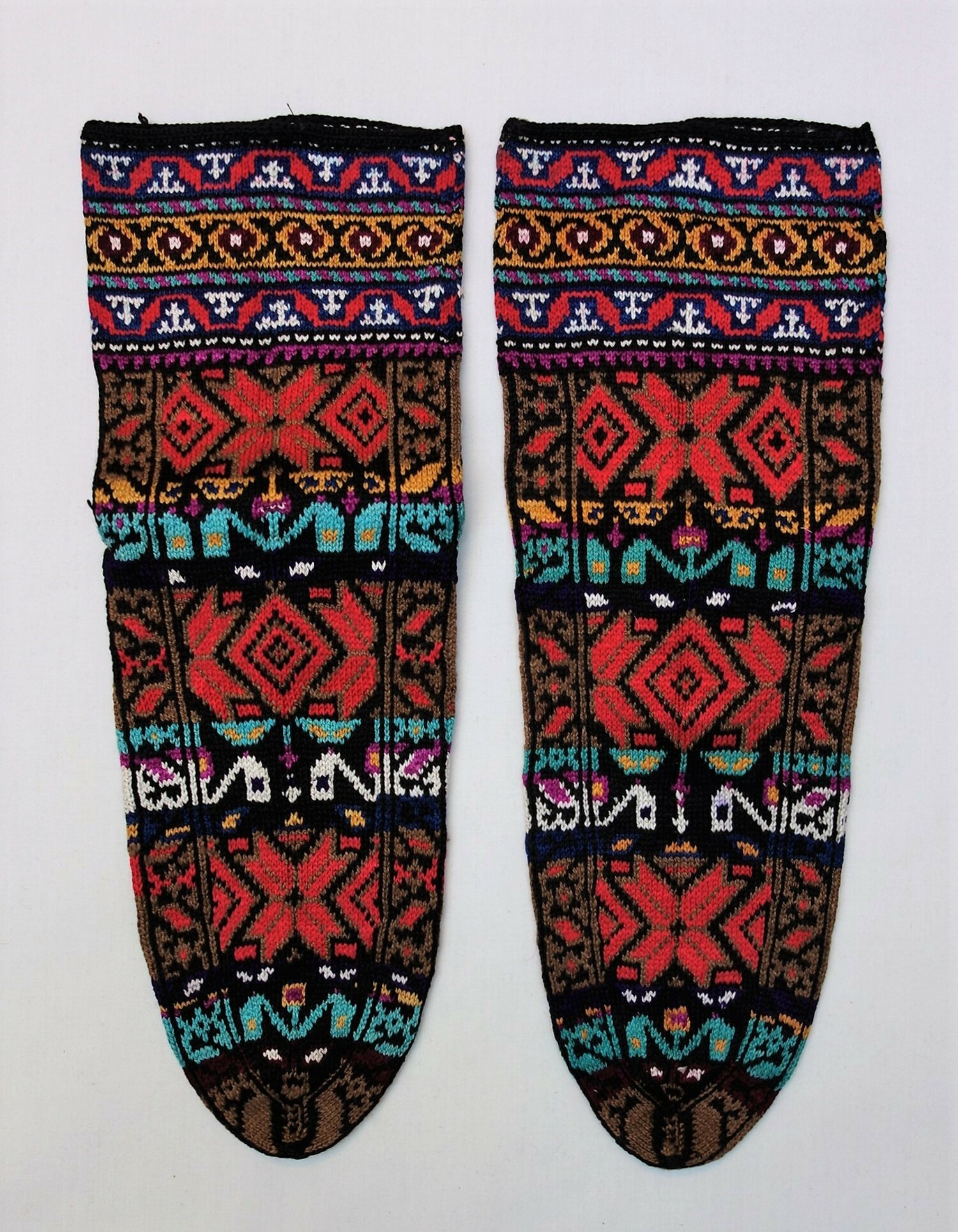
(Gillian Vogelsang, 2 August 2026) For the next six months or so we will be working hard on cataloguing, photographing and adding more details about the large Turkish and Turkish/Ottoman collection that was donated to the TRC by Jean-Marie Criel and Jos De Vrindt in Antwerp, Belgium. It is now gradually being transferred to Leiden and included in the TRC collection. So far we have added over 1100 items to the TRC database and there are (many) more entries and stories to come! To date, the TRC published four blogs on the subject.

Why did we accept this collection? There are various reasons, firstly, because we have long been building up the TRC’s collection  of regional dress from the Islamic world (see comments about the Iranian collection in another blog). For historical and indeed modern reasons, Türkiye (Turkey) is an important country, both within the Islamic world and elsewhere.

Fig. 1. Women’s kaftan from Konya, early 20th century (TRC 2025.0799b).Fig. 1. Women’s kaftan from Konya, early 20th century (TRC 2025.0799b).

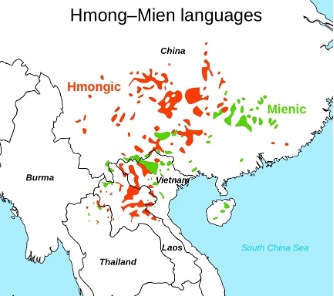
Fig. 1. Distribution of the Hmong–Mien language family. The Hmongic branch (Miao people) is shown in red. Retrieved from: https://tinyurl.com/bp92pmb8.Fig. 1. Distribution of the Hmong–Mien language family. The Hmongic branch (Miao people) is shown in red. Retrieved from: https://tinyurl.com/bp92pmb8.(Frieda Chen, 1 August 2026) The TRC houses a collection of more than 280 objects related to the Miao people of China. As part of a recent mini exhibition at the TRC, a selection of these objects was brought together to explore Miao dress traditions. The following blog article introduces both the exhibition objects and additional Miao-related objects from the TRC collection, together with an overview of Miao’s textile traditions.

Introduction of Miao people and Miao sartorial traditions

The Miao are one of the largest ethnic minority groups in China and are also distributed across Southeast Asia, including Vietnam, Laos, and Thailand (Fig. 1). Repeated migrations in history have caused numerous Miao communities living in different regions. As a result, many local styles of dress developed. Although the exact number of Miao clothing styles remains uncertain, previous studies have recorded at least 173 distinct styles of Miao clothing in China, reflecting the diversity of regional Miao communities (Wu et al., 2000; Zhang, 2004).

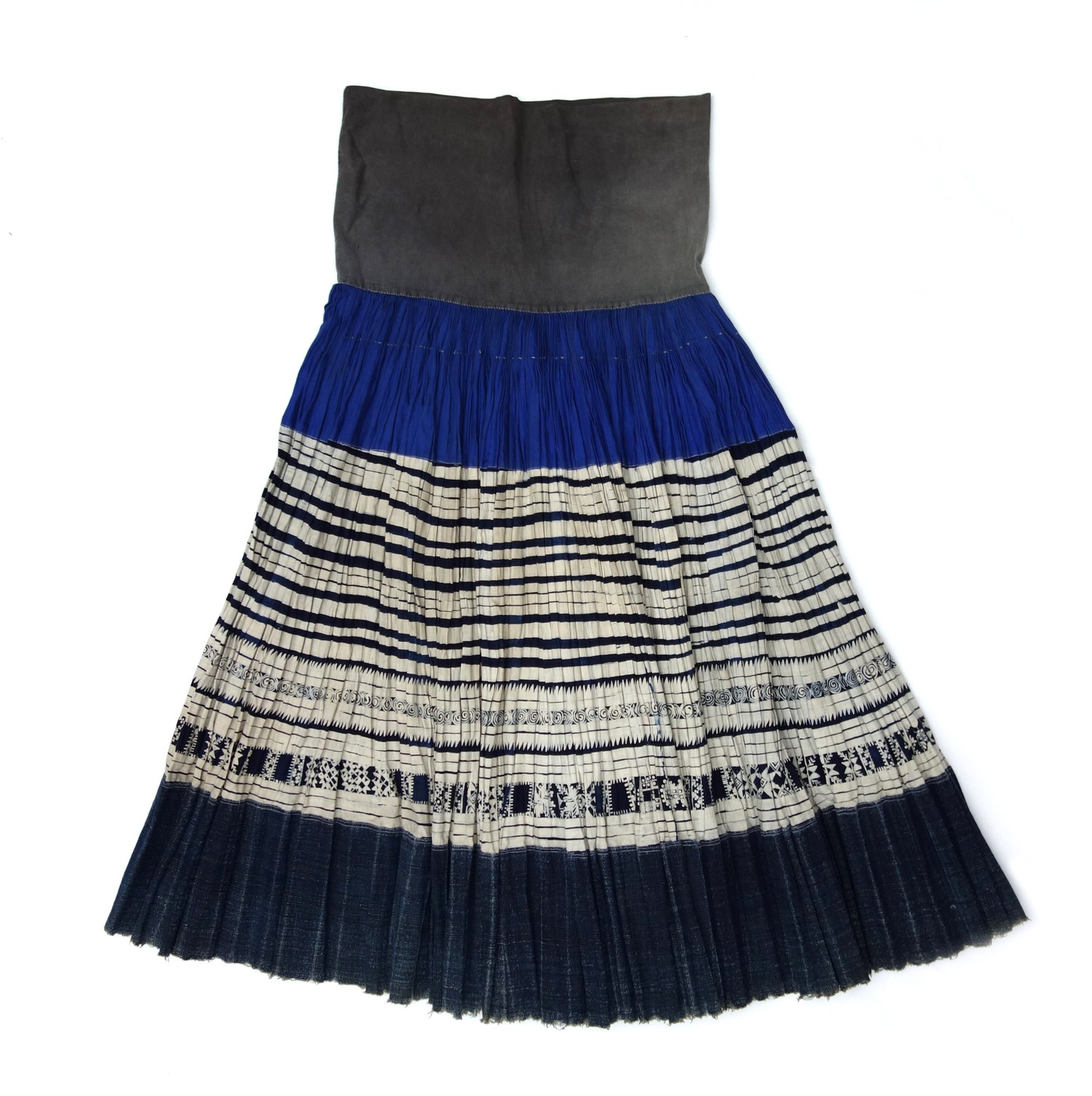
Fig. 2. Pleated, cotton and silk skirt with batik-dyed decoration. Guizhou, Ertang Miao, China, 20th century (TRC 2024.2742).Fig. 2. Pleated, cotton and silk skirt with batik-dyed decoration. Guizhou, Ertang Miao, China, 20th century (TRC 2024.2742).

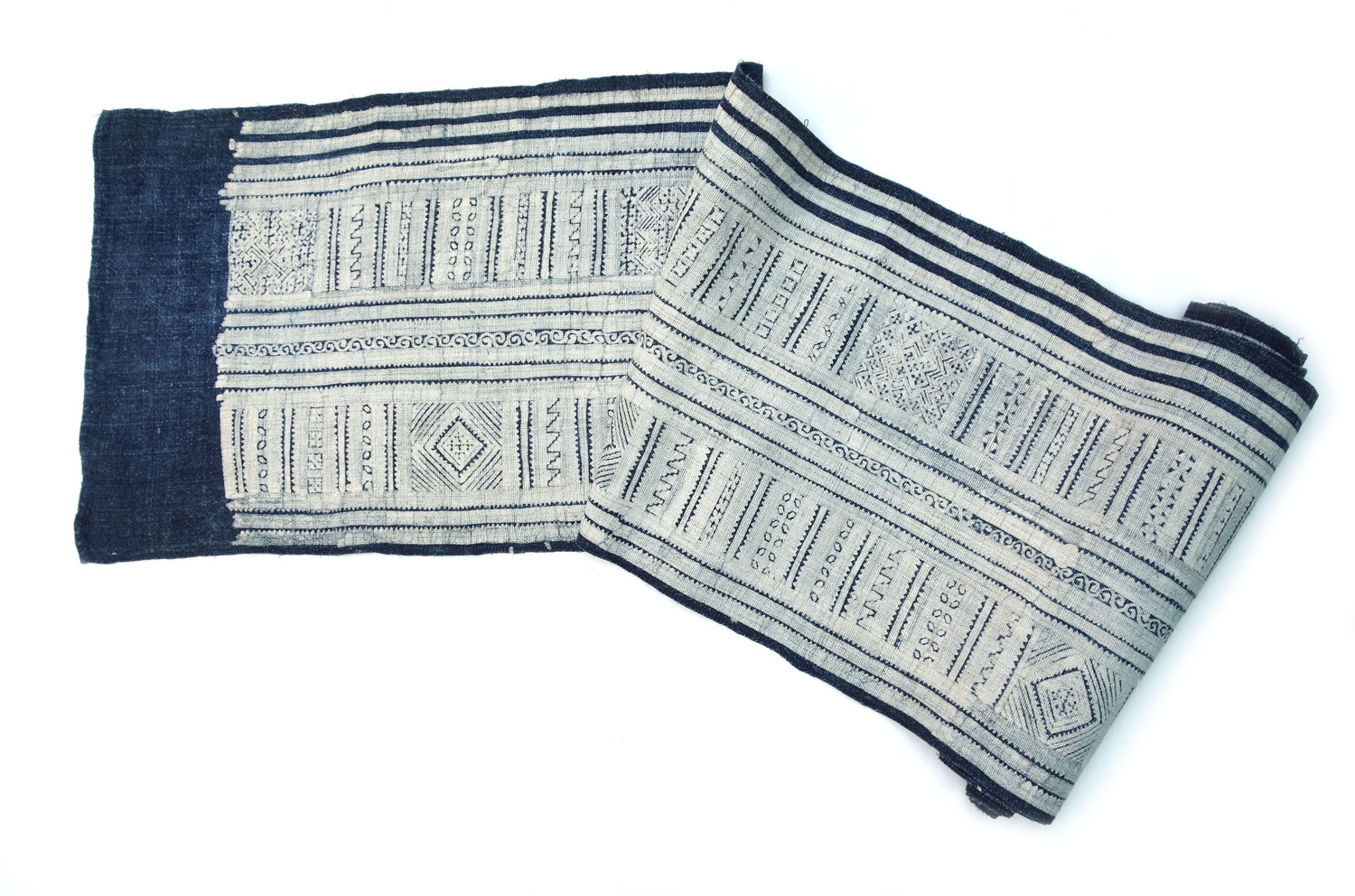
Fig. 3. Dyed skirt length, bast fibre with hand-woven batik decoration. Miao, China, 20th century (TRC 2024.2719).Fig. 3. Dyed skirt length, bast fibre with hand-woven batik decoration. Miao, China, 20th century (TRC 2024.2719).

Fig. 1. Recreation by Grace Crowfoot of one of the textiles found in the tomb of the Egyptian pharaoh, Tutankhamun (TRC 2016.0197).Fig. 1. Recreation by Grace Crowfoot of one of the textiles found in the tomb of the Egyptian pharaoh, Tutankhamun (TRC 2016.0197).(Jo Andrews, 19 July 2026) For someone who understands the world through textiles, opening a box at the TRC in Leiden is the best of surprises. You’re never quite sure what you are going to find. There is so much to explore, so much treasure on the shelves of this extraordinary storehouse it is hard to know where to begin. And even if you start with a clear objective in mind, just climbing the stairs past boxes labelled ‘cloth indigo’, ‘feedsacks’ or ‘Female outfits: mourning Friesland’ makes the fingers start to itch. But focus is the name of the game here.

I came to look at the collection of Grace Crowfoot, a woman who has been called the mother of textile archaeology. The TRC holds an important collection of her weaving and spinning artefacts. If you want to understand Grace, this is where you need to start. These boxes tell you a great deal more than words and pictures: they are a window into how she thought, and they give you an insight into the enormous variety of projects she undertook and the immense skill she brought to them.

Grace was born in 1877 in Lincolnshire to an intelligent, talented and well-off family. She was surrounded by people interested in archaeology from her earliest days, but it was a trip to the West Highlands of Scotland as a young woman where she saw wool being spun on a great wheel, that first sparked her interest in textiles.

Fig. 1. Masaru Matsui (right) and the author.Fig. 1. Masaru Matsui (right) and the author.In late May of this year, Naoko Kikuchi, a former volunteer at the TRC and now living in Japan, visited the atelier of the hikibaku craftsman, Masaru Matsui, who lives and works in Kyoto (Fig. 1). She wanted to know why her friend Natasha, who has a broad knowledge of textiles, was so fascinated by the so-called hikibaku textiles and had even moved to Kyoto to learn the technique. Naoko kindly sent three obi with hikibaku decoration to the TRC, which we shortly hope to welcome to the TRC collection. More later.

Naoko wrote the following introduction to this intricate technique.

Hikibaku, also known as hikihaku, in Japanese means 'pulling metalic foil'. It is an ancient, intricate technique, carried out by a ‘hakuya’ (hikibaku-design craftsman), a ‘kiriya’ (cutting craftsman) and a ‘hataya’ (weaver). Matsui is a hakuya.

Fig. 2. Gold foil for hikibaku.Fig. 2. Gold foil for hikibaku.

In short, the technique of hikibaku is based on the use of sheets of paper that are decorated with (coloured) lacquer and a pattern of (metallic) foils (Fig. 2). A standard sheet of washi used for hikibaku is 45 cm wide and 60 cm long. A film on Facebook about the production of these textiles, and produced by the Victoria & Albert Museum, London, can be downloaded here.

Creating and cutting the pattern

hikibaku designer covers the paper with Japanese natural lacquer (urushi) or chemical lacquer, which works as both an adhesive and a paint. The basic colour of urushi is honey-brown but can be altered by adding pigments or other substances to achieve different colours. To create a black colour, for instance, iron powder is added to the lacquer.

The use of urushi for hikibaku, however, is now losing its popularity, because it is difficult to handle. It changes colour, not only by adding pigments, but also with temperature, humidity and time. It may also cause a rash on the skin when wet. But Matsui still loves urushi because of its durability, glossy coat and colour.

Fig. 1. Observing the micro-structure of different textile fibers during a TRC course. Photograph by author.Fig. 1. Observing the micro-structure of different textile fibers during a TRC course. Photograph by author.(Frieda Chen, 11 July 2026) This February, I started my internship at the Textile Research Centre (TRC), Leiden. I am a Master’s student in Asian Studies at Leiden University. Coming from a background in anthropology and heritage studies, I was excited to gain hands-on experience in museum practice and to learn how textile collections are researched, documented, and presented to the public.

Learning through courses and workshops

During my internship, I participated in a variety of workshops and courses organised by the TRC. These activities introduced me to different aspects of textile studies, from textile production techniques to museum collections. Unlike university lectures, these sessions emphasise hands-on learning and allow participants to experience different textile techniques firsthand.

Fig. 2. Learning how to card raw wool before spinning it into yarn. Photograph by author.Fig. 2. Learning how to card raw wool before spinning it into yarn. Photograph by author.For example, during one of the courses, I had the chance to observe the microstructure of different textile fibres (Fig. 1). By observing cotton, wool, and other fibres under a microscope, I learned how their physical characteristics differ and how these differences influence the appearance, texture, and properties of textiles. This experience also helped me better understand how fibre identification is carried out in textile research.

Another memorable experience was wool processing. I learned how raw wool is prepared to align the fibres before being spined into yarn (Fig.  2). Although the process required patience and practice, it gave me a much deeper understanding of how wool textiles are made, from raw fibre to finished yarn.

I also had the opportunity to learn basic weaving techniques using a small tabletop loom (Fig.  3). Through the weaving process, I came to understand how factors such as the tension of the threads, the density of the weave, and even the smallest adjustments can affect the appearance and texture of the final textile.

Quilted kaftan from Turkey, first half 20th century, TRC 2026.0841.Quilted kaftan from Turkey, first half 20th century, TRC 2026.0841.(Gillian Vogelsang-Eastwood, 24 June 2026) A year ago we were given a large group of Ottoman and later Turkish textiles and dress from the Kavak Folklore Team & Costume Collection (Antwerp), which was founded by Jean-Marie Criel (for more information, click here and here).

Then came TRC's move to Boerhaavelaan 6 and we had to put the Kavak collection to one side. We are pleased to tell that we are now working together again on this amazing collection, and over the next 12 months, more items wil be given to the TRC. In fact, twelve boxes and bags have just been picked up from Antwerp, which include  a beautiful, hand-quilted kaftan (TRC 2026.0841).

I knew about the Yorgan or quilted bedspreads, which are an important feature of many Turkish homes, but I had not heard about quilted garments.

Detail of quilted kaftan from Turkey, TRC 2026.0841.Detail of quilted kaftan from Turkey, TRC 2026.0841.Historically, quilted bedspreads were made by men. Towns and cities used to have special quilt quarters. But cheaper modern products have meant that many quilters have stopped working and it is now more and more difficult to find apprentices to carry on the trade. Such quilts can be made from silk, cotton or sometimes woollen cloth and were traditionally filled with raw wool or sometimes cotton. Nowadays, synthetic fillings are used, as these can be more easily cleaned.

The overall design for a quilt was usually decided by the quilter and the person wanting the quilt. Floral motifs were popular for dowry quilts, others had repeating geometric designs.

The required pattern was worked on card, cut out and then the templates were used as stencils to draw the desired motifs on the ground material. A professionally made quilted bedspread took between two and three days to make, depending on the complexity of the design.

(Gillian Vogelsang, 16 June 2026) The TRC recently received a substantial subsidy from the Overvoorde – Gordon Stichting / het Pauwhof Fonds, for a series of gatherings that are aimed at strengthening relationships and stimulating collaboration with a broad group of stakeholders in the (inter)national museum, science, art, and heritage fields of textiles and dress.

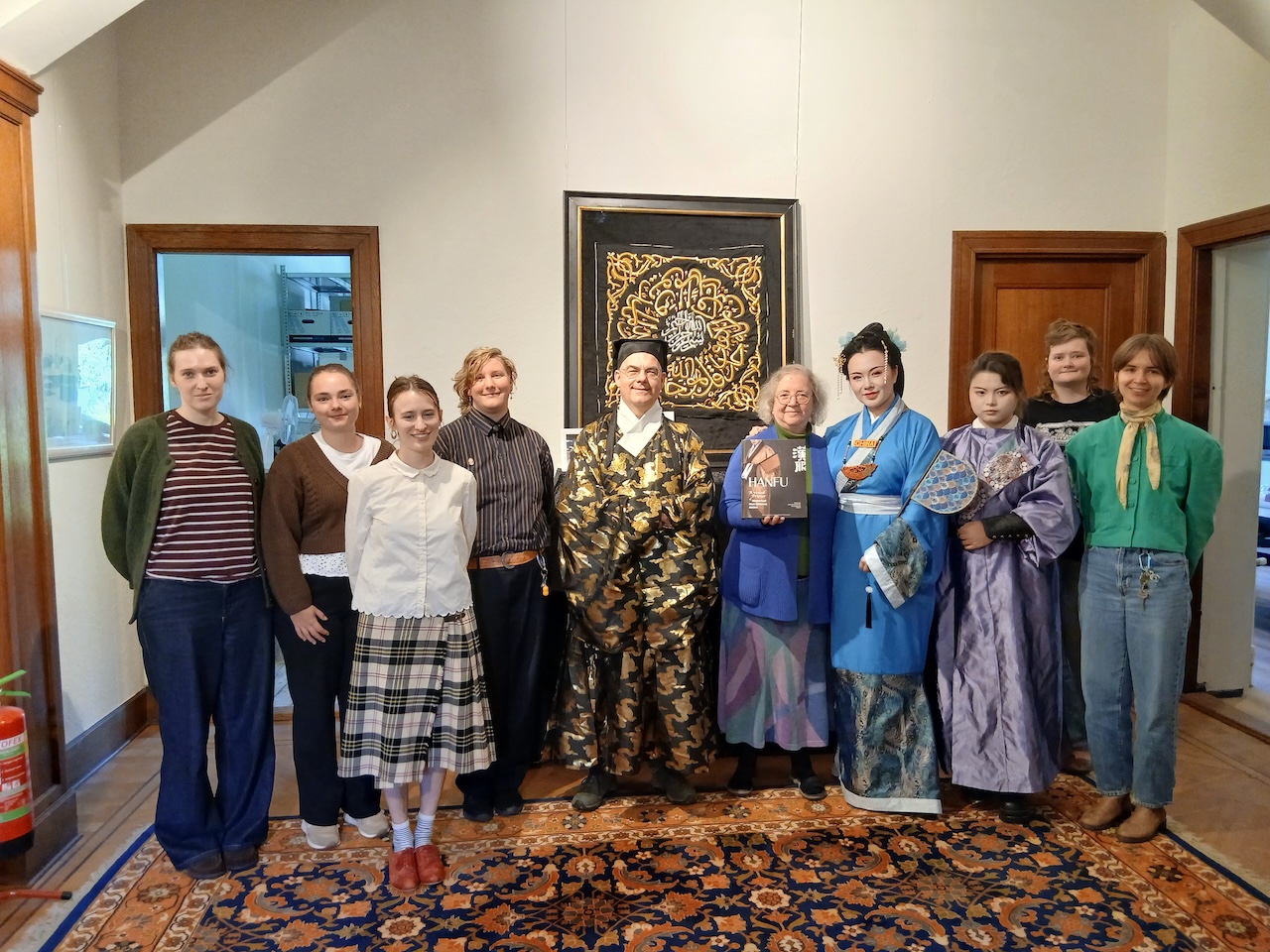
First round-table of textile studies stakeholders, TRC, 1 June 2026.First round-table of textile studies stakeholders, TRC, 1 June 2026.

We have just shut the TRC doors on a very successful book sale at B6, our new home!

We have been working hard for the last few weeks to get hundreds of books, magazines, leaflets, etc., sorted according to subject matter – embroidery, woven, printed, knitted, quilts, general history, etc., not to mention prices. These were then put into boxes and organised on a variety of themes in the main gallery. We had hoped to hold the book sale in the garden, but the weather was not very helpful – rain clouds and strong winds all day long.

The sale officially started at 10.00 but people were arriving from 09.30 onwards, and the first purchases took place at 09.45. From 10.00 until 14.00, there was a constant flow of visitors to search for interesting books and items, as well as for inspiration. Then it gradually slowed down and the last sales were made just after 15.00.

Not just about books

But the day was not just about selling books, it was also intended as an opportunity for people to come and see the new home of the TRC and to talk with colleagues about what we are doing and plan to do, as well as to see the TRC’s current exhibition about appliqué textiles (khayamiya) from Egypt.

Zoek in TRC website

Contact

Boerhaavelaan 6
2334 EN Leiden.
Tel. +31 (0)71 5134144 (kantooruren)  
office@trcleiden.org

Het TRC is elke dag geopend tussen 10.00 en 15.00 uur.

facebook 2015 logo detail


instagram vernieuwt uiterlijk en logo


Bankrekening

NL39 INGB 0002 9823 59, t.a.v. Stichting Textile Research Centre.

Financiële giften

Het TRC is afhankelijk van project-financiering en privé-donaties. Al ons werk wordt verricht door vrijwilligers. Ter ondersteuning van de vele activiteiten van het TRC vragen wij U daarom om financiële steun:

Giften kunt U overmaken op bankrekeningnummer (IBAN) NL39 INGB 000 298 2359, t.n.v. Stichting Textile Research Centre. BIC code is: INGBNL2A

U kunt ook, heel simpel, indien u een iDEAL app heeft, de iDEAL-knop hieronder gebruiken en door een bepaald bedrag in te vullen: 


Omdat het TRC officieel is erkend als een Algemeen Nut Beogende Instelling (ANBI), en daarbij ook nog als een Culturele Instelling, zijn particuliere giften voor 125% aftrekbaar van de belasting, en voor bedrijven zelfs voor 150%. Voor meer informatie, klik hier