Gillian Vogelsang wrote on Monday, 4 May 2020:
During the 1930’s the American company of Sea Island Sugar (based in California) produced a series of cotton sacks to contain 10lbs of pure, granulated cane sugar. These sacks were decorated with the outlines of various animals and figures taken from historical events, stories and from around the world. Other firms followed suit, and produced comparable sacks with the depictions of toys and dolls.
These animals and figures printed onto the cotton cloth were intended to be cut out and made at home into soft toys for children, as well as being “educational cut-outs” (text on bag TRC 2019.2890). The TRC in Leiden is fortunate to have acquired a small collection of these sugar sacks with the help of the American author, Gloria Nixon, who wrote a book on the subject of these and other dolls called “Rag Darlings” (2015).
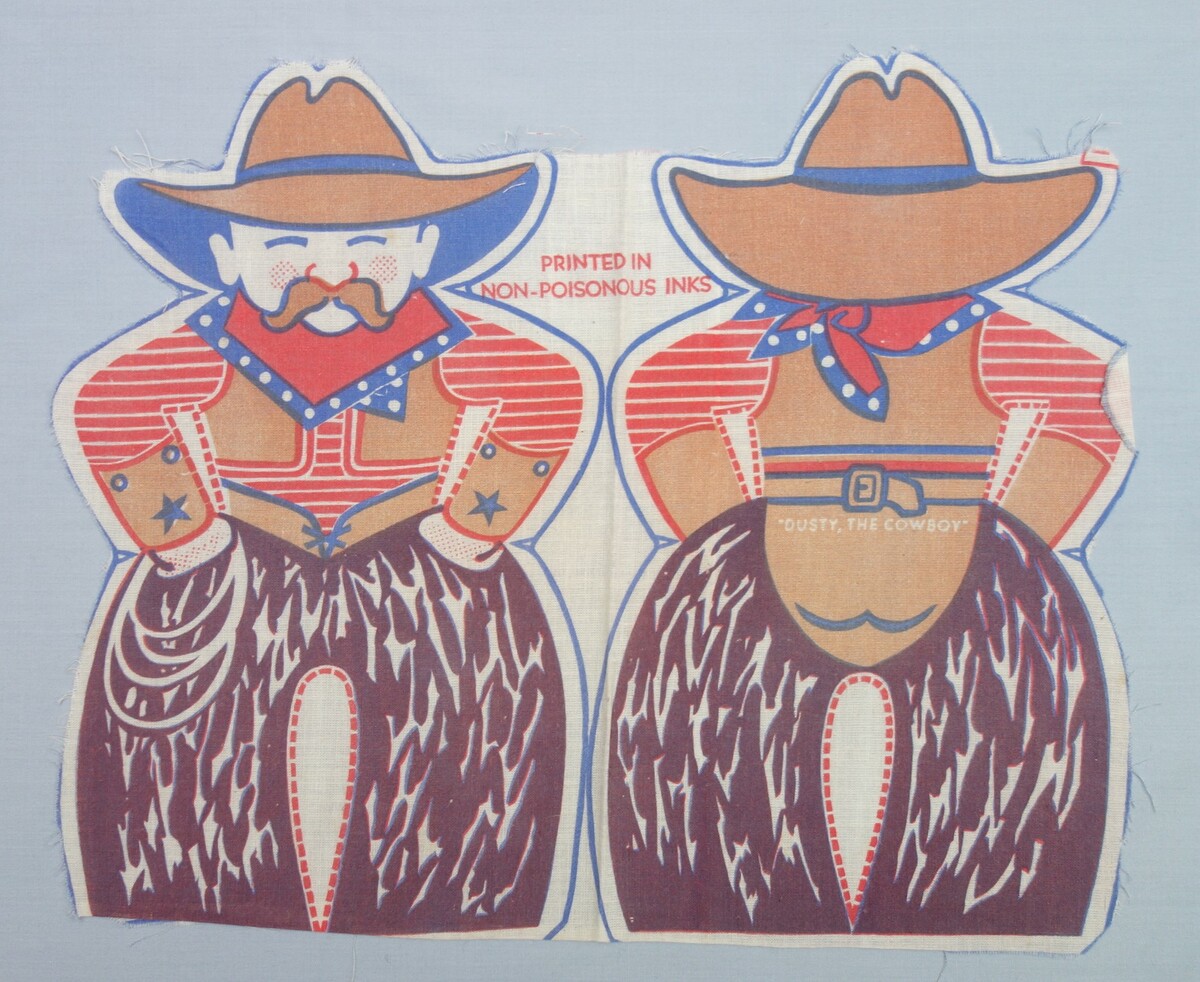 Printed doll: "Dusty, the cowboy." Sugar sack, USA, 1935 (TRC 2019.2906).
There was also a more commercial aspect to these toys, as they were deliberately intended to attract parents to buy this particular brand of sugar. In this respect, the sugar bags were not much different from other (animal) feed sacks from the period that provided the customers (especially the women) with printed cotton cloth to be made into adult and children's garments.
One series of Sea Island Sugar dolls was produced between 1934 and 1936 and was based on regional dress from around the world. Sometimes idealised versions of these outfits were clearly known to the artists, such as Dusty the Cowboy (TRC 2019.2906) and Uncle Sam (TRC 2019.2898), which were very familiar and comforting forms to the American audience.
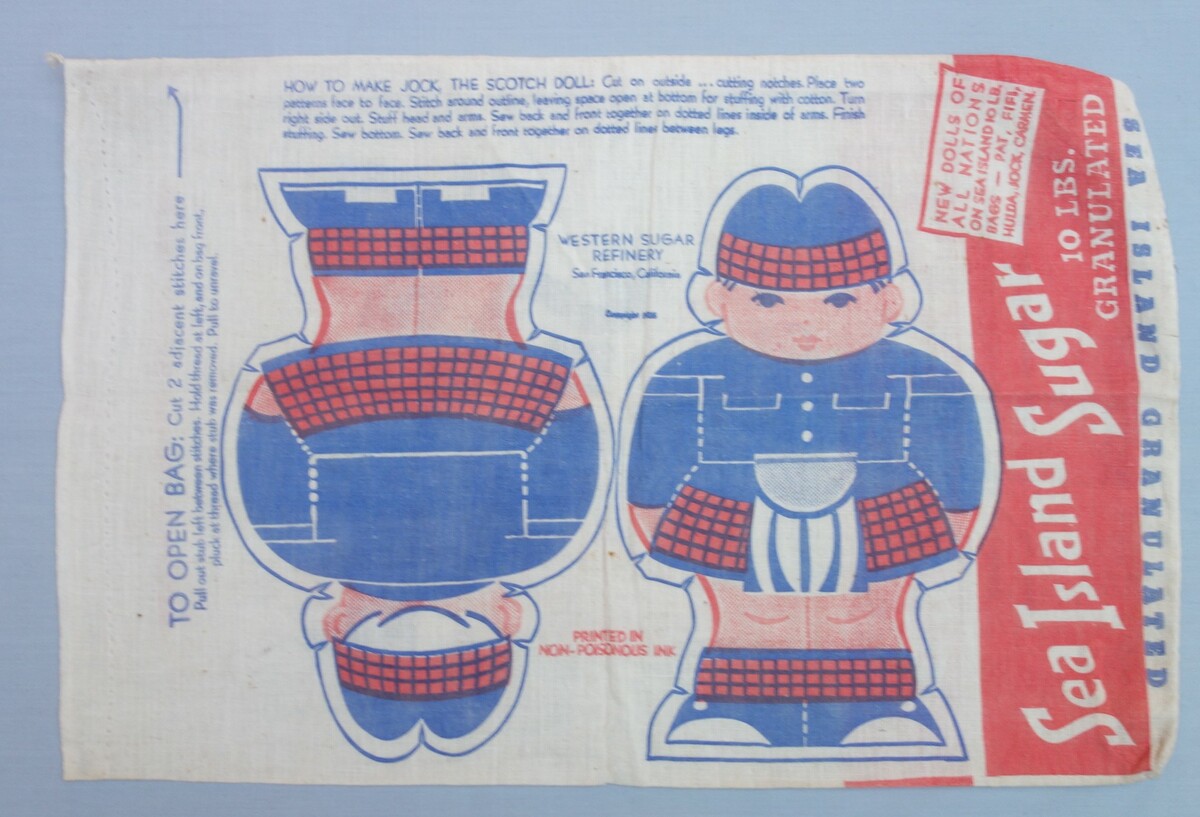 Printed doll: "Jock - The Scotch doll." Sugar sack, USA, 1935 (TRC 2019.2895).
On other occasions cliché images were used, such as Jock the Scotch Doll (TRC 2019.2895), who is shown wearing a cap, kilt and socks decorated with a ‘tartan’ material. There is even a sporran. On other occasions, some of the details are wrong. For example, there is a so-called "Dutch" feed sack (TRC 2019.2890), which has "Gretel, Dutch Girl" on the front of the bag, and "Hans, Dutch Boy" on the back. A minor detail: the outfits of both children are not typically Dutch!
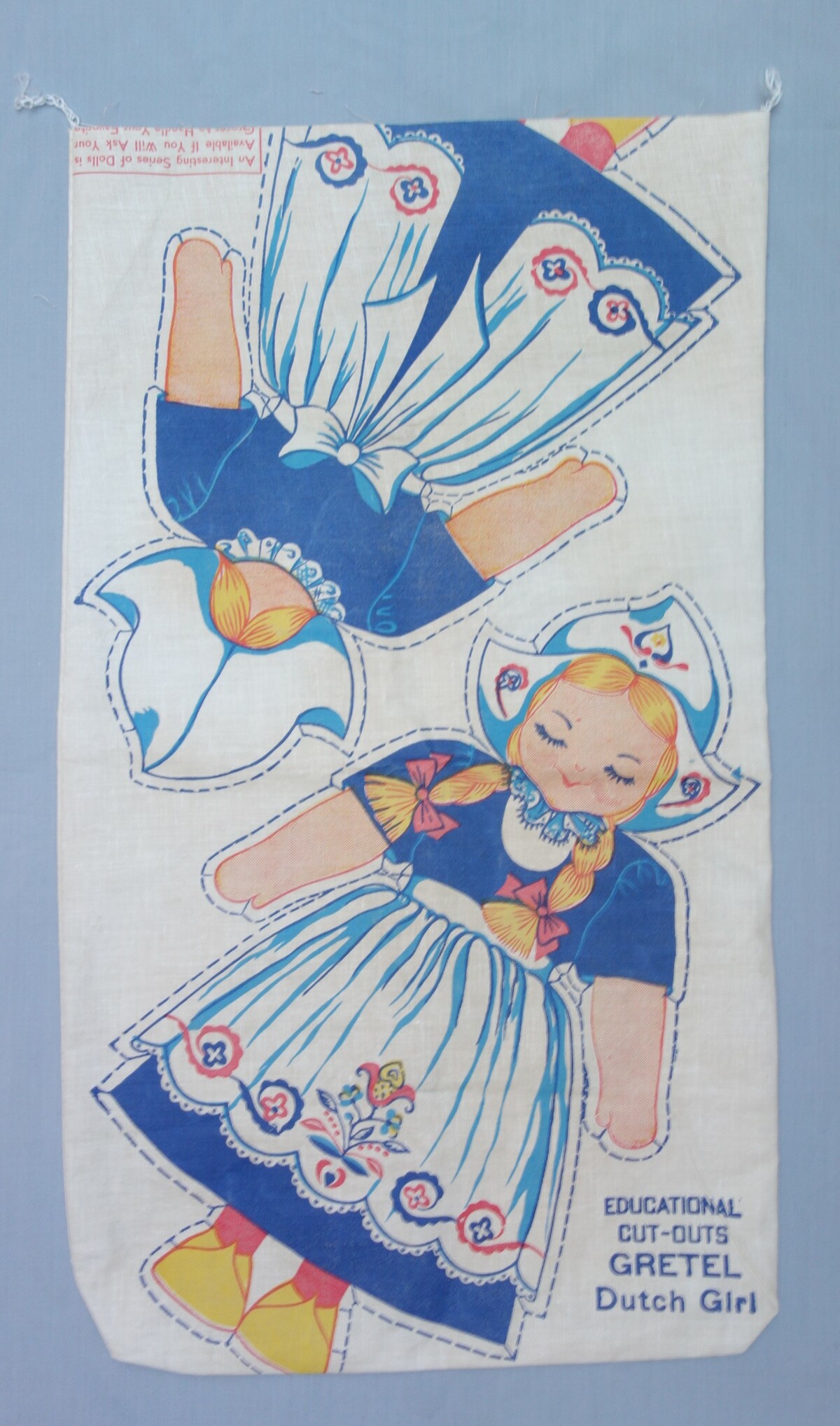 Printed doll: "Gretel, Dutch girl." Sugar sack, USA, 1948-1950 (TRC 2019.2890).
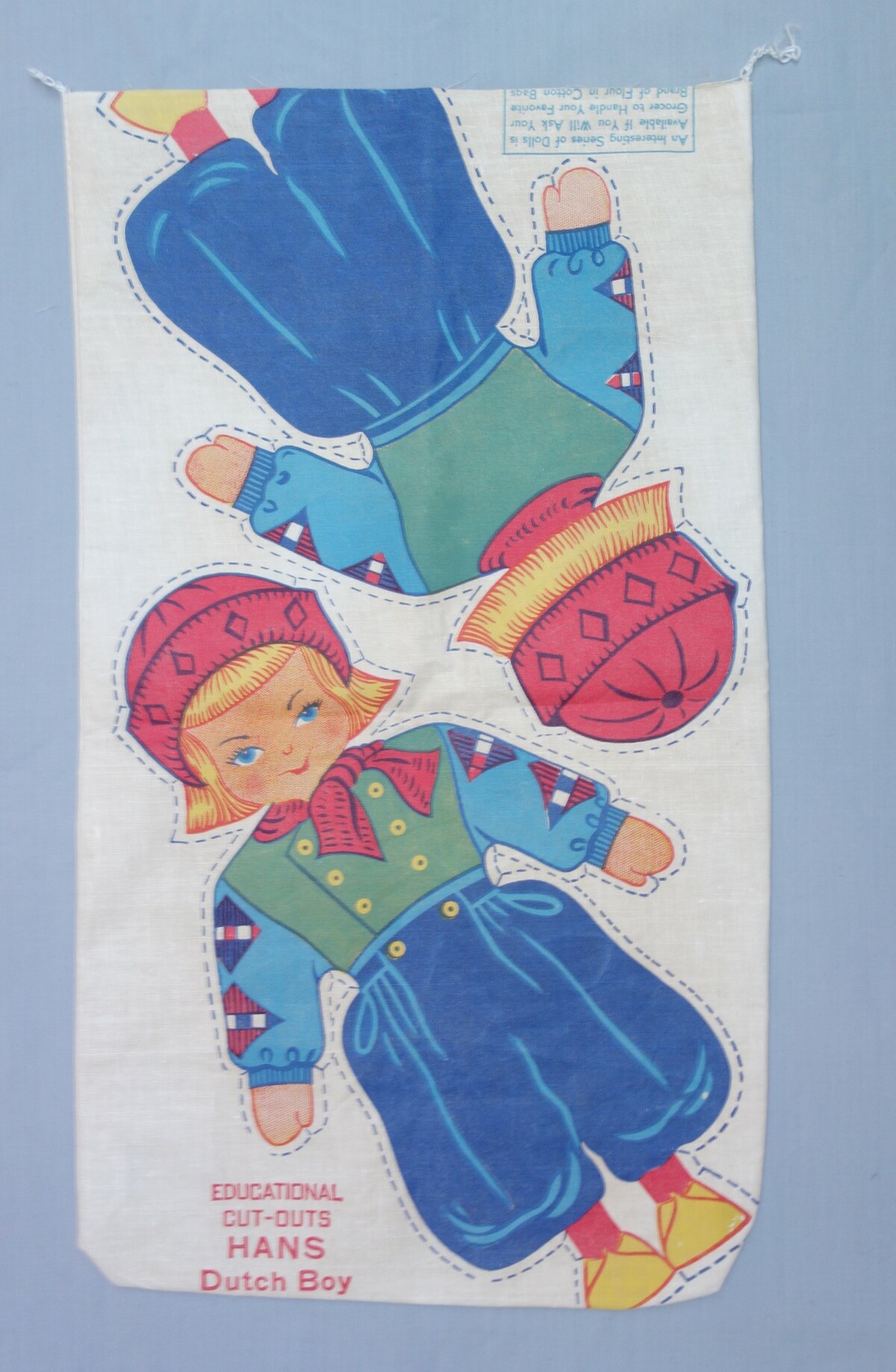 Printed doll: "Hans, Dutch boy." Sugar sack, USA, 1948-1950 (TRC 2019.2890).
Gretel (a German rather than a Dutch name) has a Volendam-style cap for a woman (not a young girl) and yellow clogs. However, the decoration on the cap and apron are more German than Dutch. The outfit worn by Hans appears to be totally made up, although he is also wearing yellow clogs.
And why does this matter? These anomalies are not important, especially in a world facing the corona virus, just curiosities from the past. But there is the element of how people are perceived and pigeon-holed via their clothing, and how this may go totally wrong. Clichés are universal: Chinese with pigtails, Mexicans with huge sombreros, English men with their bowler hat. It is often dress, in all its facets, that characterises, however wrongly, a particular group of people. The Language of Dress may sometimes provide wrong information, and should be treated with care.