The corona crisis and the enforced (but temporary) closing of the TRC to the public have had one advantage: time to reflect. We have been busy thinking and talking on what the TRC is doing, why and how we can improve things. We did so while, on a more practical level, getting things online, adding more and more books to the library, tidying up, writing blogs, and generally looking forward to reopening on the 2nd June (to a limited number of people at any one time).
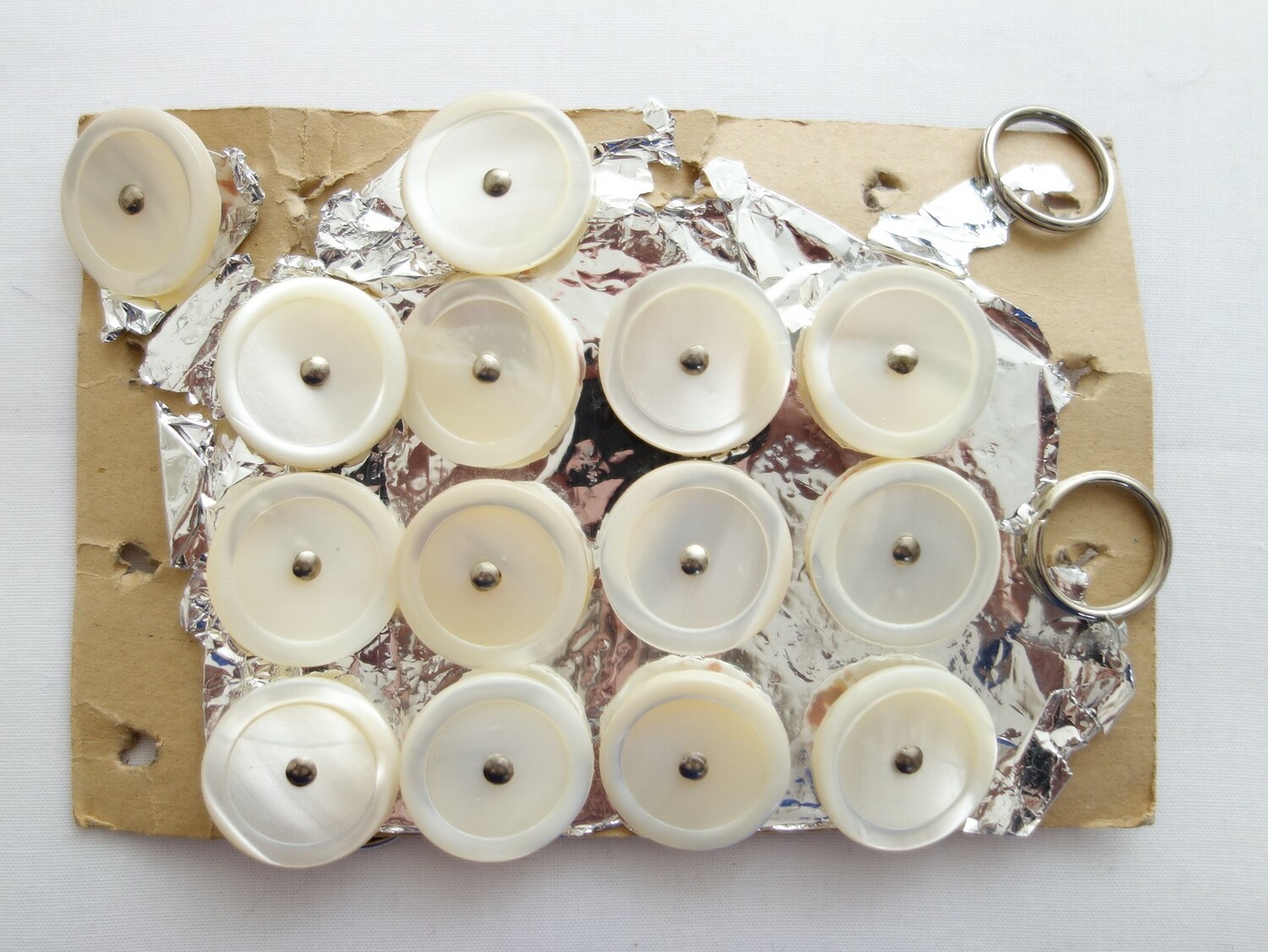 Early 20th century sheet of mother-of-pearl buttons with metal shanks, Europe (TRC 2020.2446).
Talking about the blogs, you may have noticed that just about everyday there was a new blog on a different aspect of textiles and dress and in particular on the historical and social context of items from the TRC Collection. These were all passed on to our Facebook page, which by now has more than 10,000 followers. We also, as reported earlier, have put together an impressive programme of activities, starting soon after our opening in June. Click here for the programme, and make sure to register in advance. You only pay for participation on the day itself.
Lies van de Wege, our depot manager, and I have been cataloguing, photographing and boxing a wide range of items in the collection (while keeping a social distance of 1.5 m). The last few days, for example, we have gone through the TRC Samples and Sampler collection, over 200 items, and divided the pieces according to samplers, school samplers and samples (including stitch, darning, mending and patching samples), embroidery rolls, as well as a wide range of knitted pieces. All of these items date from the 18th to the mid-20th centuries. There were also six hand-written knitting instructions from the 19th century, each with their own little sample of knitting. We are going to look for someone who can transcribe the patterns (they are in Dutch, somewhat technical, and difficult to read) and re-make the designs.
In addition, lots and lots of buttons have been added to the catalogue, and we are about to start on our (currently) small survey collection of beads. In doing all this work we came to an important decision: We have been evaluating and discussing the Dutch urban dress collection (as opposed to the Dutch regional dress collection), including all the beads and buttons, and decided it could do and be a lot more active. So Lies is going to review the collection and re-order it as a reference collection to Western ‘everyday’ garments and accessories, from the 19th century to the present day. This re-organisation is being helped by TRC Ambassador, Amber Butchart. We will inform you soon on further progress in this field.
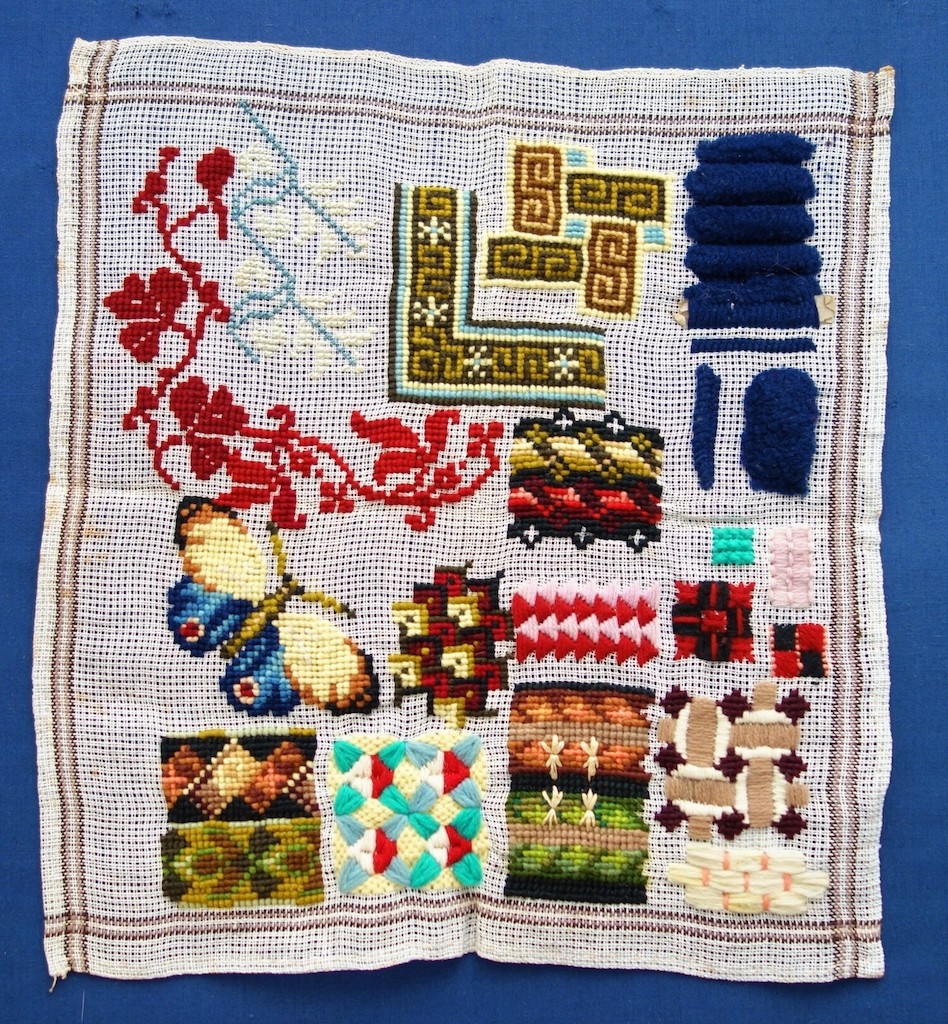 School sampler from the 1870's with Berlin wool work style motifs, The Netherlands (TRC 2020.2395).
You may have noticed, while going through the TRC Collection database, the term REF in the storage column. This is the textile reference collection and is concerned with the ever present question of What is?: What is velvet, What is gingham? What is a denim? The Reference collection also relates to a very important question: how do you accurately and consistently describe individual objects and the structural elements that make up a particular object. What exactly is a cap, or what is denim, or needlelace. There are numerous terminologies that are presented by museums and other institutions in various fields of material culture, but few are specifically geared towards textiles, dress and accessories, and the all important question, what is…..!
In addition to all of the above, we recently had a small fundraising campaign to obtain money to pay for various items we need for our reorganisation, namely one hundred acid-free boxes, two new showcases for in the gallery and for mini-exhibitions in the workroom, as well as racks. Thanks to the help of various people we have already been able order the boxes and showcases! We are really looking forward to using these and creating a series of mini-exhibitions to highlight various aspects of the TRC’s impressive and diverse textile and dress collection. Which stands, by the way, at nearly 30,000 items, dating from the prehistory to the present day. A range of nearly 7000 years.
On a more mundane level, we have been investigating types of face masks so that visitors and more importantly workshop and course participants can wear a mask when in the workroom. Thanks to Beverley Bennett (our amazing quilt volunteer), there are going to be specially made TRC face masks! Unique to the TRC. We will, of course, make sure that an exampe of one of these masks is added to the TRC Collection as a reminder of these strange times we currently live in.
Gillian Vogelsang-Eastwood, Friday 15th May 2020.