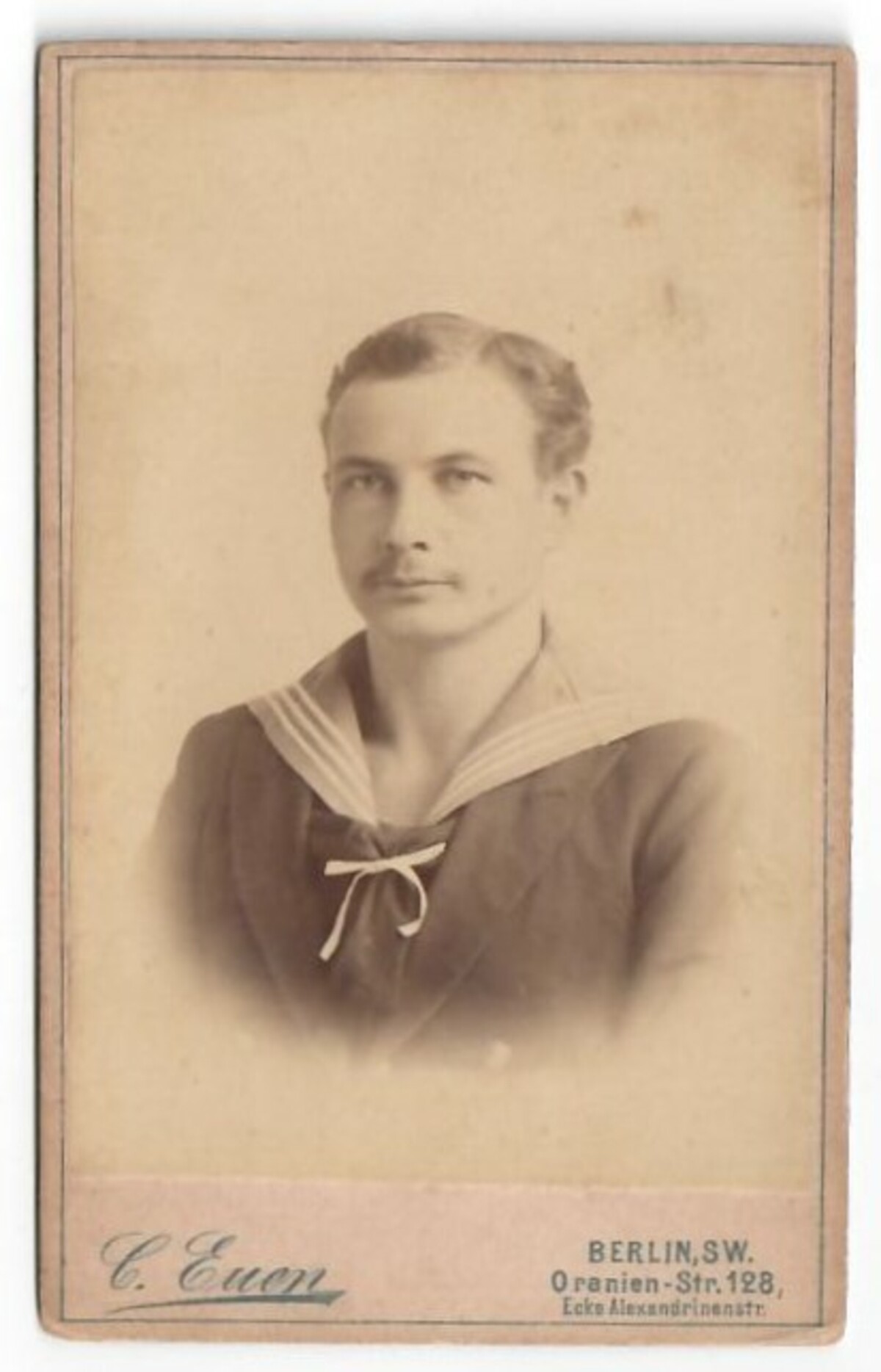
 Carte de visite of a German sailor, late 19th century (TRC 2019.1823).You’ve seen them in antique stores and second-hand shops. There is an air of melancholy around the old studio portraits of women, men or children. These late 19th to early 20th century photographs are mounted on cards, usually with the name of the studio or atelier on it in an old-fashioned script.
They are called cartes de visite (visiting cards) and the TRC has almost 200 in its on-line collection. And while the people in the photographs may be sadly forgotten, cartes de visite (CDV) are a wonderful source of information about fashion and dress history, revealing details on how garments were actually worn.
We can learn about occupational dress, like the German sailor with his black tie and narrow white bow (TRC 2019.1823), or the soldier (TRC 2020.0281), the diplomat (TRC 2019.1822) and the nun (TRC 2019.2280) in our collection. Regional dress is also depicted, like the CDV of a seated woman in Hungarian dress, her tools for spinning around her (TRC 2020.3127), or the Dutch woman in Zuid Holland Islands dress (TRC 2020.2986), with her lace cap and collar (called ‘galloon’).
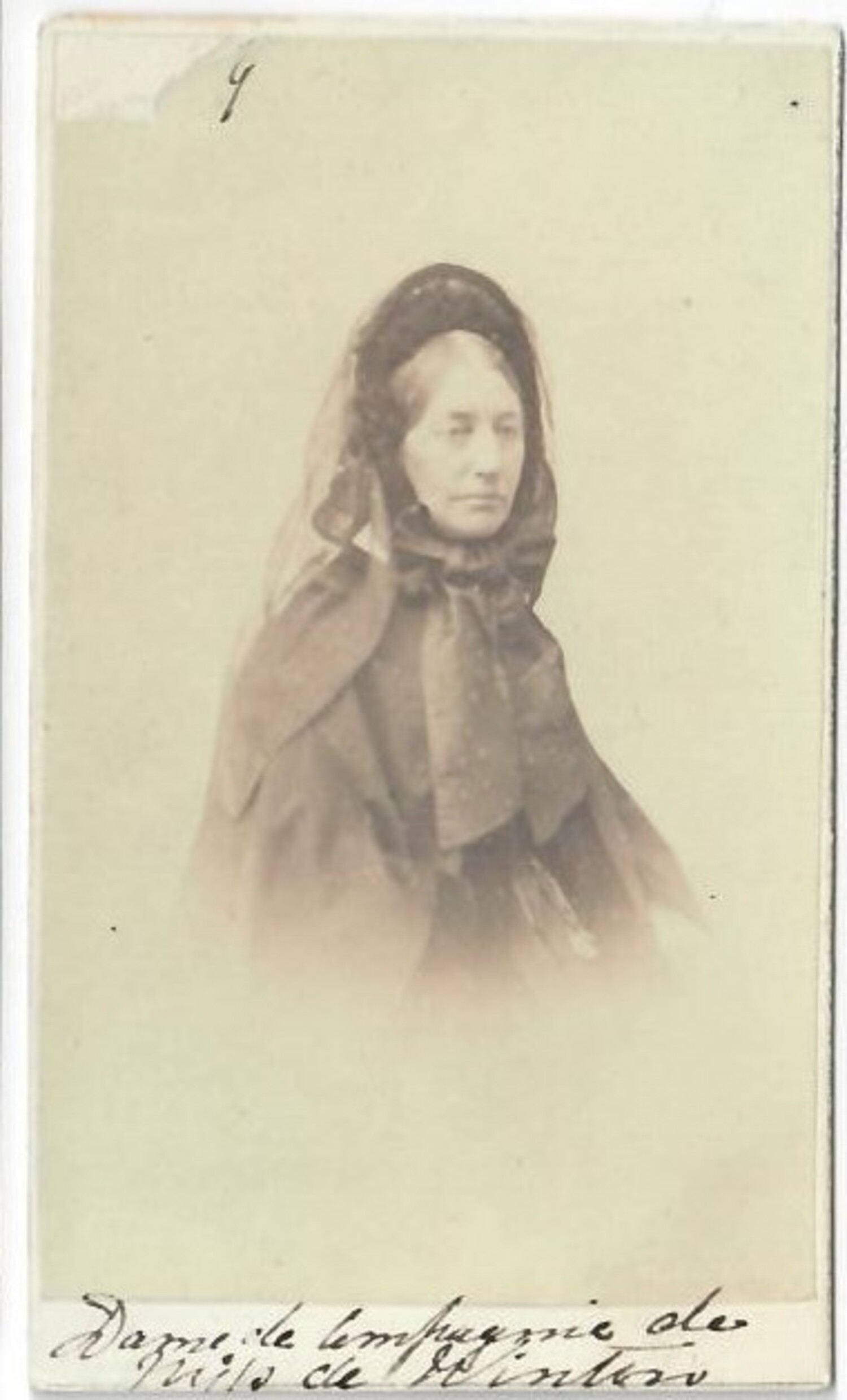 Carte de visite of a Dame de Compagnie, Genève, late 19th century (TRC 2020.3030).You wore your best clothes in a CDV portrait, to show wealth and status, as a Swiss card in the TRC collection (TRC 2020.3030) depicts: in this CDV an older woman wears dark clothes, and a large hat and bow (partially covered with a mourning veil). The hand-written text on the front reads ‘Dame de Compagnie’—a lady-in-waiting, usually to a member of a royal family.
Having your photograph taken then was an experience, not a quick click on your mobile phone. While the custom of using a photograph as a calling card existed before 1854, it was in that year that a process for the mass production of cartes de visite was patented. The French photographer, André Adolphe Eugène Disdéri, developed a way to print ten photographs on a single sheet, which meant CDVs could be made both more quickly and much more cheaply. A carte de visite craze, or ‘cardomania’, followed, spreading from Europe to the Americas.
Do you have CDVs you would like to donate to the TRC? Do you know someone who is interested in restoring the colour back to these images? Please contact us.
Shelley Anderson, Wednesday, 15th July 2020.