Poster announcing the new TRC exhibition about the Second World War. The poster photograph in the centre, showing garments from the exhibition, was taken by Joost Kolkman.During the last five days the TRC in Leiden has been very busy with (finally) taking down the American Quilt exhibition, which we put up in February, took down in March, put back up again in June up and now it is finally down.
Together with Lies, Sophie and Augusta, three of our dedicated volunteers, we cleaned the TRC Gallery and slowly started adding items for the new exhibition, including numerous panels, over twenty mannequins dressed in the relevant clothing from the 1930’s and 1940’s, photographs and many small items, ranging from lapel badges to heavy leather boots with massive wooden soles.
The new exhibition is called Textile Tales from the Second World War, and covers a wide variety of subjects and stories, from the start of the war in 1939, the occupation of The Netherlands in 1940, textile and clothing (from relevant Dutch regional dress, fashionable garments to military uniforms), the dramatic fate of the Jewish population, rationing, patriotic symbols (including margriets [the daisy flower] and orange-headed matches!), the impact of a general lack of material on clothing, to the 'Hongerwinter' of 1944-45, Liberation and the aftermath. It also explores humanitarian relief items, notably clothing and bedding.
There are over 120 items to see, to explore the stories behind them, to be reminded of and be confronted with. Next week we will be adding some fifteen Mennonite quilts that were sent from the USA and Canada to those in need in The Netherlands and Germany just after the War.
The exhibition opens on the 16th September and will run through to the 17th December 2020. It should be added, because of the corona pandemic, that visitors need to register at least one day in advance if they want to come (Dit e-mailadres wordt beveiligd tegen spambots. JavaScript dient ingeschakeld te zijn om het te bekijken.).
Below is a series of photographs that were taken last week while we were building up the exhibition.
Gillian Vogelsang, 5th September 2020.
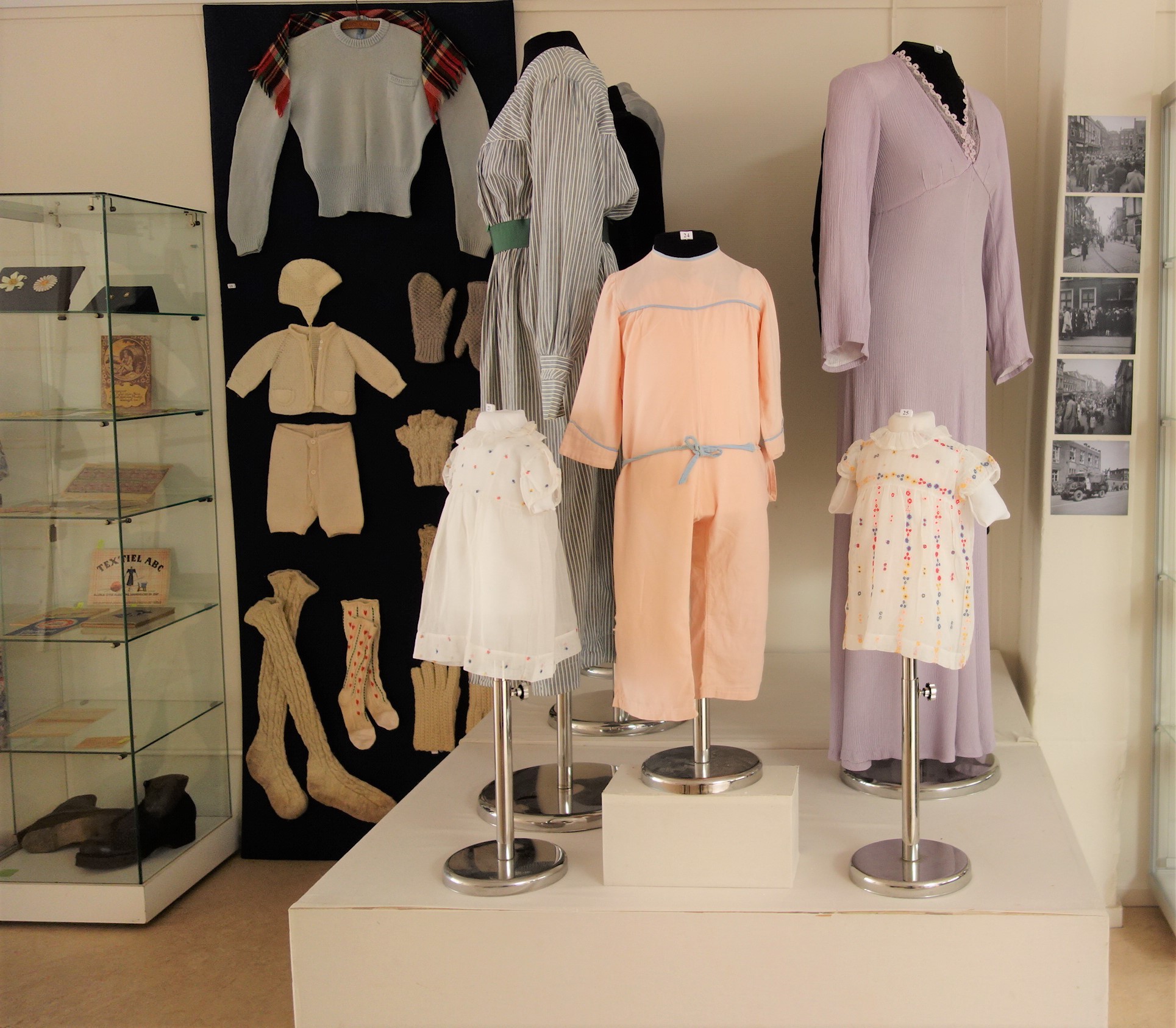 During the Occupation, textiles were rare and garments were mended or made from older garments or bedding. The pink child's garment in the centre is made from an old flannel sheet.
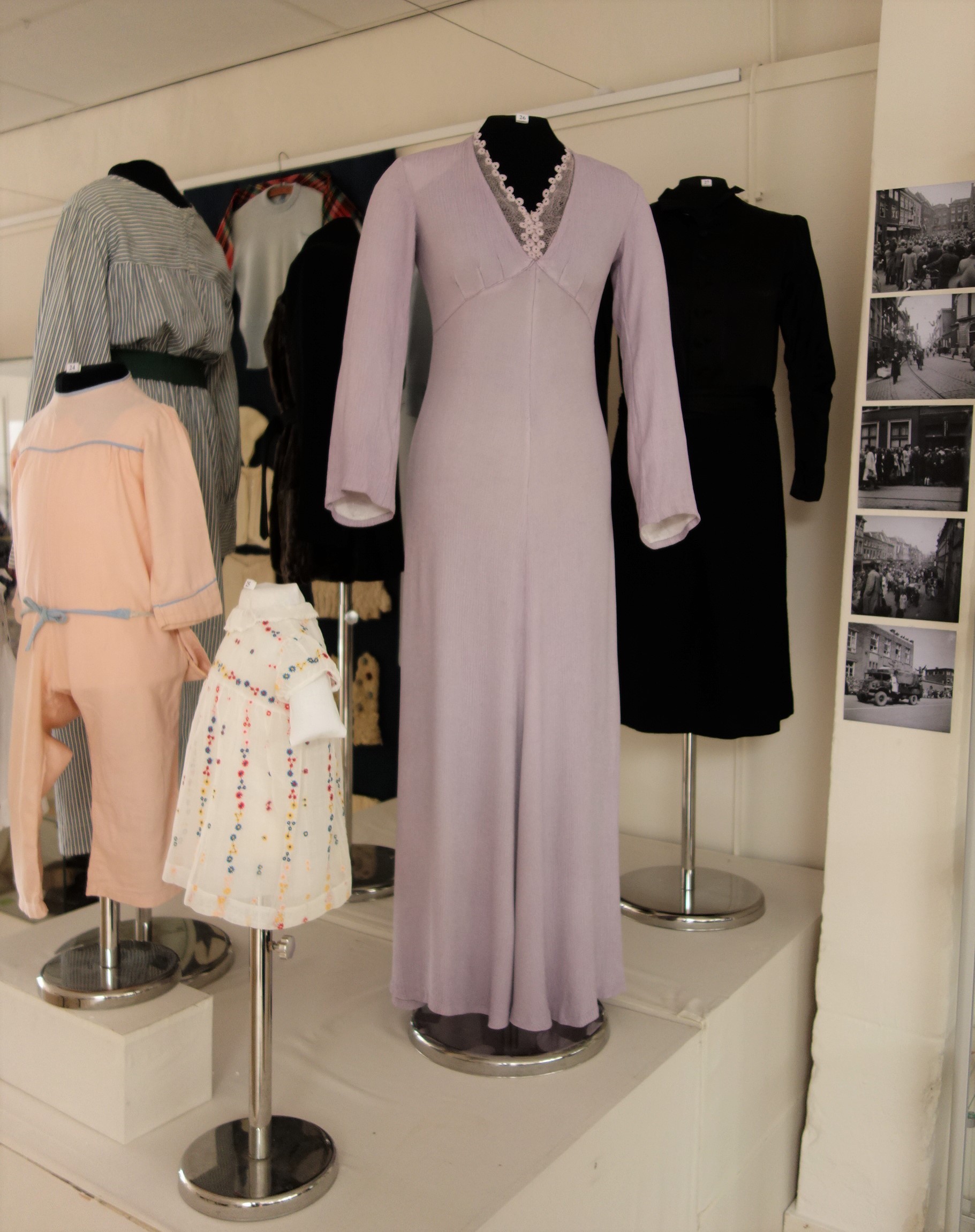 A1930s wedding dress for a Leiden bride, which during the Occupation was dyed lilac to serve as a more formal dress.
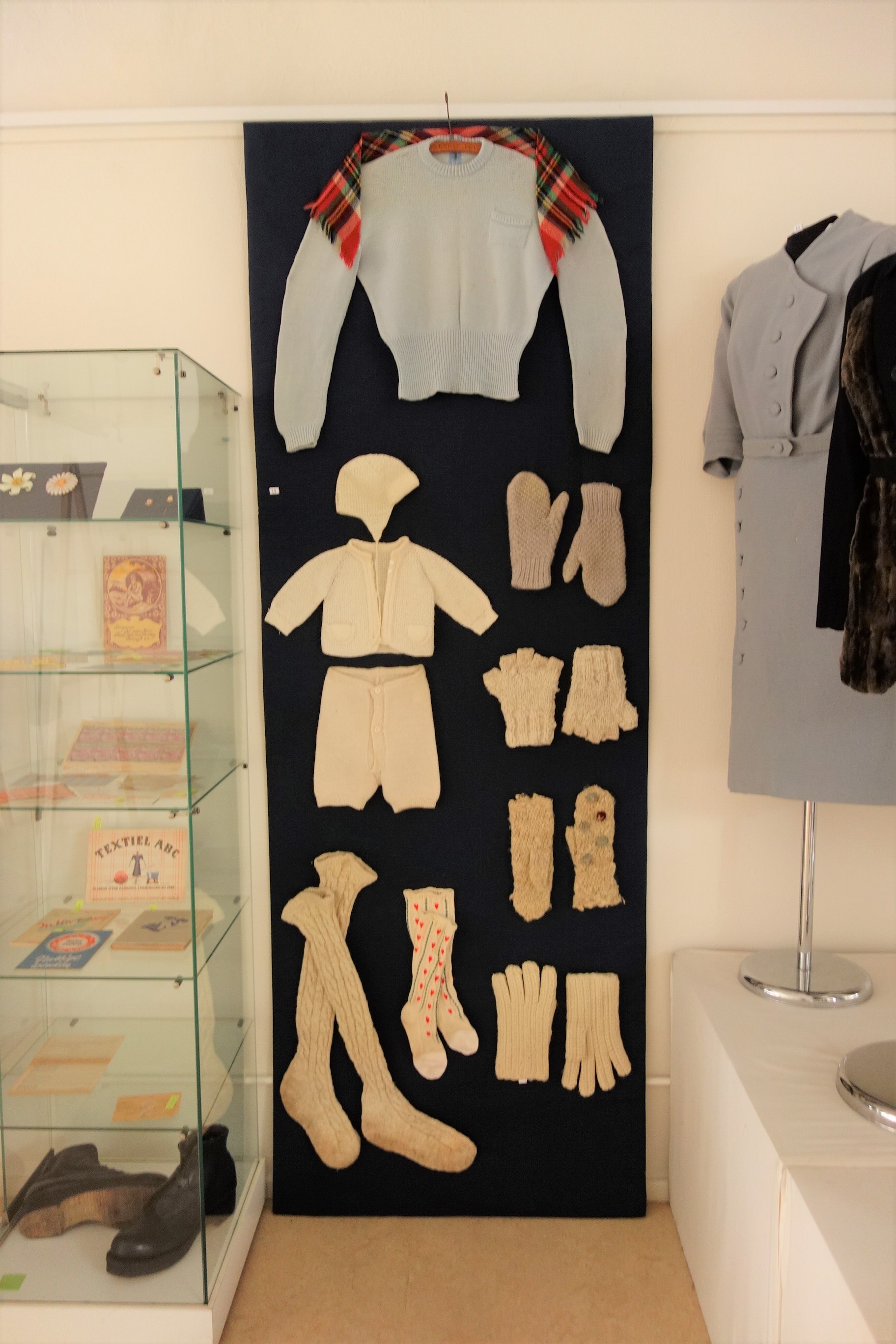 A range of hand knitted garments from the 1940s, some of which were made from hand spun yarn.
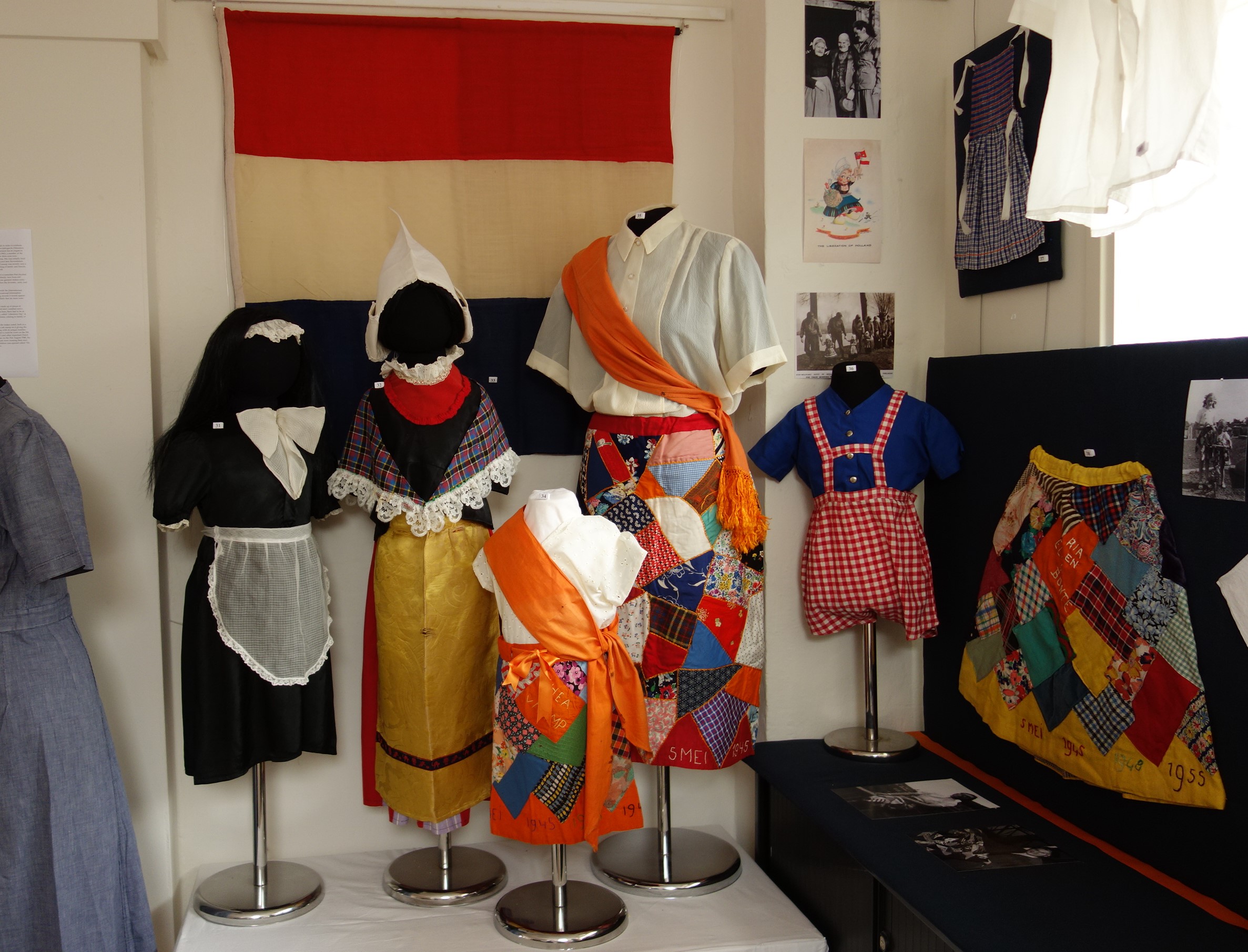 Garments worn for parties to celebrate Liberation and Reconciliation after the defeat of Nazi Germany. Two of the garments were worn at parties in Leiden.
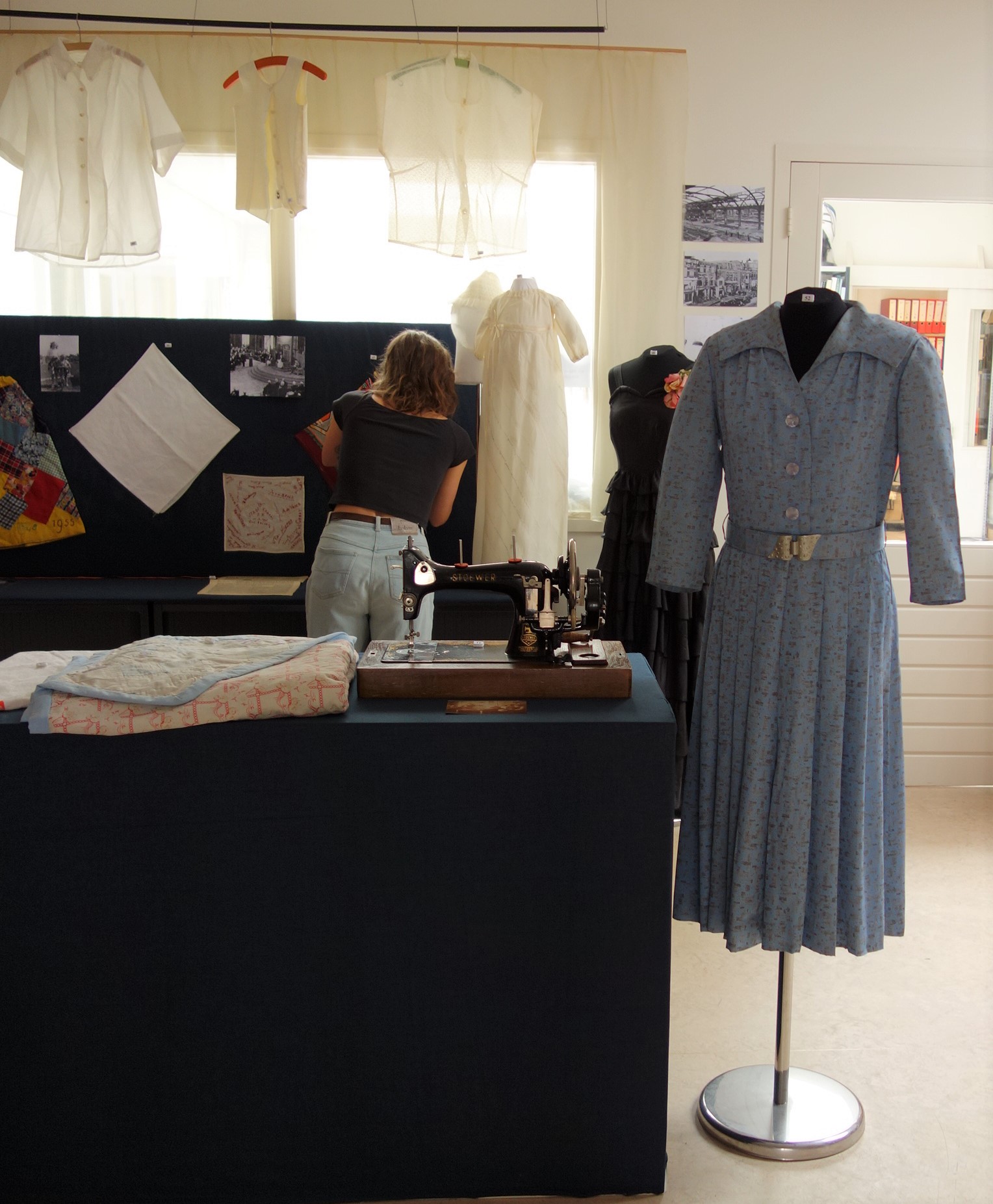 Volunteers at the TRC setting up the exhibition; in the window are nylon blouses and gowns made from parachute silk. The sewing machine was used by a Leiden family to make garments, during the Occupation.
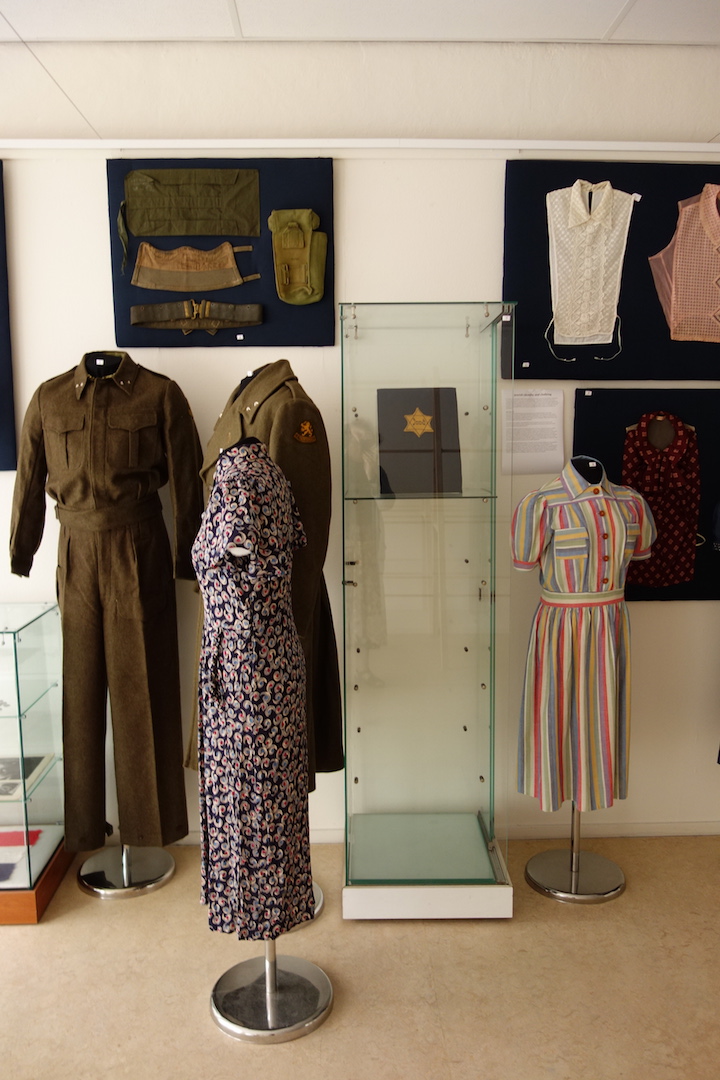 Military uniforms from British depots worn by Dutch military just after the war. The Star of David, placed in a glass showcase in the centre, reflects the tragic fate of the Jewish community in The Netherlands.
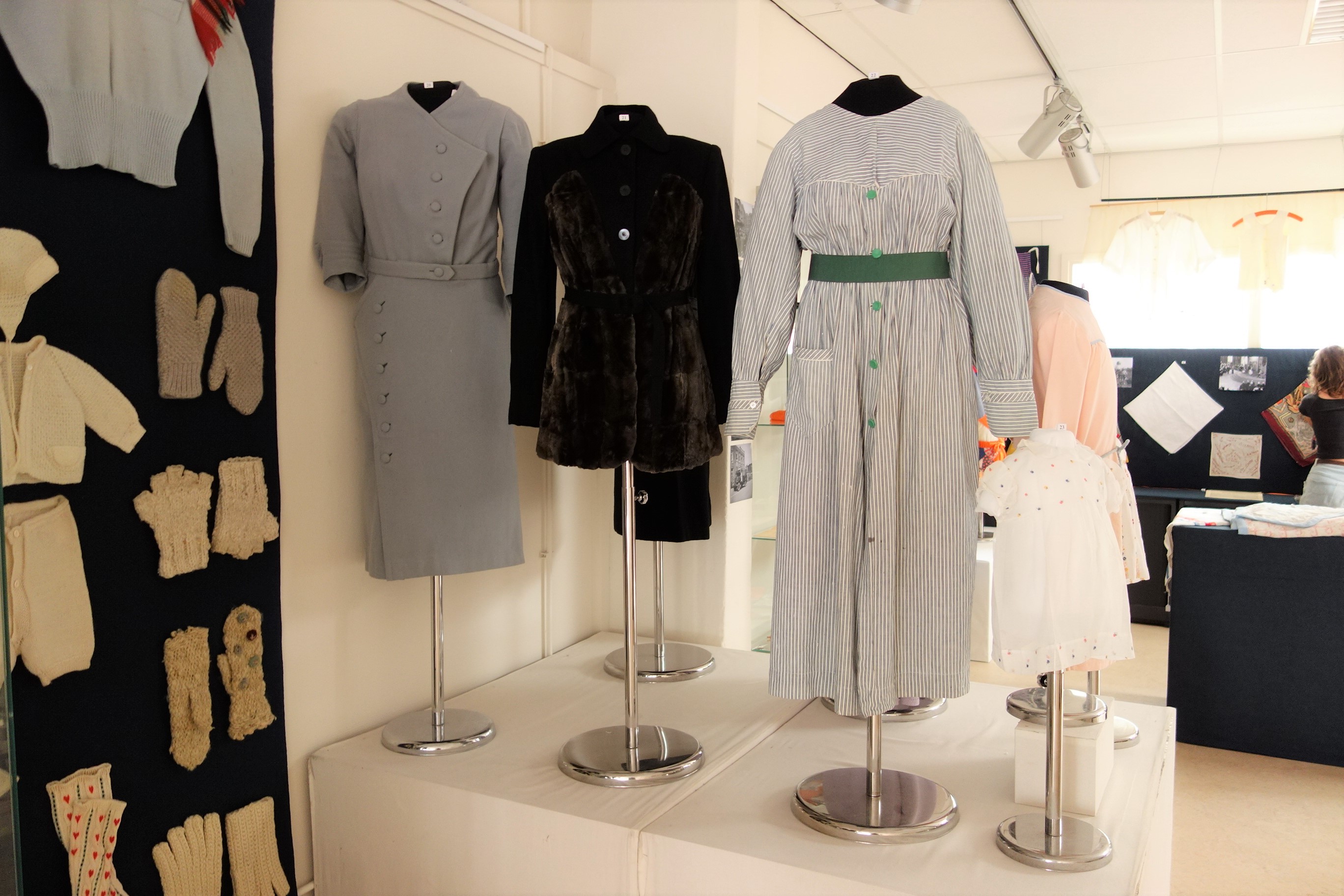 Two dresses, to the left and right, made from an old blanket and mattress ticking respectively, and in the centre a jacket decorated with mouse fur.