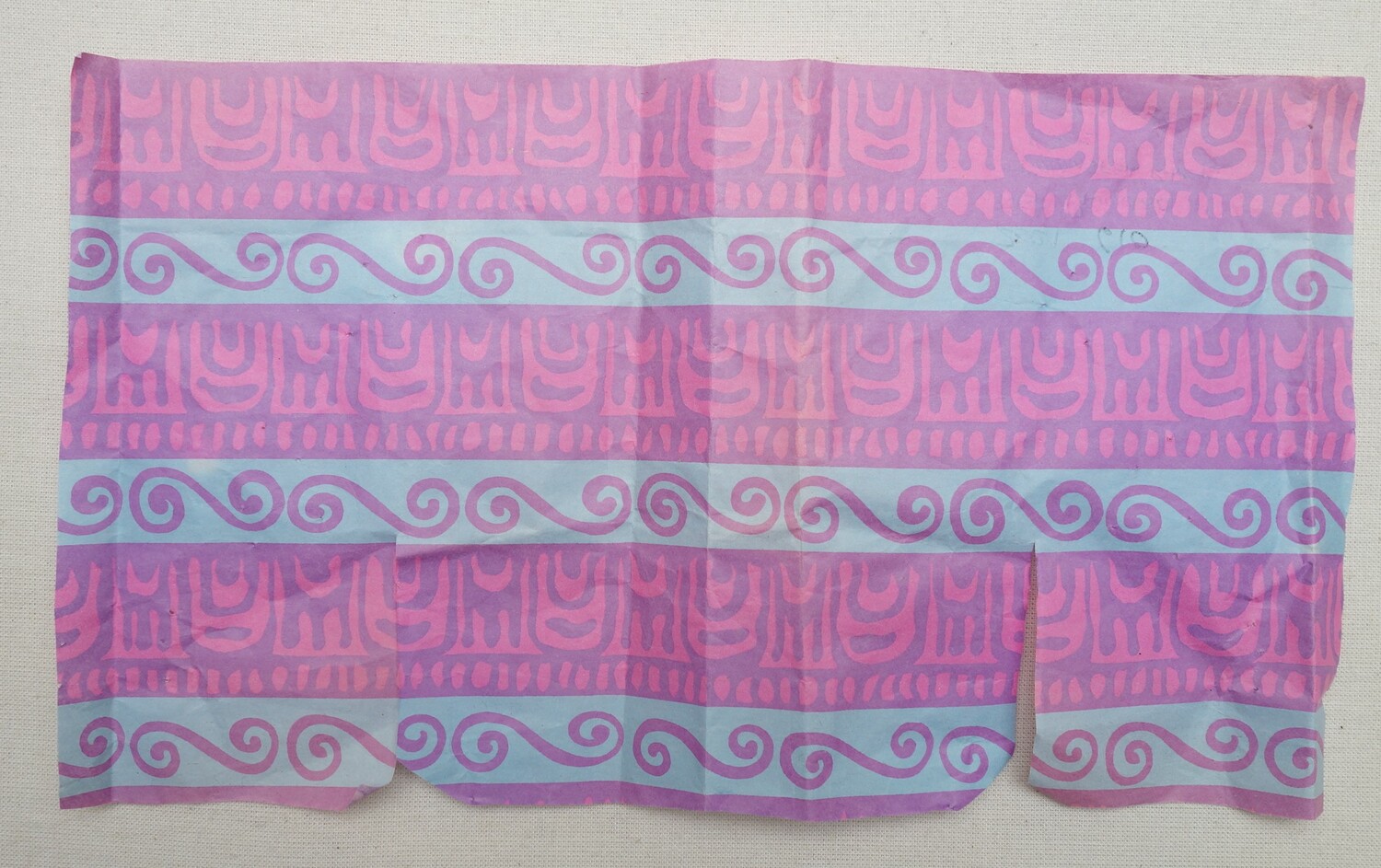
 Slip of paper used for the 'sublistatic' textile transfer technique, Europe, 1970's (TRC 2021.0610).It’s amazing how a simple object can raise so many memories and at the same time highlight a forgotten textile story.
A few days ago I was cataloguing a group of items for the TRC Collection, including some paper patterns. Among the pieces there was a small rectangle made from paper with a faded 1970’s design on one side (TRC 2021.0610).
Nothing special, and yet. As a student of design history in the late 1970's I studied different textile printing methods under the guidance of Joyce Storey. One of the methods she talked about was the paper transfer technique, often referred to as ‘sublistatic’. This method was originally developed in Milan in 1953 by the company of Stampa Tessuti Artistici.
The technique was officially known as the ‘Star Transfer printing process’. The technique involves printing a pattern on a length of paper with special inks that sublimate between 71o C and 104o C. Sublimation is the process whereby a solid is converted into a vapour. It may then go back again into a solid as it cools down.
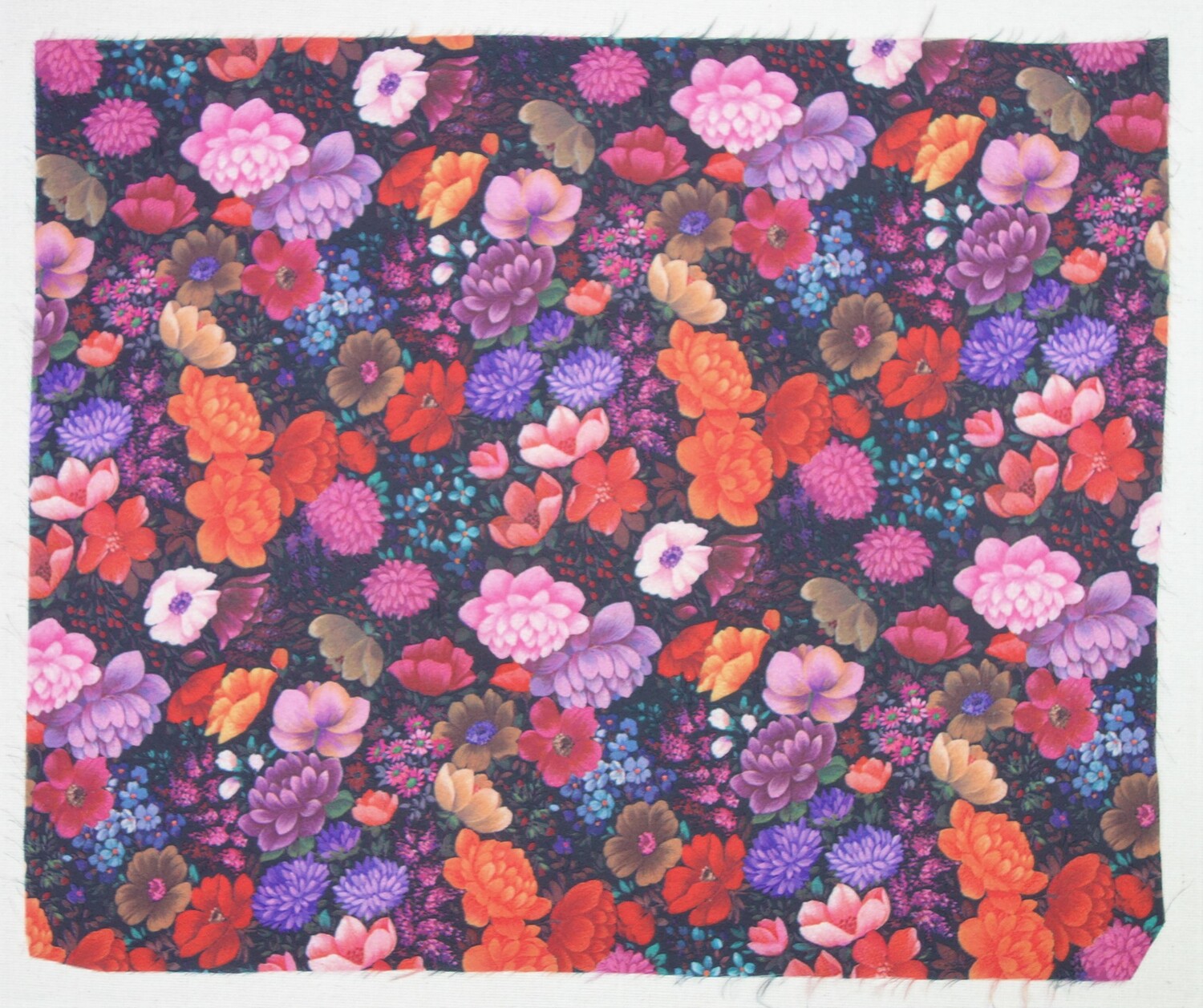 Sample with a design transferred with the 'sublistatic' technique, Europe, 1960's (TRC 2021.0239).In this technique the ink, when in vapour form, loses its affinity to paper, and afterwards, when cooling down, it is deposited on the cloth. In this manner the design is transferred from the paper to the cloth. The technique was very popular, because it required a minimal amount of (printing) equipment, and no extra water was needed to wash off excess inks (dyes). It was capable of producing high resolution, precise designs. This technique was also compatible with a range of 'modern' synthetic fibres, especially polyester, acrylic, acetate, triacetate, as well as nylon. In particular it was suitable for machine knitted forms of cloth (see for example, TRC 2020.1499 and for a woven form: TRC 2021.0239).
But why is the small rectangle of paper of such interest? Just think about how much paper must have been produced by this process. An indication is given in Joyce Storey’s book Textile Printing (London: Thames and Hudson, 1974). She noted (on page 153) that in 1972 the estimated amount of transfer paper used in Britain was about 94,000 million metres! But what do you do with that amount of paper? Simply throw it away? One solution that was developed was to turn the used, decorative paper into bags, into wrapping paper and even into paper to cover bunches of flowers. And these bags are something I remember as a young student. The bags vanished in the late 1980’s to be replaced by plastic bags.
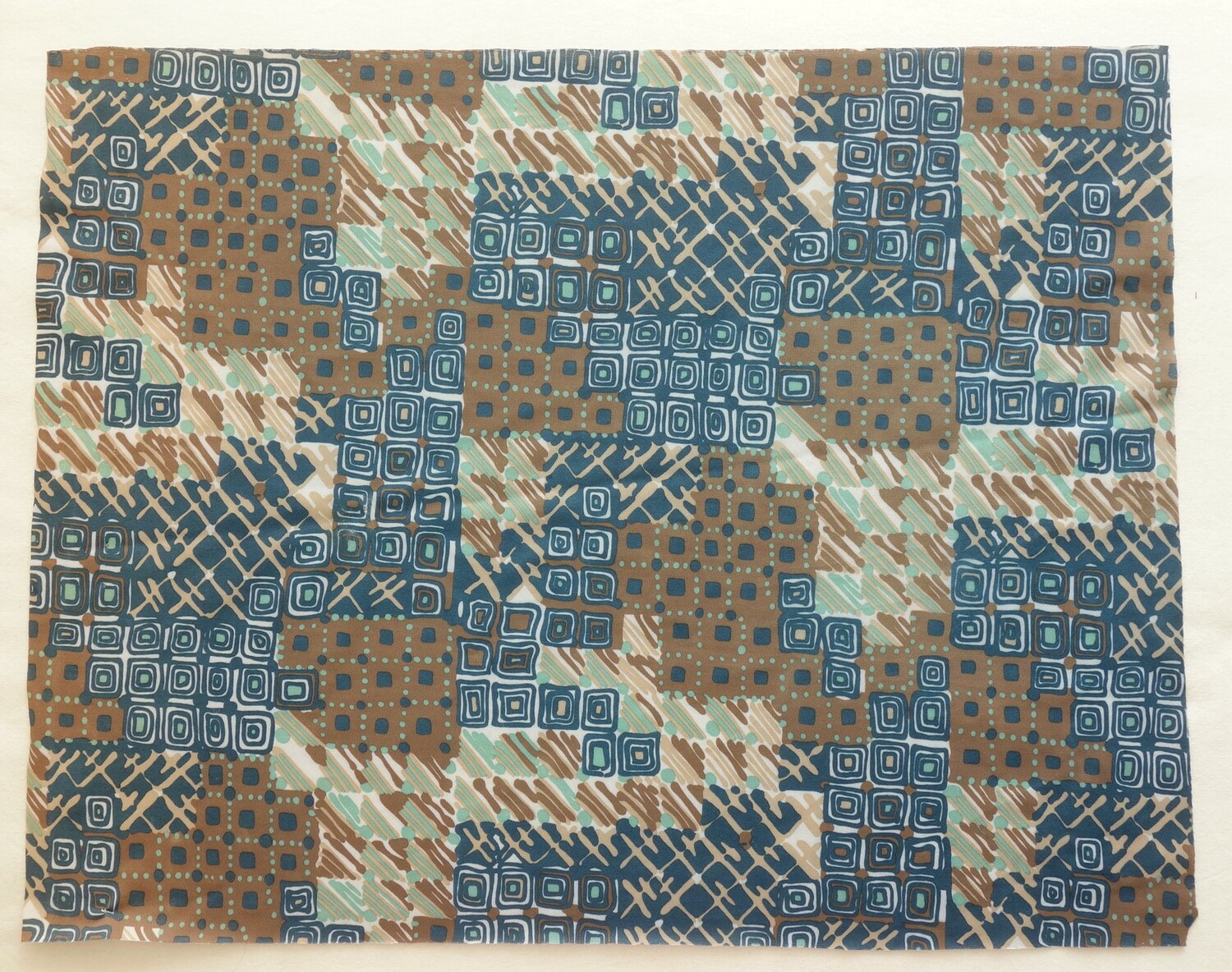 Factory knitted sample with a design transferred with the 'sublistatic' technique, Europe, late 20th century (TRC 2020.1499).One of the reasons that the paper bags disappeared was because the printing technology had changed and the paper transfer technique had become obsolete and was replaced by much faster, direct methods of design transfer. There was no need for paper anymore.
As you may have guessed, the piece of decorated paper noted above and now in the TRC Collection was cut from a 1970’s paper bag, a reminder of a once 'modern' technique that was to conquer the world (and fill it with paper bags).
As a result of finding this slip of paper, I would like to make a small collection of these paper patterns and paper bags as part of the much larger TRC Collection. If you have any decorative paper transfer bags or related samples that you are willing to donate to the TRC Leiden, please let me know at Dit e-mailadres wordt beveiligd tegen spambots. JavaScript dient ingeschakeld te zijn om het te bekijken..
Gillian Vogelsang, 4 March 2021.