I was talking with someone from the Dutch embroidery group Merkwaardig as part of a follow-up after an online lecture I gave for them called ‘What is Embroidery?” She had been looking at the TRC website and the TRC blogs and was very surprised by the diversity of subjects covered. For her it was bizarre, but fantastic.
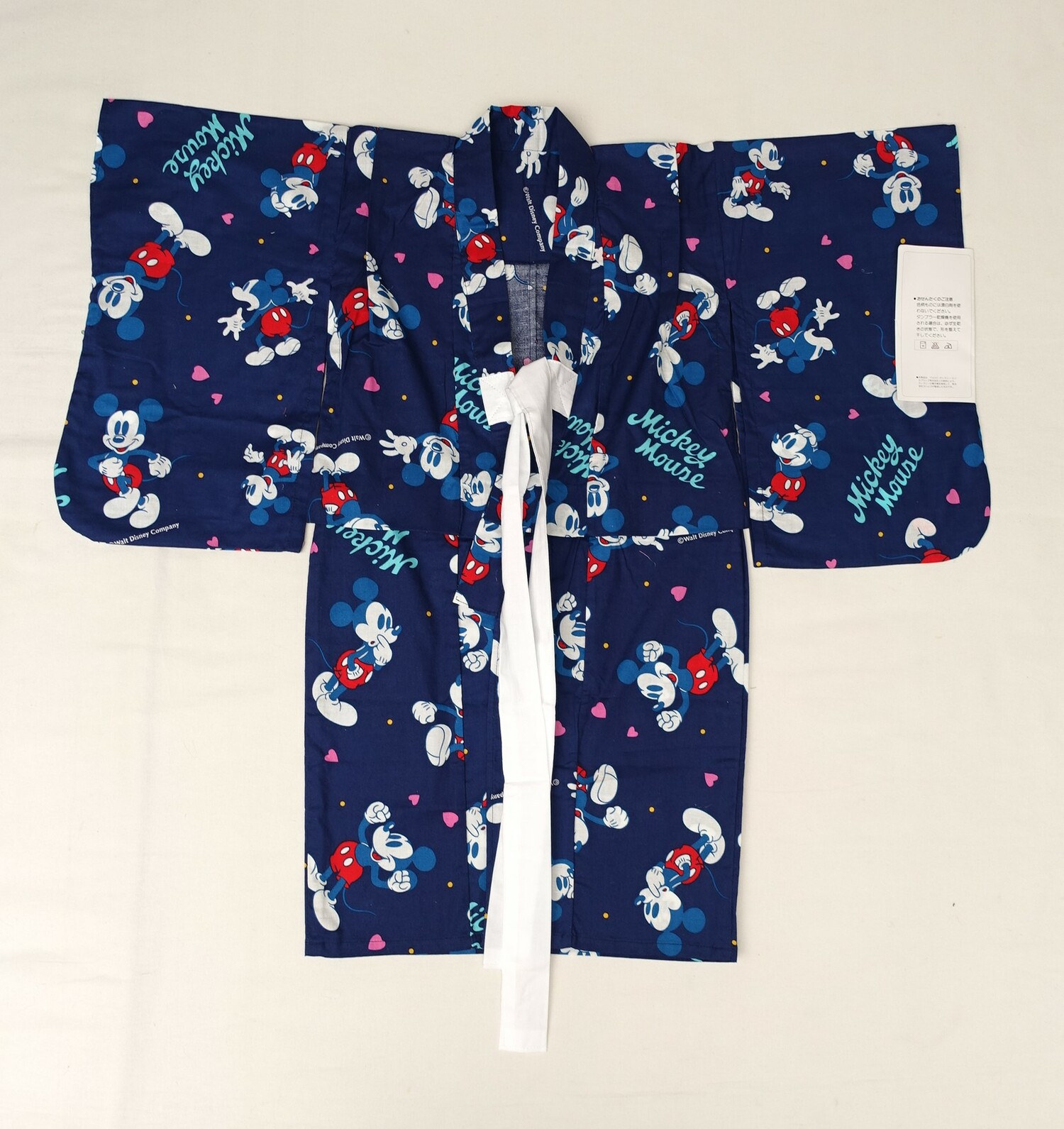 Japanese kimono with Mickey Mouse prints, 2021 (TRC 2022.0229).
This comment made me ponder on the fact that many people are used to think about textiles from within their own areas of interests, ‘I am a quilter, I am a spinner, I am an embroiderer’. People are also used to museums and exhibitions focussing on a specific and often restricted subject: Japanese kimonos, Indonesian batiks, Medieval ecclesiastical embroidery, etc. Well, the TRC is also focussing on a specific subject: textiles. Our challenge is that this subject is far from easily circumscribed, and in order to do it properly, we need to take an holistic approach. We want to reflect, in whatever we are doing, the full world of textiles.
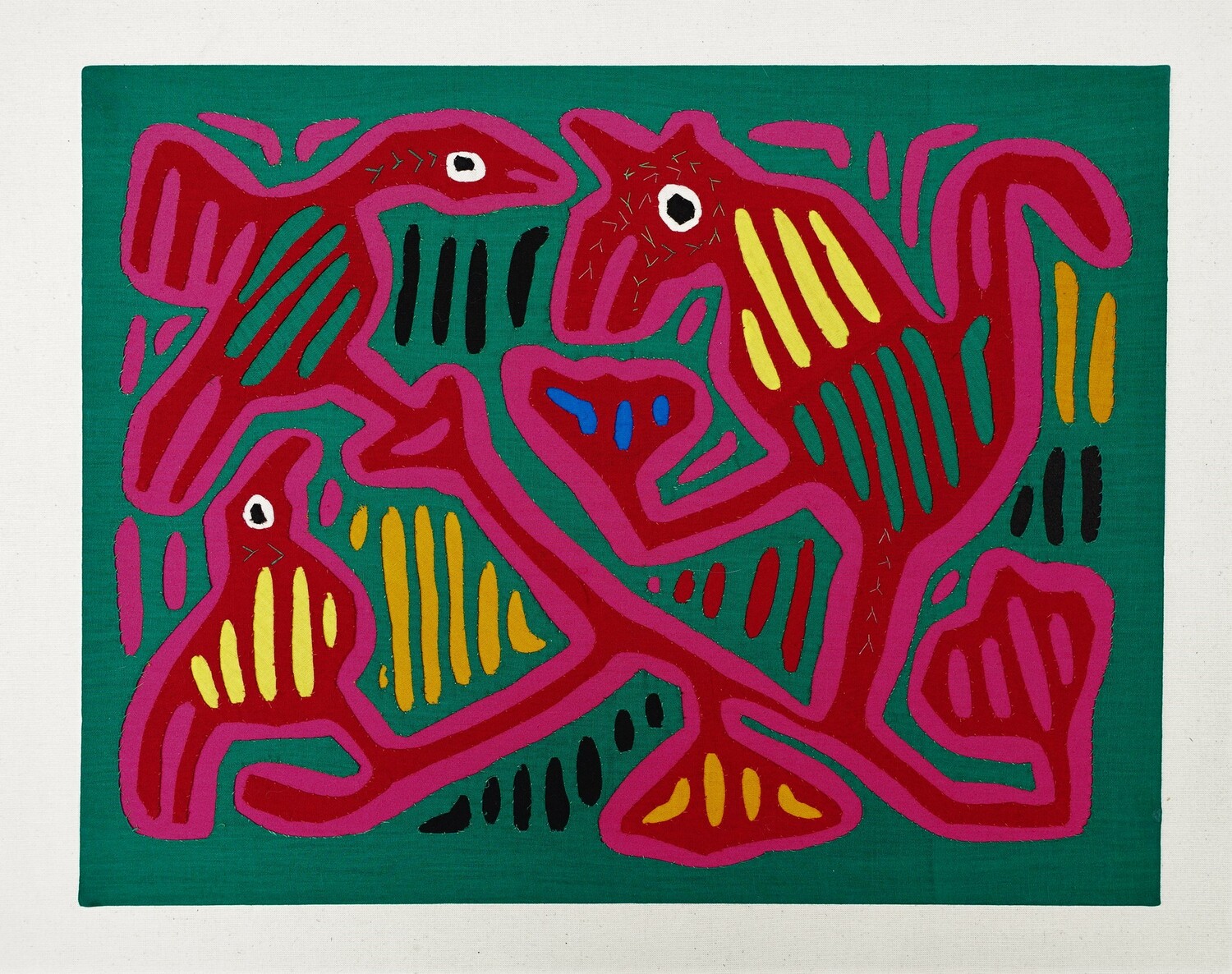 Late 20th century mola panel, Panama (TRC 2022.0278).The range of objects that we accept for our collection (by now including some c. 37,000 objects) reflects our approach to the subject. We collect textiles with a special story and a range of techniques, from wherever and whenever. Many people from all over the world are helping us in expanding our Collection and informing us about their history, their technique, and the materials involved. This is Citizen Culture at work!
This week, for example, a range of items were delivered personally, as well as via the post. They included a small group of Armenian needlelace samples (TRC 2022.0259 - TRC 2022.0268) that date from the 1920s and are indirectly linked to the Armenian genocide. One of our volunteers, Nelleke Granzevoort is going to make a mini-exhibition about these pieces and the technique of Armenian needlelace. Nelleke also donated a find from a charity shop, namely a small pin cushion (TRC 2022.0320) with ‘Welkom’ and 1850 spelt out in small, handmade pins. This type of cushion was often made to celebrate the birth of a baby.
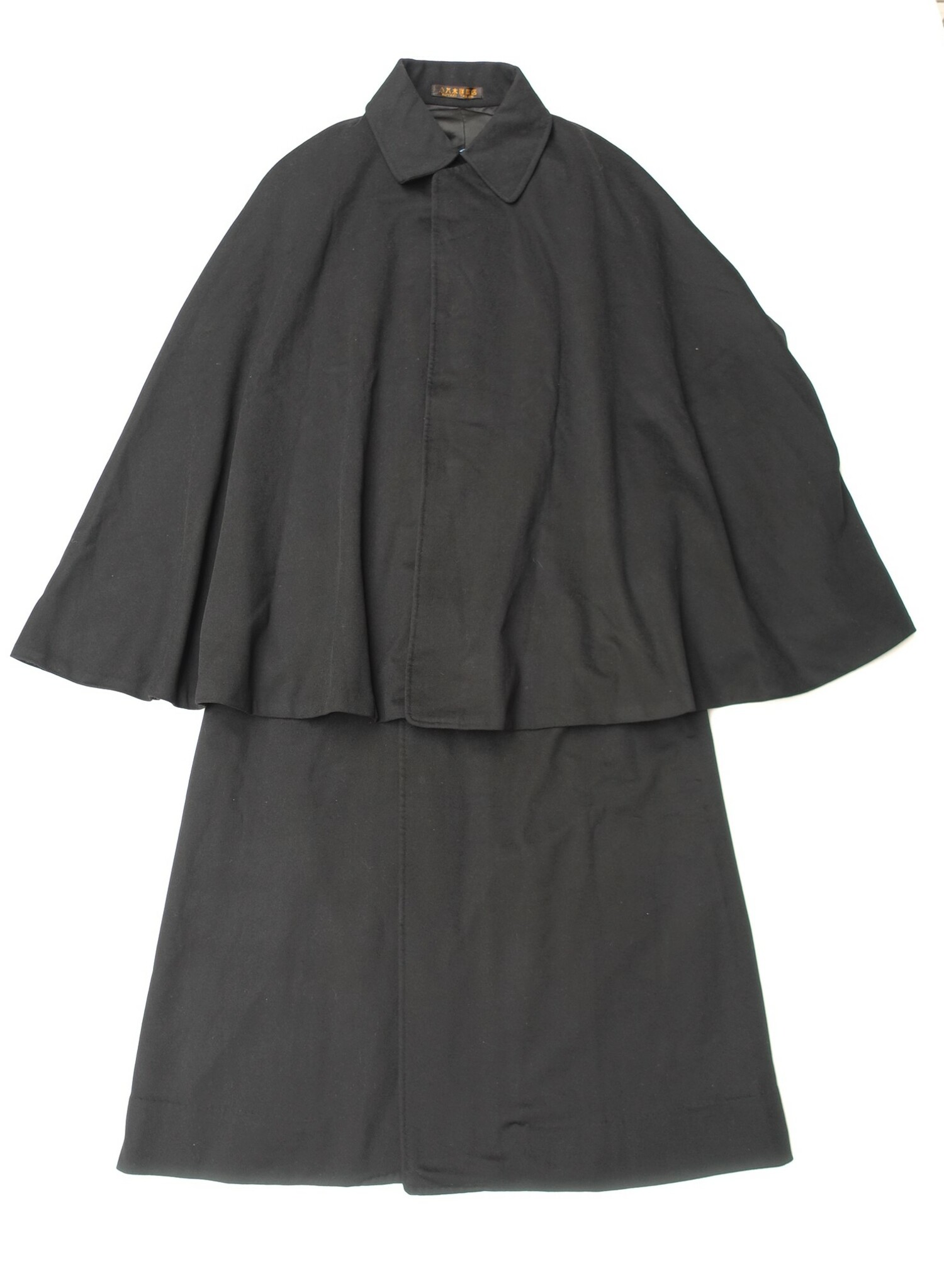 Inverness cape from Japan, with special accommodations for wearing a kimono underneath, 1960s-1970s (TRC 2022.0228).In addition, three 19th century garments (TRC 2022.0223 - TRC 2022.0225) and a belt (TRC 2022.0222) from Greece arrived as a donation from the Openluchtmuseum, Arnhem. This will contribute to our project on European regional dress – the only centre in Europe that is taking a full (as opposed to ‘simply’ looking at national/regional forms) view of this huge subject.
In doing so we are working, for example, with Osnabrück University to look at Dutch and German regional dress, and will shortly start a project with Eötvös Loránd University, Hungary, to look at the Hungarian regional dress. We are enormously helped with the collection of Hungarian and Romanian dress that will arrive from Paris at the TRC on Sunday (28th February) and has been the subject of various TRC blogs.
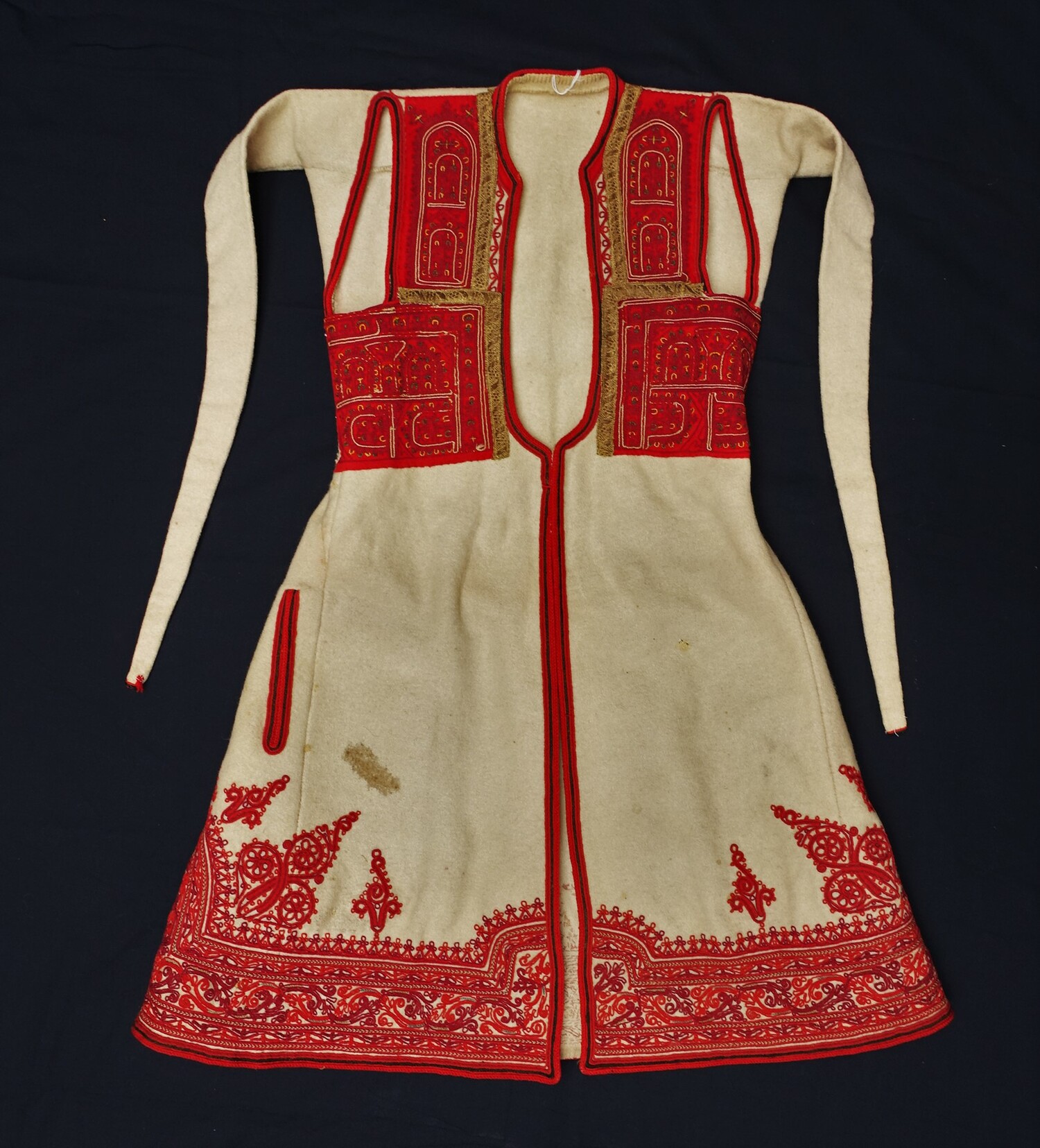 19th century coat from Greece with hand embroidery (TRC 2022.0225).Via the post came a box from Japan with items that will be used in a small exhibition opening shortly depicting Western influences on the designs used for Japanese textiles and garments. They included an Inverness cape (TRC 2022.0228), similar to that worn by Sherlock Holmes, that has been adapted to accommodate the much deeper sleeves associated with kimonos, as well as a girl’s kimono (TRC 2022.0229) with Mickey Mouse on it.
This week also saw the arrival of a small collection of molas (TRC 2022.0278 - TRC 2022.0287) from Panama that were acquired in the 1970s. They are worked in the reverse appliqué technique, in a range of colourful layers, and were given by a Canadian ‘textile sister’ Bettie Compeer. These pieces will be used in a pop-up exhibition at the TRC that opens in March, about the diversity of textiles.
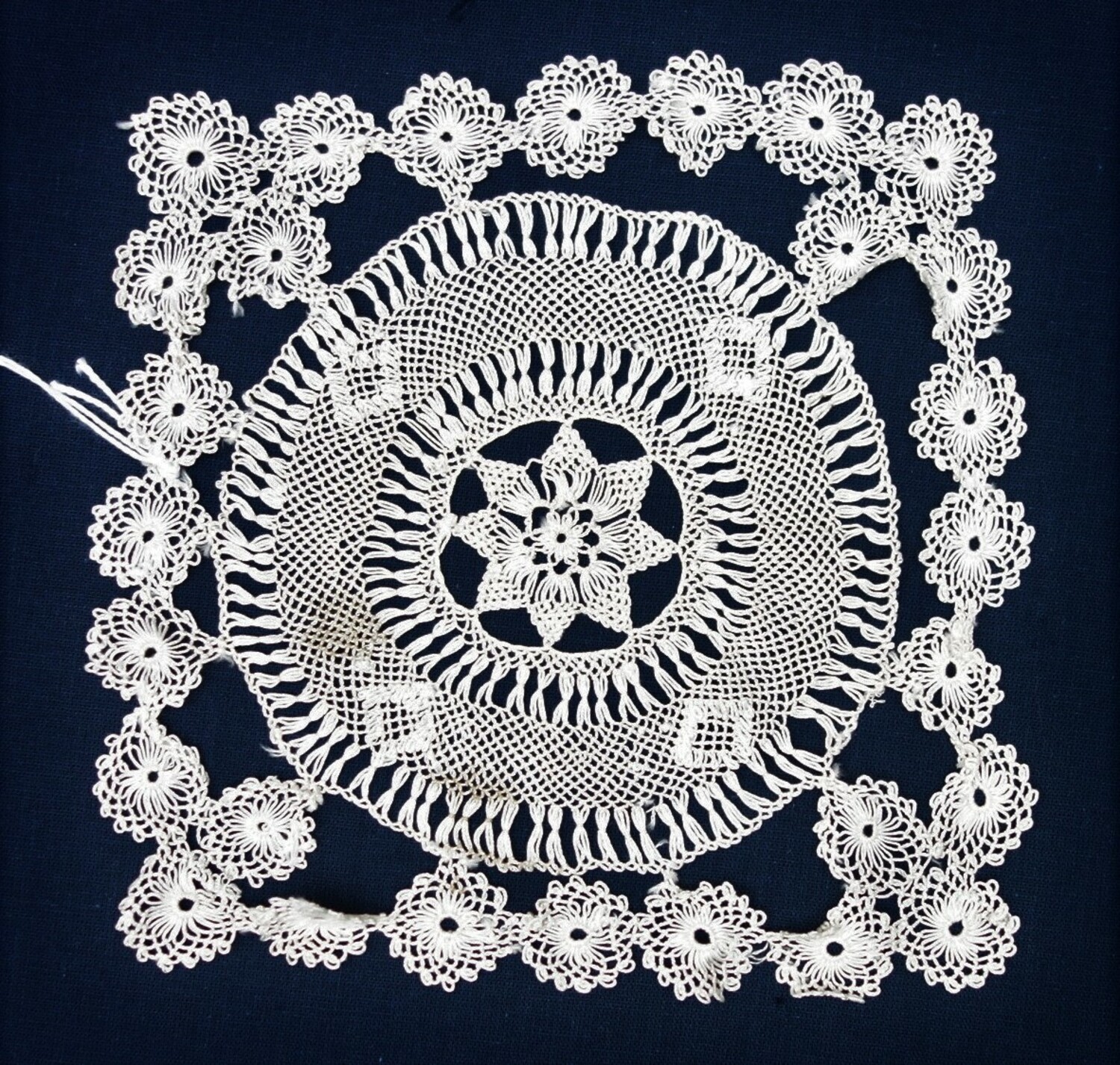 Doily made of Armenian lace, 1920s (TRC 2022.0260).On the same day a large box arrived from Los Angeles with Guatemalan and Mexican garments and textiles (TRC 2022.0288 - TRC 2022.0305) including some Mexican ikats that will be used in our forthcoming ikat exhibition (opening in September).
We have also been promised a reference collection of Indonesian ikats that reflect the main and minor types of ikats from this archipelago. These items will arrive next week. We will be using this collection to describe other items in our collection, make an online exhibition again with the idea of provenancing other examples of ikat. And of course some of them will be used in the TRC ikat exhibition opening in September.
And yes, space remains an ever constant challenge. In order to reflect the diversity of textiles and to pass on knowledge about the wide range of textile techniques and forms, we need much larger premises! If you can help financially please let us know. We can expand the TRC and make a wonderful institute with the help of one or more textile loving patrons!
Gillian Vogelsang, Director TRC, 18 February 2022