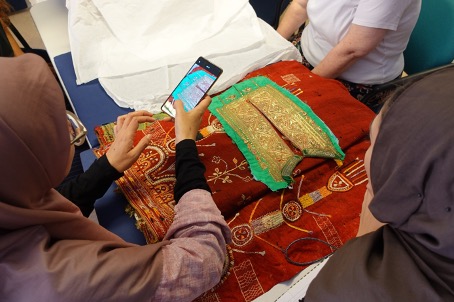
 A participant photographs a green front piece of a dress (TRC 2011.0036) on top of a red shawl from Tunisia (early 20th century) (TRC 2018.0276). Photograph by Christina de Korte.by Maria Linkogle and Christina de Korte, 25 September 2024.
“It was a beautiful day!” This is how the study day on embroidery from the Middle East and North Africa on 20 September 2024 was described by one of the participants and everyone present agreed.
There group of participants included two TRC volunteers, with the TRC director Dr. Gillian Vogelsang-Eastwood presenting. The size of the group made it possible to have a tailored experience in the realm of Middle Eastern and North African embroidery.
“How many different embroidery styles are there in the Middle East and North Africa?”
This was the first question posed. The answer: around 150 different embroidery types have been identified. We saw in an extensive presentation photographs of different stitches, including types of couching, chain stitch, cross stitch, satin stitch, but also of different patterns, colour combinations, materials (such as metal embroidery). In addition to the textiles and the embroidery techniques, we learned about the cultural entanglements and (historical) context in which some pieces were made and what to take into consideration when studying textiles from this area. After this introductory lecture, we had a lovely lunch and we had the opportunity to discuss what we had seen and heard.
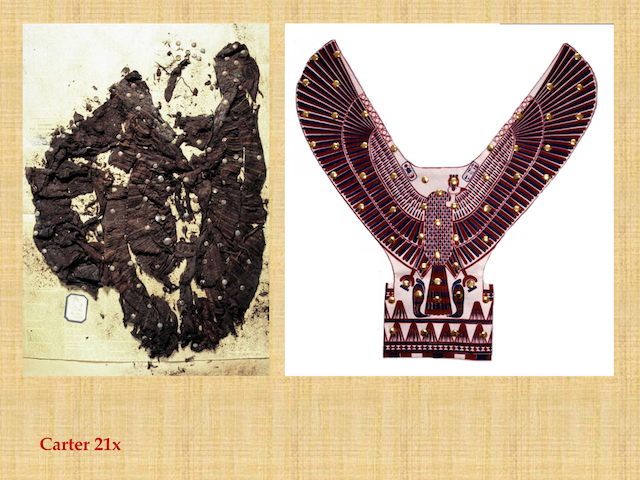 Photograph showing remains of one of the sleeve wings associated with Tutankhamun, and the reconstruction (right), by Gillian Vogelsang and Martin Hense, of the decorative pattern.
The textiles of Tutankhamun
The second lecture focused on the story of the textiles of the Egyptian pharaoh Tutankhamun, who died ca. 1323 BC. In his tomb were many textiles and garments, including wonderful examples of embroidered and appliqué pieces, which were highlighted in the presentation. Unfortunately, the textile items have received very little attention since their discovery, even though they made up the largest group of items in the tomb.
We learned about the intensive work done on the actual textiles by Dr. Gillian Vogelsang-Eastwood and her colleagues in order to decipher the design and colours over 3000 years old and used to create various replicas.
Boxes full of embroidery
After a short tour through the depot of the TRC, we turned to several examples in the TRC collection; from ancient pieces to more recent examples. The selected boxes contained examples from Tunisia, Palestine, Morocco, Yemen, Saudi Arabia, Jordan and Egypt. The first box included two embroidered textiles from the 5th/6th century AD, from Egypt.
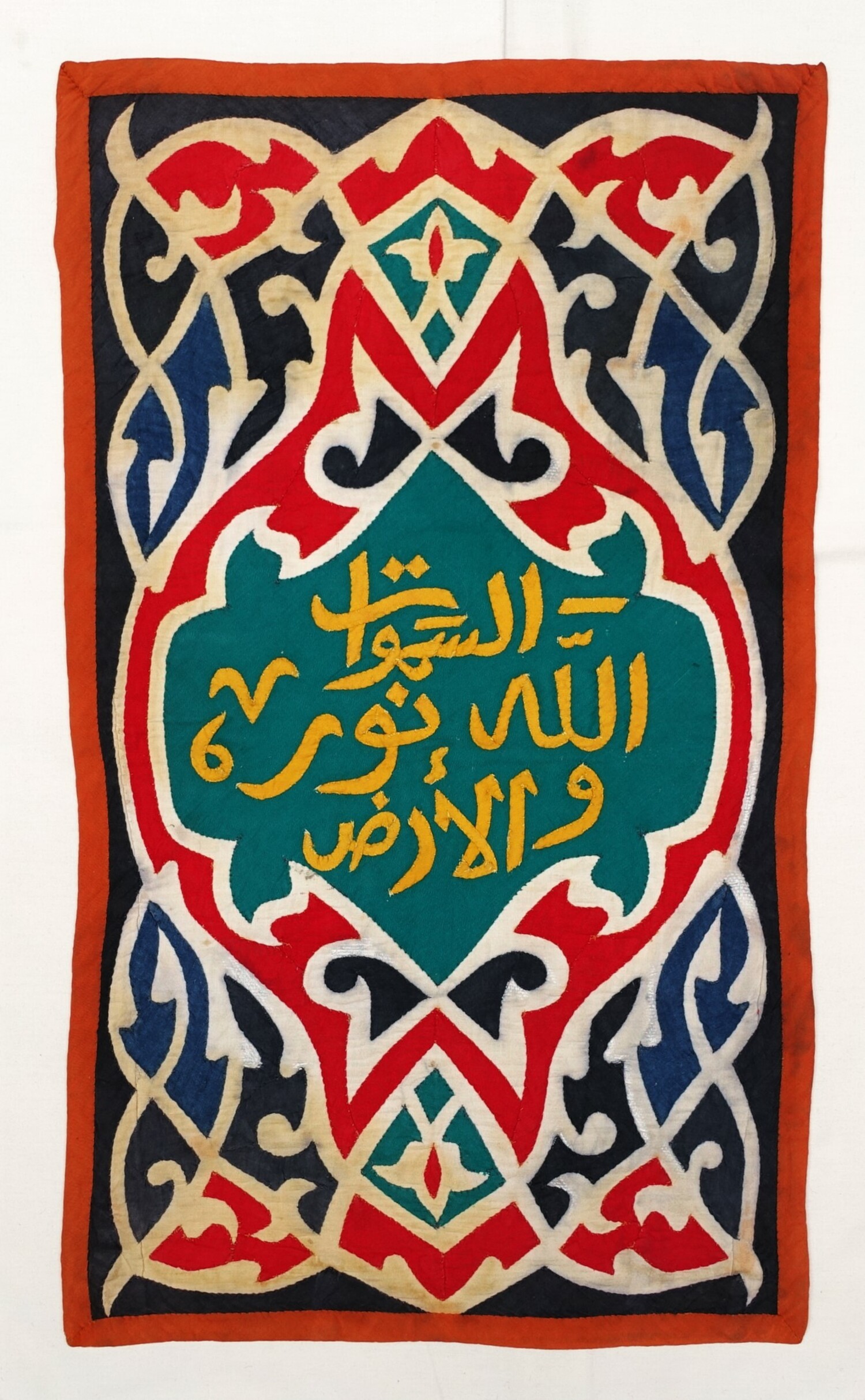
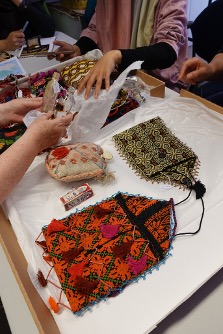 Various kohl holders from Jordan (1990’s) (Jordan 009). Photograph by Christina de Korte.More recent Egyptian examples included Egyptian appliqué, khayamiya, from the Street of the Tentmakers in Cairo. Two Arabic-speaking participants were able to fluently translate the Arabic calligraphy that was on one of the khayamiya pieces, namely: “God is the light of the heavens and the earth.” This is a wonderful example of how everyone’s input and skills during study days like these are of great value.
The following box included numerous colourful kohl holders from Jordan, mostly from the 1990s. Another colour explosion happened when a box with a bridal veil (troket) from the Siwa oasis in Egypt was opened. The veil was compared with other textile items from the oasis, which are famous because of their embroidery.
Gillian guessed correctly that we were not particularly familiar with Tunisian embroidered pieces, so we had a look at a box from Tunisia, with beautifully embroidered pieces. One of the highlights was an unfinished bodice, which made it possible to study closely how pieces like these are constructed. We ended our study day with several Palestinian dresses, including a flag dress.
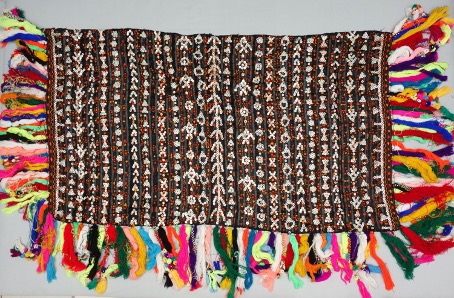 A bridal veil (troket) from Siwa, Egypt (Latter half of 20th century) (TRC 2017.2139).
All in all, it was an inspiring day for everyone, with a wide range of embroidery techniques, styles, and items. Stories and ideas were exchanged between the participants about their experiences and relations with embroidery. Furthermore, it is always exciting to get first-hand knowledge from someone who has seen and worked with many textiles, including the textiles from the tomb of Tutankhamun. Everyone would love to attend a Part Two on this topic!