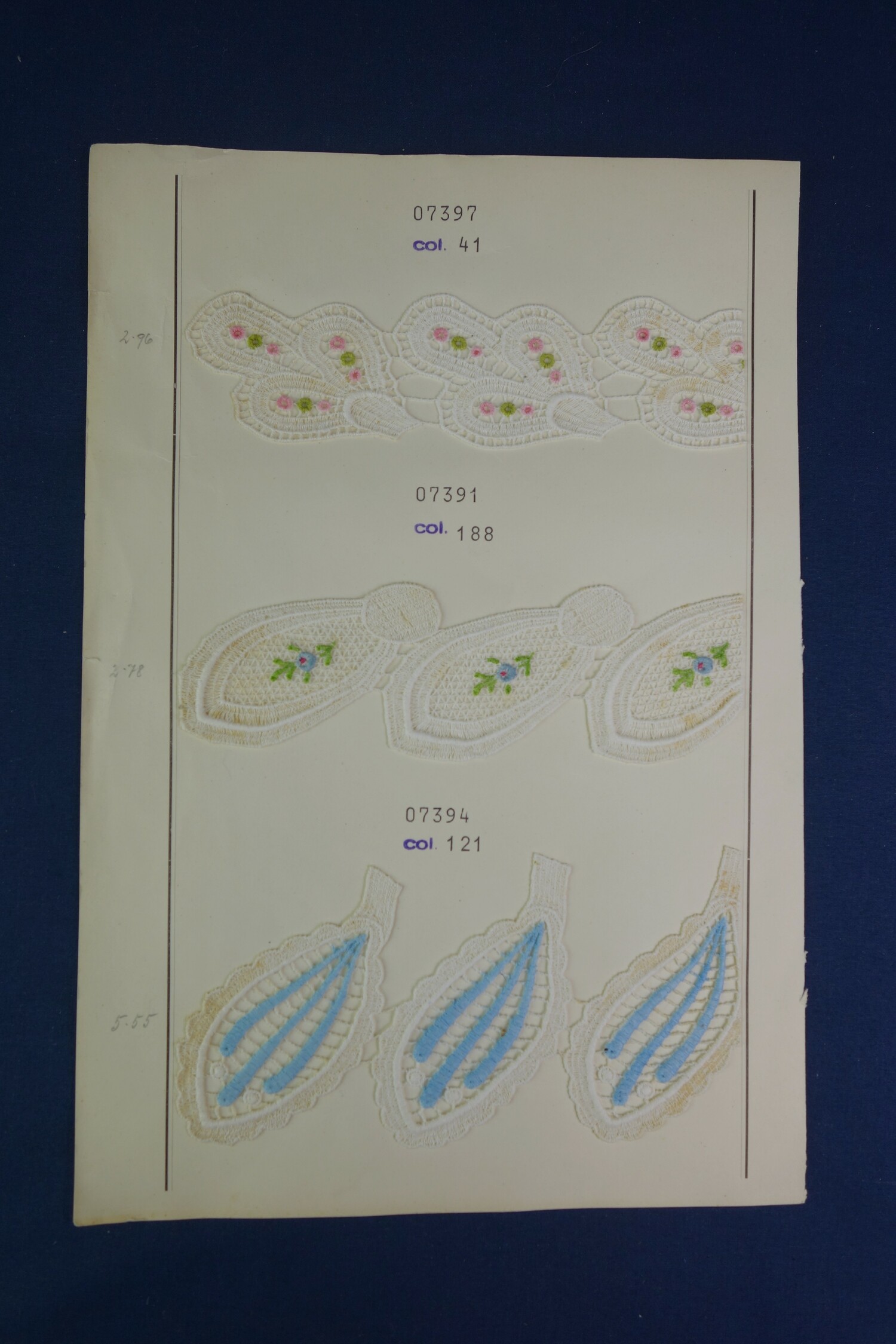
 Fig. 1. Card with samples of machine-made lace (TRC 2026.2987a).A few years ago the TRC received a large donation of textiles and related items from Hennie Stevan-Bathoorn and Sjoerd Stevan, who had run the former Museum voor Naaldkunst, in Winschoten, in the northeastern part of The Netherlands. We are gradually adding these items to the TRC Collection and among the most recent batch being processed was a folder filled with samples of machine embroidered lace, including insets, borders, edgings and collars (TRC 2026.2982 – TRC 2026.3007). The pieces were made by a German company in Ravensburg, Germany, founded by Franz Bartl (1875-1960). They date from the 1960s.
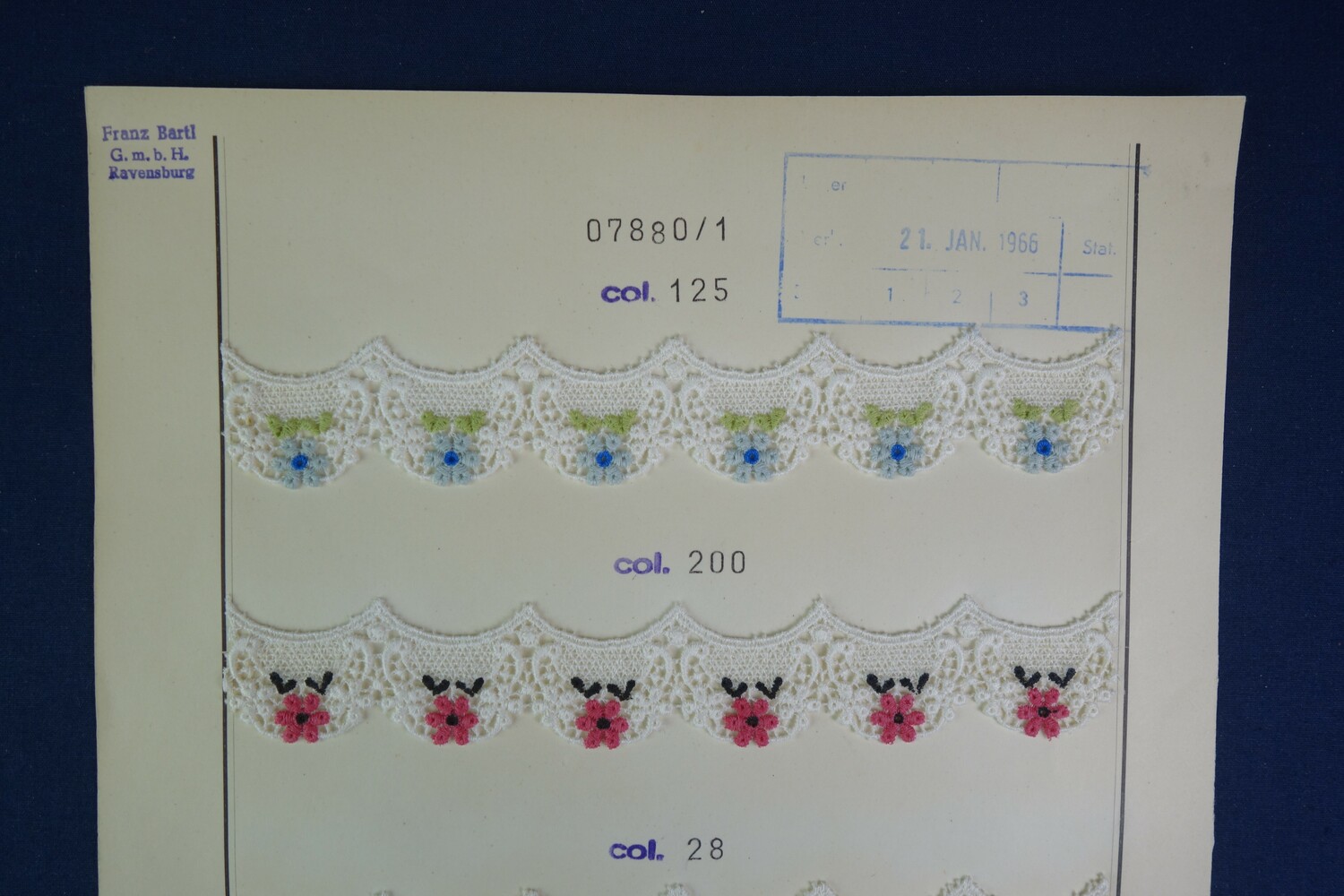
There are 121 samples that have been stuck onto card, with one to six samples per card (compare TRC 2026.2987a; Fig. 1). Each sample has a batch and colour number. Many of the sample cards also have the stamped address of Franz Bartl GmbH (later Bartl AG), as well as ‘Fraba’ (see below). In some cases, there are also the price of the lace per metre in German marks. In addition, one card (TRC 2026.2989a; Fig. 2) has the date stamped on it: 21 January 1966.
The company of Franz Bartl turns out to have a fascinating history that reflects various significant events that took place in Europe during the 20th century, especially with respect to the relationship between Bohemia, Germany, and what later became the Czech Republic.
Bohemia
Since about 1198, the Kingdom of Bohemia was part of the Holy Roman Empire and later the Austro-Hungarian Empire (the Habsburgs). Bohemia lies mainly in what is now the Czech Republic. By about 1800, 40% of the population of Bohemia were ethnic Germans and/or German speakers. Following the end of the First World War, Bohemia officially became part of Czechoslovakia under the Treaty of Saint-Germain. Much of the German-speaking population remained and prospered for the next twenty or so years.
In 1938 Nazi Germany annexed the border region (the Sudetenland) and created the Protectorate of Bohemia and Moravia. Following the collapse of Nazi Germany at the end of the Second World War, most ethnic Germans were expelled from Czechoslovakia, including those living in the town of Bärringen (see below), and resettled in Germany. At the same time, the names of many towns and cities were changed from German to Czech forms. The town of Bärringen, for example, was renamed Pernink.
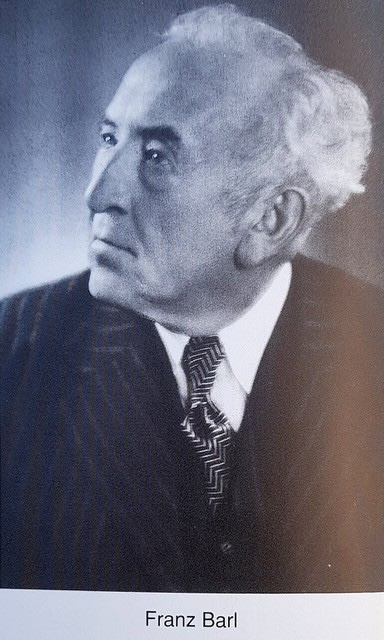 Franz Bartel (1875-1960).Meini, the Bartl company, Bohemia and Germany
The village of Bärringen was founded in the 16th century by a group of (German) miners who came to work in local silver and tin mines. Following the Thirty Years War (1618-1648), many of the Protestant miners subsequently left the region and apparently local economy became dependent on forestry and, later, textile production.
In the first half of the 19th century, a local man called Adalbert Meinl (1780-1844) established a textile factory in Bärringen that initially produced handmade lace and small woven textiles. He later developed the lace and weaving production to an industrial level. Following his death in 1844, his family continued to run and build up the company under the name of A. Meinl Erben and by the early 1860s they had built a large factory with mechanical looms, and in 1869 they introduced knitting machines. The company became known for the production of lace and other textiles that were sold in the Austro-Hungarian empire and other parts of Europe. As a result, Bärringen became known as a centre for the production of lace and other textiles, especially items such as sheets, tablecloths, etc.
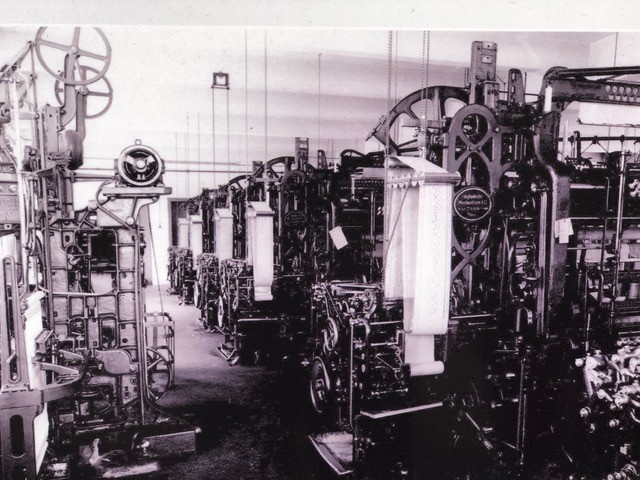 Fig. 4. The Bartl factory in Bärringen, before the war.In 1899 the flourishing industry in the region led to a railway station being opened in the town, so connecting the company with a much larger market of European cities and towns.
A few years later, in 1904, and making use of the trained local labour force, an ethnic German called Franz Bartl (Fig. 3) set up a competing, machine-made lace company in the same city (Fig. 4). He built it up to become a very successful company that thrived for the next three decades. Many of the products produced in his factory carry the name of 'Fraba', which stands for Fra-nz and Ba-rtle. It is worth noting that many of his laces now in the TRC Collection have this name ‘Fraba’.
Changes came in 1938 when the Germans took over the region and created the Sudetenland. During the early years of the Second World War the company of Bartl continued to produce a range of textiles and related items. In 1942, for example, Bartl bought a former bleachworks building in Ravensburg just over the border in Germany, with the idea of expanding his company, although for the time being he continued his production lines in Bärringen. However, in 1945, along with many other ethnic German nationals, the Bartl family was expelled from Bärringen (it became part of Czechoslovakia) and they moved to Ravensburg. His lace-making factory became one of the first companies to resume manufacturing items in Germany after the war. At its peak in the 1950s and 1960s, the Bartl company had 150 employees and shipped machine-made lace throughout Europe and other parts of the world (Fig. 5).
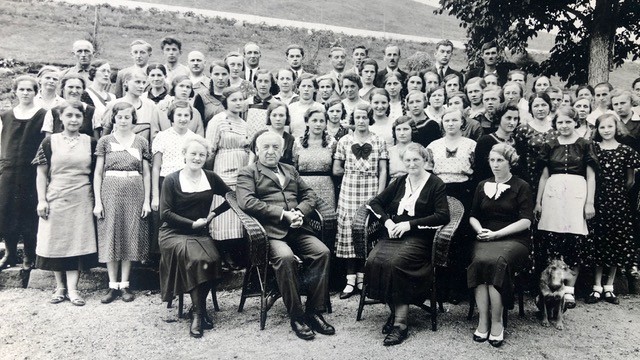 Fig. 5. Franz Bartl, his family and part of his workforce. Bärringen/Pernink, 1920s/1930s.
The company closed down in the 1970s as a direct result of the import of cheap, Asian textiles, notably from Japan, India and later China, which resulted in the decline of the European textile industry in general. This development that affected many towns and cities throughout Europe. On a personal note, the decline in textiles directly affected Bingley in West Yorkshire, England, where I grew up, as well as Leiden, here in The Netherlands, where I now live.
I would like to thank Wolfgang Eckhart, the grandson of Franz Bartl, for his help and support while writing this blog.
More information about the Bartl family and company can be found in: Wolfgang Eckhart, Die Spitzenfamilie. Der Fabrikant, der Stoff und die Pianist, Reisewolf-Verlag (2023; ISBN 978-3-00-074735-9).
Gillian Vogelsang-Eastwood, Director TRC, 28 November 2026.