TRC volunteer Shelley Anderson’s Textile Moment took place during a recent batik workshop in Yogyakarta, Indonesia: “Batik is everywhere in this city, which has been called the cultural heart of Indonesia. While the shirts and dresses used for daily wear are factory produced, the patterns are based on traditional batik designs. A popular downtown department store offers batik demonstrations and sells supplies; young fashion designers here and in the capital Jakarta incorporate batik into their work.
Batik comes from two Javanese words which translate as ‘to write dots’. This wax resist dye technique was used in ancient Egypt, in China and India, and in Africa. A pattern is first drawn on the fabric. The same pattern is then redrawn with hot wax, applied either with a canting (a small piece of wood with a metal container with a spout attached) or a metal block stamp called a cap. The fabric is then dyed until the desired colour or colours are reached. The wax is removed, either by brushing or by boiling the cloth.
While batik may not have originated in Indonesia, it certainly developed into a highly respected art in Java. A pattern is first drawn on the fabric. The same pattern is then redrawn with hot wax, applied either with a canting (a small piece of wood with a metal container with a spout attached) or a metal block stamp called a cap. There were special batiks used in ceremonies for mothers-to-be, for new born babies, for a ritual when a baby took its first steps, and for the dead. The patterns and colours used in a batik showed one’s ethnicity and status. Certain batik patterns were reserved exclusively for royalty—and royal batiks were among the goods thrown into volcanoes during ceremonies to prevent eruptions. In 2009 UNESCO declared Indonesian batik a part of humanity’s intangible heritage. This textile has quite a history!”
8 August 2015
Photos:
- Wife of the Sultan of Yogyakarta giving a speech dressed in batik.
- Examples of royal batik from the Kraton (Palace) in Yogyakarta.
- Batik demonstration at local department store.
- Batik supplies for sale in department store
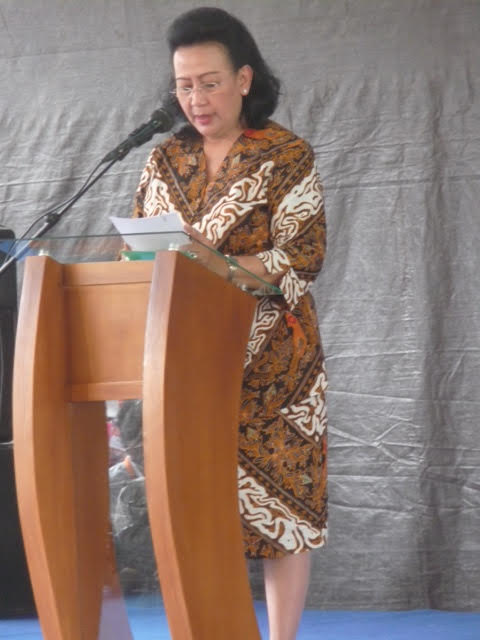 Wife of the Sultan of Yogyakarta giving a speech, dressed in batik.
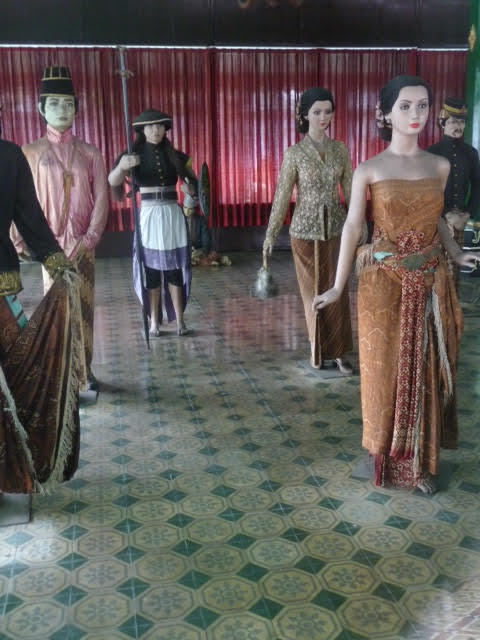 Examples of royal batik from the kraton (palace) in Yogyakarta
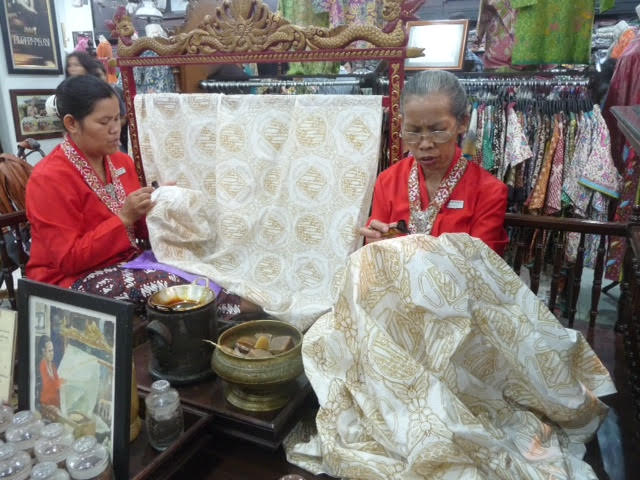 Batik demonstration at local department store
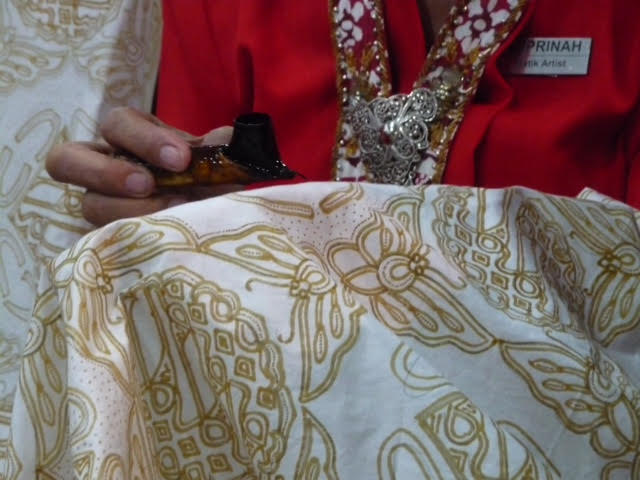 Batik supplies for sale in department store