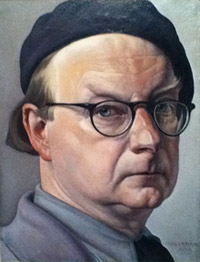
 Chris Lebeau, 1878-1945
The TRC has just been given a collection of textile books for its library. Among the many items was a thin booklet with the title, Catalogus van Lakens en Sloopen van E.J.F. van Dissel en Zonen te Eindhoven. The booklet dates from about 1911/12. The company of Van Dissel was set up in the early 1870s by the Rev. E.J.F. van Dissel, initially in the village of Bladel in the eastern part of the Netherlands and from 1873 it was established in nearby Stratum (near the town of Eindhoven).
From 1890 the company was run by other members of the Van Dissel family and it developed into a large linen concern that employed a number of famous Dutch designers, as well as hundreds of workers. Van Dissel fused with another Dutch company, Van den Briel and Verster (also known as the Koninklijke Eindhovensche Damast-Linnen & Pellen Fabriek), in 1963. The factory was closed in 1971.
The booklet given to the TRC is basically a sales catalogue of designs for hand and machine embroidery that could be worked on 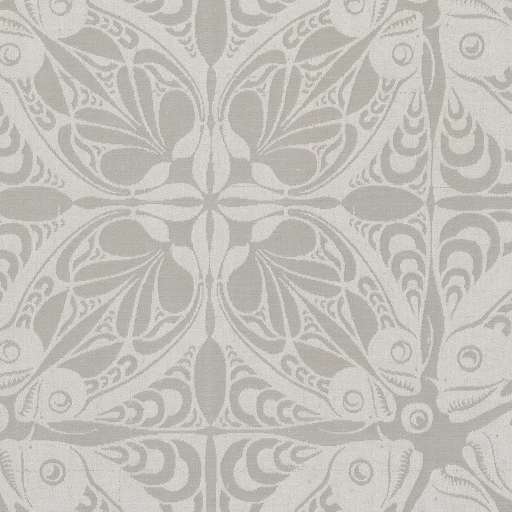 Napkins, with designs by Chris Lebeau.pillows and sheets intended to make up part of a bride’s dowry. There are over forty designs in the book that was intended to show how pillow covers and sheets could be used together to create various artistic scenes. There is also a section on monograms that could be worked by the company or at home.
The embroidery designs and illustrations in the sales catalogue were produced by the Dutch illustrator, painter and graphic designer, but also anarchist and vegetarian, Chris (Joris Johannes Christiaan) Lebeau (1878-1945). He worked for Van Dissel in the early part of the twentieth century. He also worked for a number of other companies, including those producing flags and banners, glass wear and graphic designs. Between 1926-1928, for example, he made wall paintings for the Old-Catholic Church (built in 1926; Zouterwoudsesingel 49), in Leiden. He even produced a series of Dutch stamps called the Vliegende Duif (“Flying dove”), which were available in the Netherlands from 1924, and which were again issued in 1941.
Lebeau was also famous for his graphic textile designs that were used for batiks, curtains and tapestries. But he was particularly known for his wide range of patterns for woven linen items, such as damask table cloths, serviettes, pillow cases and sheets. It is some of these designs that are illustrated in the catalogue.
Just before the beginning of the Second World War (1939-1945), Lebeau entered into a fake marriage with a German Jewish refugee in order to help her staying in Holland. During the war itself he used his artistic talents to create false identity papers for various people. He was arrested in November 1943 and sent to Dachau concentration camp where he died on 2 April 1945. American troops entered the camp on the 28th. An exhibition of Lebeau's work was set up in the Drents Museum, Assen, in 1987.
Gillian Vogelsang-Eastwood, 19 April 2016
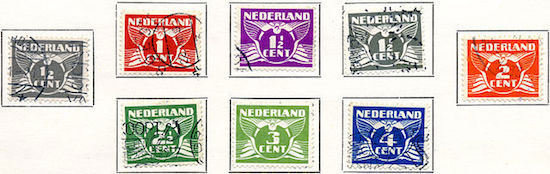 Dutch stamps (the Vliegende Duif series) designed by Chris Lebeau