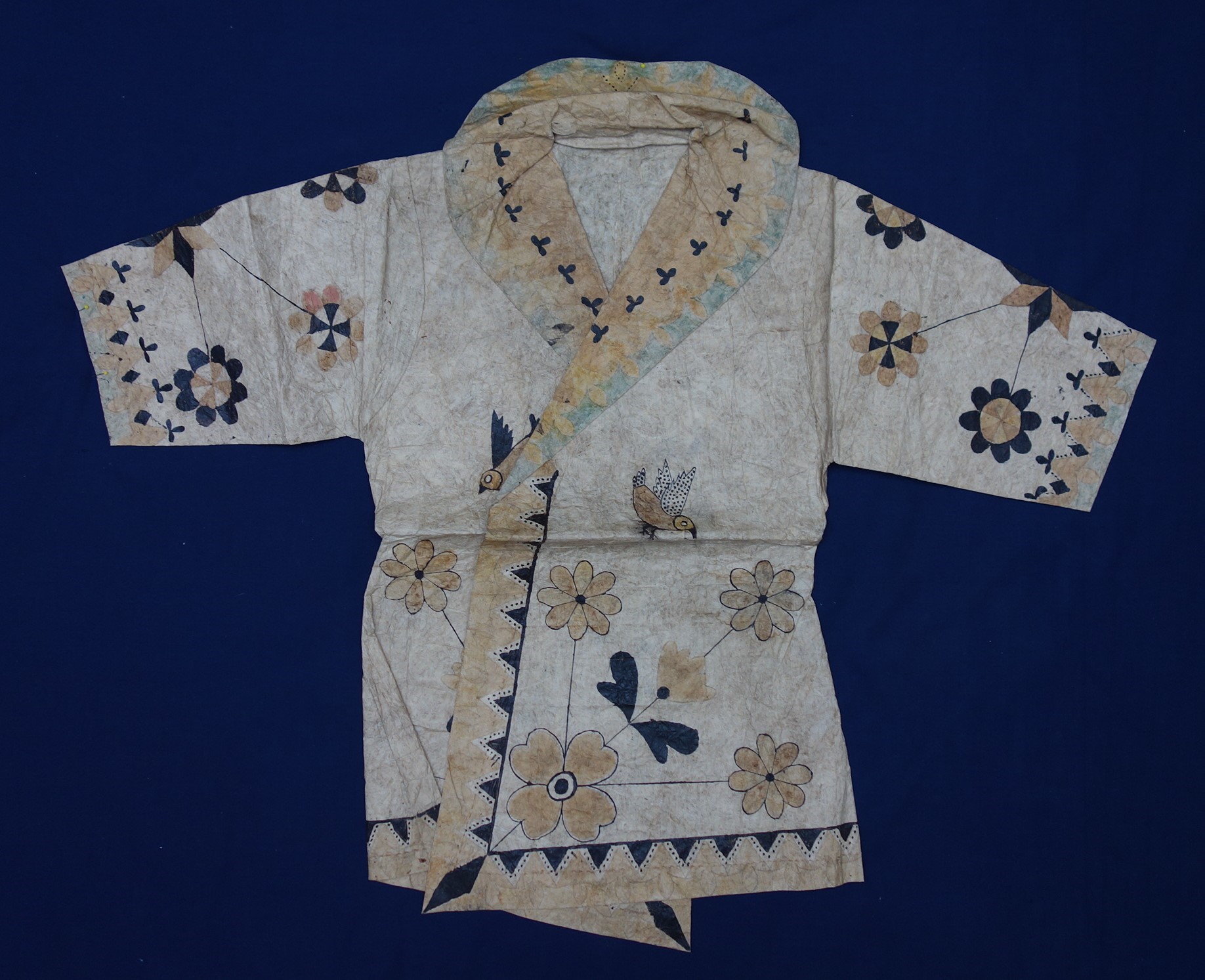
 Bark cloth garment from Sulawesi, Indonesia, c. 1945/1950 (TRC 2018.0042).It is only the third week of January, but we are already including some new and very diverse objects into the TRC Collection. The first few items include an original Gingham Girl cloth and notebook, both from c. 1925 and acquired in the context of the current exhibition at the TRC about feedsacks. The acquisition of these items means that we have an almost complete range of objects on display that really represent the fascinating history of the American feedsack.
We are also welcoming groups of quilters coming to the exhibition. They are especially attracted by the many quilts made from feedsacks, and their intriguing and colourful designs. So far, the 'Flying Geese' quilt seems to be the most popular. The exhibition can be seen until the end of June 2018. One the groups that we welcomed was actually a birthday party. Perhaps an idea for others?
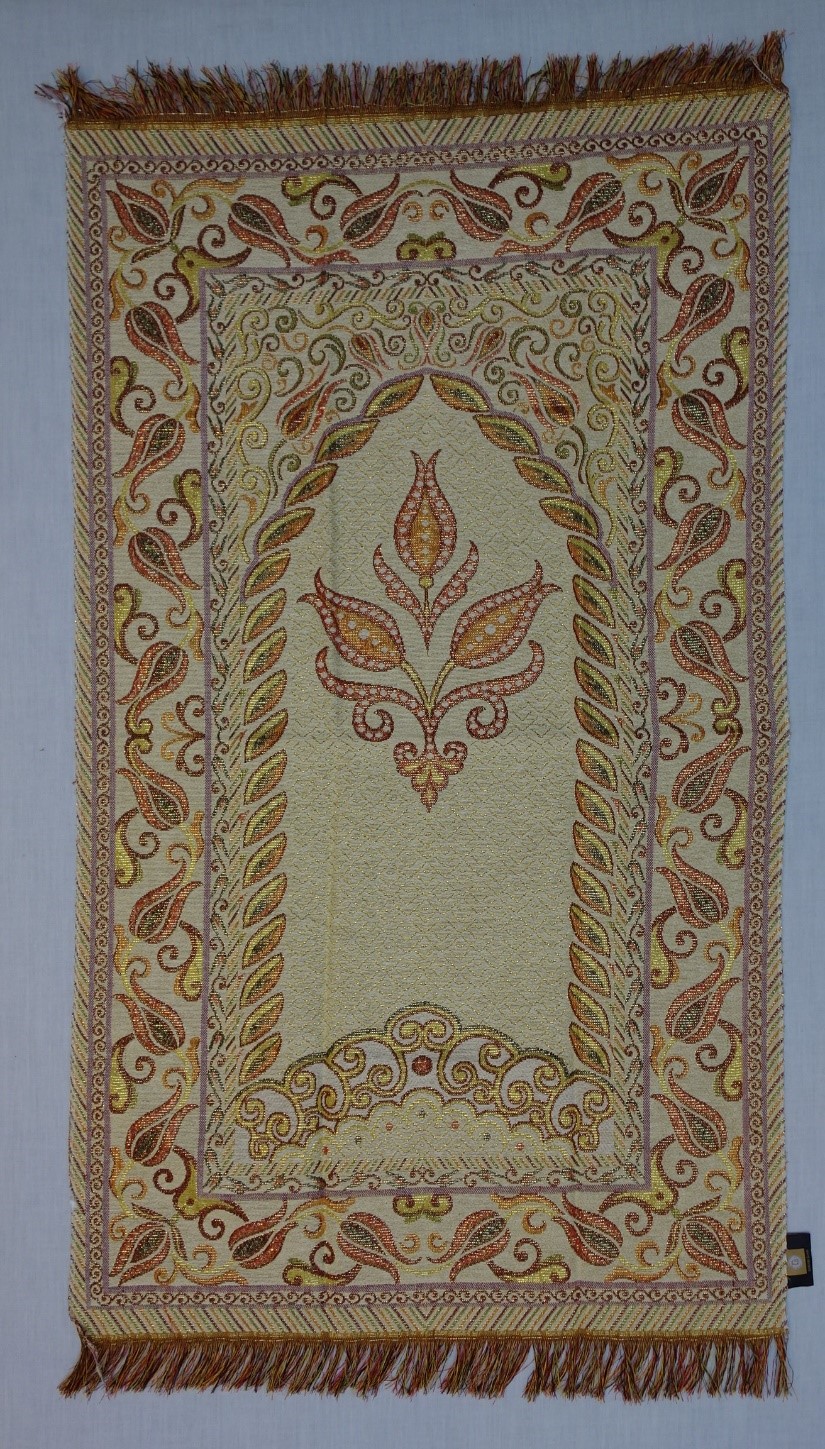 Woman's cloth for a Turkish woman, used for the Umrah pilgrimage to Mecca (TRC 2018.0038a).Another range of new acquisitons is equally fascinating. Mrs. E. Güney, a long-standing friend of the TRC who is very active within the Turkish community in Leiden, came to the TRC with various items relating to Turkish Muslim life, namely, Hajj and Umrah clothing for men and women, worn when on pilgrimage to Mecca. This set included two prayer cloths, prayer beads and books explaining how to perform the Hajj and Umrah, in both Arabic and Turkish. In 2017 she gave the TRC a range of cloths, soaps, perfumes, etc, relating to the burial of a Muslim. Over the next few years she wants to build up the Turkish collection at the TRC in order to represent this aspect of Turkish life in The Netherlands. The objects are donated in the name of the Stichting Güney, Leiden.
On Friday last (26th January) we were given five bark cloth garments that date from about 1945/1950. These come from eastern Sulawesi (Indonesia) and were given by the Van Strien family. They had initially been given to Mr. P.T. van Strien, who was appointed as a Dutch colonial administratior to the region in 1945. The garments include two sarongs, a blouse and a large roundel. All of these have been painted with stylised foliage, birds and geometric shapes, mainly in brown and black. Because of the Japanese occupation of the islands during the Second World War (1939-1945), there was an acute shortage of cotton material for clothing and many people were forced to wear bark cloth garments.
Gillian Vogelsang, Saturday 27th January 2018