• F3
  • F2
  • F1
  • F4

Cotton, hand-resist dyed blanket from Flores, Indonesia (TRC 2007.0636).Cotton, hand-resist dyed blanket from Flores, Indonesia (TRC 2007.0636).A blanket can seem a mundane article, designed solely to keep us warm. The TRC has numerous blankets in its collection, including a patterned Baluchi blanket (TRC 2001.0061) from Iran, a red felted blanket from the Netherlands (TRC 2007.0384) and an ikat blanket from Indonesia (TRC 2007.0636). These examples don’t include the dozens of Americans quilts, whose functional purpose is often overlooked today.

But blankets also have a symbolic function. “In the Coast Salish tradition, blankets are gifted to uplift the spirit, to honour the strong or to protect the vulnerable,” Canadian artist Cary Newman explained. The Coast Salish are a diverse group of indigenous people who live in Pacific Northwest of Canada and the US.

Addoley Dzegede.Addoley Dzegede.As part of strengthening the position of the TRC as a hub for textile studies and technical skills the TRC has started a new rubric and display theme – namely the ‘TRC Spotlight’. This is a means of highlighting a particular textile, technique or textile artist/craft person.

We are using part of the workroom for this display and it includes a dedicated showcase and various panels to spotlight different stories and themes. Each display will be on view for up to two months. There will also be a digital version that can be enjoyed by a wider audience online.

The first TRC Spotlight pays attention to the American-Ghanian textile artist, Addoley Dzegede, who recently presented at the TRC several workshops and lectures about West African wax resist techniques. Various examples of Addoley’s work are currently on display.

For many years there has been a textile market along the banks of the Rijn (Rhine) here in the historic centre of Leiden. It is held twice a year and there are about forty stalls of varying sizes selling a wide range of cloth, knitting yarns, as well as haberdashery in the form of needles, pins, threads, buttons and zips.

The market did not take place during the various covid lockdowns and I did miss it! Today (Sunday 30th October) it was there again! The weather was glorious and all the cafes along the river were open so it was possible to order tea, coffee and an appelgebak (apple tart), and sit by the waterside surrounded by textiles. Bliss.

The Leiden Stoffenmarkt, 30 October 2022The Leiden Stoffenmarkt, 30 October 2022

Volume 1: Encyclopedia of Embroidery from the Arab World.Volume 1: Encyclopedia of Embroidery from the Arab World.I thought you might be interested in having an update on the Bloomsbury World Encyclopaedia of Embroidery series, which is based at the TRC Leiden and uses a growing number of examples from the TRC Collection for research and illustrative purposes. Outside support for the work involved in these volumes is increasing and coming from both official and ‘ordinary’ sources, making this a unique reference series.

Volume 1: Encyclopedia of Embroidery from the Arab World came out in 2016 and looks at embroidery from Morocco to the Arabian Peninsula and Iraq. This book won three international awards, including the prestigious Dartmouth Medal (2017), which is organised by the American Library Association. As pointed out by Widad Kawar (Amman), one of the Grand Dames of Palestinian and related textiles and garments, it is also the first Middle Eastern embroidery book to have a piece of Jordanian embroidery on its cover.

October is LGBTQ+ History Month and the TRC was recently given a cheeky textile memento of American lesbian life (TRC 2022.2570).

The object is a square-shaped appliquéd panel, approximately 48 cm x 38 cm, with a plain white backing. The front depicts a beach scene. Five couples are kissing and cuddling on beach towels, under big umbrellas. Strewn around them are four palm trees (including one with coconuts), sandals, bags and a beach ball. There are mountains in the background, birds in the sky, and a bright yellow sun.

Appliqué cloth from Hawai'i, early 2000s (TRC 2022.2570).Appliqué cloth from Hawai'i, early 2000s (TRC 2022.2570).

We also see the upper torsos of six figures swimming in the sea, and another two in sailboats. All the figures are nude and female, judging by their breasts and long, yarn-like hair. Care has been taken to show some individuality, as there are different hair and skin colours.

This appliqué, according to the donor, was purchased second-hand in Honolulu, Hawai’i (USA) in the early 2000s. The donor further said that the textile was made to commemorate Sandy Beach in Honolulu, where lesbians gathered every Sunday for many years in the late 1990s to at least 2010. Hawai’i, a Polynesian archipelago in the Pacific Ocean, has been a very popular tourist destination for decades. Honolulu is the state capital and port of entrance for most tourists.

Waikiki is the most popular, thus famous, beach near Honolulu. Given the fact the figures are nude, which is generally illegal on American beaches, and the affection the couples are expressing, it’s possible this is a private, women-only, beach.

Arpillera from Chile, 2015, Made to mark the disappearance of Chilean men and women (TRC 2015.0401).Arpillera from Chile, 2015, Made to mark the disappearance of Chilean men and women (TRC 2015.0401).

The panel’s appliqué style is reminiscent of arpilleras from Chile (compare TRC 2015.0401). Both examples use appliqué, including small, three dimensional cloth dolls; are made from scrap fabric; and show normally invisible scenes from women’s lives.

In Chile, arpilleras were made by women, and while the maker of the lesbian panel is unknown, it was likely made by a woman, too. In the case of Chilean arpilleras, the makers showed scenes of human rights violations by the Pinochet military dictatorship (1973-1990). Smuggled out of Chile, arpilleras raised international awareness of the dictatorship’s abuses—which is why it was made illegal to own or publicly show arpilleras inside Chile.

Chilean arpilleras made during the dictatorship had a political message. While the scene depicted on the appliqué from Hawai’i is far more playful, the fact that it portrays lesbians enjoying themselves without shame or secrecy is also political. It is a statement of visibility and pride by a minority whose lives are still criminalized in many countries.

You can see more textiles about LGBTQ+ lives in the TRC’s digital exhibition Rainbow People.

Shelley Anderson, 24 Octobeer 2022

Can you believe it? Neither could we!

Obverse of paper 50,000,000 mark banknote, Bielefeld, Germany, 1923 (TRC 2022.2255).Obverse of paper 50,000,000 mark banknote, Bielefeld, Germany, 1923 (TRC 2022.2255).

We sometimes talk about the 'TRC effect', whereby the things we wish for tend to come through the door in a matter of days. Well, the fifty million was certainly on our wish list for some time. And there it was, in a fashion, on paper. And have you ever seen legal tender made from embroidered silk or printed linen before?

I feel exhausted! Last Monday, 3 October, people in Leiden celebrated the lifting of the Spanish siege of Leiden in 1574. A week before Willem and I attended a big gala in the Pieterskerk, and for the weekend of 1-3 October there was a large fair in Leiden, a parade, and lots and lots of people from all over the Netherlands and elsewhere. And I also experienced another feature of the Leiden fair – a flat tyre on my bicycle due to the broken glass (mainly beer glasses) that was all over the place….

TRC book fair, 8 October 2022TRC book fair, 8 October 2022

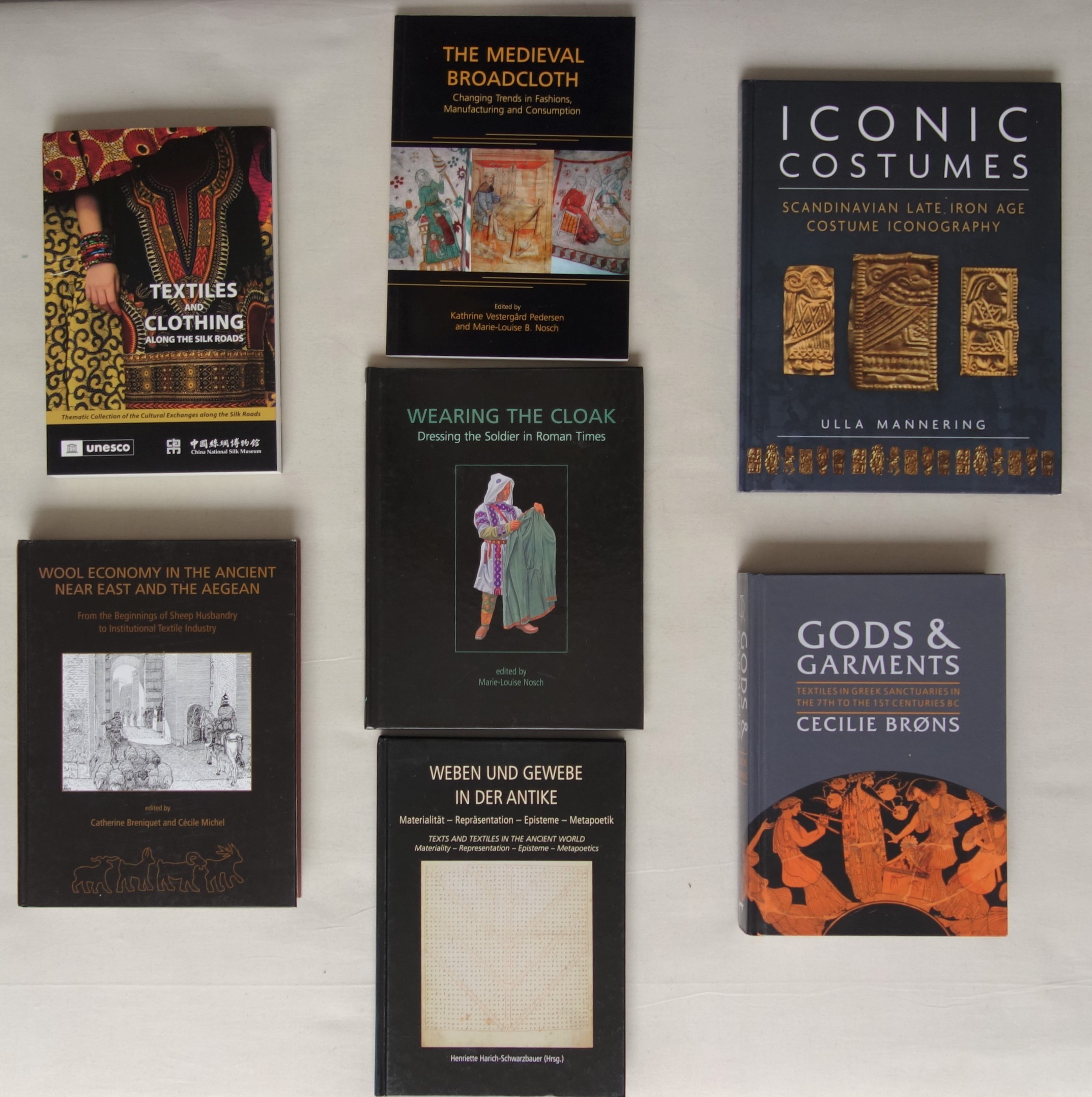
Tuesday saw the TRC preparing books and magazines for the textile book sale held on Saturday, 7 October, which we had promised would include at least 400 textile and dress books. It took a lot of work to sort, sticker and box the books and we were feeling very proud of ourselves until we discovered a couple of other boxes of unsorted books!

It is noticeable from the increased number of emails and phone calls that word about the work, collection and courses associated with TRC is rapidly spreading both nationally and internationally. The diversity of what we do and the wide range of backgrounds of those who reach out to the TRC is a sure sign we are doing something that is needed!

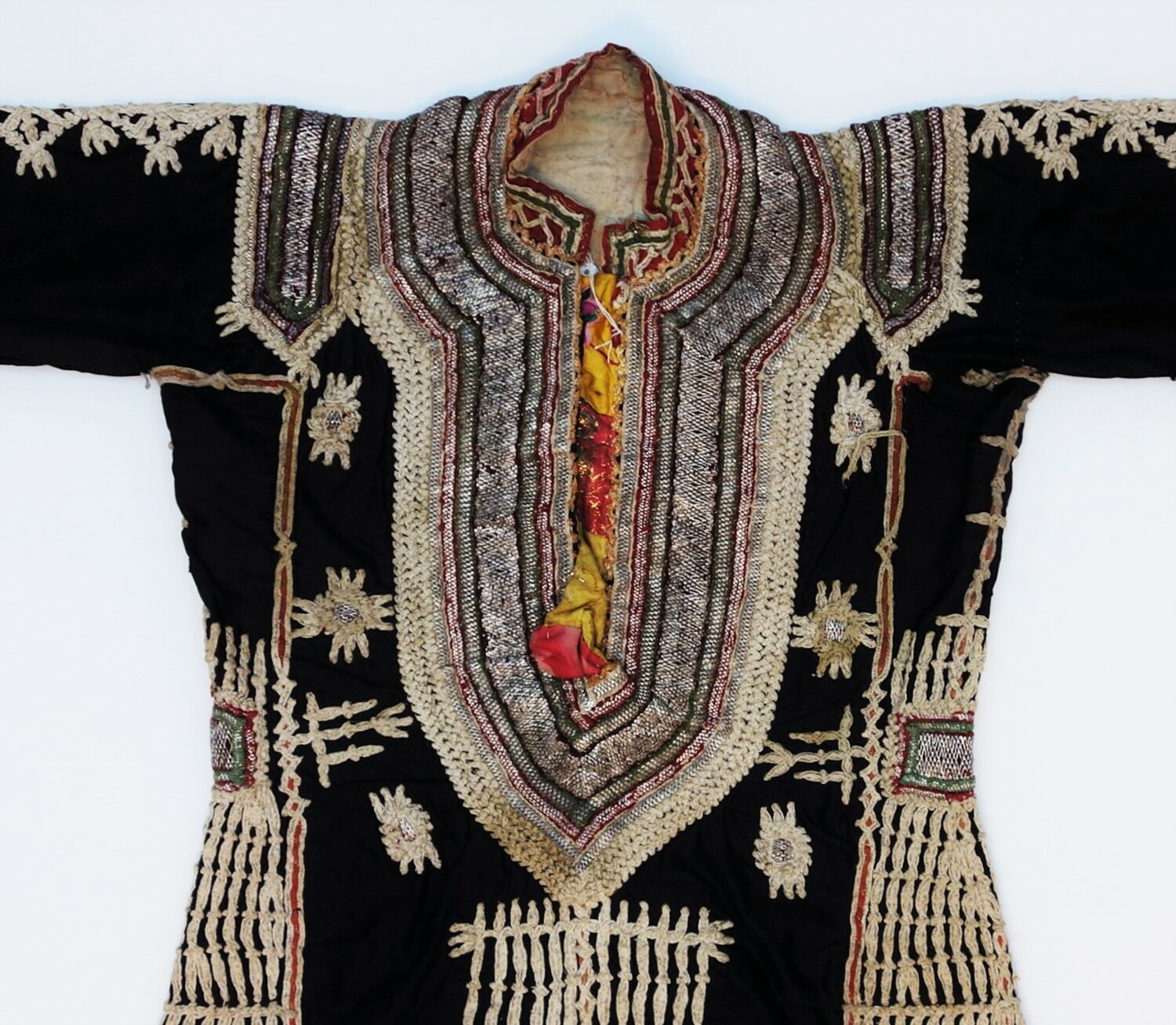
Detail of an embroidered dress from northern Jordan (TRC 2005.0078).Detail of an embroidered dress from northern Jordan (TRC 2005.0078).

Zoek in TRC website

Contact

Boerhaavelaan 6
2334 EN Leiden.
Tel. +31 (0)6 28830428  
office@trcleiden.org

Het TRC is elke dag geopend tussen 10.00 en 15.00 uur.

facebook 2015 logo detail


instagram vernieuwt uiterlijk en logo


Bankrekening

NL39 INGB 0002 9823 59, t.a.v. Stichting Textile Research Centre.

Financiële giften

Het TRC is afhankelijk van project-financiering en privé-donaties. Al ons werk wordt verricht door vrijwilligers. Ter ondersteuning van de vele activiteiten van het TRC vragen wij U daarom om financiële steun:

Giften kunt U overmaken op bankrekeningnummer (IBAN) NL39 INGB 000 298 2359, t.n.v. Stichting Textile Research Centre. BIC code is: INGBNL2A

U kunt ook, heel simpel, indien u een iDEAL app heeft, de iDEAL-knop hieronder gebruiken en door een bepaald bedrag in te vullen: 


Omdat het TRC officieel is erkend als een Algemeen Nut Beogende Instelling (ANBI), en daarbij ook nog als een Culturele Instelling, zijn particuliere giften voor 125% aftrekbaar van de belasting, en voor bedrijven zelfs voor 150%. Voor meer informatie, klik hier