(by Minsook Kang, 14 October 2026) When preparing a mini exhibition at the TRC (click here), a selection of Buton sarongs was brought together to explore the sarong as a form of embodied and transmitted knowledge. This blog introduces the exhibition put together by Minsook Kang, TRC intern and provides deeper context concerning Buton sarong traditions - tracing how patterns, motifs, weaving practices, and memories are transmitted across generations through speech, observation, and the hands. Rooted in a strong oral tradition, the sarong emerges as a living textile language, shaped by everyday life, nature, and generations of makers.
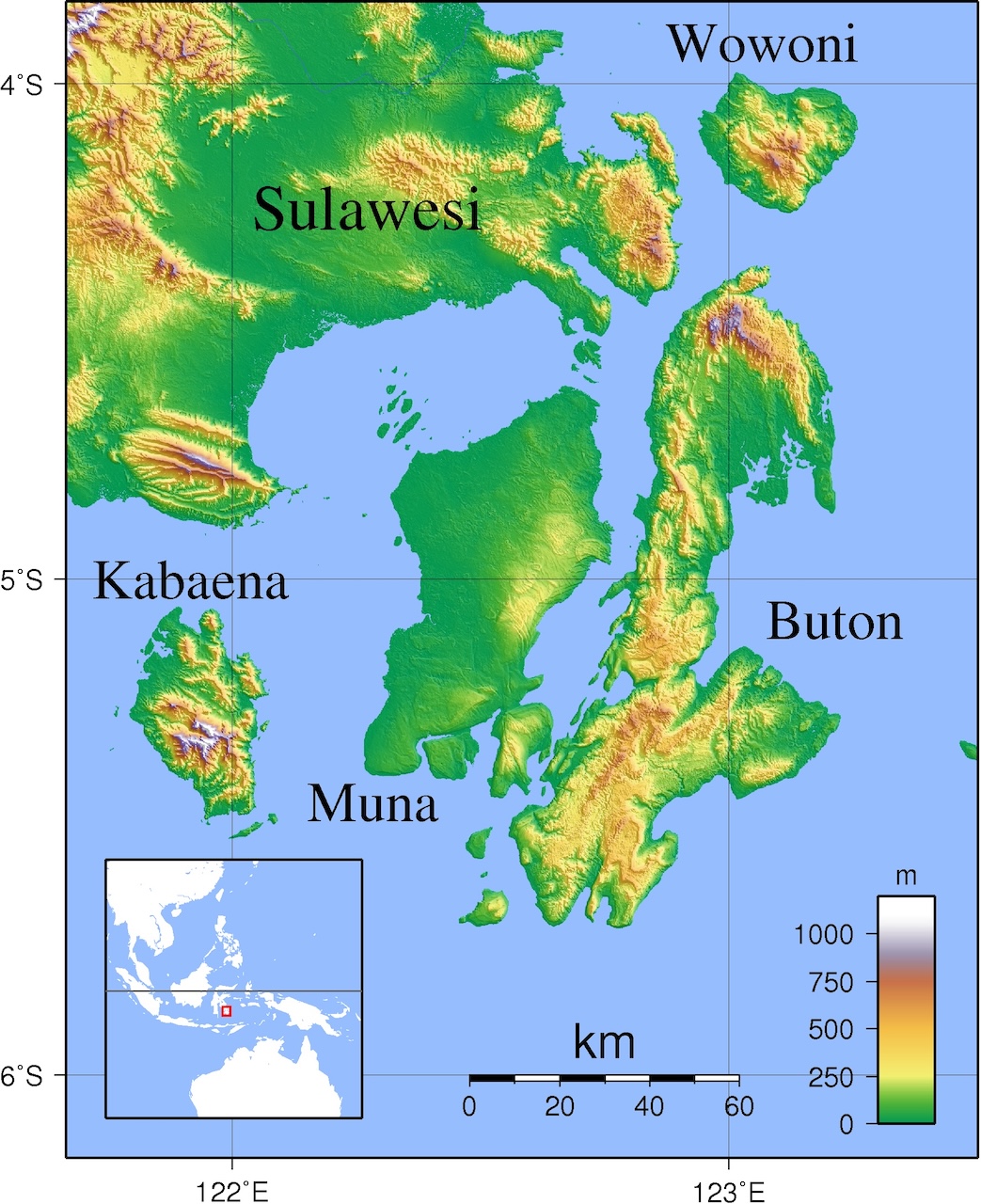 Fig. 1. Map of Buton Island, Sulawesi, Indonesia.Minsook Kang is a visual artist and researcher currently studying Textile and Text (TXT) at the Gerrit Rietveld Academie in Amsterdam and working as an intern at the Textile Research Centre (TRC). Her practice explores stories, memory, and embodied knowledge through forms of care, attention, and material engagement, working across textiles, moving image, installation, and publication.
Buton sarongs and the “Language of Hands”
This mini exhibition showcases Indonesian TRC textiles and links them with a project called Native Tongue, bringing together the oral language of the Cia-Cia indigenous community in Baubau, on Buton Island in Southeast Sulawesi, Indonesia and the textile traditions of the Buton region.
Native Tongue began with the story of the Cia-Cia language and the adoption of Hangul, the Korean alphabet, as a writing system in 2009, in an effort to support the preservation of a predominantly oral language. When I first encountered this story, I was interested in the relationship between oral language, writing, and cultural preservation. However, after visiting Buton Island, I began to realise that the narratives I had encountered from outside the region could not fully describe the complexity of its linguistic and social realities.
During my visits, I encountered language being lived in many different ways, through conversations, songs, prayers, stories, and everyday interactions. This gradually shifted my research. I became less focussed on documentation alone and more interested in how knowledge, memory, and cultural practices are transmitted through the body.
This led me towards Buton’s textile traditions, particularly the Buton sarong, a large length or tube of fabric wrapped around the waist and worn as a skirt or lower-body garment. Through conversations with local residents and weavers, I observed weaving processes and listened to stories about particular patterns and motifs. I began to realise that the names and meanings of these motifs were not always something that could be traced through written sources. Instead, they often existed in people's memories and continued to circulate through conversation and practice.
For this exhibition, I therefore approach these stories not as fixed or definitive historical facts, but as forms of living oral knowledge that I encountered during my fieldwork. I wanted to bring together objects from the TRC collection with sarongs that I encountered and collected during my fieldwork in Buton, and to explore what they might reveal about nature, memory, everyday life, and what I have come to call the “language of the hands.”
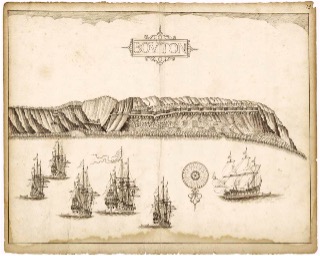 Fig. 2. Dutch ships in the roads of Baubau, Buton,1650. Retrieved from: https://vocwreckssulawesi.wordpress.com/otter/
Indonesian textile culture and the historical crossroads of Buton sarongs
Indonesia is home to an extraordinary diversity of islands, communities, languages, and textile traditions. Travelling through Buton, I became increasingly aware of how this diversity is also connected to a much longer history of movement and exchange. Within this landscape, Buton occupies a distinctive position within the maritime history of Southeast Asia. From the sixteenth century onwards, Baubau, the centre of the Sultanate of Buton, developed as an important node within maritime trade networks connecting different parts of Southeast Asia and the wider Indian Ocean.
Spices, weapons, textiles, and other goods travelled through these networks, bringing different cultural influences into contact with local traditions. Buton also had complex relationships with the Dutch East India Company (VOC) and later colonial authorities (Fig. 2).
At the same time, I was struck by the long history of textile production on Buton itself. One important example is the Kampua, a woven textile that was historically used as a form of currency (Fig. 3). It circulated as a medium of exchange for centuries before its official use as currency was discontinued in the nineteenth century. The history of the Kampua shows how closely weaving was connected to the economic and social life of Buton.
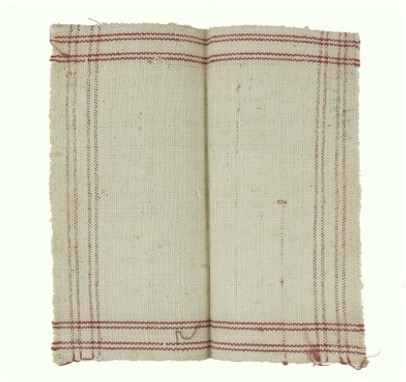 Fig. 3. Kampua textile from the Wereldmuseum collection, Rotterdam. Retrieved from: https://collectie.wereldmuseum.nl/#/query/fbc3d370-319d-4d3f-8fc7-0d2bef9780a7Yet despite this history, I found that Buton textiles have received relatively little attention compared with textiles from other Indonesian regions. Even within international textile collections, including the TRC collection in Leiden, textiles from Sulawesi regions such as Toraja are much more extensively represented and documented than those from Buton.
Sarongs and motifs: Translating everyday life, religion, and nature
The sarong is widely worn across Southeast Asia, but during my time in Buton I came to understand that it carries meanings beyond its function as clothing. It is a practical garment that protects the body from the intense tropical sun, but it is also closely connected to everyday life and religious practice.
When the call to prayer (Adhan) marks the rhythm of the day, people wrap themselves in a sarong before joining prayer. For men, particularly when attending Friday prayers at the mosque, the traditional sarong remains an important part of dress (Fig. 4).
Living closely with the body, Buton sarongs also carry a subtle social language through its colours and patterns. Traditionally, checked patterns have been associated with men's sarongs, while horizontal stripes are associated with those worn by women. According to the local accounts I encountered, combinations of colour and pattern may also communicate aspects of age, gender, or social position. For example, I was told that a sarong combining a black ground with silver-coloured threads could be associated with young unmarried women.
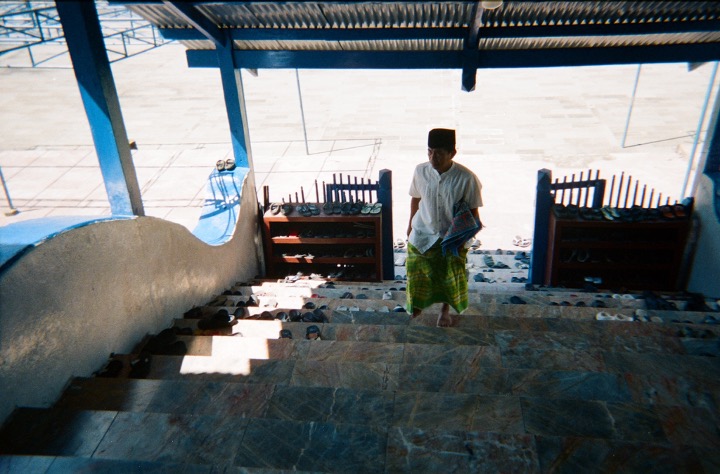 Fig. 4. A man wearing a Buton sarong on his way to the mosque. Photograph[h by author.
I was particularly fascinated by the names given to textile motifs. At first glance, many of the geometric patterns of Buton sarongs appear abstract. But as I listened to weavers and local residents, I began to recognise how closely many of them are connected to the natural and everyday environment. Leaves, flowers, fruits, seeds, and roots are translated into textile patterns. During my fieldwork, I encountered motifs named after coconut flowers, pomegranates, tamarind, guava, jasmine, and watermelon. The watermelon motif, for example, reinterprets the colours associated with the fruit within the particular colour system of the textile.
Other motifs take their names from objects of everyday life, including unexpectedly playful references such as fried eggs and the package of sugar. What stayed with me was the fact that a motif name can survive even when its precise origin or earlier meaning is no longer known. In some cases, people know the name of a motif without knowing exactly what the name originally referred to. Not everything needs to be written down in order to be remembered. Some knowledge travels through speech, observation, repetition, and practice. A motif name can move from one person to another even when its original story becomes uncertain. For me, these motifs form part of a living oral history: knowledge that moves not only from person to person, but from hand to hand.
The making of a sarong
During my fieldwork, I also became interested in the material processes behind the finished sarong. Traditionally, Buton weaving tends to use cotton fibres obtained from locally grown cotton. Today, however, many weavers purchase commercially produced yarns from factories outside Buton, including from cities such as Surabaya. Although hand weaving continues to be practised, the choice of materials has changed. Pure cotton yarn and naturally dyed threads can be considerably more expensive, and weavers therefore use a wider range of commercially available materials.
The making of a Buton sarong involves a series of carefully coordinated processes (Fig. 5): preparing the yarn, forming the warp, setting it on the loom, and weaving the textile itself. I encountered local terms for these stages:
- Poburu — preparing the yarn into a bundle
- Pogantara — preparing the warp
- Pangururi — stretching and setting the warp on the loom
- Tanun — the actual weaving process
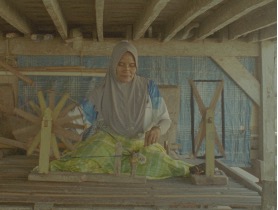
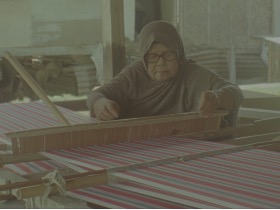
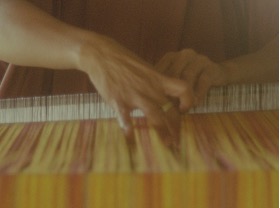
Fig. 5. Weaving Buton sarongs in a weaving community (from top to bottom: Pogantara, Pangururi, and Tanun). Photographs by author.
A living tradition: Knowledge remembered by the body
One of the things that affected me most during my fieldwork was the way weaving knowledge was transmitted. Buton weaving has traditionally been learned not through written manuals or diagrams, but through the body and through generations of practice. Weavers accumulate knowledge through repeated movements: aligning threads, operating the loom, controlling tension, and coordinating their hands with the rhythm of weaving. The weavers I met often told me that they had learned the practice from their mothers or grandmothers when they were young.
In weaving spaces where mothers and daughters sit side by side at the loom, tools can become carriers of family histories and intergenerational memory. This brought me back to the question that first led me from language towards textiles. Just as spoken language passes from mouth to ear, weaving knowledge can pass from hand to hand and from body to body. This is what I understand as embodied knowledge. If writing records the sound of language, perhaps textiles can record the repeated movements of the hands and the passage of generations.
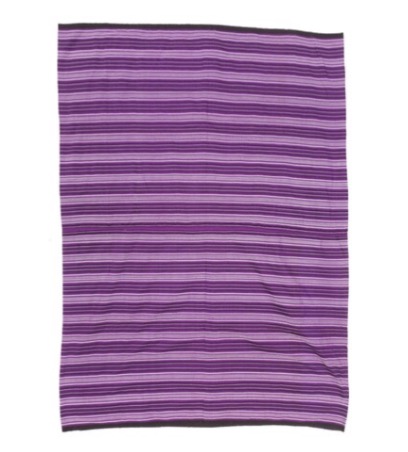 Fig. 6. Hand-woven Buton sarong, cotton, 20th century, Sulawesi, Indonesia (TRC 2022.1474).
Encounters between the TRC collection and my fieldwork
When I asked a local weaver about a motif on a sarong in the TRC collection, she identified it as representing an eggplant. Two sarongs that I brought back from Buton had different colour combinations, but the motif was also described to me as the same eggplant motif. This encounter made me think about how a single motif can be interpreted and transformed differently by different weavers. The motif may remain recognisable, while its colours, proportions, arrangement, and visual character change according to the individual maker, the period in which it was produced, and the weaver's own sensibility.
The subtle differences between the sarong I encountered in different places reminded me that tradition is not a fixed form preserved unchanged over time. Instead, it continues through individual choices, adaptations, memory, and intergenerational transmission. In this sense, the changing nature of textile tradition closely echoes the oral traditions through which many of its meanings continue to circulate.
What Is recorded, and what remains in the hands?
Finding written documentation about Buton sarongs has not been easy. My research has therefore been marked by questions, gaps, fragments, and partial answers. At first, I found these gaps frustrating. Over time, however, I began to wonder whether the absence of written documentation might also encourage another way of looking; one that pays closer attention to what is carried through the body, through making, and through everyday use.
The sarong itself continues to live. It is still worn, made, used, and passed from one generation to another. For me, Buton sarongs are therefore more than a traditional textile. It offers a way of thinking about the relationship between people and nature, the memories embedded in everyday life, and the ways knowledge can move across generations without being fully captured in words or writing.
Written records may fade, deteriorate, or be forgotten over time. Knowledge held in the hands and body can continue through the repetition of making. If writing records the sound of language, textiles can record the repeated movements of the hands and the memory of time. Yet this record is never completely fixed. Every new weaver changes it slightly. A colour may be altered, a motif remembered differently, or a technique adapted. A tool may be passed from a mother to a daughter, while a story survives even when part of its original meaning has been forgotten.
This is what makes Buton sarongs, for me, a living form of language. Its knowledge does not remain only in written records or in the finished textile, but continues through hands, bodies, materials, memory, and use.
Through this exhibition, I invite visitors to look at these textiles not simply as finished objects, but as traces of people, nature, everyday life, memory, and time, and as forms of knowledge that continue to live in the hands.