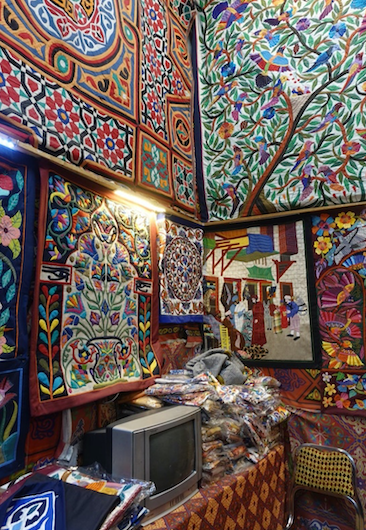
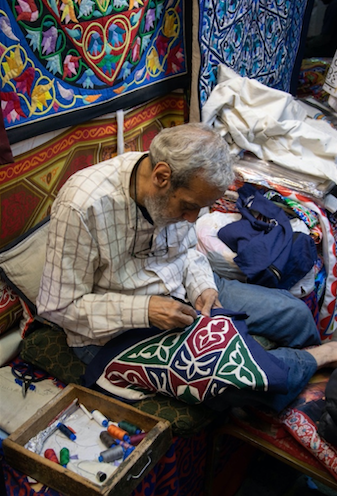
 Khayamiya stall from the Street of the Tentmakers, Cairo. Photograph by Christina de Korte, 2025.Khayamiya is an Egyptian type of cloth generally decorated with appliqué, which can be seen almost anywhere in Egyptian streets. Appliqué is a technique whereby one or more pieces of textiles are sewn onto a ground material, usually of cloth. The fact that the word khayamiya is connected to the Arabic word for tent, namely khayma, indicates the deep historical connection between these appliqués and tents.
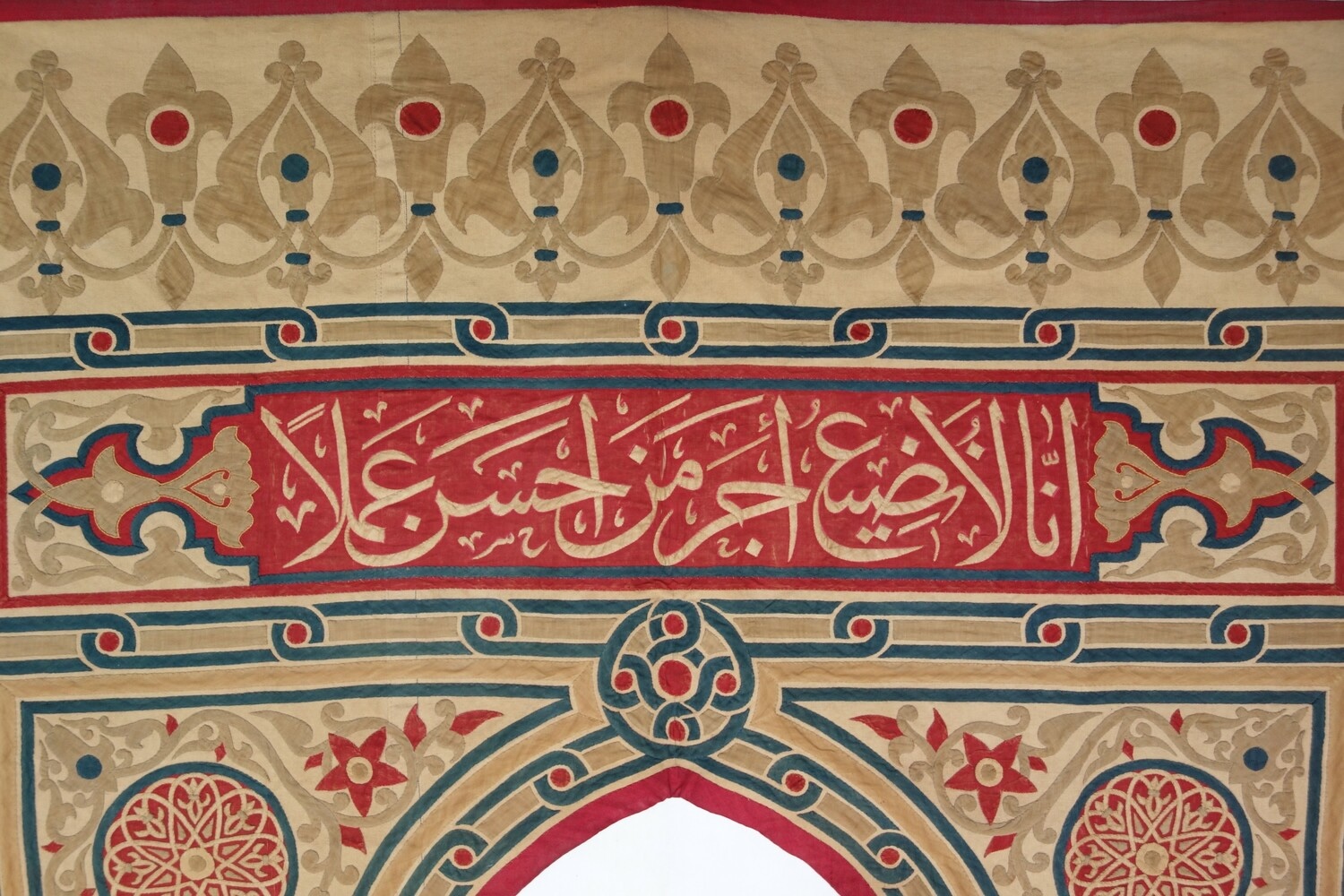
Khayamiya panels (plain or decorated) are traditionally used for tent constructions, but appliqués are also used as decorative items (in tents, houses or streets). The term Khayamiya can be used for plain tent or decorative tent panels (1,2,3,5) as well as individual hanging textile pieces (4).
The Street of the Tentmakers in Cairo, locally known as the Shari'a al-Khayamiya or Suq al-Khayamiya, is the most important and traditional location for making and selling khayamiya tents and related objects. The covered market street dates to the 17th century and is located near the Bab Zuweila medieval city gate, in the Al Darb Al Ahmar area.
 2024.1544
Originally, the market was built for shoemakers, but later on, articles for caravans, including tents and khayamiya, were also produced and sold there. Some of these items were for the Hajj pilgrimage caravans to Mecca.
 Khayamiya25
There are various designs for khayamiya panels, but this exhibition deals with, along with the techniques to produce them, four of the most common types of motifs that they feature, namely:
 2025.1241Figurative: representing animals, people, daily-life scenes, objects.
- Calligraphic: where text and imagery go together. Islamic or Arabesque: abstract, organic or geometric.
- Pharaonic: depictions of ancient Egyptian scenes and traditional symbols, such as the lotus flower (numbers)
Khayamiya then and now
In the past, khayamiya panels were mostly used to decorate large, handmade tents, but nowadays they can be found in all sorts of contexts, from handmade decorative pillows to Ramadan decorations in the streets, and from digitally-printed tablecloths to embroidered pieces in an art gallery.
Khayamiya panels have also long been part of the tourist trade. However, tents with khayamiya panels are still used for specific purposes, such as weddings, funerals, or during Ramadan for hosting an iftar (the fast-breaking meal of the day). The tents are rented from, and built up by the farrashin, the tent builders, who can be found in different parts of Egypt where such tents are regularly used.
 2022.1805It is difficult to determine the exact date when the types of khayamiya panels that we know today were first produced, however, appliquéd cloth is deeply interwoven with Egypt’s history. The earliest textiles featuring this decorative technique go back to ancient Egypt; for example, pieces of appliqué work have been recorded in the tomb of Tutankhamun (died c.1320 B.C.), indicating that this form, in Egypt, is at least 3000 years old.
Historical information on khayamiya, and especially how they became part of the tourist trade, can be found in early Western photographs and postcards from the 1920’s and even earlier. Cook’s tourist tours for foreigners of, among others place, Egypt became popular in the 1860s and the opening of the Suez Canal in 1869 dramatically increased the number of foreign tourists.
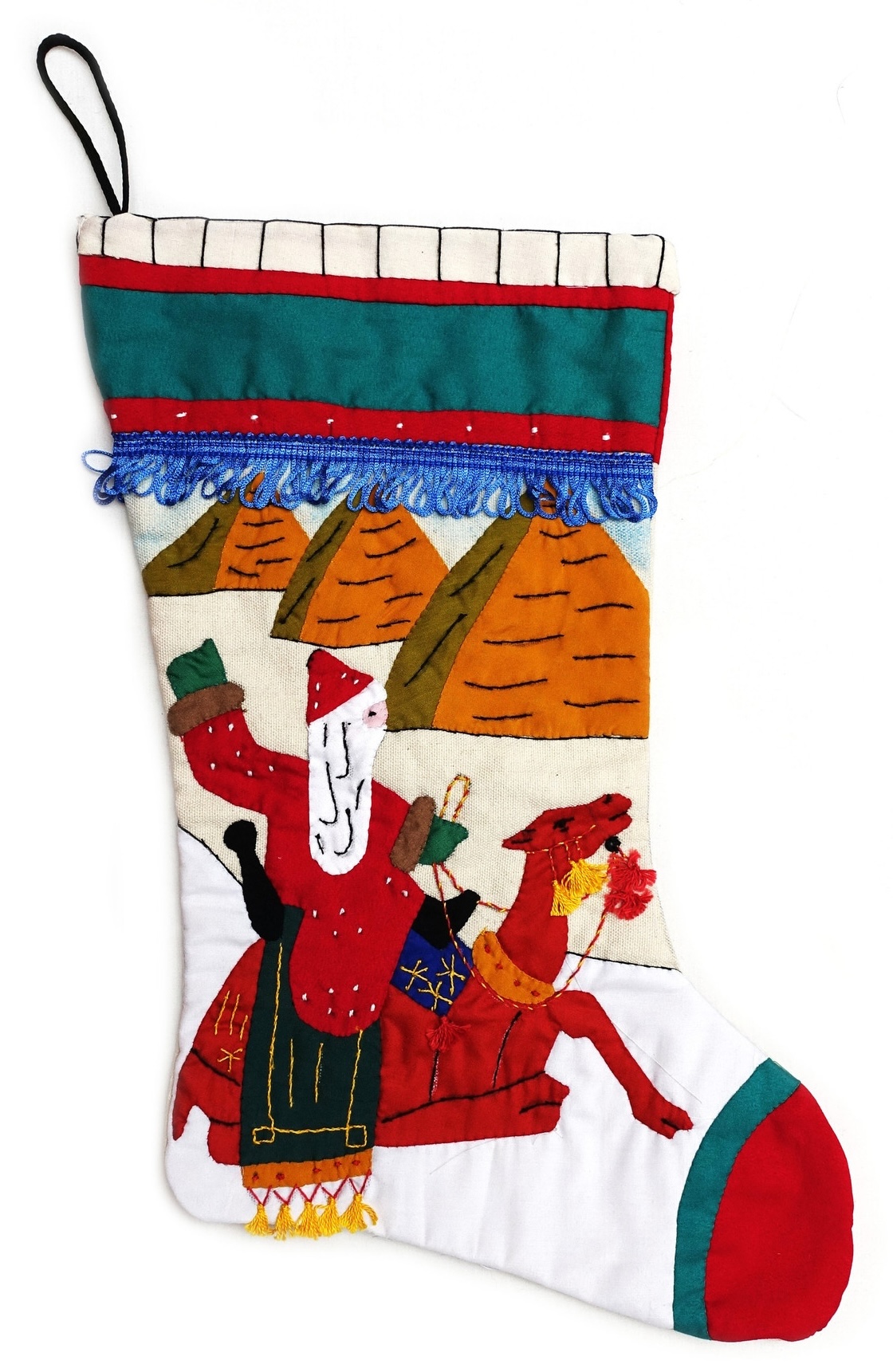
 2013.0313Khayamiya panels sold to early tourists typically tended to represent events that appealed to the foreign visitors, ranging from Napoleon's visit to Egypt, the pyramids, and, after 1922 the discovery of the Tomb of Tutankhamun. Nowadays, there is even Santa Claus riding a camel on some tourist pieces (17c). These touristic pieces are often smaller than traditional khayamiya, and can be easily carried, compared to the large tent panels.
Figurative designs
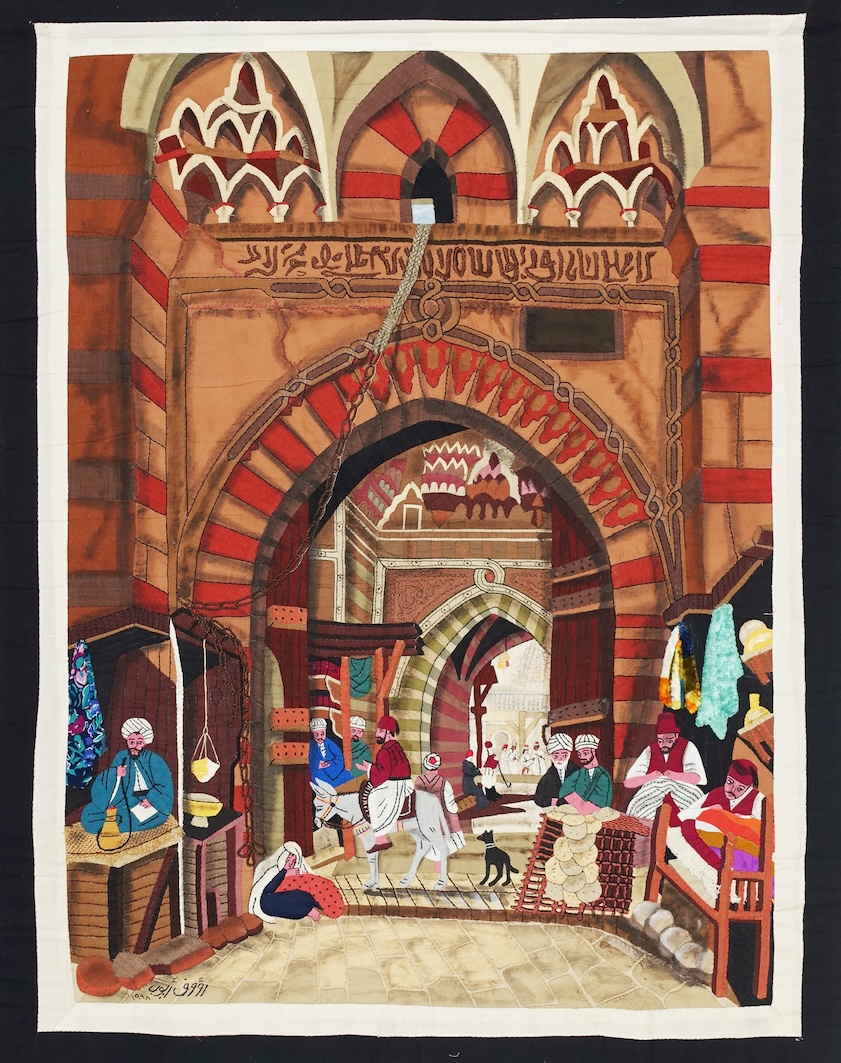
Designs depicting street scenes, objects, animals, etc. are very popular on khayamiya. A khayamiya piece in the exhibition (8) shows a market street similar to the Street of the Tentmakers.
This piece was created with complicated techniques, which include mixing various types of fabrics as well as painting in the shadows to give it more depth. This is the only piece of the TRC collection that is personally signed and dated by the maker.
 2013.0315
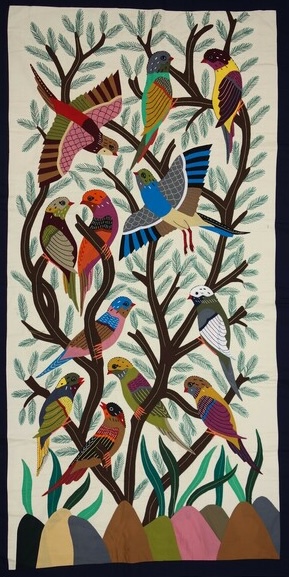
Designs with flora and fauna, notably birds, can be found in almost every khayamiya shop, as illustrated by number 7 in the exhibition. This piece was made with a wide range of colours and probably used many of the vivid cotton cloths available in a khayamiya shop. The panel also includes various embroidery stitches—many of them in contrasting hues. Parts of the design, such as the tree and leaves, are reminiscent of ancient Egyptian motifs such as the Tree of Life.
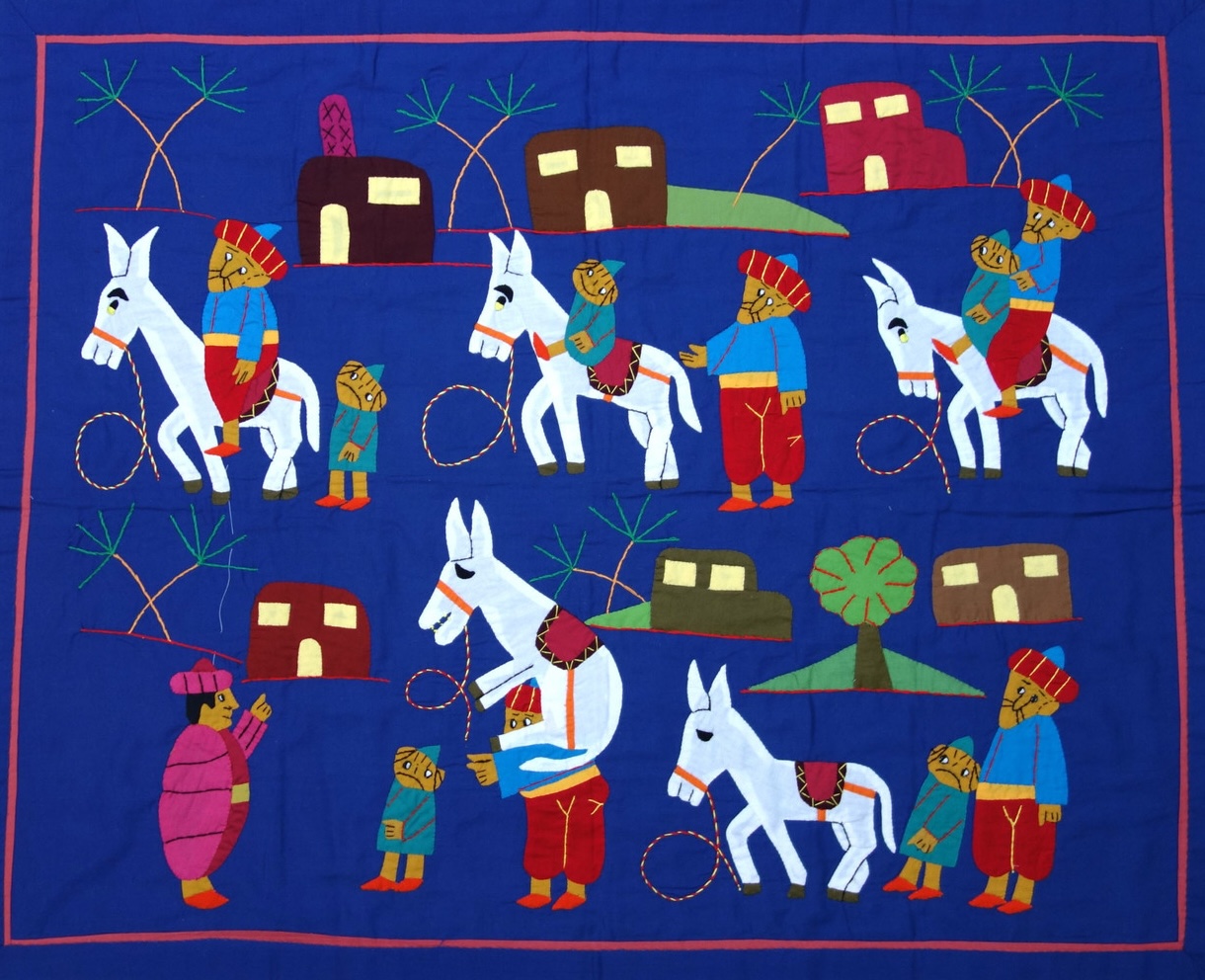
 2014.1064Another interesting theme is the story of Goha the Wise Fool (6), who is a popular figure in Egypt and other Arabic-speaking countries. This particular appliqué depicts five different scenes that can be read from right to left, as in Arabic script.
In the first scene, Goha and his son are riding a donkey. Then someone tells Goha that he is a mean old man, letting the donkey carry two people. So Goha gets off and leaves the child on the donkey. Then someone comes along and says "Goha, what are you thinking? You, an old man, walking, while a young child is riding the donkey?"
So then Goha gets on the donkey and lets the child walk. Someone comes along and says: "Goha, what are you doing? You ride a donkey and your son is walking!" So Goha dismounts and father and son walk behind the donkey. Goha and his son wonder how to please people; all they can come up with is carrying the donkey themselves.
 2014.1071
 2013.0440Calligraphy
The use of Arabic script can be found in khayamiya of all types and sizes. Around a third of the TRC’s khayamiya pieces contain Arabic, varying from a few words to full texts that almost completely cover the cloth. The texts are usually Quranic verses, Islamic sayings, ahadith (narrative records of the sayings or customs of Muhammad), names, or proverbs. Various types of calligraphic scripts are used on khayamiya, such as Thuluth and Kufic.
 2013.0436
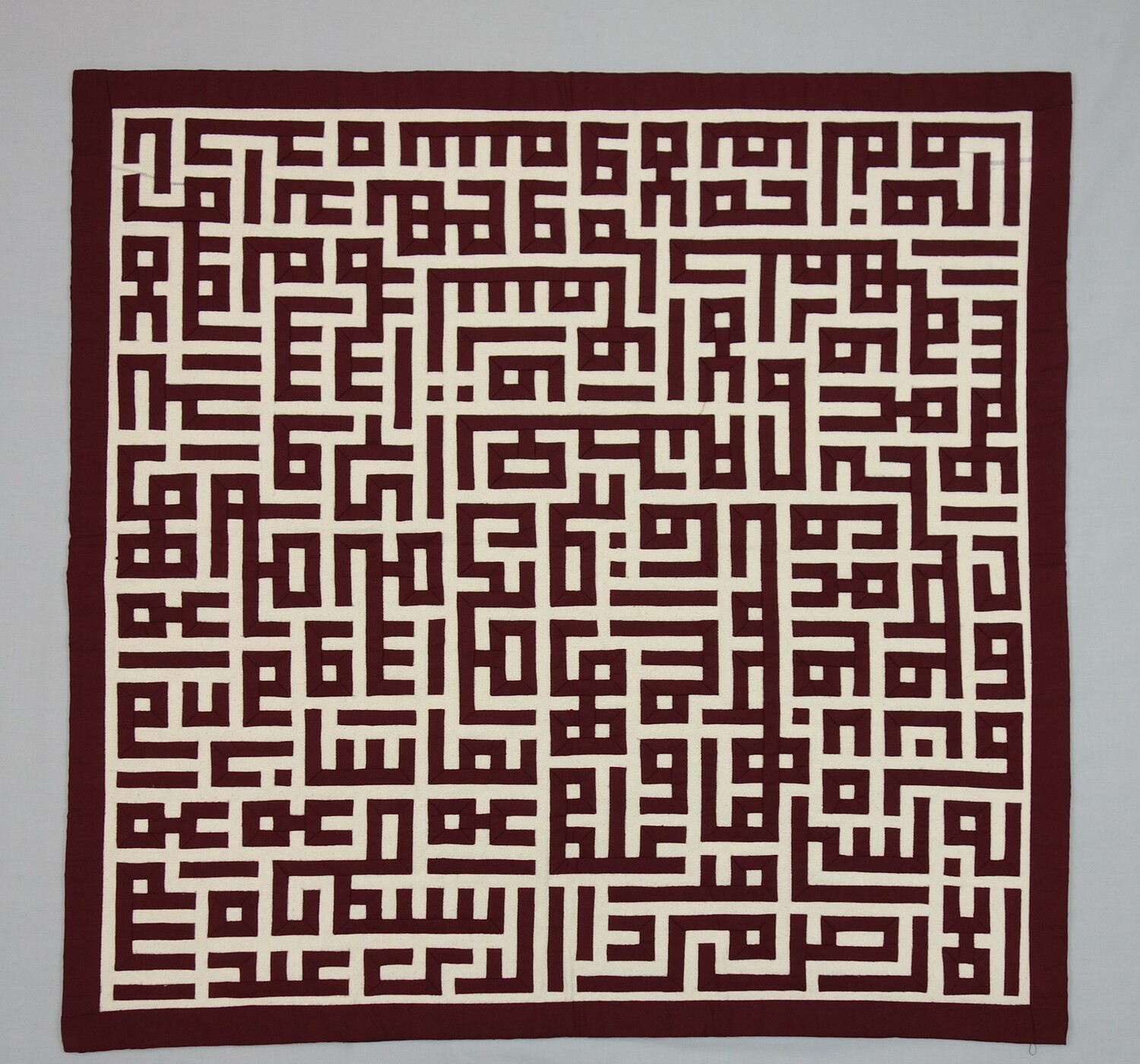
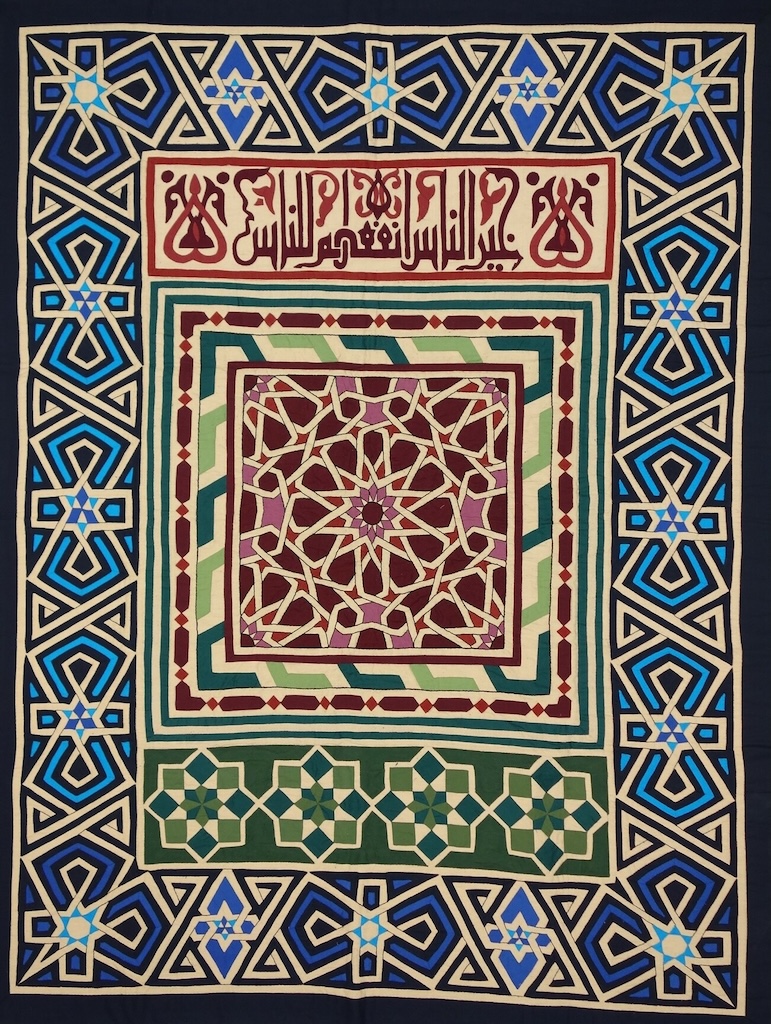
Many pieces show Quranic verses, and in the case of the TRC collection, all these verses are different. The longest verse can be found on number 9 in the exhibition, in which the tentmaker used square Kufic script to write the well-known throne verse (Ayat al-Kursi, Q 2:255). “God, there is no other god but He, the Living, the Self-Subsisting. Neither slumber overtakes Him nor sleep. Unto Him belongs whatsoever is in the heavens and whatsoever is on the earth. {…} Protecting them tires Him not, and He is the Exalted, the Magnificent.”
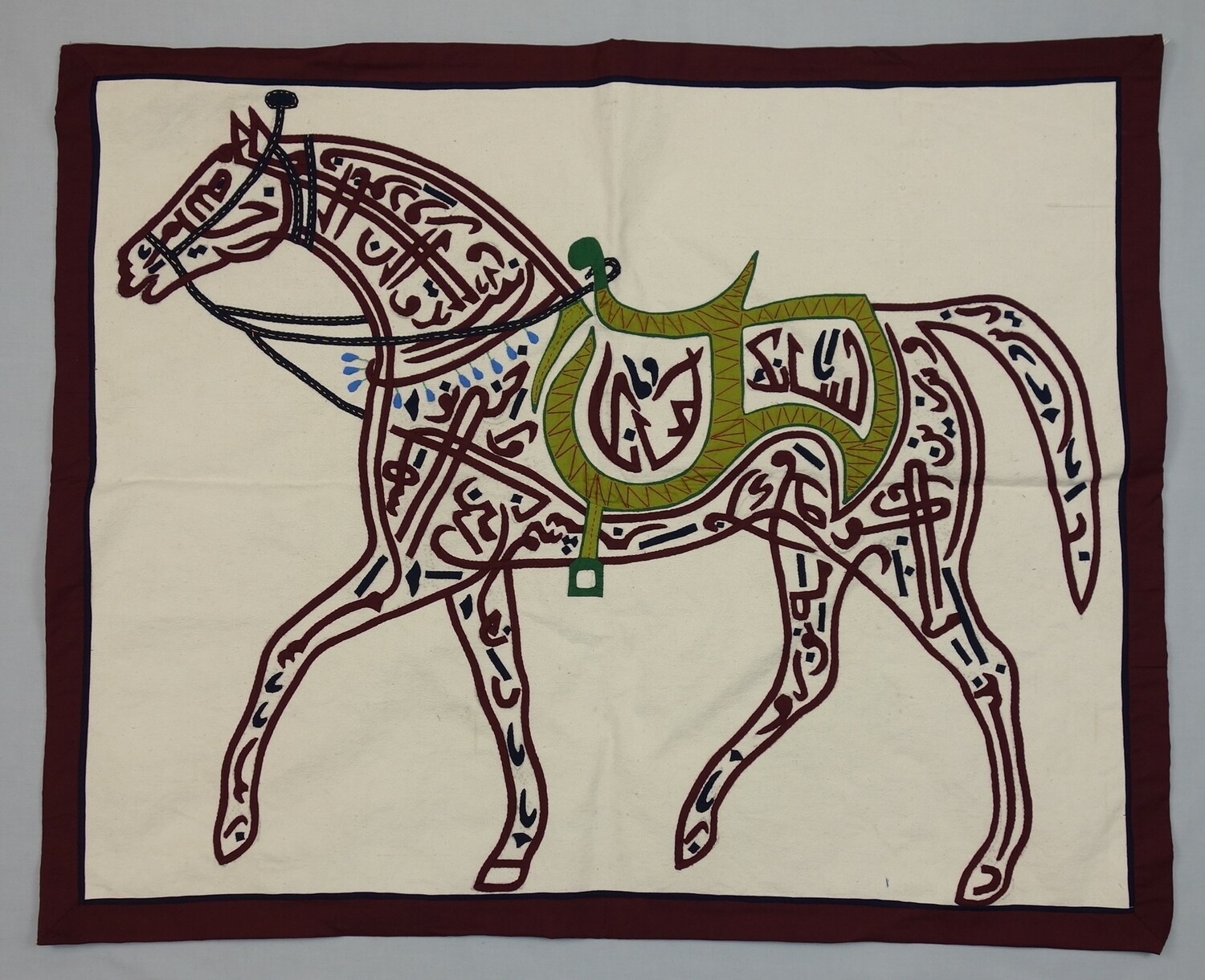
 2014.1066Other calligraphy pieces mix imagery and script. In such pieces, quality can sometimes be evaluated by how well the outline of the depicted subject mixes in with the script itself. For example, panel 10 depicts a horse with an inlaid text of an Egyptian saying: “Your tongue is your horse. If you preserve it, it will preserve you, if you abuse it, it will abuse you.”
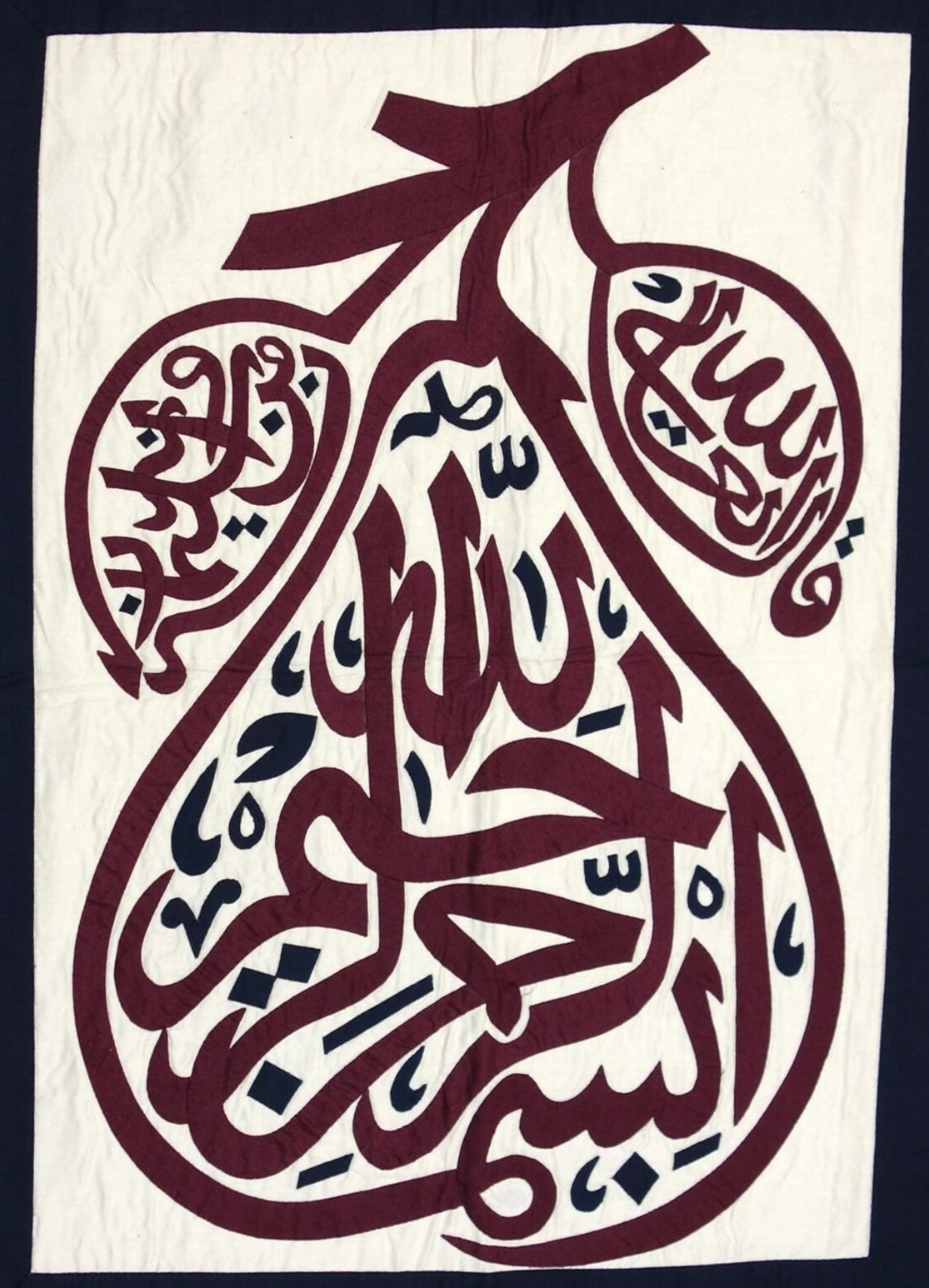
Here, the outline is almost completely separate from the text, whereas on panel 11, the outline of the pear shape is part of the calligraphy itself. This capacity to integrate the outline into the script is regarded as an expression of a tentmaker’s high level of skill and experience. The text at the centre of the pear is an excerpt from Surah 27:30 in Thuluth script, as well as “Allah, the sublime” in the leaf pattern.
 2025.1246Islamic or Arabesque motifs
The Street of the Tentmakers is located in Al Darb Al Ahmar, a part of medieval Cairo that is filled with history. The monuments and architectural ornaments in the city and surrounding area serve as an important source of inspiration for the khayamiya makers, as the visual language of the quarter inspires a type of motif that can be defined as Islamic/Arabesque.
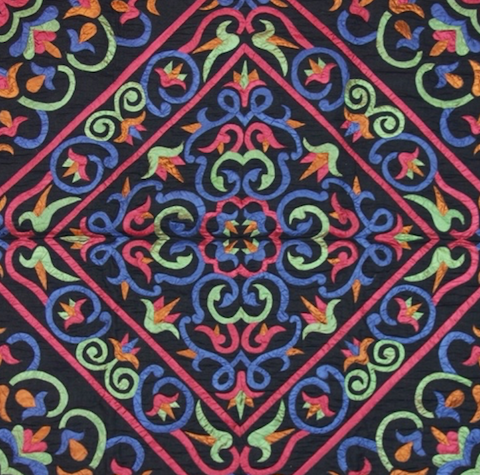
This type of design is found in many of the panels. They can actually also be found throughout Cairo, not only on textiles, but also in wood, marble, paper, leather and metal. The tentmakers sometimes make exact copies of pre-existing motifs (from books or objects) but also use other elements to create their own original designs and colour combinations for their khayamiya.
 Flowerpot
The khayamiya producers refer to these geometric designs as Islamic or Arabesque. Some tentmakers use these terms interchangeably, while others distinguish between them, namely pointing out that “Islamic” designs are more organic and “Arabesque” motifs are more geometric.
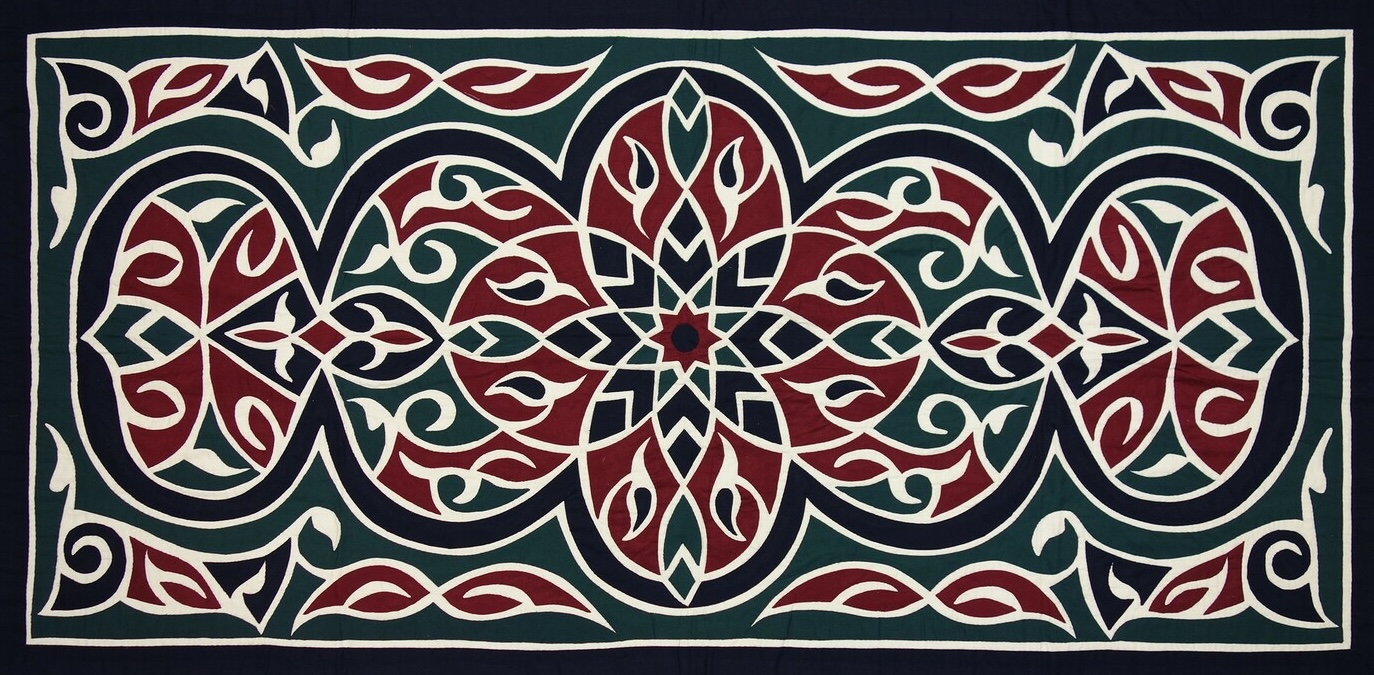
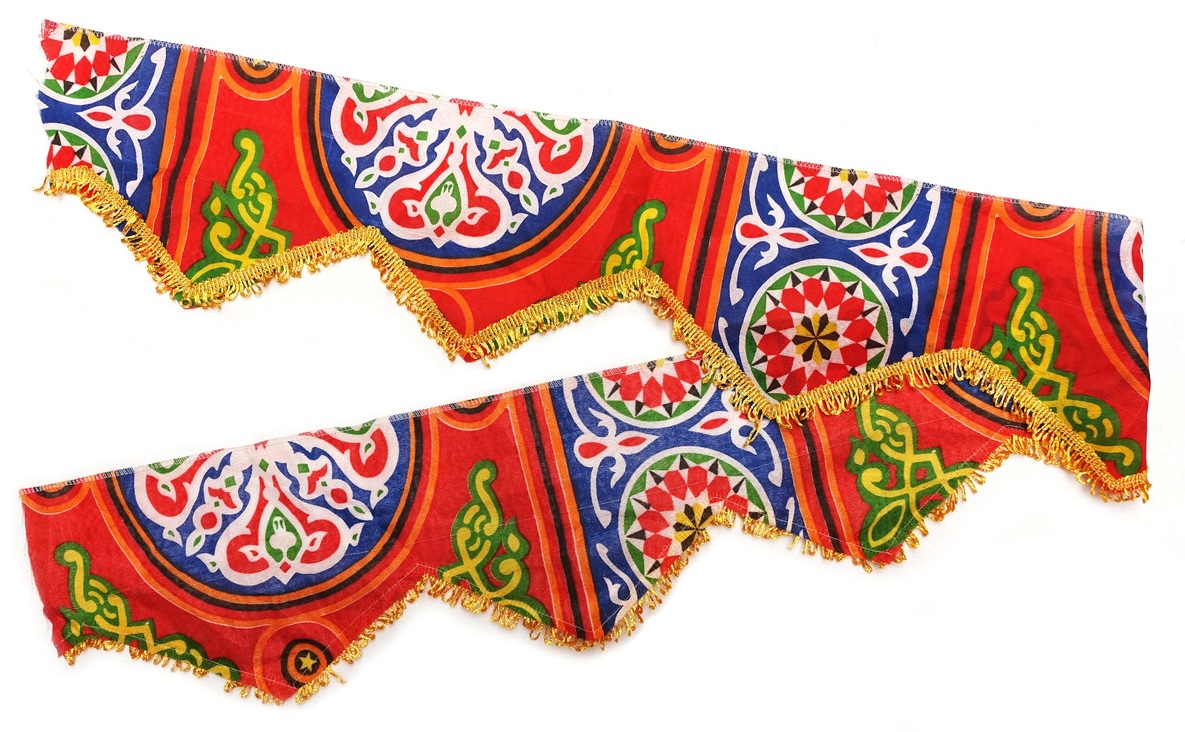
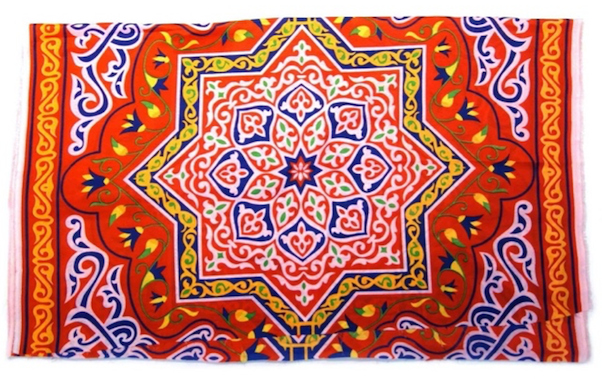
 TentmakerThis type of design is often combined with other motifs, including calligraphy (12) or lotus flowers. The most ‘traditional’ khayamiya design, as recognised nowadays, is actually based on Islamic and Arabesque motifs. This type of design is hence also the most popular to be digitally printed on fabric.
Traditional khayamiya technique
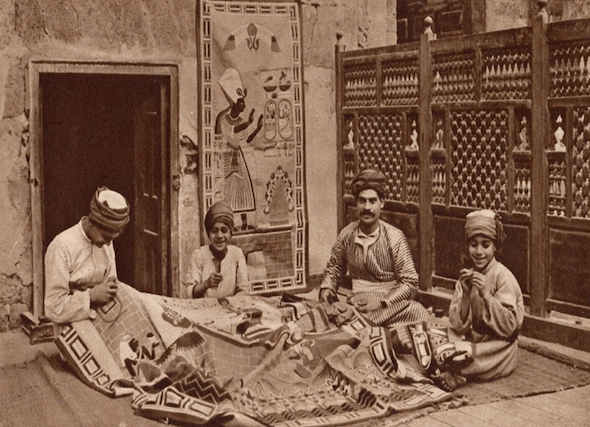
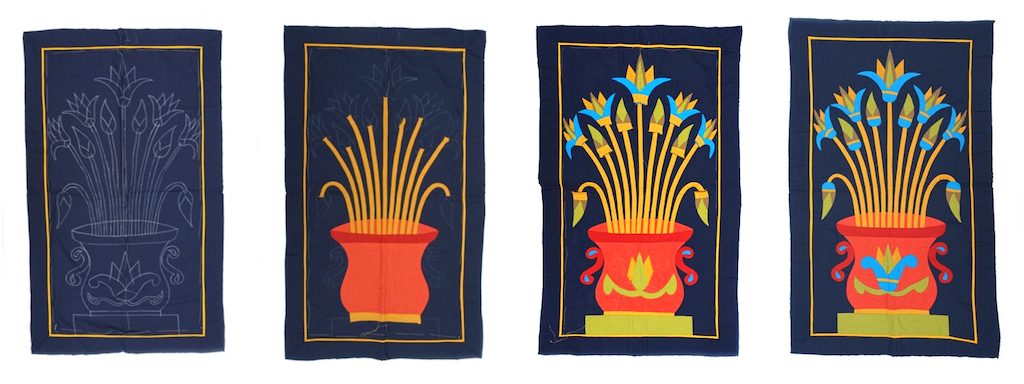
Four panels depicting pots filled with lotus flowers show the overall steps of producing a handmade khayamiya (15). Whereas in the past, mostly men worked as khayamiya makers, nowadays more and more women are also involved, although they tend to work from home.
Furthermore, not all the stages in the production process are necessarily carried out by one person. A single piece of khayamiya can go through many hands before it is finished.
2025.1241The first step of making traditional, handmade khayamiya is drawing the design on a piece of paper— often folded, in order to make the design symmetrical (17a). The tentmaker then uses an awl or needle to prick a series of small holes following the design contours on the paper.
The paper is stuck to a cotton cloth, and the design is then transferred onto the fabric with charcoal or chalk being forced through the tiny holes in the paper. The paper is removed, and the resulting dots on the cloth are then connected with a pencil line (17b).
A separate piece of cloth, roughly identical in shape to the design on the ground cloth, is folded and stitched in place onto the ground cloth following the dotted contours. Sometimes a second or third piece of cloth is sewn onto an earlier applied cloth. The appliqué panel may be further decorated with embroidered details. For the stitching, an (open) thimble (17b) is used to push the needle through the cloth.
Modern techniques and materials
In some instances, different techniques to the traditional appliqué method are used, such as using crayons to colour the sky in the background of this tourist piece featuring Santa Claus on a camel (17c)! In addition to handmade khayamiya, many other techniques are nowadays used to imitate the original method, such as machine-sewing or (digital) printing (17c).
 Picture5
When khayamiya are machine-sewn, the pieces of fabric are usually stitched on the edges of the fabric, instead of being folded in the way associated with hand-made khayamiya. Digitally printed khayamiya (17c) allows for new interpretations of the textile technique and is widely used for decorations during Ramadan in Egypt, such as on lanterns and flags.
 Khaya2
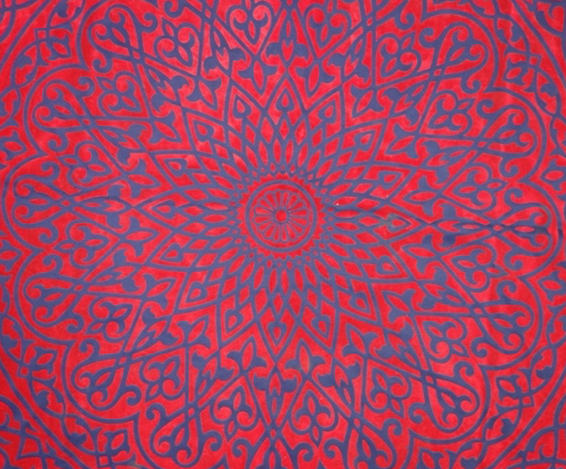 KhayaDigital printing makes it easier to produce larger quantities of decorative cloth at more affordable prices. Other interesting materials and techniques, such as using synthetic fabrics instead of cotton (16) or flocked velvet (17d) can also be found in some examples.
These variations show that the tradition of khayamiya is constantly evolving, influenced by contemporary concerns and factors.
Pharaonic designs
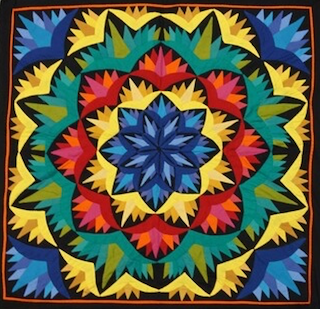
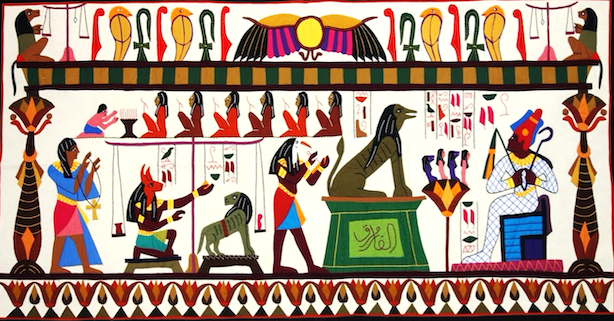
Ancient Egyptian influences can be clearly seen in some of the khayamiya. The lotus flower (sometimes also referred to as papyrus), for instance, is a prominent element used in khayamiya (20,24,25), but it often surprises people when they realise the motif’s relation to ancient Egypt.
Depictions of lotus flowers can be found on many ancient tombs and temples. The lotus design on khayamiya can be used by itself (25), or in combination with other motifs, such as Islamic/Arabesque forms (19).
 Khaya3
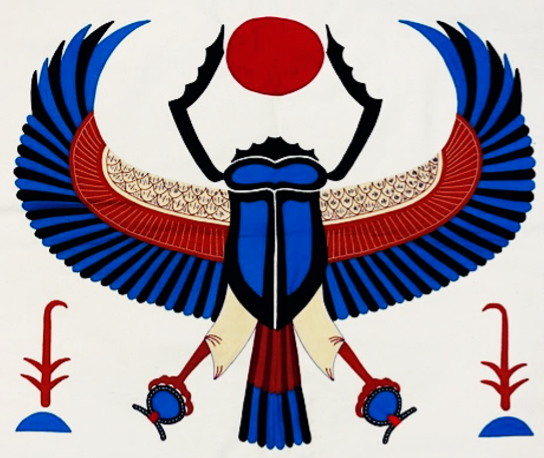 Picture13Other popular ancient Egyptian symbols on appliqués are the ‘Eye of Horus,’ Ankh, also known as ‘The Key of Life’ or insects such as a scarab, which is a beetle-shaped figure (22). This panel is an example of a finely made piece whereas number 21 is of lower quality. These references to Ancient Egypt can be found on larger wall hangings, but also on smaller pieces such as pillow covers (22).
Number 23 depicts the ancient Egyptian scene of the weighing of the heart - or the soul - of a deceased person in the afterlife. The scene comprises of hieroglyphs and mythical figures. On this piece, within the green pedestal, in contrast to the hieroglyphs, ‘Cairo’ is written in Arabic.
 hallohallo