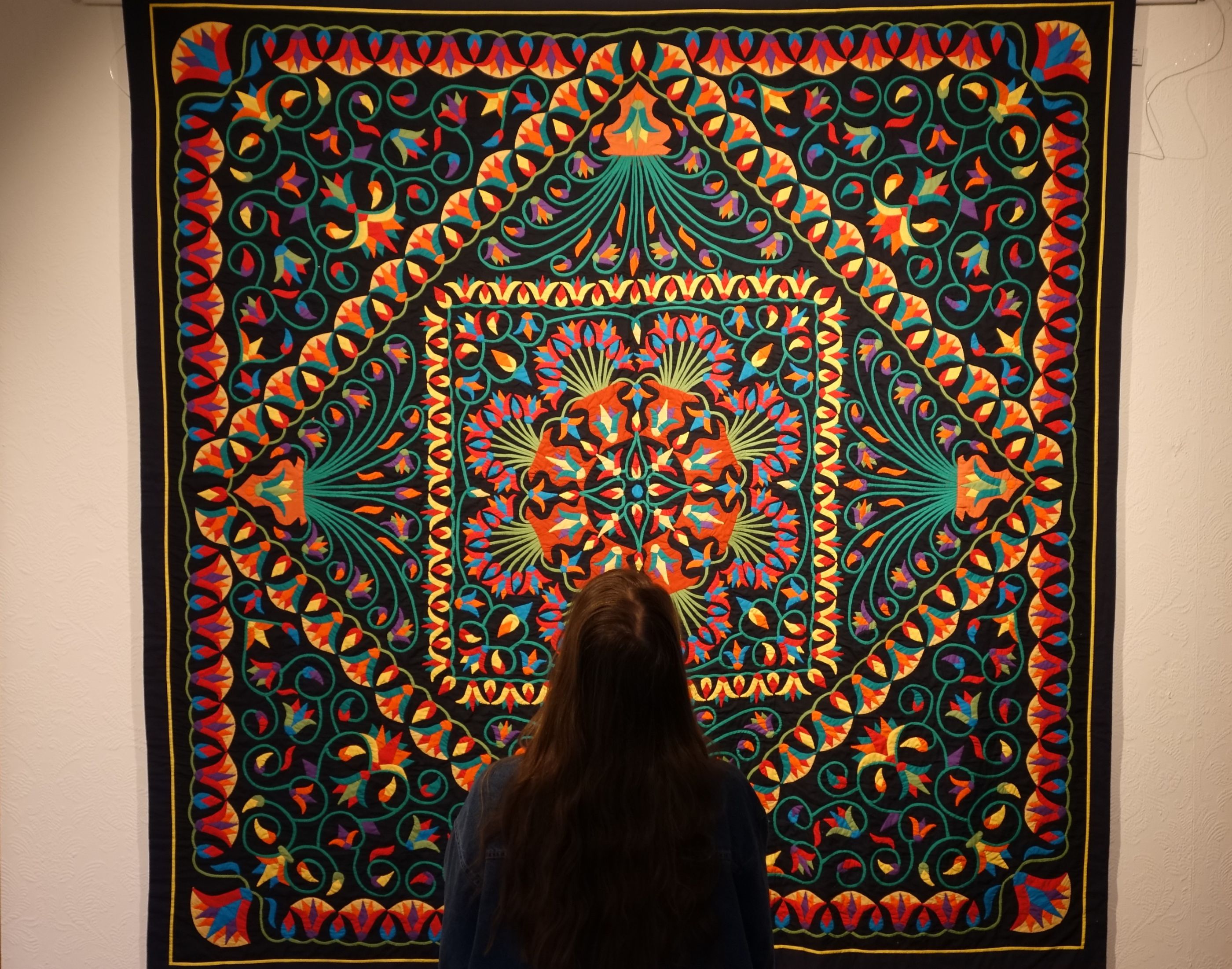
The Textile Research Centre proudly presents its first exhibition in the new TRC home along the Boerhaavelaan in Leiden: Khayamiya: Egyptian appliqués from the Street of the Tentmakers.
Khayamiya is a textile form that is omnipresent in Egypt. The word itself is derived from the Arabic word for tent, namely khayma. Originally, this appliqué technique was mostly used for making hand-sewn tents. Nowadays, khayamiya can also be created using other techniques, such as machine-sewing or (digital) printing. Khayamiya tents were used in the past by pilgrims going to Mecca. Nowdays, they are widely used for other occasions, such as weddings and funerals, and they are made in various shapes and variations. Especially before and during Ramadan, khayamiya tents and decorations are ubiquitous in Egyptian streets. The principal place of manufacture is the Street of the Tentmakers in the centre of medieval Cairo.
Khayamiya has been the subject of TRC research for some time, and in recent years we acquired many more examples that complement our earlier collection. We even made a digital exhibition on the subject (click here). But it remains a relatively unknown subject, often simply framed as a traditional Egyptian textile form. What is generally left out is the lived experience. How are the khayamiya panels made, how do people appreciate them, how are they used? Moreover, khayamiya textiles are embedded in Islamic culture and often used to strengthen the Islamic setting, although they can also be used by other (non-) religious groups.
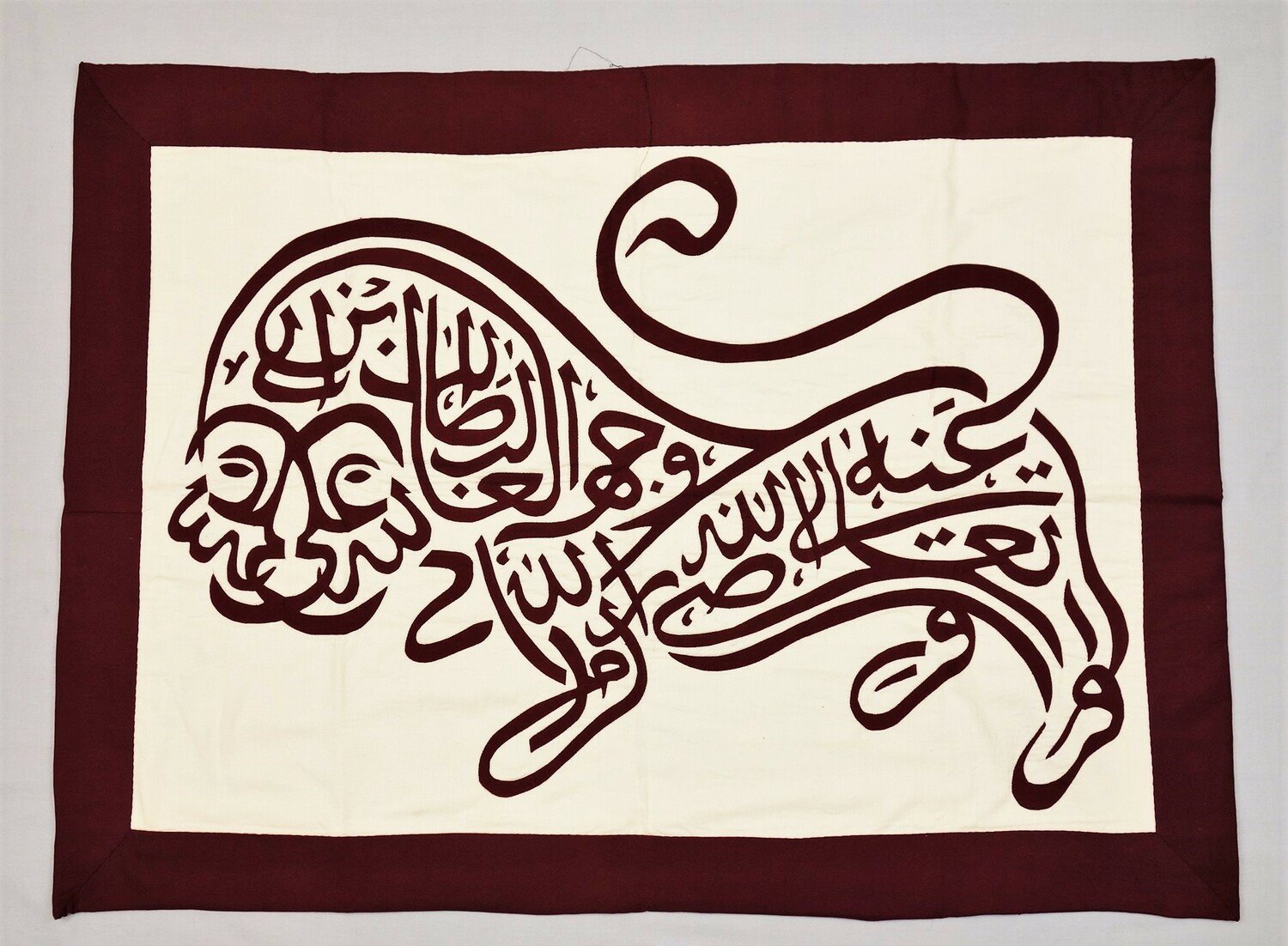 Khayamiya with calligraphic decoration. Cairo, Street of the Tentmakers, 2013 (TRC 2013.0615).
The exhibition includes various colourful and intricate examples of khayamiya. They show a range of designs. They can be calligraphic, geometric and naturalistic. They may also contain ancient Egyptian themes, street scenes, etc.
The exhibition is curated jointly by Augusta de Gunzbourg, Head of Exhibitions and Education of the TRC curator, and Christina de Korte, who is a visual artist and textile researcher. She learned how to make khayamiya in the Street of the Tentmakers while doing her research on the technique and the contemporary khayamiya usages before and during Ramadan. Her interdisciplinary approach touches upon three themes, namely material culture and Islam, popular culture and piety, and living heritage.
Programme:
- 15.30: Doors open.
- 16.00: Welcoming words by Dr. Gillian Vogelsang-Eastwood, Director TRC.
- 16.15: Christina de Korte, co-curator, elaborates on her experience learning about khayamiya in Cairo.
- 16.40: Opening of the exhibition by H.E. Mr. Emad Magdy Hanna Kamel, Ambassador to The Hague of the Arab Republic of Egypt
- 17.00: Refreshments and an opportunity to see the exhibition.
- 18.00: End of the event.
This event takes place at the Boerhaavelaan 6, Leiden, on Monday, 11th May, 2026.
Please register through: Dit e-mailadres wordt beveiligd tegen spambots. JavaScript dient ingeschakeld te zijn om het te bekijken.