Last Wednesday (9th December) I took part in the TRC workshop on pre-industrial sewing stitches, given by by Dorothee Olthof. I’m interested in archaeology and in all sorts of hand stitching, and I was not disappointed.
Dorothee focussed on early medieval styles of hand stitching for garments. She introduced the subject with a PowerPoint presentation and showed us some modern replicas of early medieval garments, especially head coverings from various museum and archaeological collections.
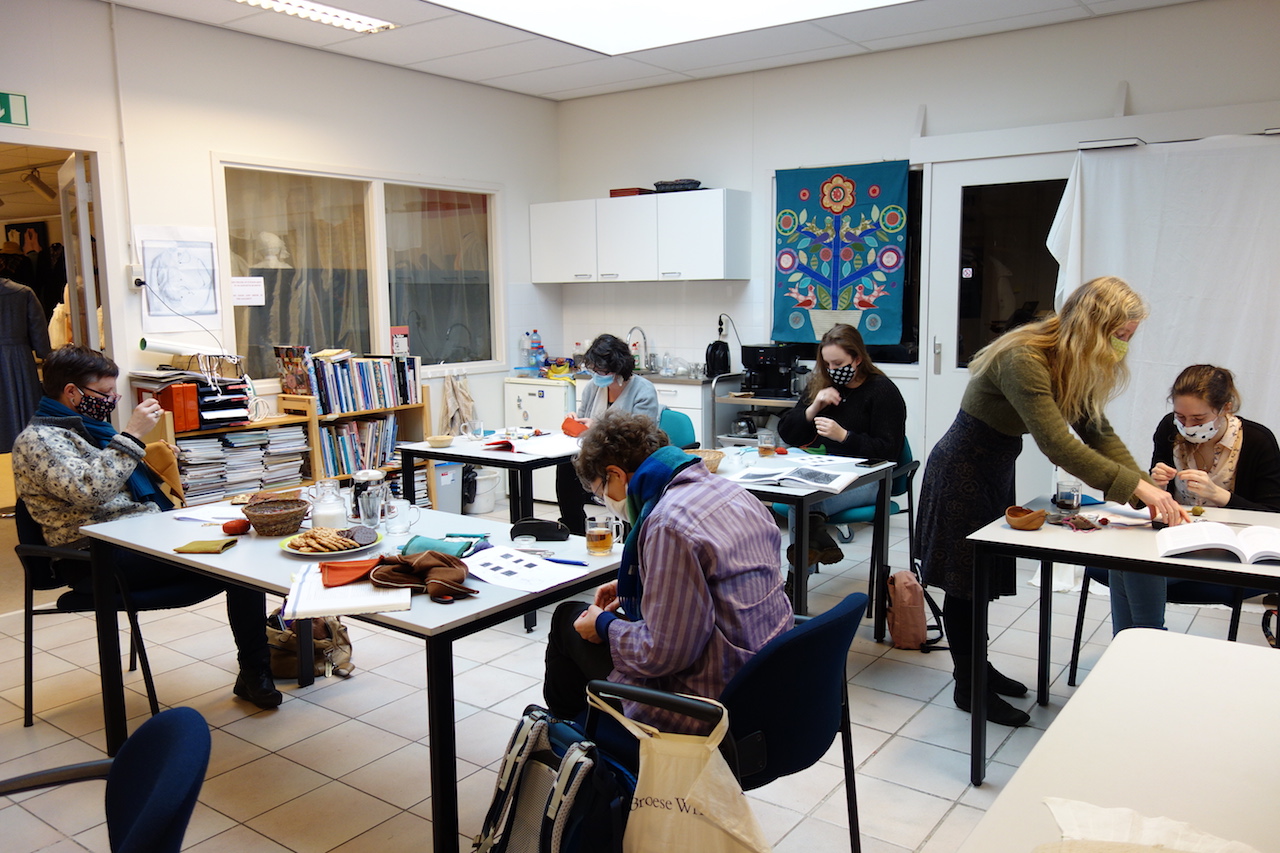 Photograph of the TRC workshop on pre-industrial sewing techniques, 9 December 2020.
We then dived into the practicalities. She handed around a group of replicas and I was so happy to see and feel how the garments were constructed. So much better than looking at a photograph!
Then we all were shown and given a piece of woollen material that was to be made into a pouch. Dorothee also provided us with beautiful woollen threads, very finely spun and hand dyed with natural dyes in wonderful colours. Some of them were spun and woven by very skilled people here in Leiden.
Dorothee also gave us a handout with diagrams of the stitches to be used for making the pouch. Some of these stitches were simple; others were very complicated, such as the braided stitches. Some of these were similar to the Van Dyk stitch (but slightly different in construction), but – to my surprise – they proved very useful for strengthening and decorating seams. I missed my personal favourite for hemming, the herringbone stitch, but according to Dorothee, it is not (yet) found in connection with northwest European archaeological textiles.
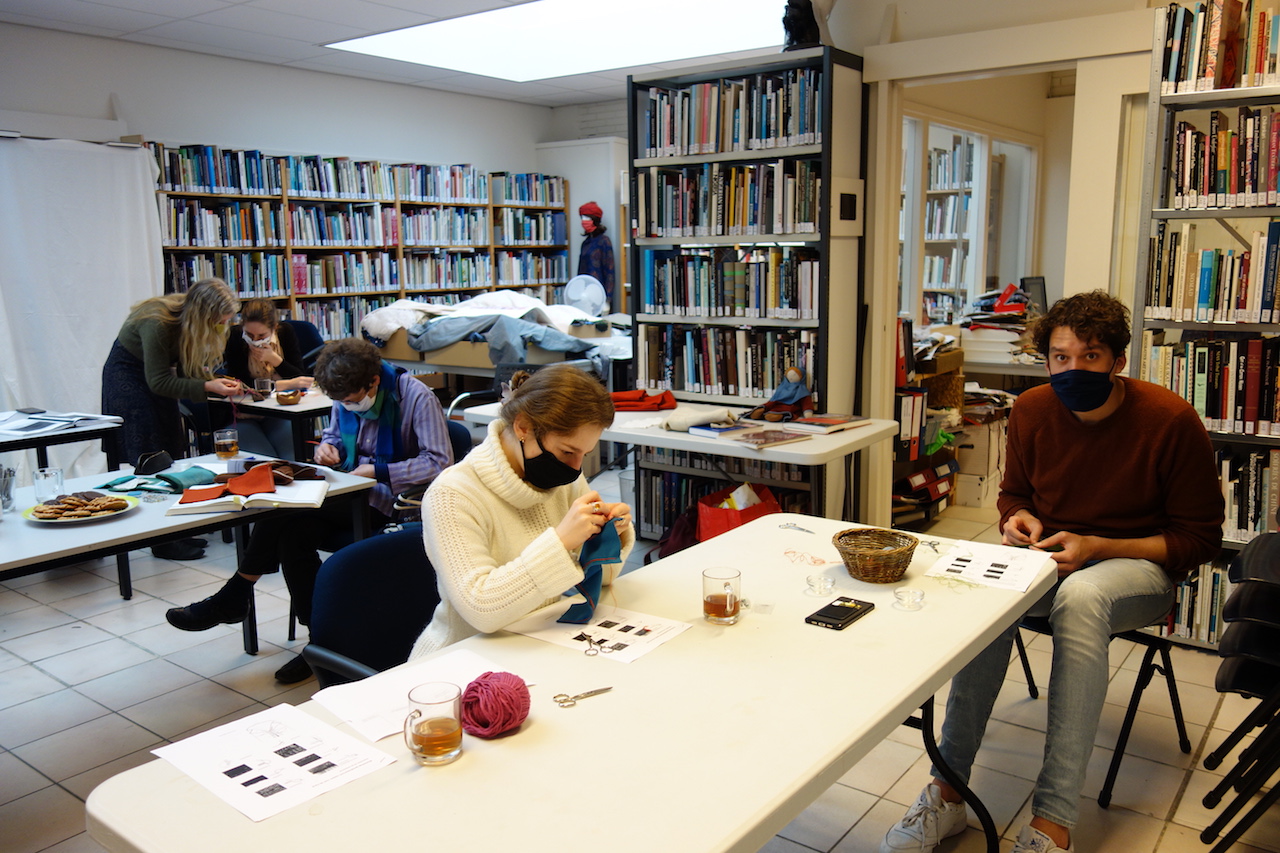 Photograph of the TRC workshop on pre-industrial sewing techniques, 9 December 2020.
What really was a revelation for me was, how pleasant and easy it was to stitch in this way. It was faster than I expected – even the braided stitches – and looked really good. I think in my next life I want to be a medieval seamstress …
Nelleke Ganzevoort, 13 December 2020.