A little while ago I saw an Indian photograph of some Sikh soldiers wearing what appeared, at first glance, to be face masks on their chins. Then came the thought, of course, they are not face masks but beard bags.
After trying, on several occasions, to leave the idea of beard bags to one side it soon became apparent that the concept was stubbornly going to refuse to go away and over the last few days I searched on the internet and in the TRC Library for beard bags.
I must confess: A new world opened up to me! And here I apologise to our (male) readers who have beards and know about beard care, but I had no idea that the maintenance of a beard was so complex. I strongly suspect that a significant number of the TRC Blog and Facebook readers will have also be similarly ignorant. There are many comments by men about the time spent by women on their hair, but it is very clear that some men are equally attentive to their beards! Their beard bags are an essential part of their dress and identity, and as such of great interest to the TRC. We realised that examples should be included in the TRC Collection!
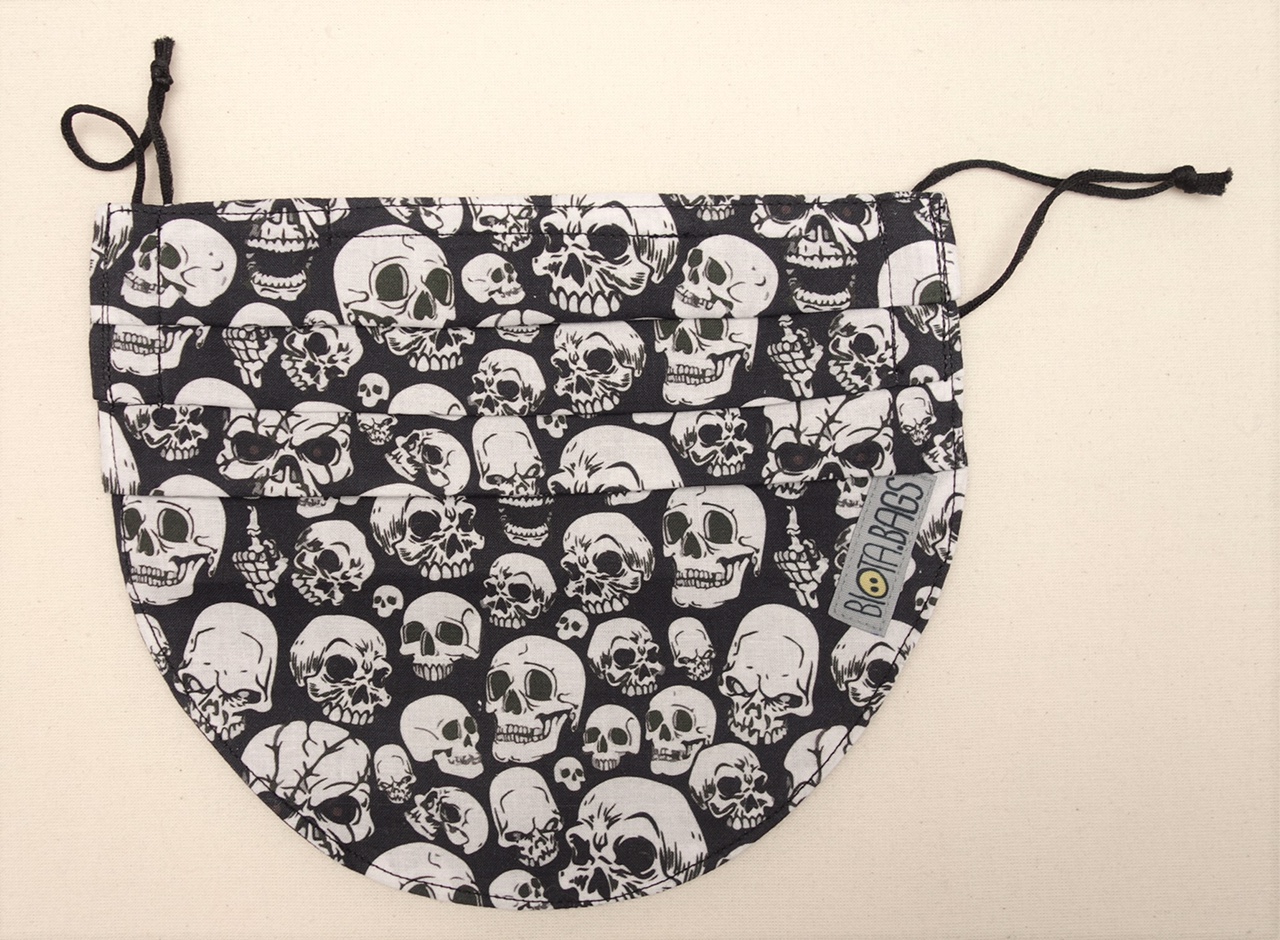 Cotton, combined face mask (corona) and beard bag with elasticated ear loops and a design of skulls. Spain (TRC 2022.0208).
What I find fascinating is the wide range of different accessories and attachments, not just with respect to colour (beard dyes), trimmers, combs, brushes, lotions, butters, shampoos etc., but also to items such as beads (see below), ribbons, and feathers. There are even miniature Christmas lights, baubels and tinsel for beards!
It has also been interesting to note how few (conventional) books on men’s fashion and accessories actually mention beard bags and related items! It would appear that the growing interest in a well-looked after and decorative beard can be traced to various late 20th and early 21st century films and series, such as the Lord of the Rings, Game of Thrones and Vikings.
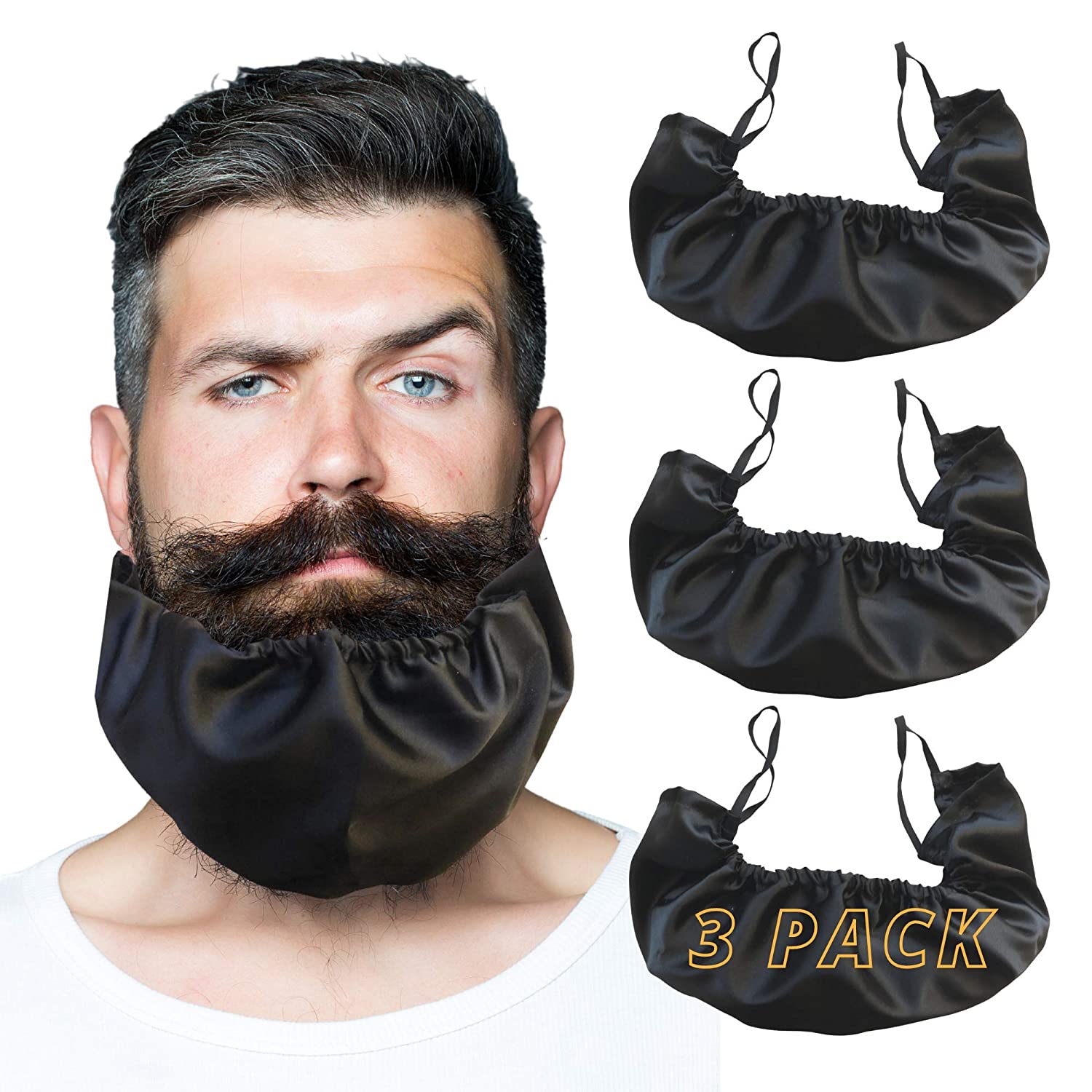 Advertisement for beard bags. South Korea.But what is a beard bag? Well, there would appear to be three basic types. The first is literally a bag to carry all the equipment needed to contain items for the trimming and grooming of beards, such as combs, trimmers and lotions. These are made out of a variety of materials, from leather to canvas and thick cotton cloth. There is also a ‘better’ class of container, the beard chest, which is made of wood.
The second type is a bag that is an elasticated rectangle of cloth (see the recently acquired TRC 2022.0210) or fine net that is literally placed around a beard to prevent food particles and drops of drink clinging to the beard. These are also used when sleeping, to help prevent beards developing dents, curves, waves and curls if a straight beard is required (and of course the effects of the dreaded ‘bad beard day’). They are also used to prevent air borne particles, such as dust, pollen and dirt settling on a beard. There is also another form that is used by members of various armed forces to prevent soldier’s beards getting tangled up in a weapon of some kind.
The third type of beard bag is used in industrial and hygiene situations (food manufacture, bakeries, hospitals, laboratories, etc) and is designed to prevent beard hairs from getting into and contaminating food, medicines, etc. These are generally known as beard guards, beard nets or beard covers.
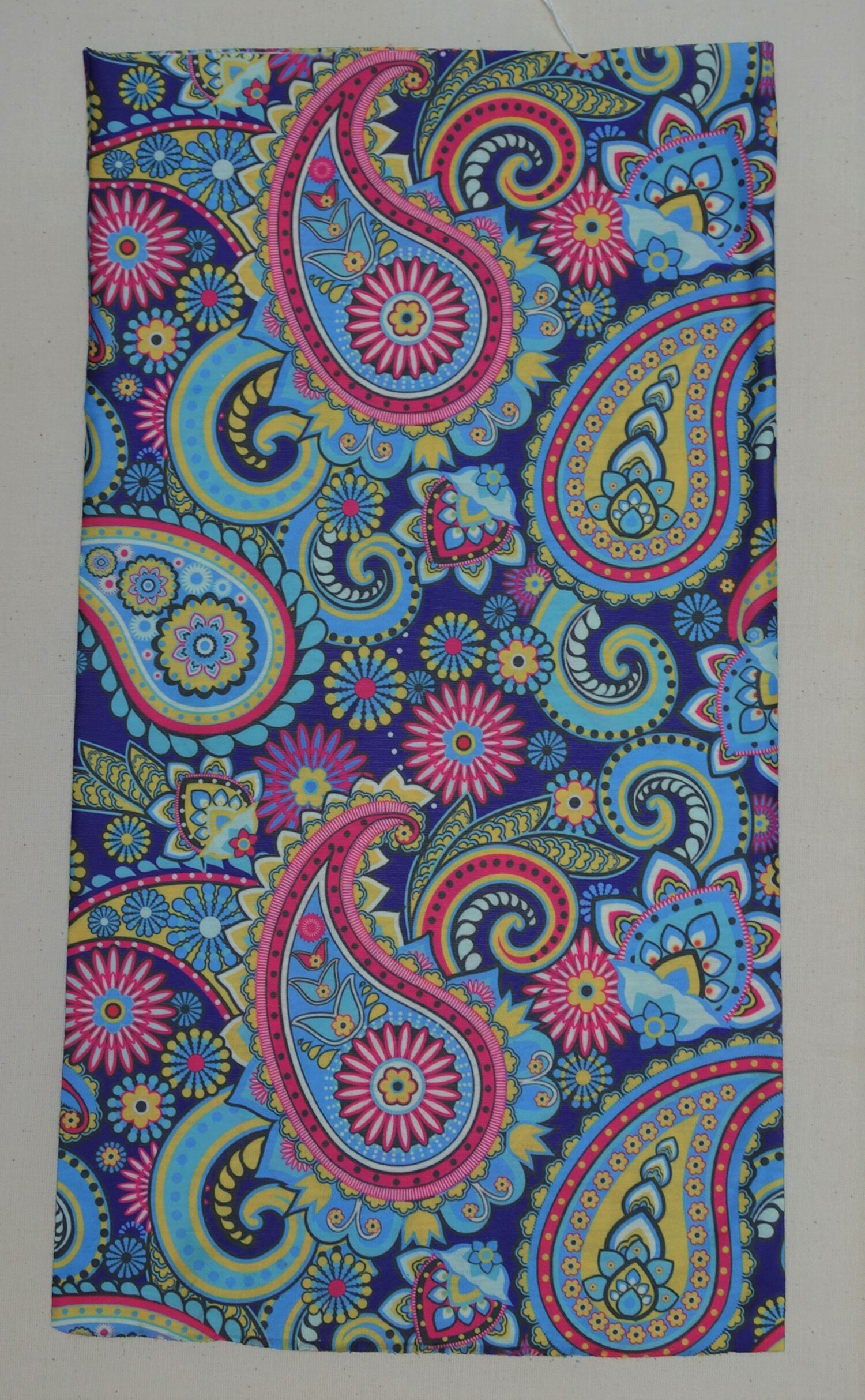 Gaiter with buteh/paisley motifs. This type was often used to cover the mouth (and beard) during the corona pandemic (TRC 2020.3688).During the current Covid/Corona crisis a fourth type of beard bag has been developed, which is a combination of a face mask with a beard bag. At first, at least in the US, neck gaiters, which is basically a tube of material that covers the neck and lower half of the face (see TRC 2020.3688) were approved, but these were later rejected as a suitable form of Covid/Corona mask.
Now there are various products that are in fact extended and wide face masks with attached bags (TRC 2022.0208 and TRC 2022.0209) that are usually fastened at the back of the head (so not to tangle in sideburns and the beard itself), and are long enough to cover the beard so preventing beard dents and curls forming along the lower edge of the beard, etc.
And continuing with beards, we are now working with DutchBeards on a number of blogs, as well as a mini-exhibition on the subject of beard beads. The use of beard beads dates from at least the Viking era. More details coming shortly!
Gillian Vogelsang, Director TRC, 8 February 2022