Opus Anglicanum in the Victoria and Albert Museum, London
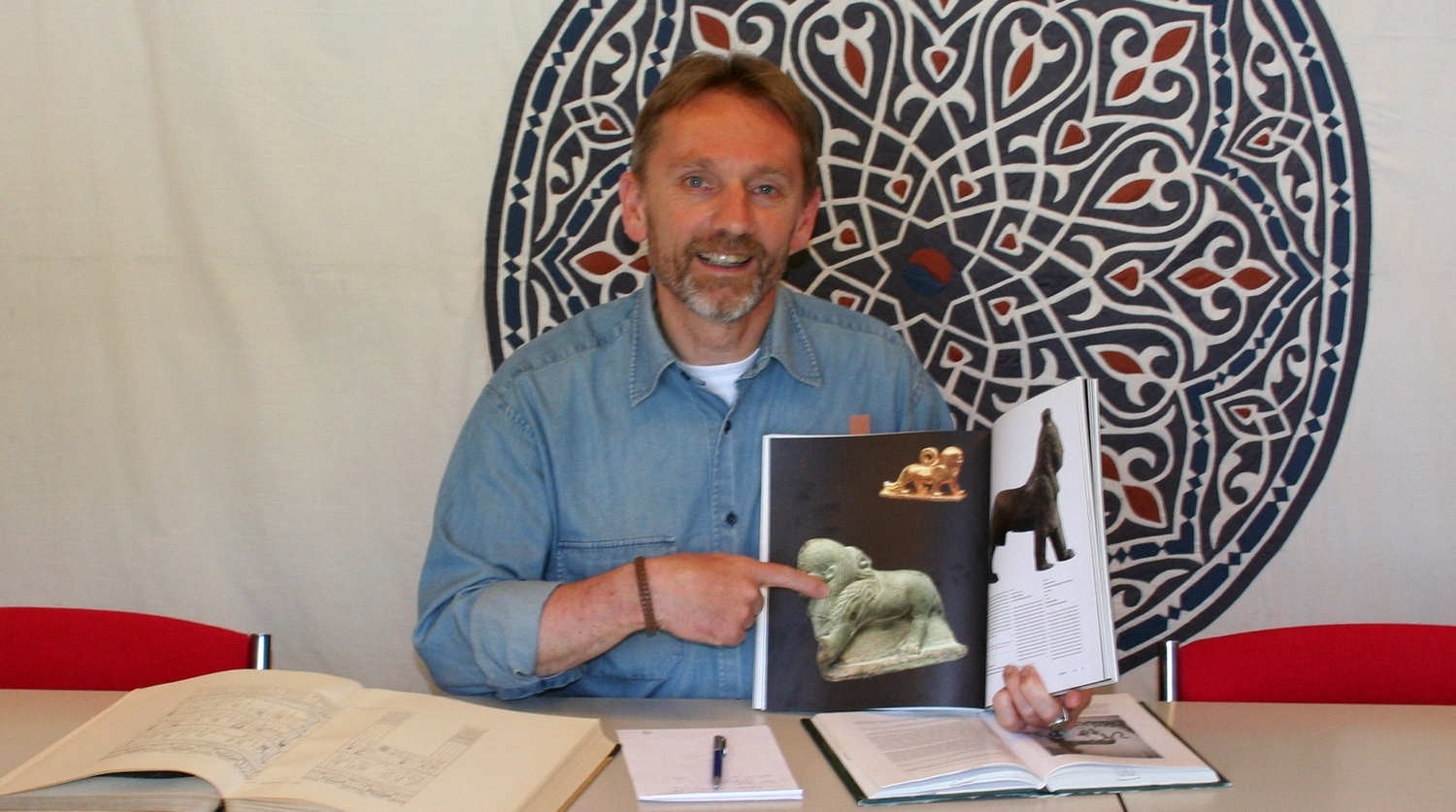
 Willem and I have spent the last few days in London, basically because I was asked to give a lecture to the Oriental Rug and Textile Society of Great Britain about the work of the TRC. This was given in the evening of the 18th January to a full house in the meeting room of an 18th century church in the centre of London. It was fun talking about the TRC: its origins, the wide range of acivities, its ever expanding collection, and the plans for the future. A group from the society will be coming to The Netherlands in March and will be spending some time at the TRC.
Today Willem and I, plus a textile friend, Caroline Stone from Cambridge, spent some time at the Victoria and Albert Museum looking at two very different exhibitions. The first was about Lockwood Kipling, father of Rudyard Kipling, the famous British author of books such as Kim and Jungle Book. Lockwood Kipling visited the Great Exhibition of 1851 and became fascinated with Indian arts and crafts. He moved to India and was involved in the development of a wide range of crafts, especially in the Punjab region of the country. He also helped to establish an art academy in Lahore. Lockwood Kipling was also involved in the British arts and crafts movement, including the design and production of textiles and embroideries. An interesting exhibition about an influencial artist and designer, who has been overshadowed by the work of his son.
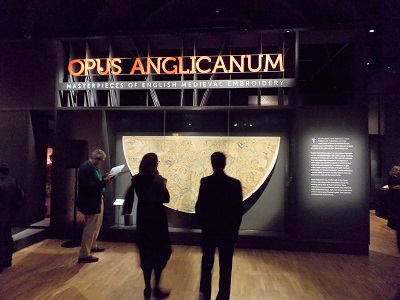
The main reason for going to the Museum, however, was to see their Opus Anglicanum exhibition (which finishes on the 5th of February, 2017, so you may need to hurry). This is a wonderful exhibition that takes the visitor through the different types of 'English' gold, silver and silk embroidery that was produced in London and various ecclesiastical centres from about the 12th to the mid-14th century (and the Black Death plague), when many people died, including skilled embroiderers. It has been argued that Opus Anglicanum, and English embroidery in general, never again reached the same standard of metal thread and silk embroidery. Opus Anglicanum was desired, commissioned and used by the medieval courts and churches throughout Europe. It was even regarded as a suitable gift for various popes, hence so many pieces being preserved and housed in European ecclesiastical collections.
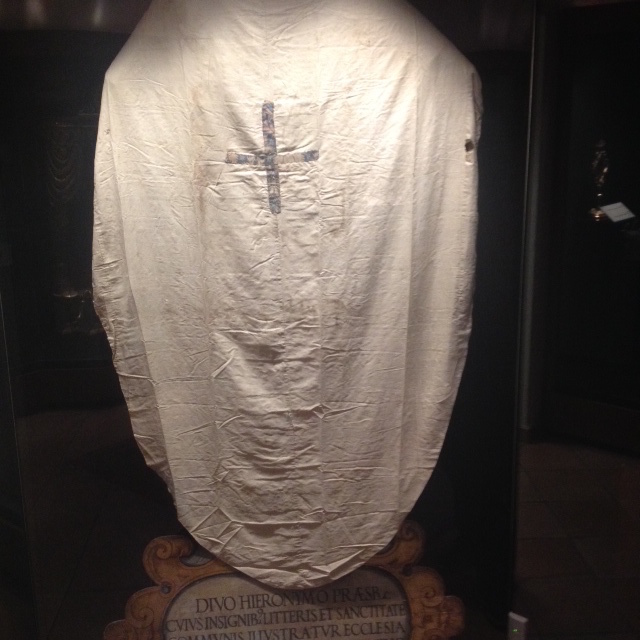
The London exhibition has many famous examples of Opus Anglicanum on display, including the Syon Cope, the Toledo cope, and the Vatican cope, but also various chasubles (including the Clare chasuble), and dalmatics, as well as a beautiful little figure of a knight from Stonyhurst College that dates to early 14th century. There are also a number of orphreys, burses, and panels in general. But also the 'achievements' of the Black Prince (see the TRC Needles entry)!
Attention is also paid in the exhibition to the professional embroiderers (men and women) and the tools that they used (based on archaeological finds from various quarters of medieval London). The methods of working are also explained by various videos, which are extremly helpful. The chance to see so many pieces of Opus Anglicanum in one place is truely amazing and thanks to the help of various museums throughout the world the exhibition provides a rare insight into this brilliant (literally) form of embroidery.
The exhibition is accompanied by a superbly executed catalogue with magnificent photographs. It is entitled: English Medieval Embroidery. Opus Anglicanum. It is edited by Clare Browne, Glyn Davies and M.A. Michael. It is published by Yale University Press, in associated with the Victoria and Albert Museum. Year of publication: 2016. Amazon.uk.
The exhibition was presented in collaboration with the London firm of Hand & Lock, an embroidery company that specialises in metal thread embroidery. We actually went to see them yesterday to discuss their celebratory programme for this year. The firm will be celebrating its 250th anniversary in the summer of 2017. More details about their work and celebrations can be found at the Hand and Lock website.
After our visit to the Victoria and Albert Museum, Willem and I walked back to our hotel via Liberty's of London, the famous shop just off Regent Street, which dates back to the late 19th century. Their textile department is well worth a visit (if you like the Liberty style of course!). Tonight we are going to the opening of an exhibition called 'Embroidered Tales and Woven Dreams' at the Brunei Gallery, SOAS, London. More details about this exhibition will be given in our next blog.
Gillian Vogelsang-Eastwood, 19 January 2017