• F3
  • F2
  • F4
  • F1

A group of women with a Middle Eastern background discussing Syrian garments. Photograph by Maria Linkogle.A group of women with a Middle Eastern background discussing Syrian garments. Photograph by Maria Linkogle.We are happy to draw attention to the latest project at the Textile Research Centre, Leiden, with the title 'Engaging Textile Heritage Communities through Citizen Culture'. It is co-funded with the sum of 20,000 euros by the national Fonds voor Cultuurparticipatie (The Cultural Participation Fund), and runs from April 2023 until October 2024.

For this particular TRC project we invite three groups of women from a variety of textile heritage communities to share knowledge about the textiles and textile related objects from their respective communities, included in our TRC collection. Each group meets various times to discuss textiles and garments from their respective communities. They organise a workshop of their choosing, plan a small presentation and set up the presentation itself.

The project is aimed at supporting heritage activities of groups with different cultural backgrounds, thereby stimulating closer cooperation among and between these groups. Participants will develop multiple perspectives on the value and meaning of their textile heritages, and participants will have a voice in the interpretation, appreciation and representation of that heritage.

When the groups have completed their mini presentations, the three groups will come together to share the knowledge of their respective heritages. They will choose a theme that ties the textile groups together and prepare for an exhibition and a workshop, lecture or study day based on the theme chosen by all participants.

Kotomisi jacket from Suriname, 1930s (TRC 2006.0259c).Kotomisi jacket from Suriname, 1930s (TRC 2006.0259c).

Kotomisi skirt, Suriname, 1930s (TRC 2006.0259d).Kotomisi skirt, Suriname, 1930s (TRC 2006.0259d).The celebration of Keti Koti seems a good time to review the TRC’s collection of textiles from the South American country of Suriname. But first, what is Keti Koti? Keti Koti, celebrated on 1 July, marks the day the Dutch abolished slavery in 1863. The words mean “Broken Chains” in Sranan Tongo, a language from Suriname, where the day is also called Dag der Vrijheden ('Emancipation Day'). It’s celebrated in Suriname, a former Dutch colony, and in the Netherlands with concerts, commemorations, and, of course, by dressing in festive clothing.

Such festive clothing includes a traditional women’s ensemble called kotomisi, from the word ‘koto’ (skirt) and ‘misi’ (woman). While the word originally referred to the woman who wore the garment, over the years it has come to refer to the garment itself. The garment is mentioned in colonial accounts from the 18th and 19th century.

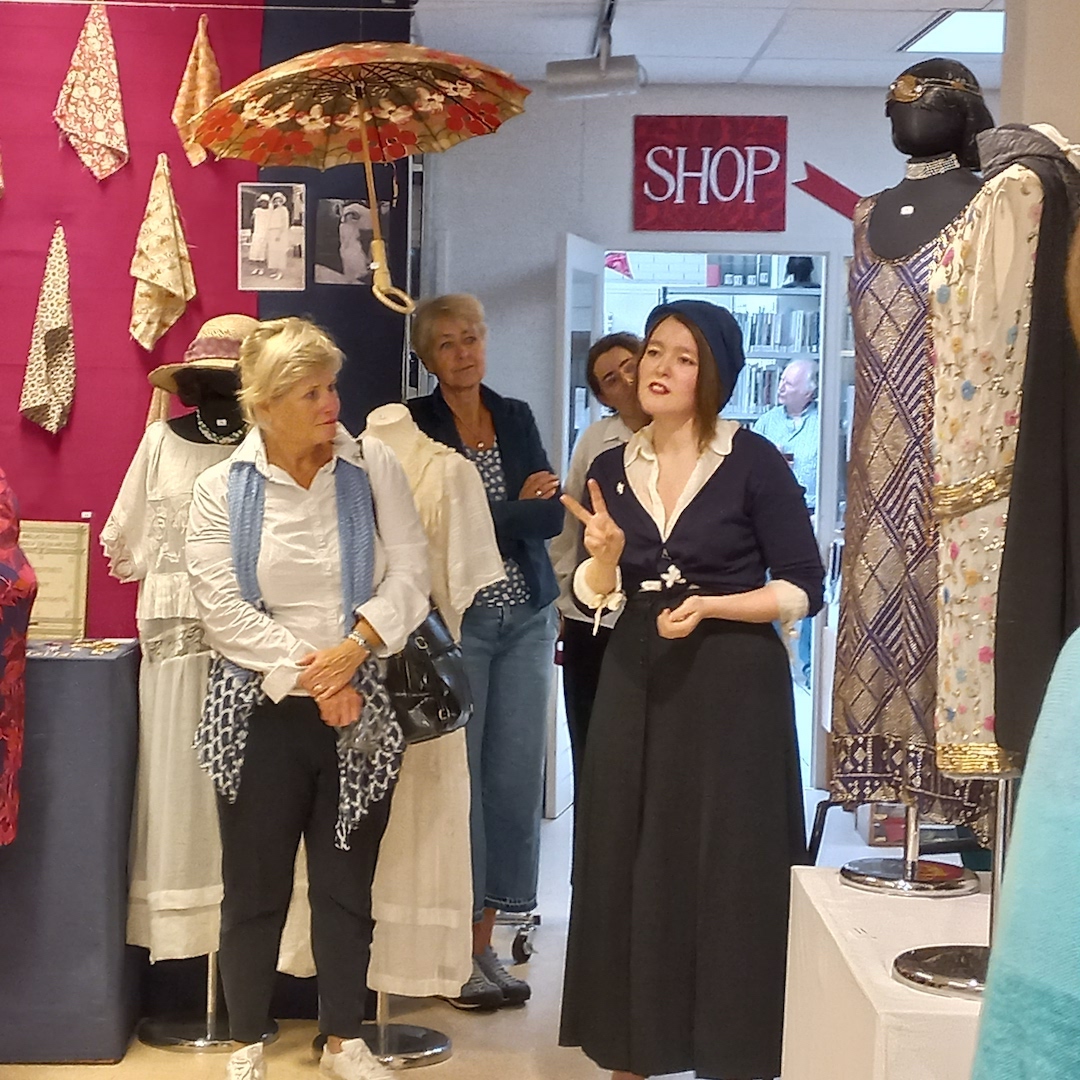
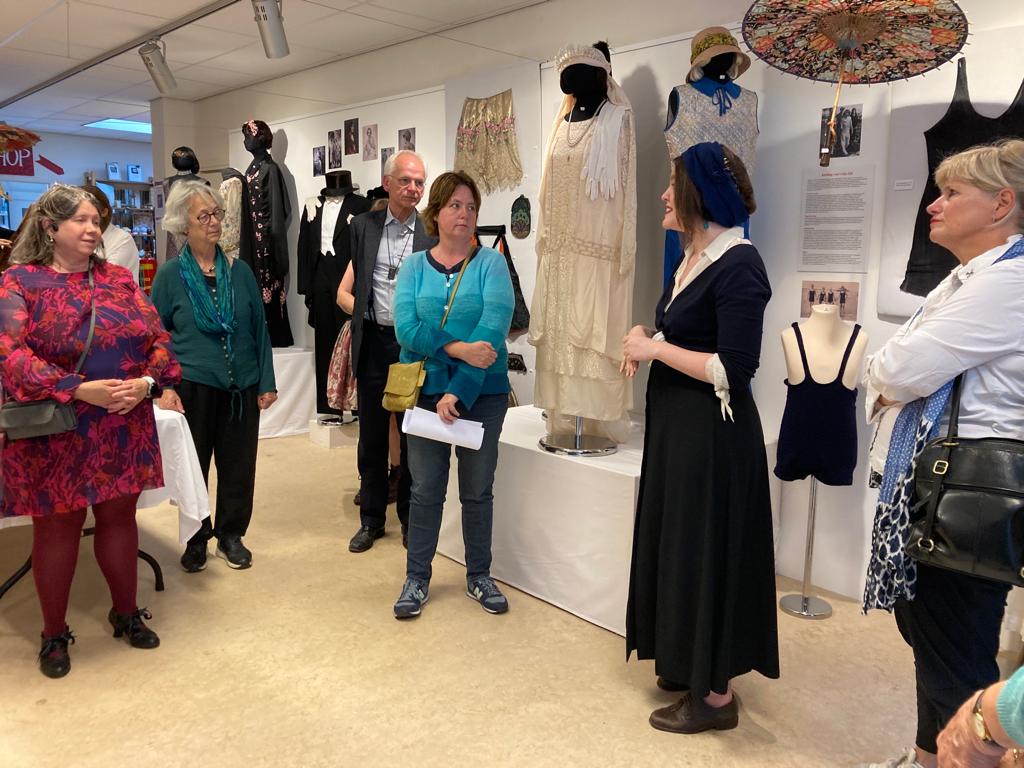
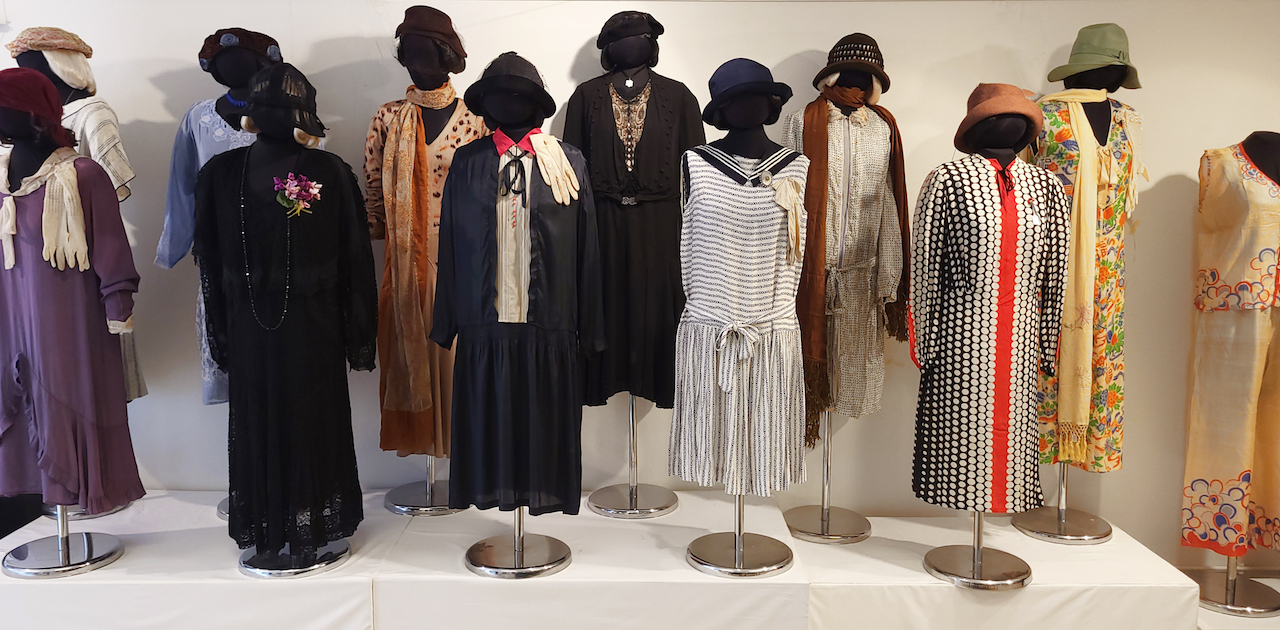
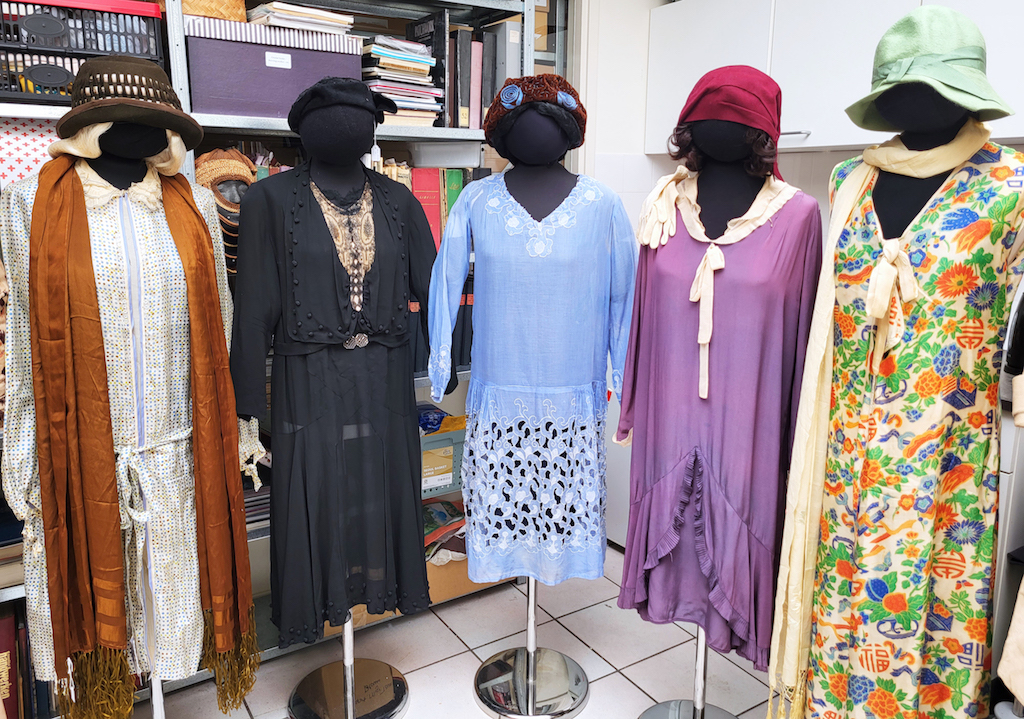
Clothing of the 1920s. The Costume Museum, Avallon. Photograph: Willem Vogelsang.Clothing of the 1920s. The Costume Museum, Avallon. Photograph: Willem Vogelsang.Last Sunday, 11th June, Gillian and I visited the Costume Museum in Avallon, France. It was like stepping back in time.

The museum is run by two sisters, Agnès and Sylvie Carton, who have managed, with their mother Pauline, over many years to fill a large 17th century building (some 1000 square metres) in the centre of town with an amazing collection of paintings, garments and textiles (including some 3000 complete costumes), four-poster beds, glass work and porcelain, and anything else that you may associate with domestic material culture in France from the 18th to the 20th century.

Medieval statue of the Virgin Mary being taught by St Elizabeth (?). Troyes Cathedral. The statue  shows the rich garments of Mary and her teacher. Photograph by author.  Medieval statue of the Virgin Mary being taught by St Elizabeth (?). Troyes Cathedral. The statue shows the rich garments of Mary and her teacher. Photograph by author. Develop an interest (translation: obsession) in textiles and see the world! Well, perhaps not the whole world, but the study of textiles and building up the TRC Collection are certainly taking me to a variety of different countries and more is to come over the next few years.

This blog is being written during a trip to France, more specifically Troyes. Willem and I are en route to some friends who are making a donation of textiles, clothing and looms from the Philippines, Indonesia and Belgium! More about the donation in another blog.

We have just had some very interesting visitors at the TRC, namely Keiko Okamoto and her mother, Nobuko (Tsugita) Okamoto, who are on their way from Japan to the International Textile & Garment Technology Exhibition (ITMA), in Milan, Italy, but they first wanted to come to Leiden to see what we are doing and why. They also wanted to see Leiden itself and especially the Siebold Huis, an international centre for Japanese studies, based on the famous Siebold collection of 19th century Japanese items. Both Augusta de Gunzbourg and myself were very pleased to welcome them at the TRC.

From left to right: Augusta de Gunzbourg, Keiko Okamoto, Nobuko (Tsugita) Okamoto, and the author. Monday 5 June 2023.From left to right: Augusta de Gunzbourg, Keiko Okamoto, Nobuko (Tsugita) Okamoto, and the author. Monday 5 June 2023.

Over the last month or so we have had various questions about the TRC Reference Collection, and in particular how it is organised and used. These questions have come from individuals as well as various museums and groups, notably one in Kortrijk, Belgium, as well as Arraiolos (Portugal) and Lucknow, (India). So this blog is about the TRC Reference Collection and its function(s).

Sample of needle lace, the Netherlands, 20th century (TRC 2007.0559).Sample of needle lace, the Netherlands, 20th century (TRC 2007.0559).

As part of building up the TRC’s reference collection, today Renske, a TRC colleague, and I went to a special textile market in Leiden (29th May) – it occurs twice a year and includes many stalls selling a wide range of woven and printed textiles, tulle and net, machine laces and embroideries, haberdashery (from pins to buckles, via threads of many kinds), knitting yarns, as well as one stall selling leather. Great fun! For the market of 30 October last year we published another blog.

Announcement for the 29 May textile market in LeidenAnnouncement for the 29 May textile market in Leiden

Author in front of Durham Cathedral, 25 May 2023. Photograph: Willem VogelsangAuthor in front of Durham Cathedral, 25 May 2023. Photograph: Willem VogelsangI am looking out of my hotel window at the spectacular sight of the towers of the medieval cathedral of Durham and neighbouring castle; a building complex with over a thousand years of history. I could sit here for a very long time! However, this blog is about saints and embroidery, not early medieval buildings.

In previous blogs Willem and I have talked about our visits to look at the St Petrock’s altar cloth in Exeter Cathedral, England, and also about the embroideries associated with Frankish St Harlindis and St Relindis in Maaseik, Belgium, about St Thomas Becket’s garments and embroideries in Sens, France  and the embroidered cope associated with St Thomas Becket in Kortrijk, Belgium.

Zoek in TRC website

Contact

Boerhaavelaan 6
2334 EN Leiden.
Tel. +31 (0)6 28830428  
office@trcleiden.org

Het TRC is elke dag geopend tussen 10.00 en 15.00 uur.

facebook 2015 logo detail


instagram vernieuwt uiterlijk en logo


Bankrekening

NL39 INGB 0002 9823 59, t.a.v. Stichting Textile Research Centre.

Financiële giften

Het TRC is afhankelijk van project-financiering en privé-donaties. Al ons werk wordt verricht door vrijwilligers. Ter ondersteuning van de vele activiteiten van het TRC vragen wij U daarom om financiële steun:

Giften kunt U overmaken op bankrekeningnummer (IBAN) NL39 INGB 000 298 2359, t.n.v. Stichting Textile Research Centre. BIC code is: INGBNL2A

U kunt ook, heel simpel, indien u een iDEAL app heeft, de iDEAL-knop hieronder gebruiken en door een bepaald bedrag in te vullen: 


Omdat het TRC officieel is erkend als een Algemeen Nut Beogende Instelling (ANBI), en daarbij ook nog als een Culturele Instelling, zijn particuliere giften voor 125% aftrekbaar van de belasting, en voor bedrijven zelfs voor 150%. Voor meer informatie, klik hier