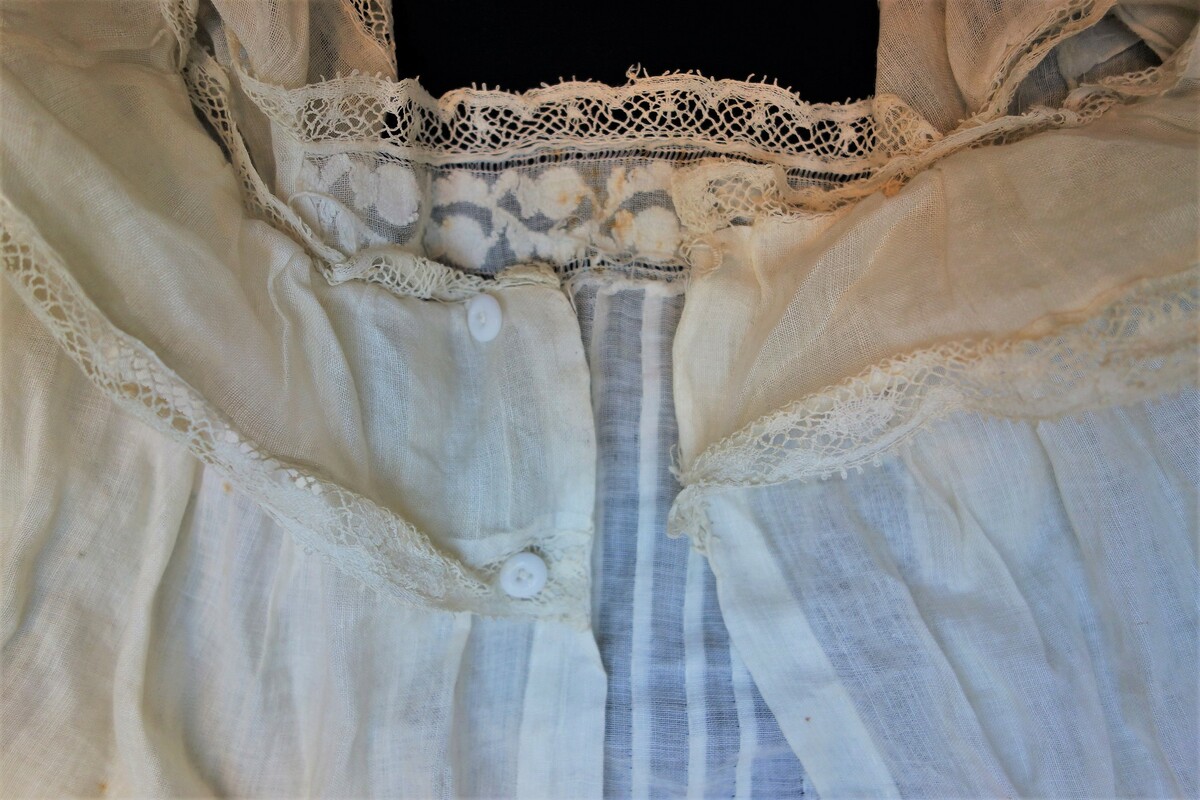
Repurposing a blanket into a sport's jacket, anno 1946
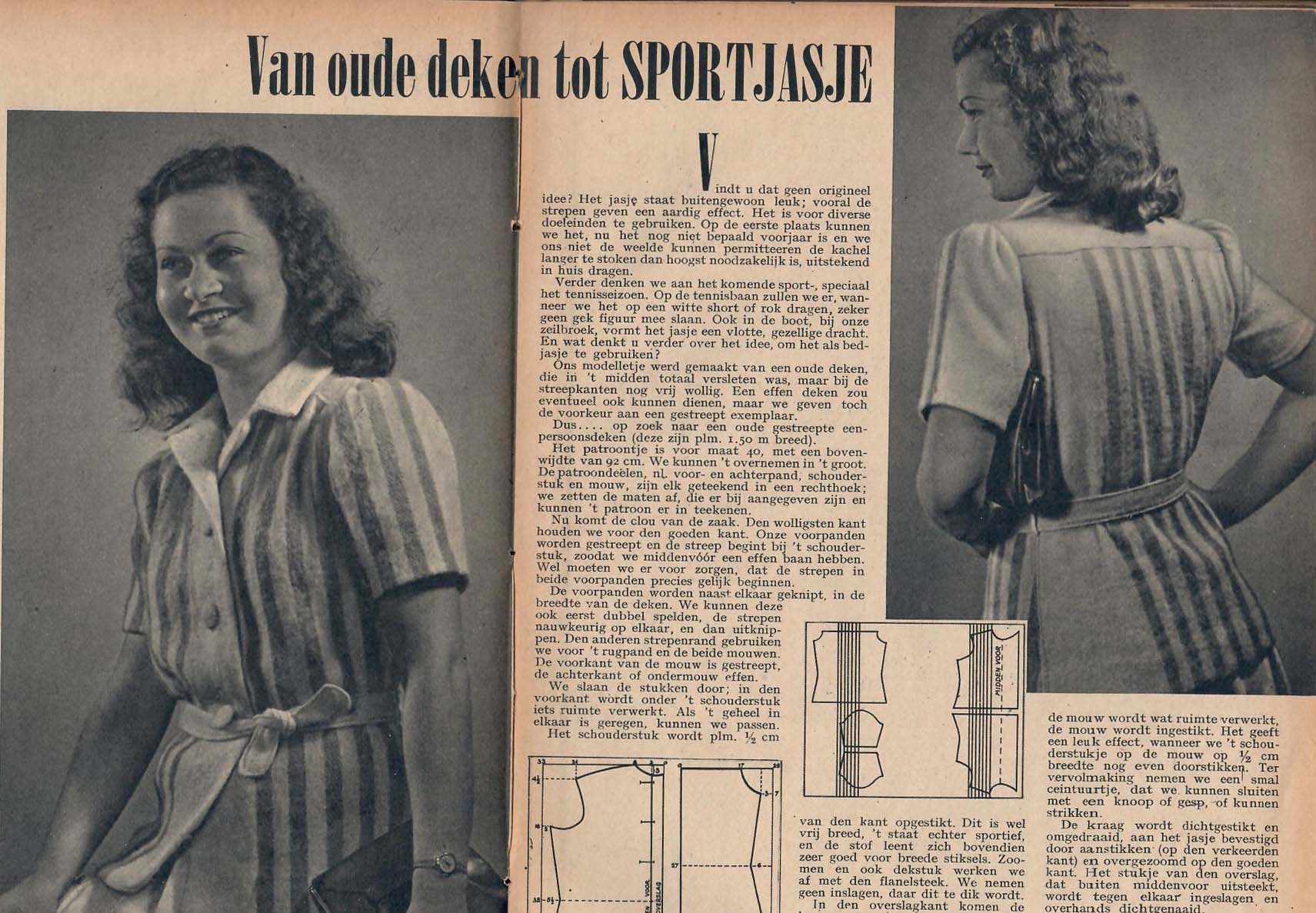 Article in the Dutch women's magazine Libelle about re-purposing a blanket, 1946.“A lovely jacket to wear indoors – as we can’t yet afford the luxury of turning up the heating other than when strictly necessary - but also nice to wear on the tennis court”. This is what the Dutch women’s magazine Libelle wrote in 1946 about the sewing pattern for a sport's jacket made from a leftover woollen blanket.
I recently came across this article in the TRC magazine collection. It struck me because it could easily have been a recent article about upcycling textiles. It is, however, an example of how magazines contributed to helping households to repurpose other textiles into garments in the aftermath of the Second World War.
Libelle is a - still running - Dutch women’s magazine. At the time sewing was a common subject in women’s lifestyle journals. They would feature sewing patterns, either included in the issue itself or as advertorials for patterns that could be ordered by mail.
During and after the Second World War textiles were scarce in the Netherlands, as it was in many other counties. This caused the government to implement a coupon system. Households were allowed to purchase a number of garments based on the size of the family. This meant everyone had to be as mindful as possible about buying and looking after their garments. The exhibition ‘Textile Tales from the Second World War’ contains many examples of re-purposed textiles.
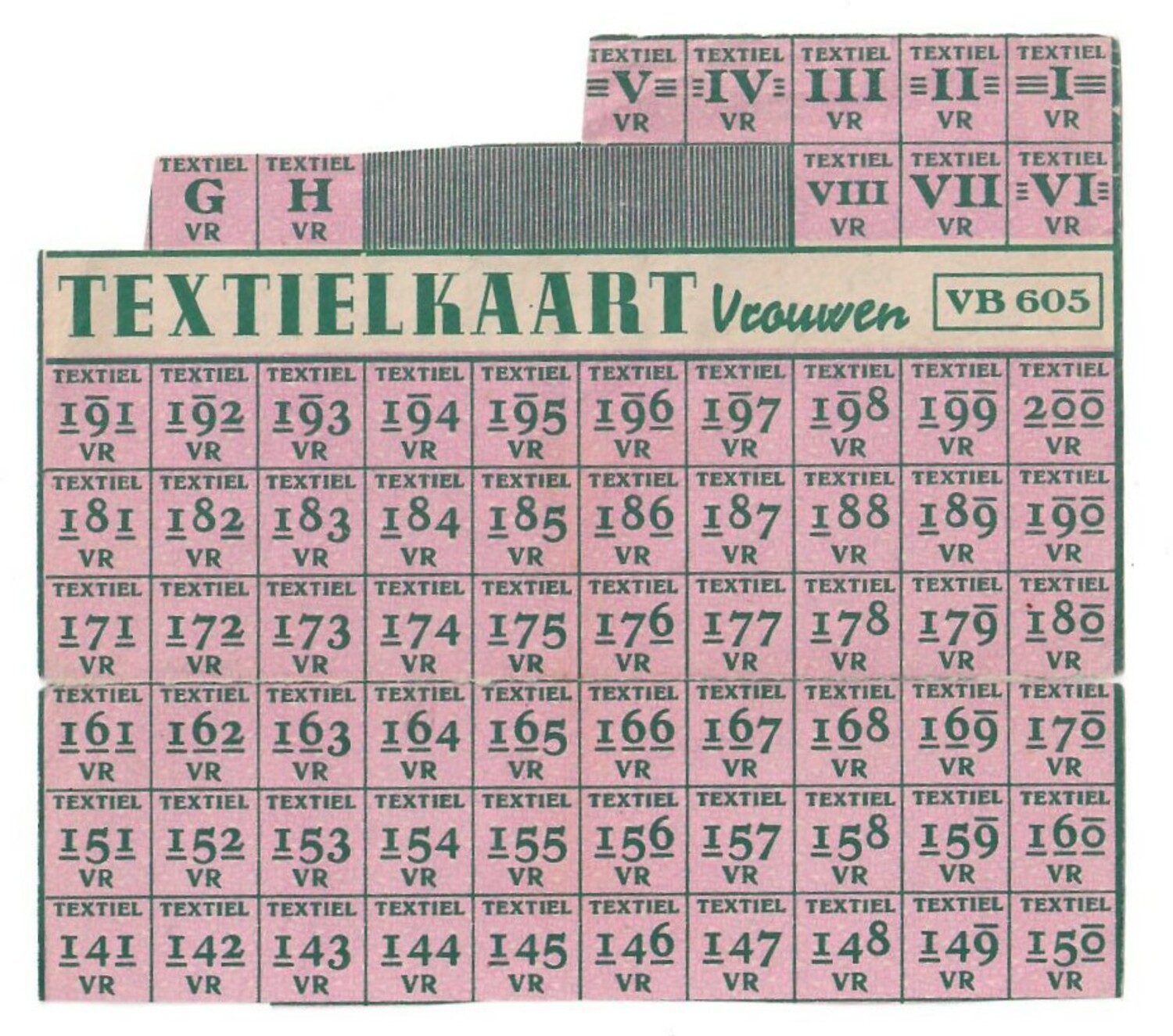 Partially used sheet of textile rationing coupons for women, the Netherlands, 1946 (TRC 2020.3670).
In the article Van oude deken tot sportjasje ('From old blanket to sports jacket'), Libelle provides a pattern and description for a simple sports jacket. The novelty of the jacket lies in the fact that the stripes of the blanket can be used as accents on the front and back panel of the bodice.
The sewing description is very short compared to contemporary sewing patterns. This is often the case in older sewing patterns: most readers had at least a basic understanding of sewing. For example: the writer provided guidelines about what stitches to use, but did not explain at what point the sleeves should be inserted or how the top of the sleeve is gathered (based on the picture of the finished garment the sleeve seems to be gathered).
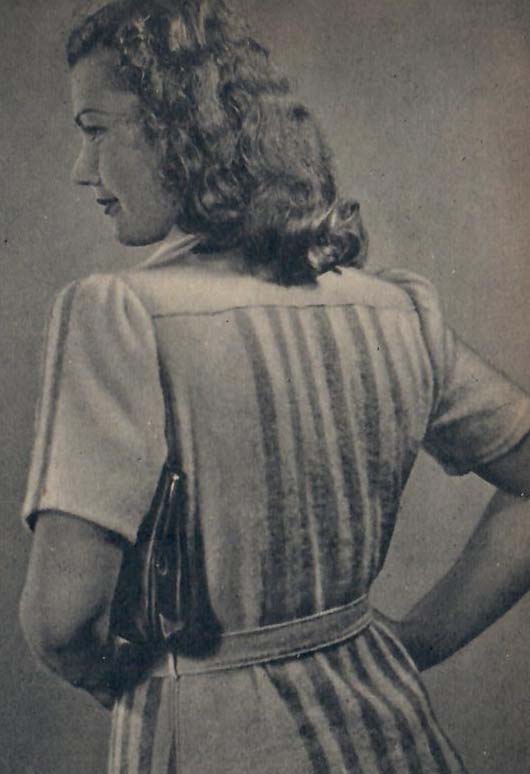 Back of the sport's jacket, made from a blanket, Libelle 1946.Although it used to be common in the Netherlands to make clothing for yourself and your family, the interest in sewing has long been declining. The low price of clothing in stores is likely one of the reasons for this. In recent years, however, sewing seems to regain popularity. There is a large and expanding community of people making, mending and repurposing their own clothing. Their motives include doing it for hobby, to make something unique and to become more conscious and environmental-friendly.
On social media many people are sharing their self-made garments for which they re-use textiles, such as blankets, to make unique pieces of clothing. Whereas after the Second World War scarcity of textiles was the main motive to make and repair clothing, nowadays the abundance of textiles becomes a new reason to do so.
Joshua Verkerk, TRC volunteer, 26 November 2021


 There was an international press conference this morning in Leiden to present the official programme of