Collar and label for a man's jacket by the French tailoring house of Maison R. Cumberland / F. Disslin, mid-1930s (TRC 2021.3360a).This week I started researching some of the latest additions to the TRC collection (TRC 2021.3360a-c; 3361a-b; 3362; 3363). They came as a set made up of seven pieces, accredited to the tailoring house of Maison Cumberland, Paris, including two dinner jackets, two tailcoats (one morning, one dress) and one waistcoat.
They were acquired by a Dutch gentleman in the mid-1930s. The name of the owner is written on one of the labels (C.A. Wiessing). The garments are indicative of a unique cultural period that occurred during the 19th and early 20th century.
Gathering information on the Maison Cumberland has proven challenging, with many details lost through time - it’s been satisfying to find traces of its former success left behind in advertisements, postal addresses and historical literature. The popularity of British tailoring reflects the hegemony of the British Empire during its height in the 19th century, dominating popular fashion trends both across the Channel and throughout the world.
 Waistcoat, Maison R. Cumberland, Paris, dated 16 May 1935 (TRC 2021.3360b). The label indicates the waistcoat was made for Mr C.A. Wiessing.Prior to this, in the 18th century, France had taken the stage as the global fashion powerhouse. However, the French Revolution gave Britain’s tailoring industry a chance to develop, fuelled by the limited contact between France and Britain during the Napoleonic Wars. This expansionist moment is well articulated in an excerpt from a speech given by Conservative MP John Wheeler to the British parliament on the 5th of November 1987 regarding Savile Row, the traditional centre of British high class men's tailoring.
‘Given the nature of our hostile climate, tailoring has been a feature of our country for some time. We all like to wear clothes… it was the French Revolution that gave the British tailor the opportunity to lead men's fashion’.
The garments now accessed in the TRC Collection should thus be understood as a visual signifier of the influence of power seeping into fashion, the human trait of copying those who are in control and of the reach of the British Empire to places both near and far.
British tailors were also sought after due to their association with the British royal family and 'upper class' living. In this period, demand for British tailoring peaked in Paris, heralding a period of British tailoring houses opening across the city. A good example, apart from the Maison Cumberland, is the House of Worth, established in Paris in 1858 by Charles Frederick Worth.


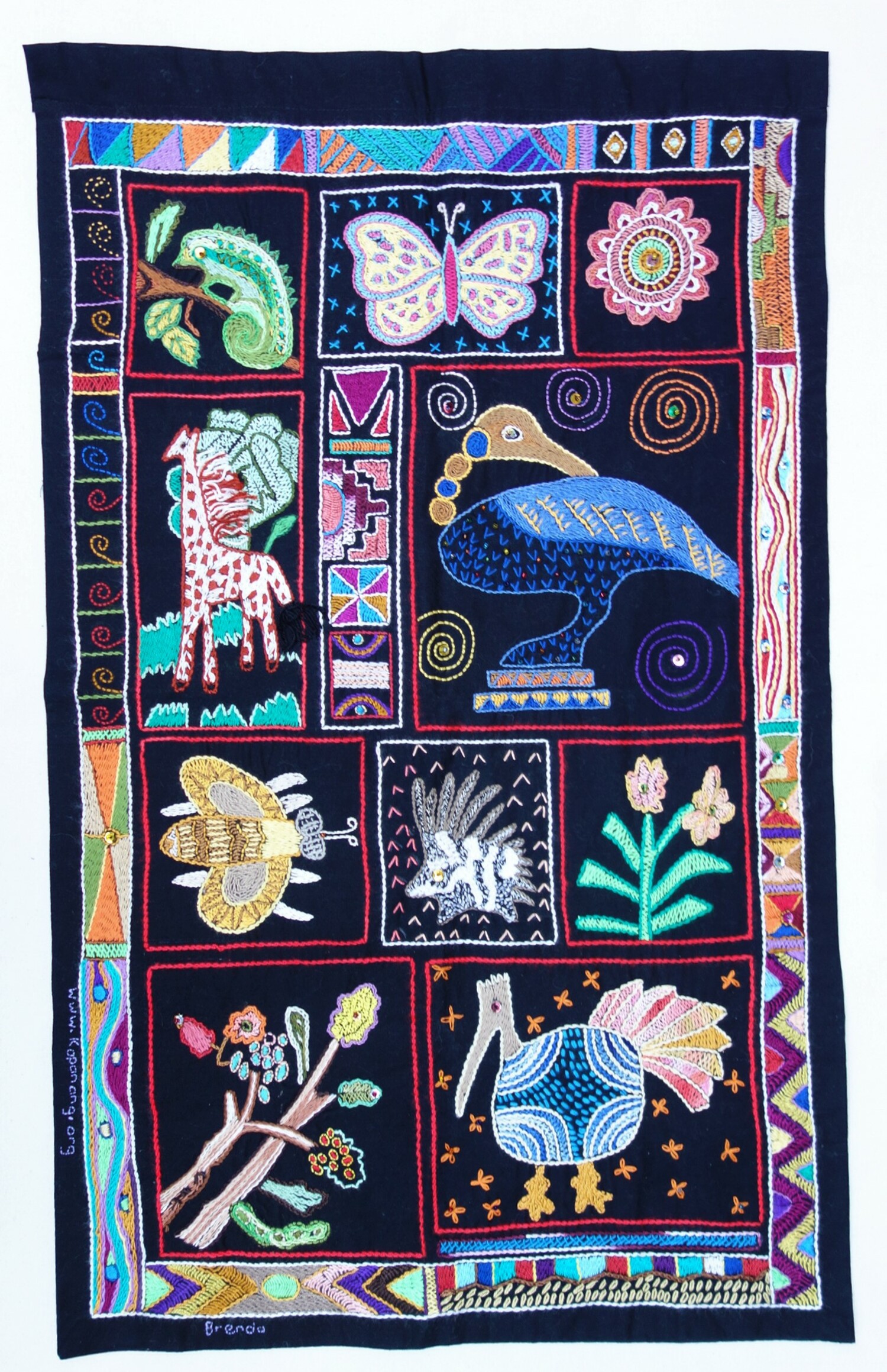
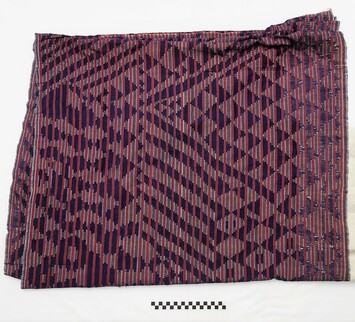 Length of 'George' cloth from Nigeria, 20th century (TRC 2019.1361).I am coming to the final stages of writing the third volume of the Bloomsbury World Encyclopadia of Embroidery, which is about embroidery from sub-Saharan Africa. Not surprisingly there is a list of things that need to be checked, added or thrown out.