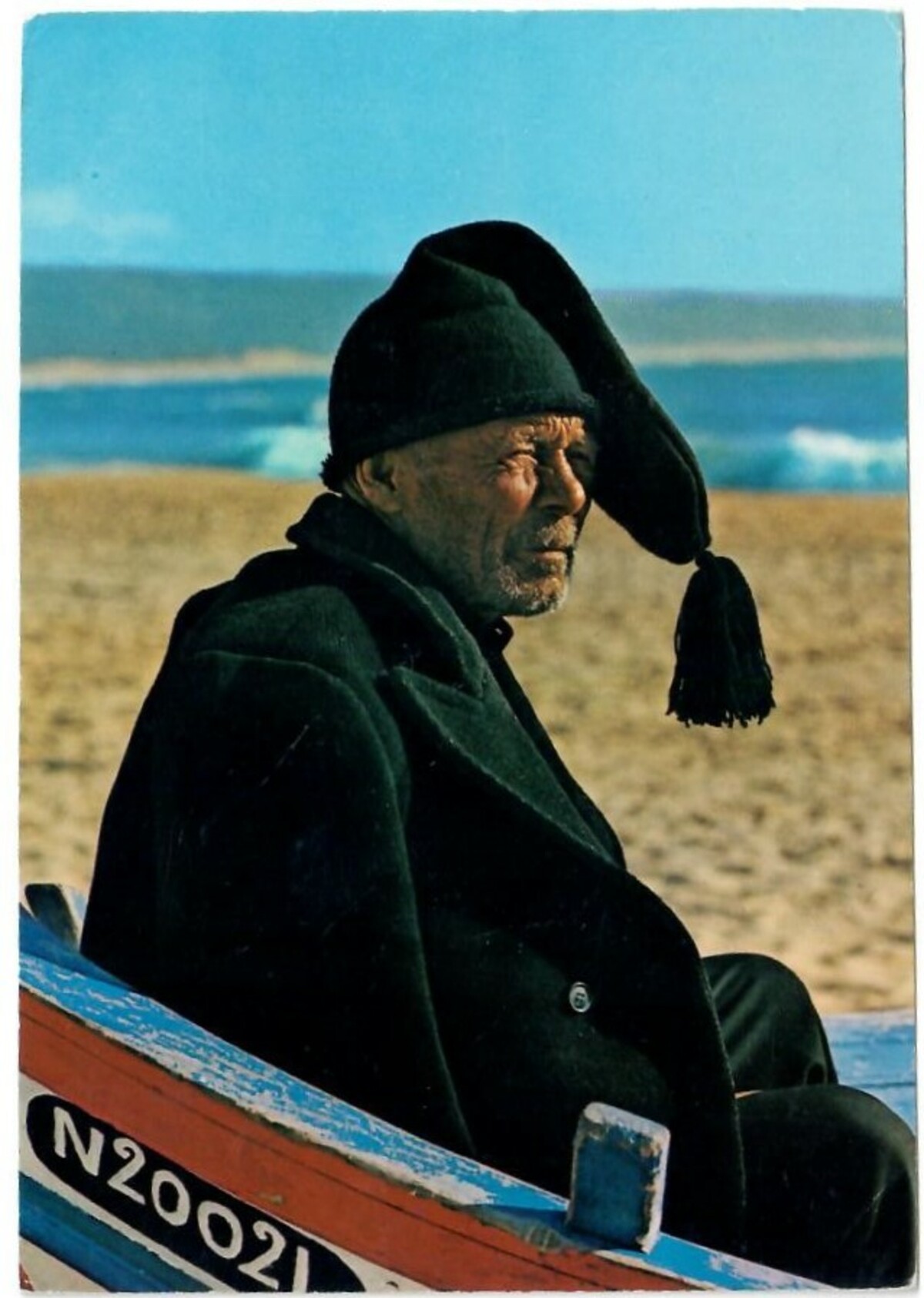
 Portuguese postcard from the mid-20th century, showing an elderly fisherman wearing a long black cap with tassel (TRC 2020.0004).Amber Butchart, a British textile and dress historian, BBC presenter and TRC ambassador, wrote on the 12th May:
Souvenir postcards have taken an heightened resonance at a time when so many of us are restricted in our travel. They capture a fleeting moment, but many also represent a certain timelessness in dress, featuring local examples of ‘traditional’ or ‘national’ clothing as part of the tourist experience. A case in point is a postcard in the collection of the Textile Research Centre in Leiden (TRC 2020.0004) that features a Portuguese fisherman wearing a mariner’s pea coat and the stocking hat characteristic of the Nazaré region, which is usually paired with checkered clothes.
Romanticised images of fishermen became popular at many of Europe’s seaside resorts, helping to chart the transition of picturesque coastlines from fishing to fashionable playgrounds. From the 19th century, fishermen and fishwives were popular subjects for picture postcards for urban visitors who were keen to sentimentalise their pre-industrial way of life. This nostalgia commodified and sanitised treacherous working life, while spreading the distinctive dress of fisher families even further.
 A studio portrait of a Cullercoats Fishwife in 1897. Kate Donkin has been photographed wearing her 'best' clothes which include a printed silk or cotton blouse with matching apron, a silk square filling the neckline of her blouse and a bonnet with the ribbons hanging loose. From Newcastle Libraries.For around a century from 1860, the Scottish fisher lassies were a distinctive sight around the coast of Britain. Women from Newhaven or Aberdeen in Scotland would follow the herring fleet down the east coast, where they joined local women in gutting, packing and salting the catch. In the last decades of the 19th century, fisher girls could be identified by the shawls wrapped around their heads and striped petticoats, the outer layers of which would be pinned up to reveal the lower layers, a stylistic device which has passed from fishing into fashionable dress a number of times.
As with much seafaring work that could be hazardous and demanded clothing that protected from the elements, there was a great desire to dress to impress in scarce leisure time. For fisher girls travelling down the coast, Sunday best dresses were carefully packed alongside oilskin or leather aprons and other accoutrements of the profession. Many groups developed regional styles, such as the Cullercoats fishwives of northeast Britain. For holidays or photographic portraits, cotton or silk bedgowns (blouses) would be worn with an apron in a matching print, accompanied by bright shawls of wool or cashmere.
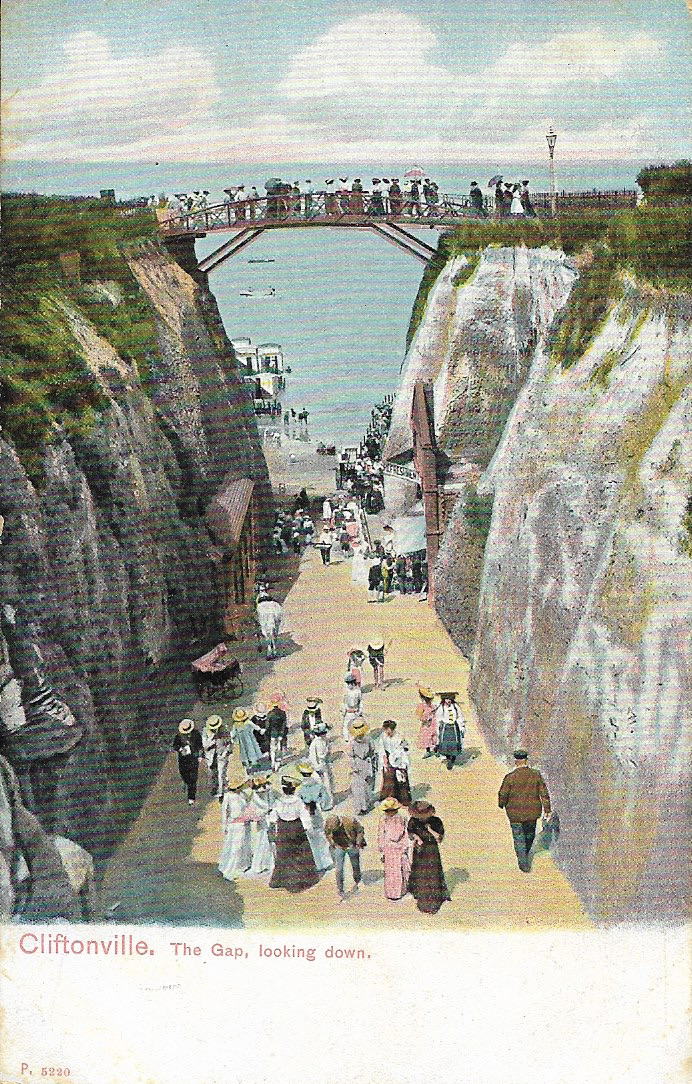 Fashionable promenaders in Cliftonville, Margate, UK, c. 1900. Collection of the author.This glorious ostentation feeds into the idea that the seaside is a space of spectacular dress, perfect for fun-soaked holidays. Piers and promenades became the setting to parade the season’s finest attire for fashion-conscious visitors. And by fixing ‘traditional dress’ in time as an essential part of the authentic tourist experience, postcards became a type of particularly flamboyant fashion plate.
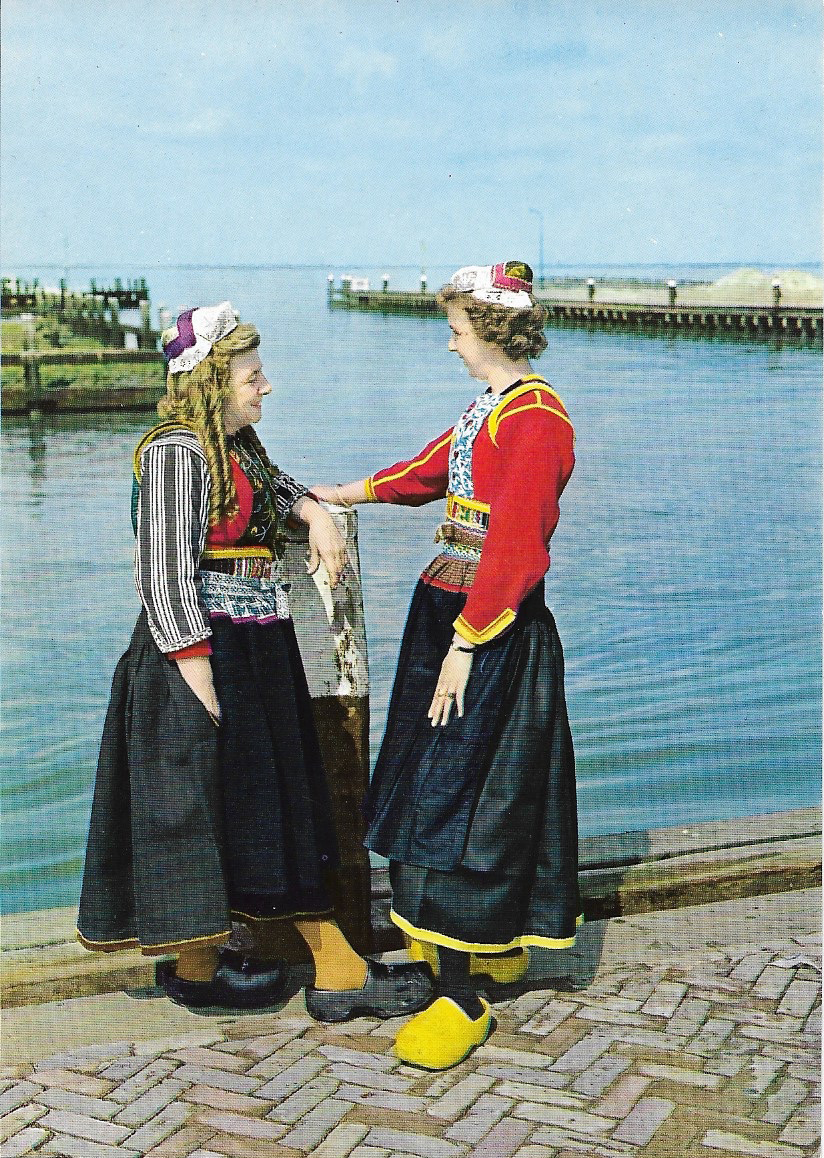 Postcard of traditional dress from Marken fishing village, Netherlands, 1960's-1970's. Collection of the author.