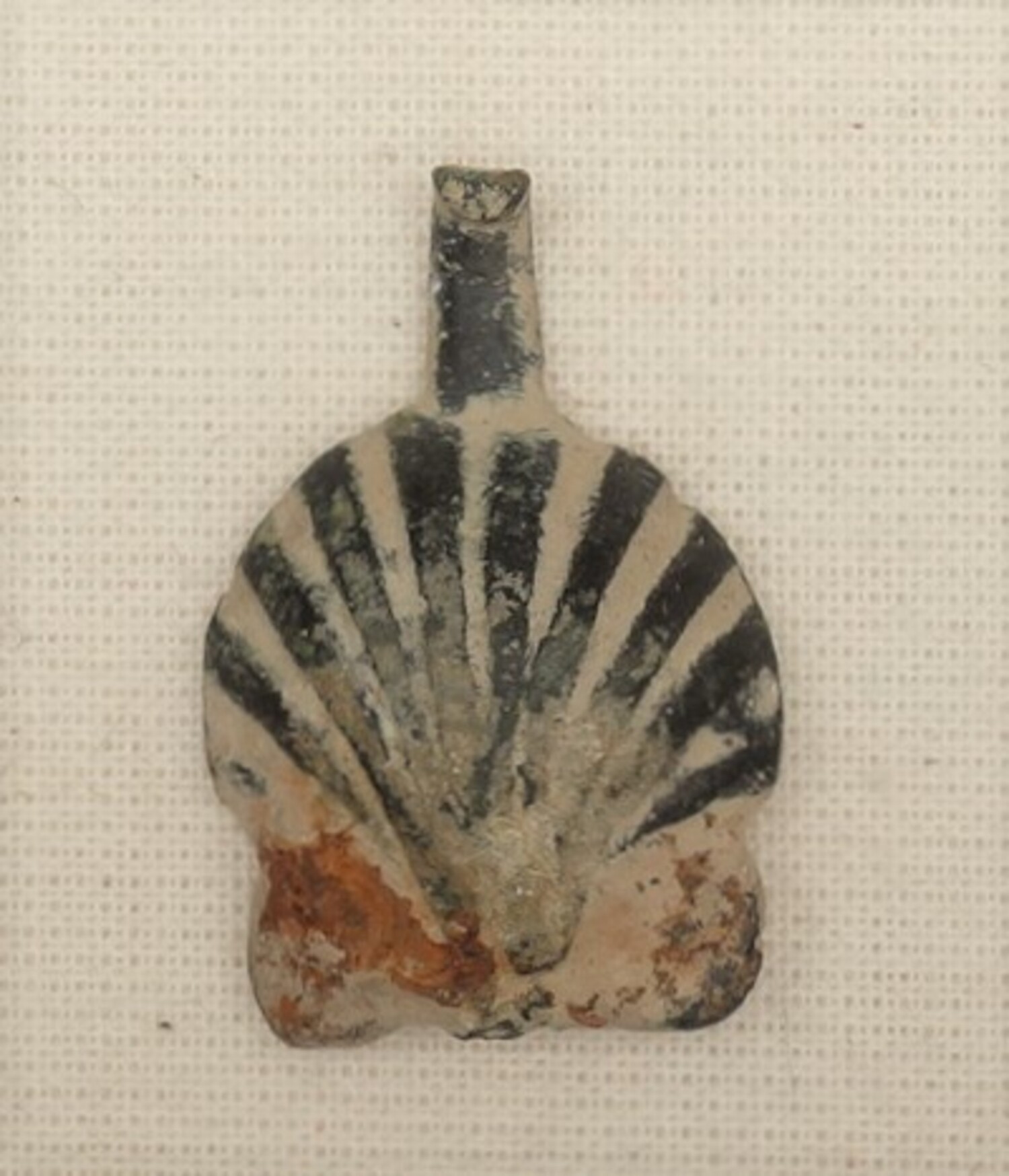
 Medieval scallop shell badge for a pilgrim to Santiago de Compostela (TRC 2020.3387).For several years the TRC Leiden has been slowly building up its collection of religious items of dress and accessories. These range from an impressive collection of prayer beads (literally from Buddhist, Christian, Islamic to Neo-Pagan forms), to liturgical and monastic garments (especially from the Syriac and Coptic Orthodox churches).
Within the last few weeks we have been given various items by the Bijbels Museum, Amsterdam, including embroidered samplers and paintings on Biblical and religious themes, as well as a bonnet for an officer in the Salvation Army (click here for more details).
From a different source we now also have a medieval pilgrim’s badge (TRC 2020.3387). Comparable badges were worn by pilgrims after they had been on a pilgrimage to a Catholic religious centre such as Canterbury, Jerusalem, Rome or Santiago, and, of course, having returned home. They were regarded as both a ‘badge of office’ and as a personal memento for an important event in a person’s life. The present badge has the shape of a scallop shell, and refers to the pilgrimage to Santiago de Compostela, in northwestern Spain.
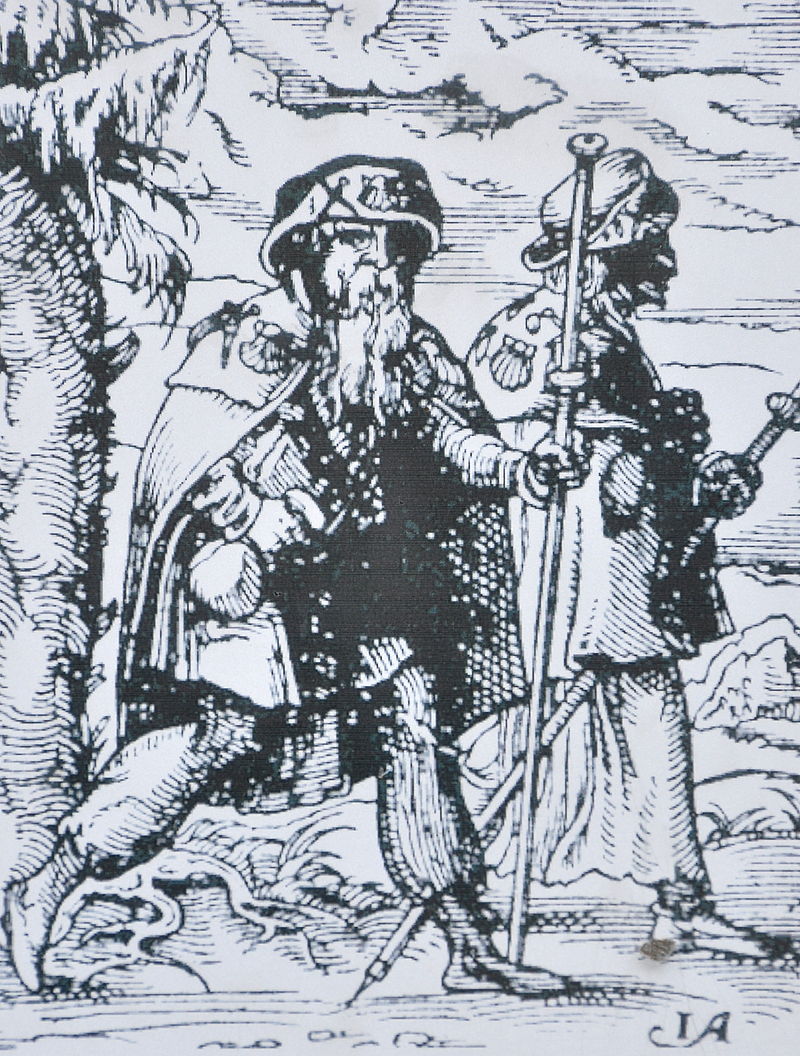 German woodcut, Jakobsweg Pilger (St. James-way pilgrims),1568.These badges were attached to the pilgrim’s clothing, such as a cloak or tunic, as well as to their hats. Some people went on so many pilgrimages that their garments became totally covered in badges exclaiming to the world their piety (or sinful life, as pilgrimages were also ordered by the Church as a penance for an proscribed deed).
Each of the major pilgrimage centres had its own symbol, such as a depiction of the death of Thomas à Becket for Canterbury (England), the head of John the Baptist for Amiens (France) and of course, and the scallop shell that stands for Saint James and Santiago de Compostela in northwestern Spain.
Where exactly this shell was found and its date are now lost, but it represents a way of life, a deep belief in the power of a pilgrimage, as well as highlighting the medieval system of travelling that included numerous monastries and convents where people could stay. The fact that thousands of such badges have been found throughout Europe and the eastern Mediterranean regions indicate that the medieval world was not always as isolated and locally orientated as it is sometimes portrayed.
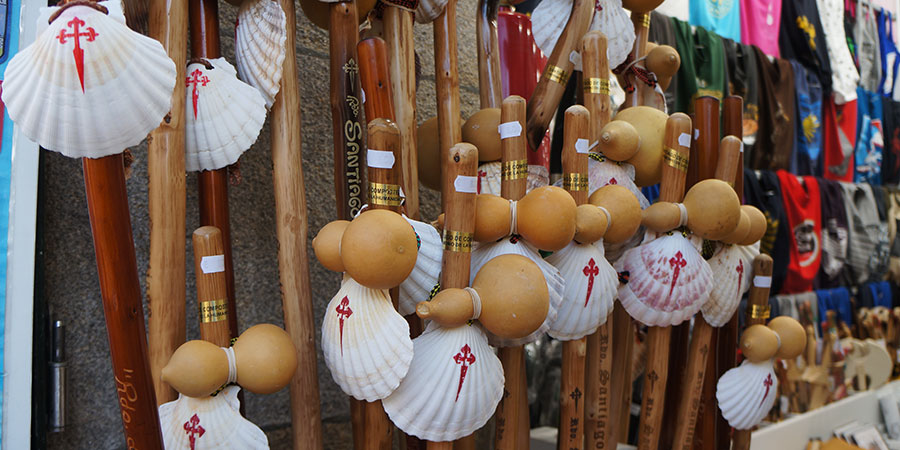 Scallop shells displayed in Santiago de Compostela.Comparable badges are still awarded to pilgrims that have completed the pilgrimage to Santiago, along the so-called Camino de Santiago.
Gillian Vogelsang, 4th July 2020