With the help of Kikuchi Naoko (Japan), a TRC (long distance) volunteer, the TRC in Leiden has been able to acquire a small collection of embroidered sukajan jackets from Japan. The term sukajan derives from: (Yokio) Suka-jan, meaning ‘(Yoko)suka jumpers’. This type of jacket dates to the end of the Second World War (1939-1945) and is based on American baseball jackets. They were worn by personnel on the US military base at Yokosuka (a city in the Kanagawa Prefecture). A specific feature of the sukajan is the use of machine embroidery (using a single needle machine that is hand operated, rather than large commercial machines).
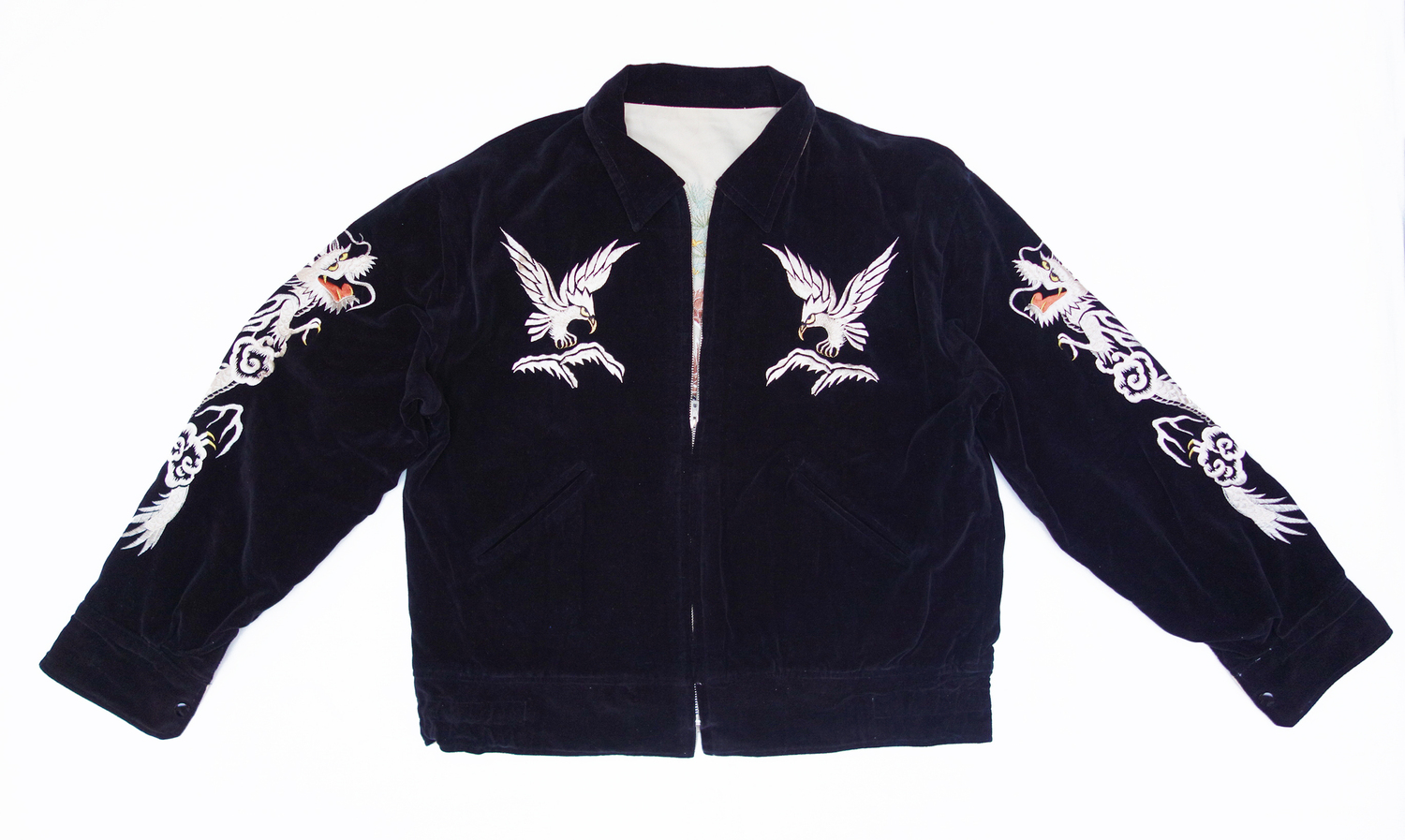 Japanese sukajan jacket, early 21st century (TRC 2021.0625).
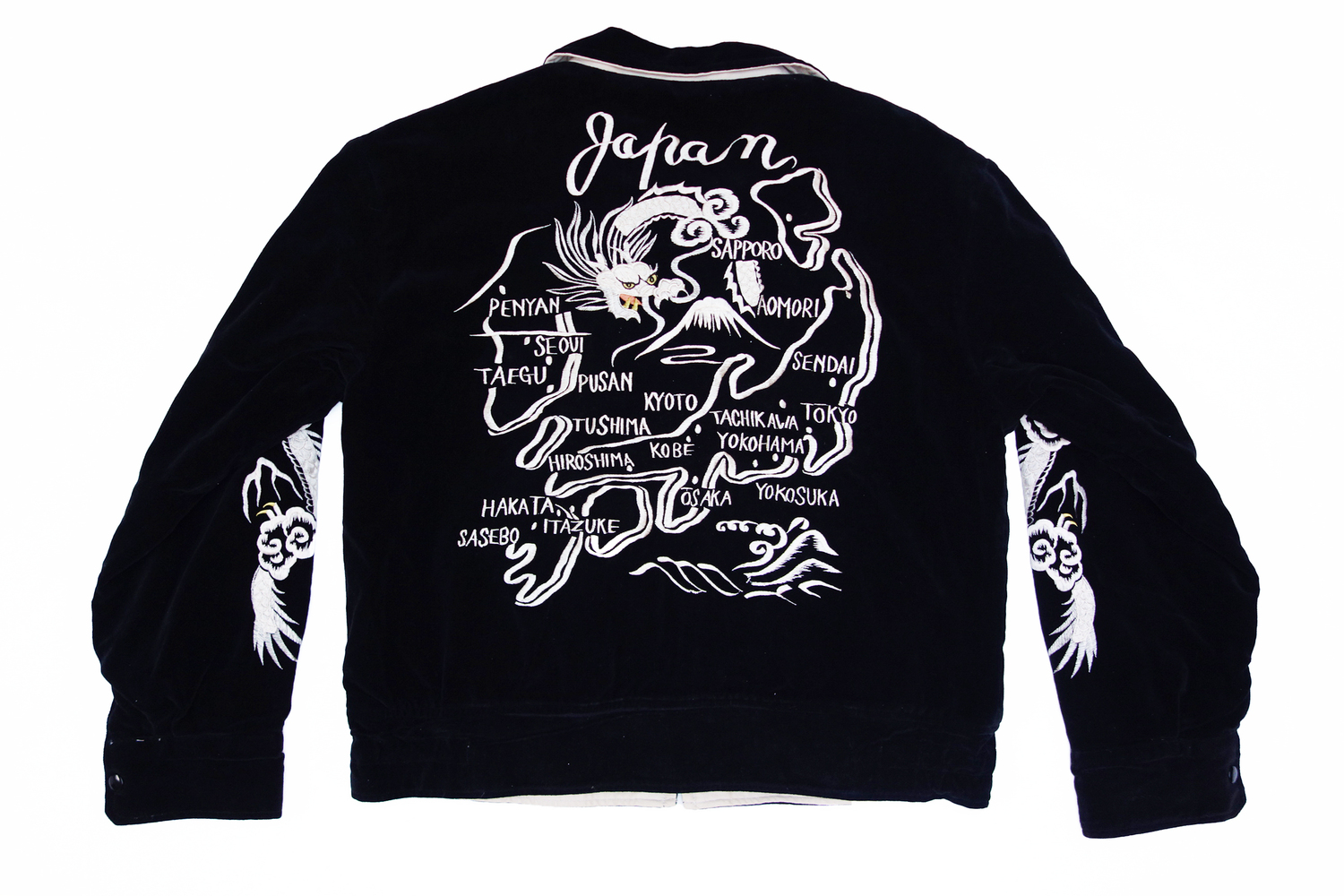 Back of a Japanese sukajan jacket, early 21st century (TRC 2021.0625).
The wearing of the sukajan jackets became very popular in the 1950’s, with both American and Japanese men in Japan and elsewhere, and they have since then become a cult garment associated with ‘bad boys’. Various Western fashion designers and stores, such as Diesel and H&M, also picked up on the sukajan jackets and incorporated them into their collections from the 1990’s onwards.
By the early 21st century the same type of jackets was produced for women, with suitable motifs (see for example TRC 2021.0627, which is decorated with butterflies and the name of Yokosuka).
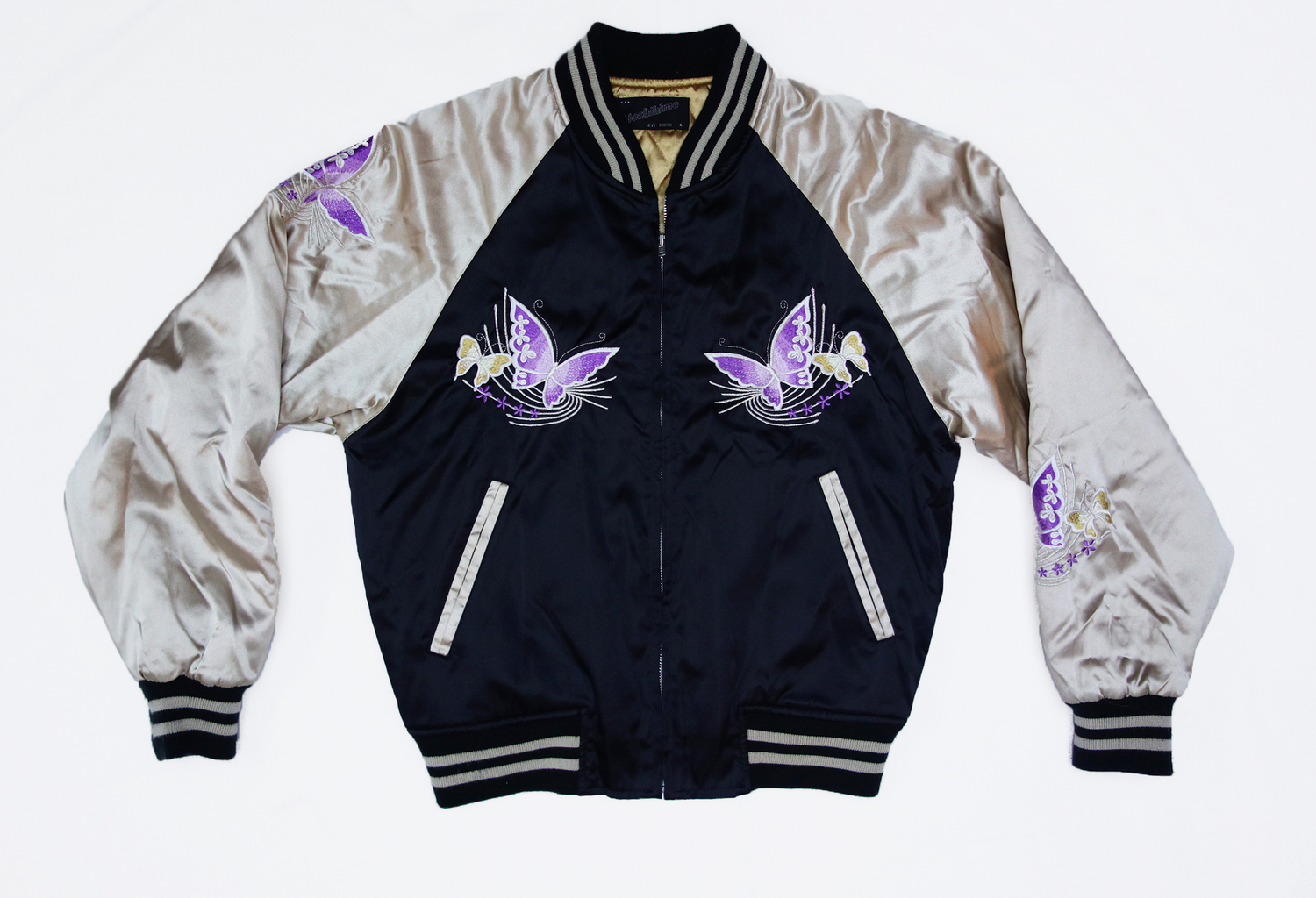 Woman's sukajan jacket, early 21st century (TRC 2021.0627).
These jackets are normally decorated with Japanese-style designs, such as fans, flowers, pine leaves, as well as iconic images, notably of Mt. Fuji and a map of Japan (for example, TRC 2021.0625). Tigers and dragons often feature as well, as these are perceived as being typically Japanese/Eastern symbols as well as often being associated with Yakuza (Japanese crime syndicate) culture. Sometimes Chinese and Japanese characters are incorporated into the designs, especially those associated with prosperity.
In addition, the Japanese forms are often combined with American imagery, such as baseball players and references to American military activity in Japan and East Asia. One of the jackets (TRC 2021.0629) just acquired by the TRC, has the text “U.S. PARATROOPERS, 13TH AIRBORNE." This was the parachutist unit that was trained to invade Japan in 1945, but the war ended before they could be deployed.
Another example of a sukajan (TRC 2021.0626; mid-1950’s) now in the TRC Collection has scenes associated with Hawaii, including hibiscus flowers, a small guitar, men surfing, as well as the word ALOHA. There is also a depiction of Mt. Fuji embroidered onto the lining of the garment.
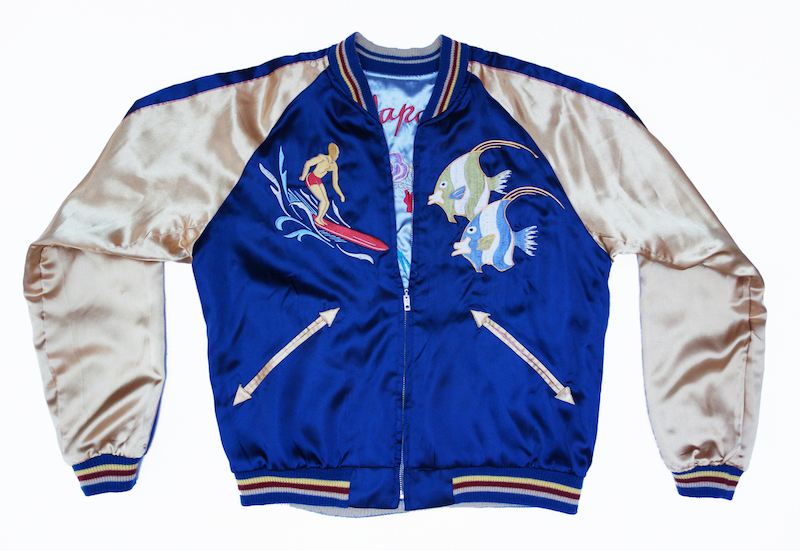 Mid-1950's sukajan from Japan (produced in China), with American themes (TRC 2021.0626).
There is a specific type of sukajan, called a Viet-jan, which is based on a military jacket known as the MA 1 (bomber jacket). This form of sukajan developed during the Vietnam war (1955-1975) and is often decorated with a map of Vietnam. An example of this type of jacket is TRC 2021.0628, which has the relevant map as well as tigers. The jacket dates to the mid-1960’s.
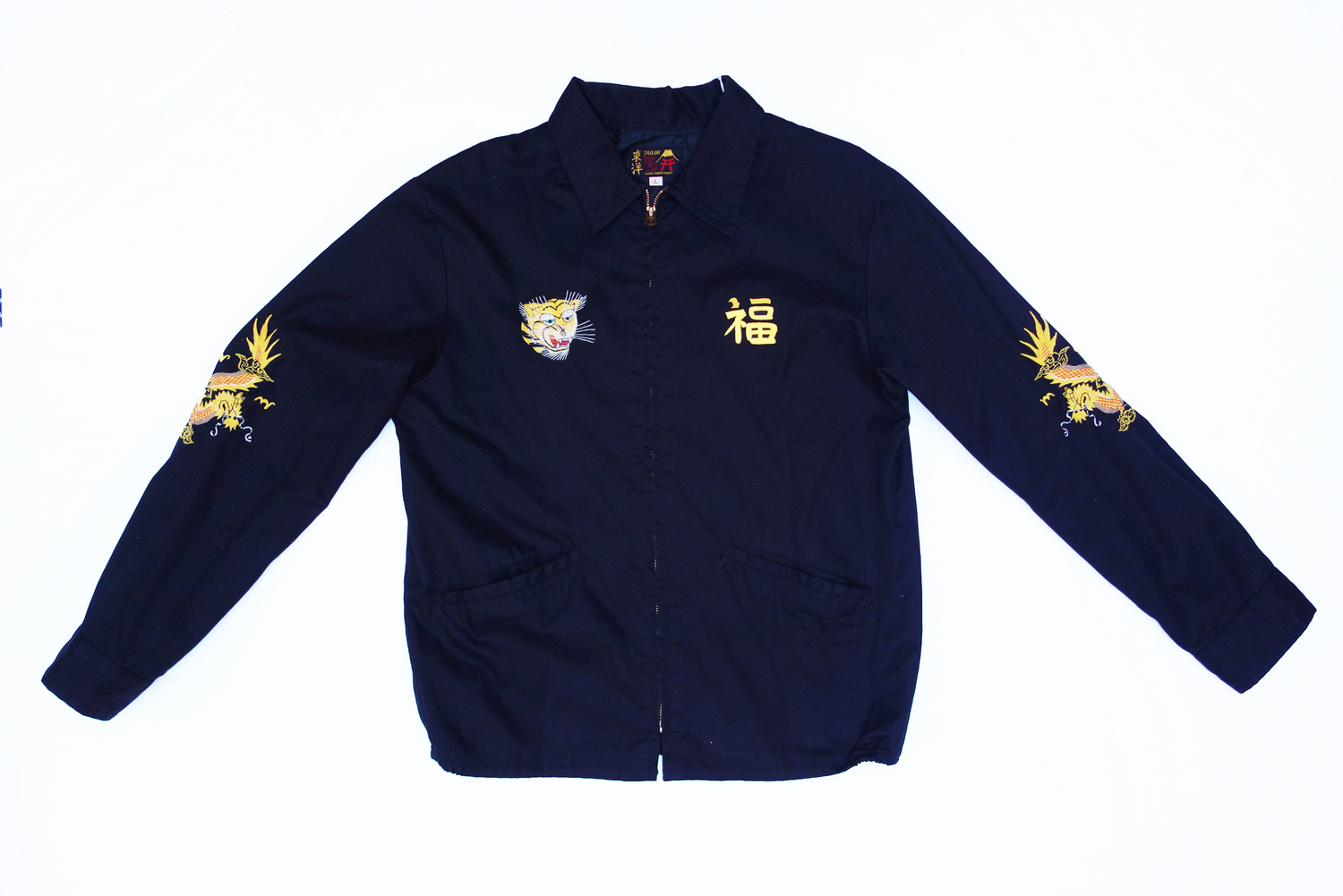 A viet-jan, or Japanese sukajan from the 1960's (TRC 2021.0628).
The sukajan jackets just donated to the TRC will feature in the forthcoming Encyclopedia of East Asian embroidery (Bloomsbury, London), organised by the TRC. They also form an intriguing part of the TRC’s growing collection dedicated to the wide-range of textiles and garments associated with Japan.
I would like to thank both Kikuchi Naoko and Francesco Montuori for their help with this blog and with the TRC’s Japanese collection in general.
Gillian Vogelsang, director TRC, 7 March 2021.