Here at the TRC we are busy working on our next big exhibition: about 1920s fashion in the Western world! The emphasis lies on women’s clothing and outfits, but we have not forgotten men’s wear, and we are including various men's outfits including an official uniform for a Dutch politician, as well as evening wear. All the items are based on garments and accessories in the TRC Collection.
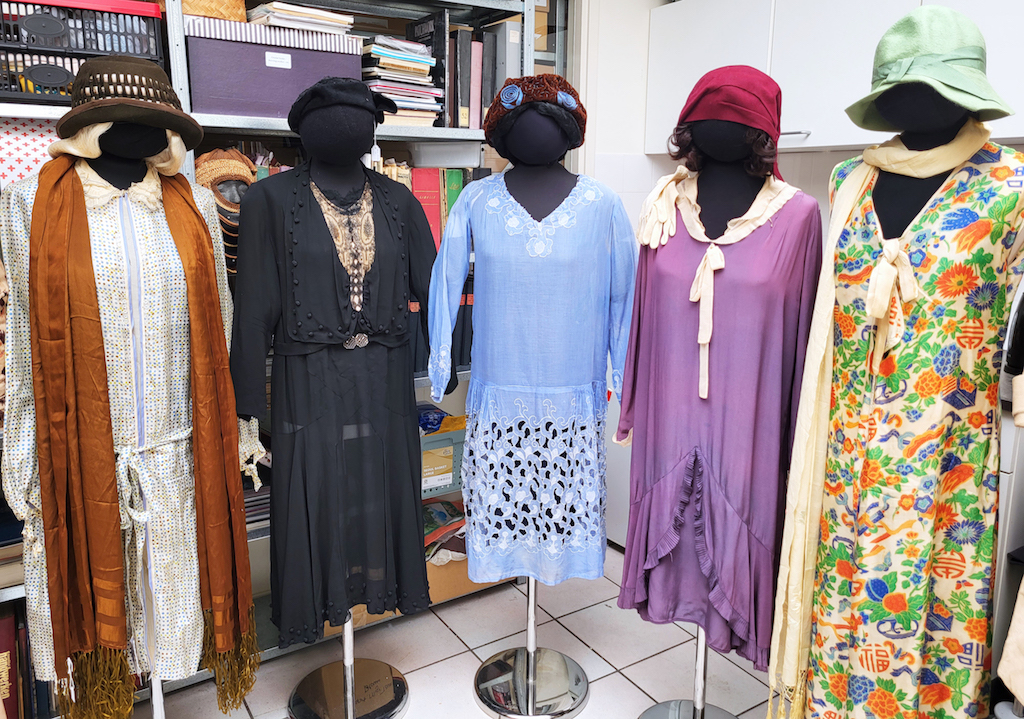 Exhibition in progress: The 1920s from head to toe
We have brought out beautifully beaded flapper dresses, as well as the daily, but striking printed dresses and all the hats, shoes, bags, gloves, spectacles, underwear and even paper parasols that would have been used to complete a 1920s fashionable woman’s outfit for many different aspects of her life, literally from daytime work and duties to afternoon tea time; from evening parties to a trip to the beach.
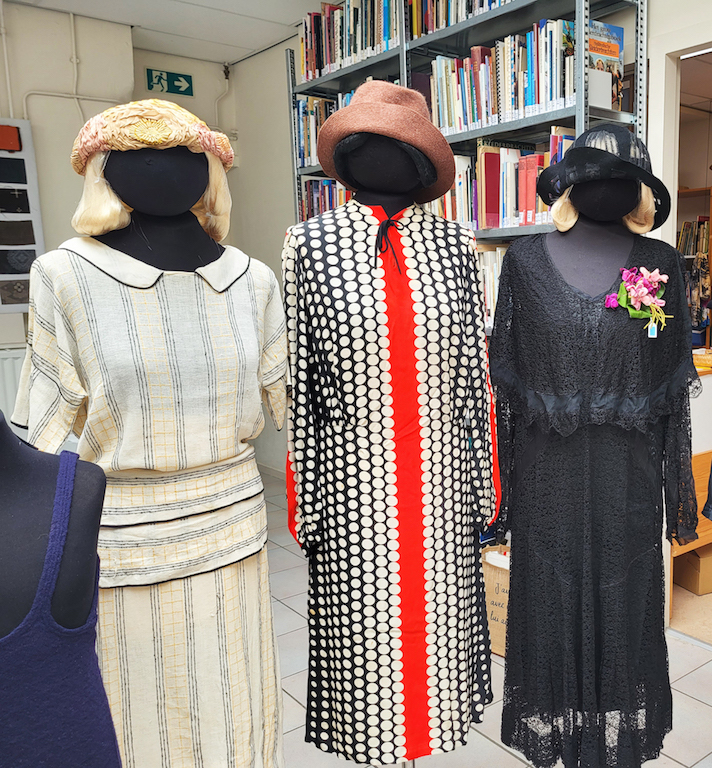 Exhibition in progress: The 1920s from head to toeIt is amazing to reflect on how different women’s fashion of the 1920s was from that of the previous thirty-odd years. Whereas the 1890s and 1900s emphasised an ideal of femininity through corseted, hourglass-shaped silhouettes, the 1920s suddenly reinvented the idea of the appearance of a ‘modern’ woman who was slender, boyish in silhouette, sported looser clothing with straight lines and, shock horror, wore her hair short.
There are various features of interest we have noticed while working on the exhibition. Some details have made us reassess our (commonly held) assumptions about the decade, while others have reinforced these iconic images:
- A clear tendency for sheer fabrics (gauze, crepe, netting, lace, etc.) that would require appropriate underwear to make sure the garments were not too revealing.
- New types of rather modern undergarments such as loose bandeau bras and rayon under-slips, as well as hip-flattening girdles.
- Low waistlines and decorated, open backs on dresses in either monochromatic colours or geometrically printed patterns.
- Flapper dresses that feature more beading and spangles than the usual fringes we expect when thinking about these garments.
- Hats and gloves were absolutely necessary for all and any occasion.
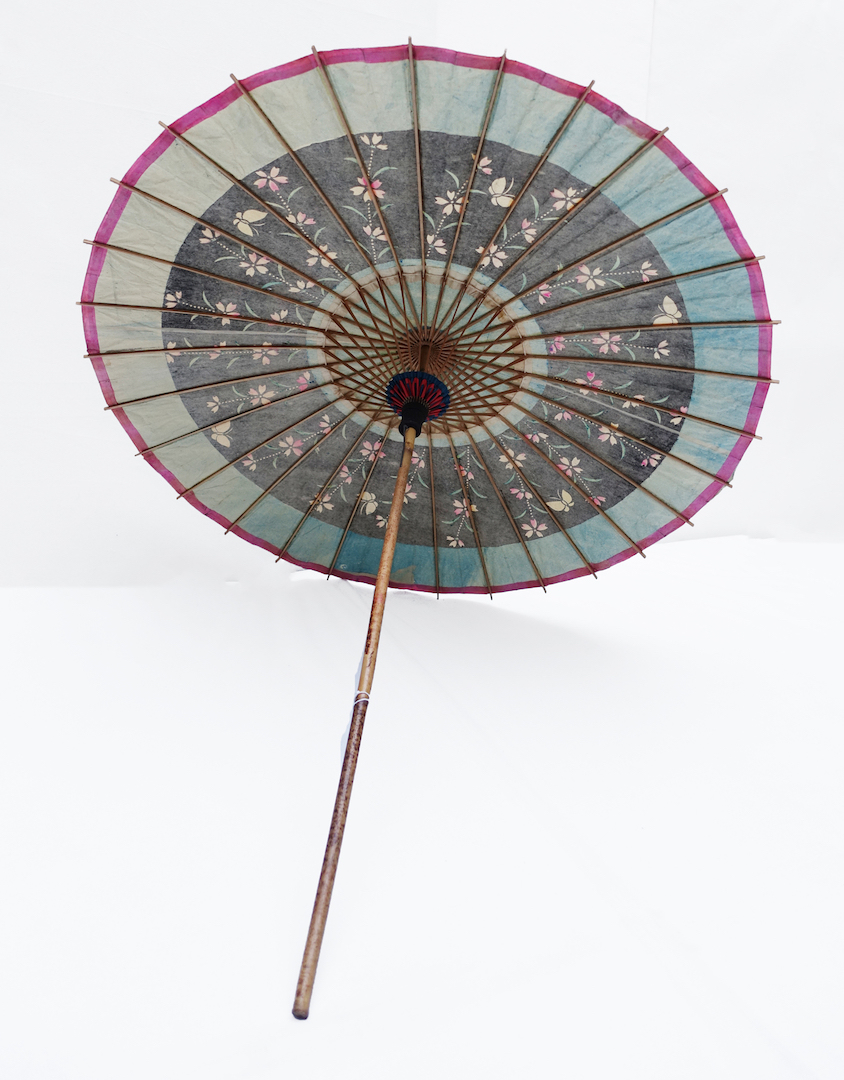 1920s parasol from a Dutch family in Indonesia.There is still a lot to be done: proper dating of the items, steaming, pinning the garments, fitting the mannequins and garments correctly, figuring out how to ‘finish’ the mannequins with wigs and accessories, and finally installing the figures in the gallery for show. Not to mention text boards, illustrations, books, all used to bring the exhibition in the TRC Gallery to life!
We are still looking for some items for the exhibition, such as men's and women's coats, and suitable items of jewellery (especially the long, beaded necklaces of the period). We are sure that suitable items will appear thanks to Citizen Culture and the strange (and wonderful) magic of the TRC at work, once again!
The exhibition will open in mid-September and be on view for six months. We hope to welcome you to explore fashion from one hundred years ago – literally from head to toe!
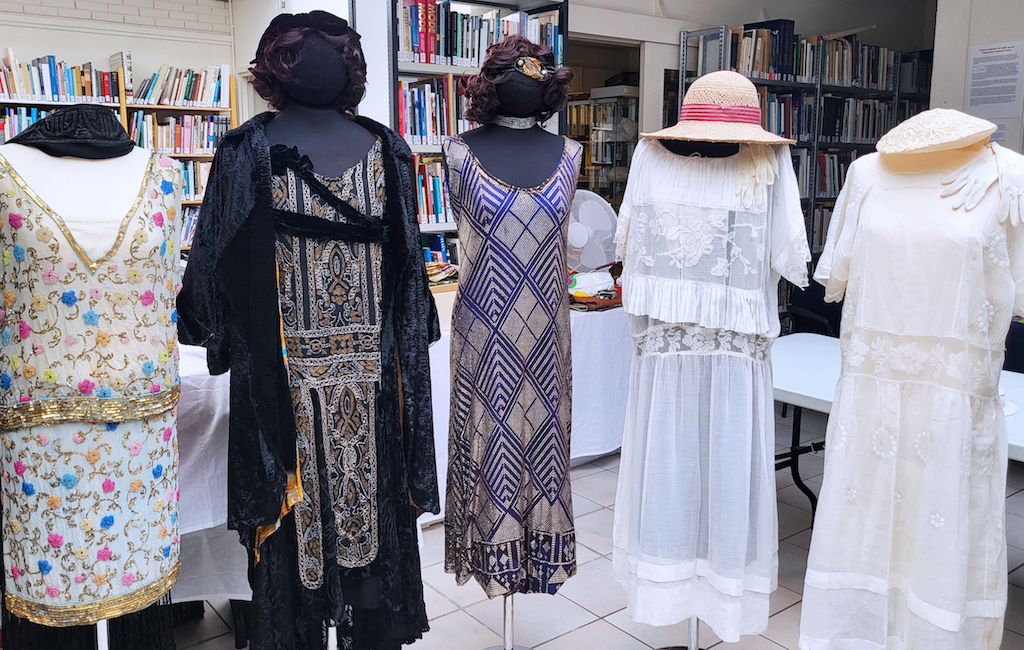 Exhibition in progress: The 1920s from head to toe.
There will also be an online TRC exhibition and a short film about the display. The exhibition will later be available for loan to museums and similar institutes.
Augusta de Gunzbourg, curator TRC, 30 August 2023