On Friday, 3 April 2020, TRC volunteer Shelley Anderson writes:
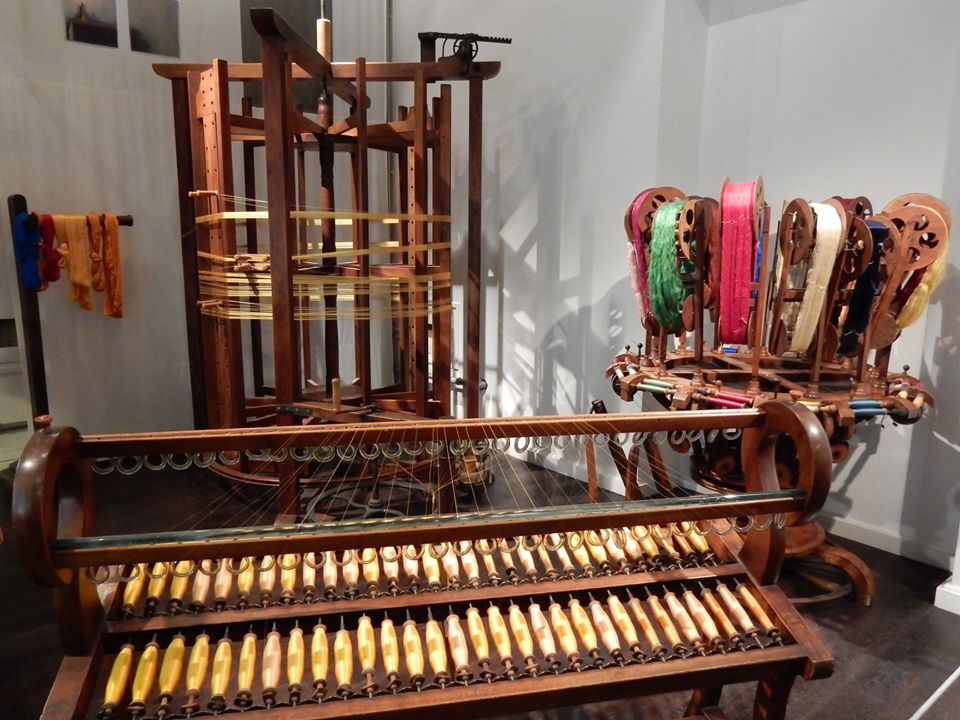 Spools of silk and a winding mill, to prepare a warp for weaving, Maison des Canuts, Lyons. Photograph: S. Anderson.
Many people are having to work from home during the corona virus pandemic. Working from home has a long history in textiles, as I discovered visiting a small museum in Lyons, France (pre-pandemic, I will add). Lyons, in the south of France, was the French centre for silk production for over 400 years. The Maison des Canuts (House of the Canuts) is a small museum in Lyons’s old Croix Rousse area. Canuts were independent silk weavers who worked out of their own homes. They had up to three looms in their home and they supervised journeymen, whom they provided with room and board.
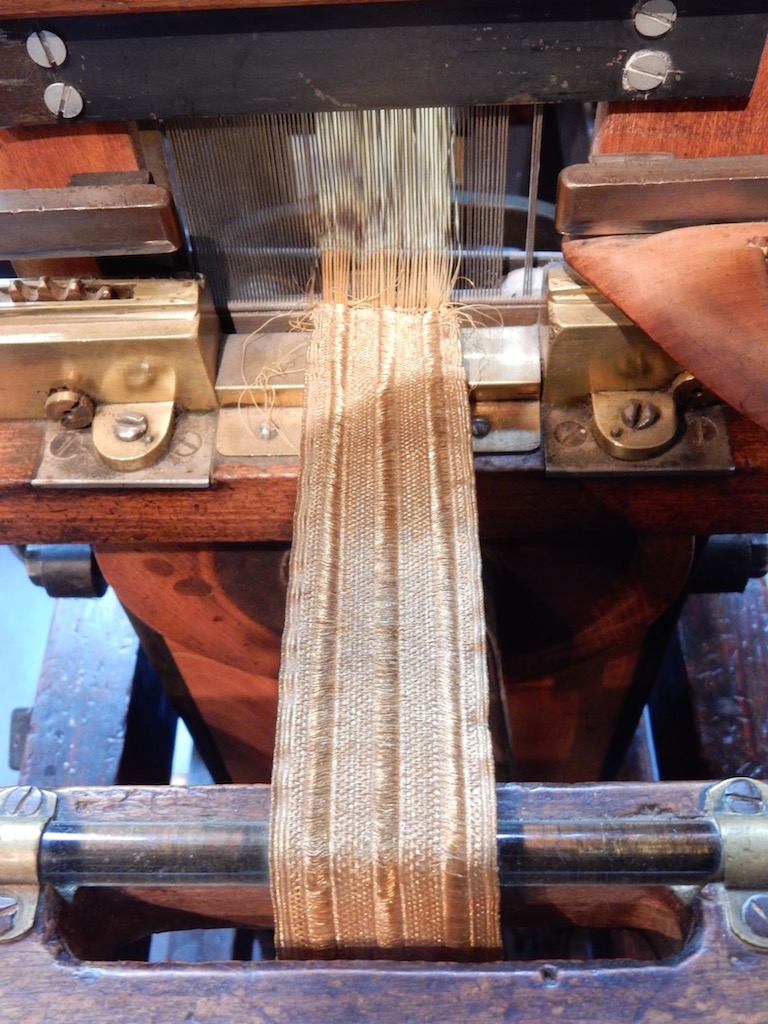 Weaving gold thread passementerie in the Maison des Canuts, Lyons. Photograph: S. Anderson.
In the early 19th century there were an estimated 8,000 canuts in Lyon alone, supervising some 20,000 other silk weavers. Canuts were the mainstay of Lyons’s silk industry, and their silk made Lyons a true city. By the mid-19th century one out of every two workers in the city was involved in the silk trade. The international demand for French silk was huge; one-third of all of France’s manufactured exports was silk textiles, produced in Lyon.
Silk weaving was demanding work. It’s estimated that one weaver could weave about 3.5 aunes per day (one aune equals 1.2 metres). The amount paid for the cloth depended on the weave and the quality of the cloth: taffetas paid about 1.5 francs per aune, while plain velvet fetched five francs per aune. The canuts banded together early on, and organized many strikes to demand better wages.
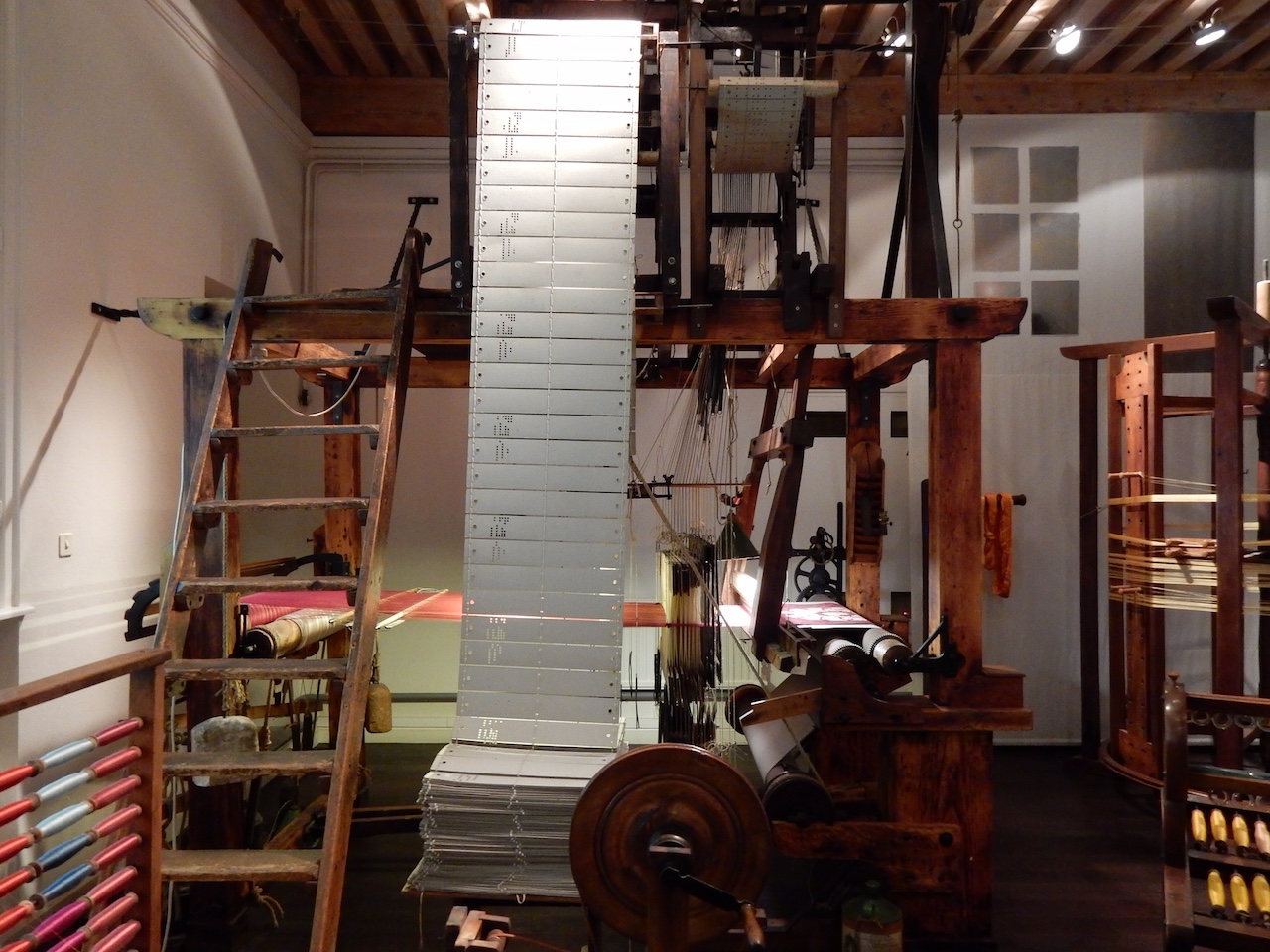 Silk loom in the Maison des Canuts, Lyons. Photograph: S. Anderson.The Maison displays many looms and tools the canuts used, accompanied by very informative text boards in multiple languages. There is, for example, a small loom for making gold or silver passementerie, and a hand-cranked machine for winding gold wire around silk fibres to make gold thread. I found this fascinating, as the day before, in the city’s famous Gallo-Roman Museum, I saw a funeral stele from about the first century CE dedicated to a barbaricaire—a gold yarn weaver. Indeed, Lyon has a long history of textile production at home.