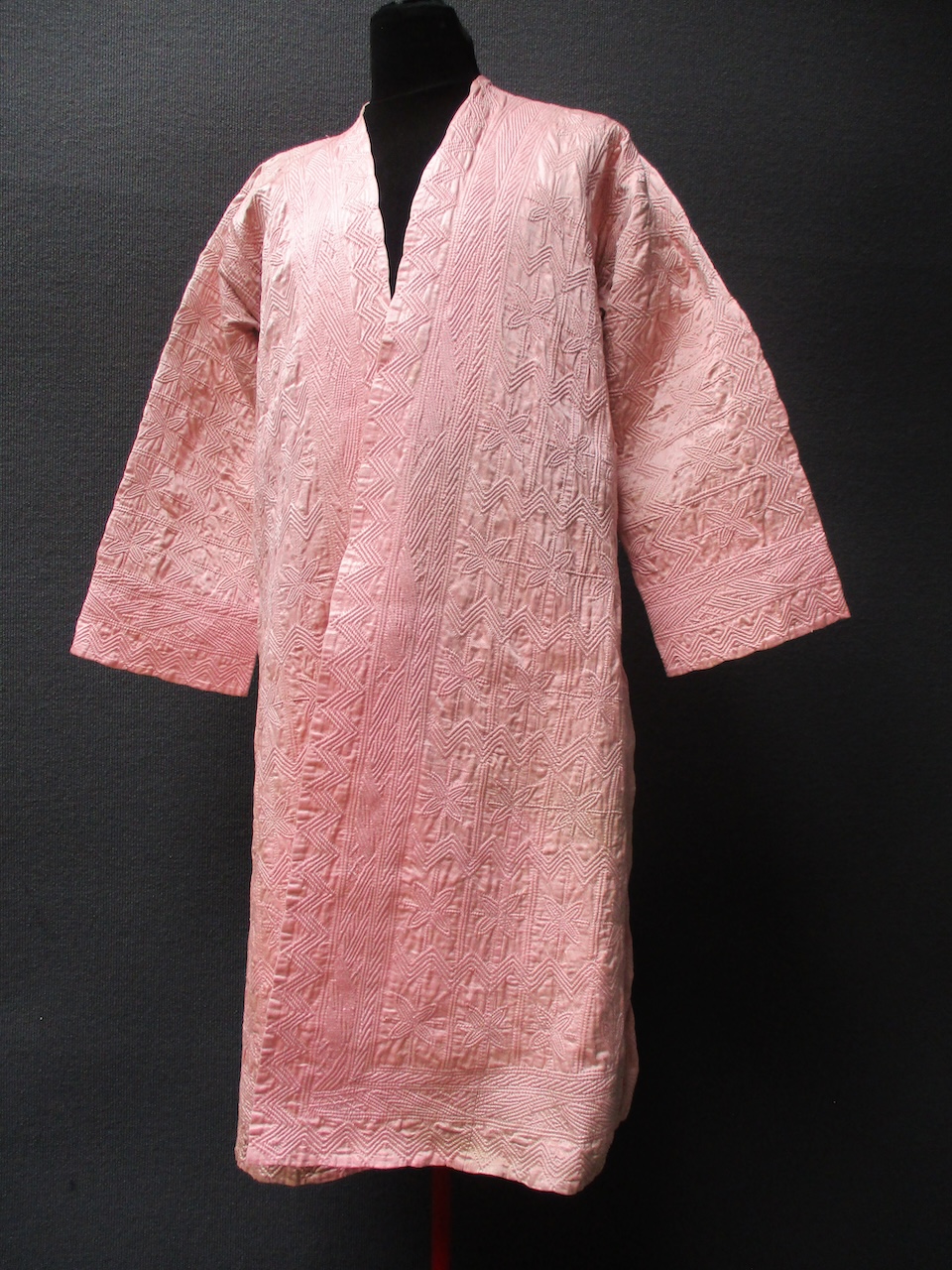
 Quilted kaftan from Turkey. TRC 2026.0841.(Gillian Vogelsang-Eastwood, 20 June 2026) A year ago we were given a large group of Ottoman and later Turkish textiles and dress from the Kavak Costume Collection, that is owned by Jean-Marie Criel and his partner, who live in Antwerp, Belgium (for more information, click here and here). Then came TRC's move to Boerhaavelaan 6 and we had to put the Kavak collection to one side. We are pleased to tell that we are now working together again on this amazing collection and over the next 12 months more items wil be given to the TRC. In fact, twelve boxes and bags have just been picked up which include garments from … …. and …. as well as a beautiful, hand quilted kaftan (TRC 2026.0841).
I had known about yorgan or quilted bedspreads, which were an important feature of many Turkish homes, but I had not heard about quilted garments. Historically, quilted bedspreads are made by men. Towns and cities used to have special quilt quarters.
But cheaper modern products have meant that many quilters have stopped working and it is now more and more difficult to find apprentices to carry on the trade. Such quilts can be made from silk, cotton or sometimes woollen cloth and were traditionally filled with raw wool or sometimes cotton. Nowadays, synthetic fillings are used, as these can be more easily cleaned.
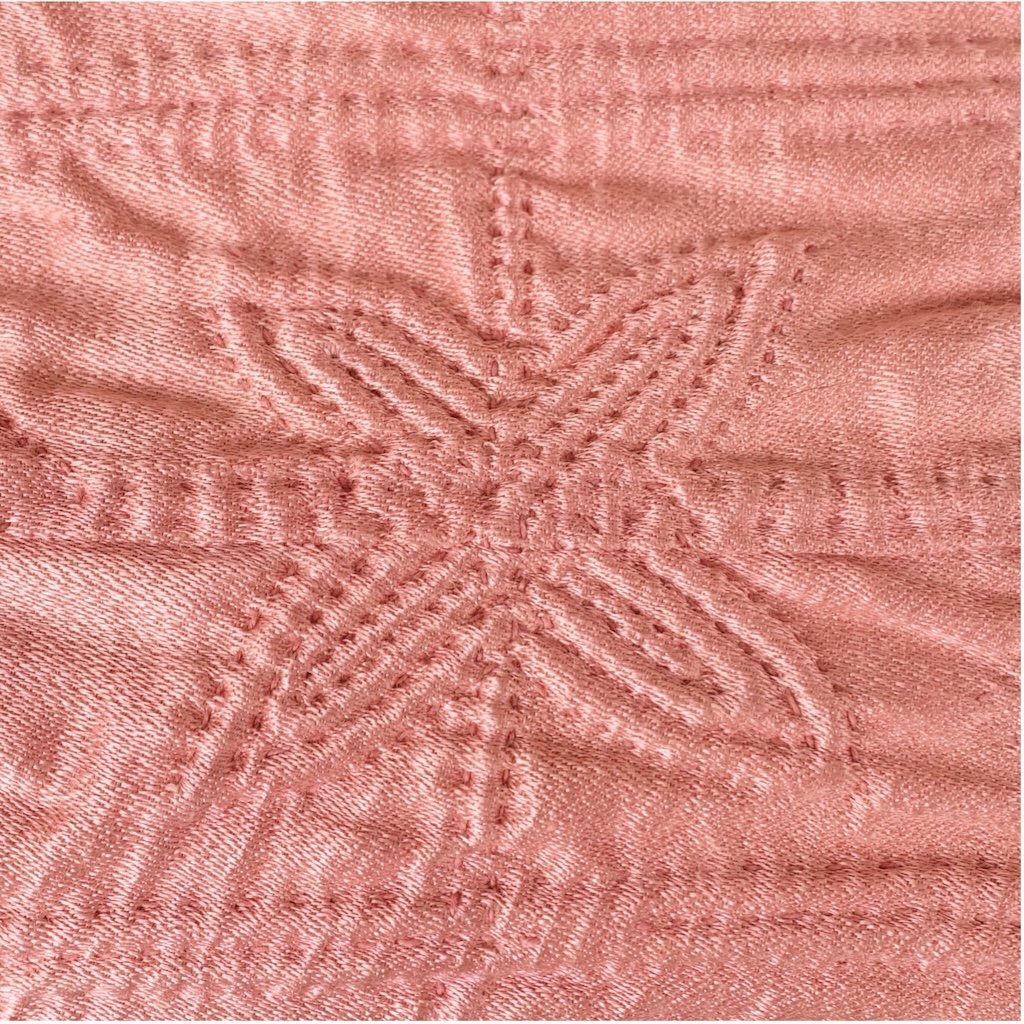 Dinolite detail of the quilted kaftan, TRC 2026.0841.The overall design for a quilt was usually decided by the quilter and the person wanting the quilt. Floral motifs were popular for dowry quilts, others had repeating geometric designs.
The required pattern was worked on card, cut out and then the templates were used as stencils to draw the desired motifs on the ground material. A professionally made quilted bedspread took between two and three days to make, depending on the complexity of the design.
The pink quilted kaftan
The pink quilted kaftan comes from Konya in the southwest of central Turkey. The kaftan has been dated to the first half of the 20th century. It has faded and there is some staining on the lining, which suggests it has been worn, but in general it is in a very good condition.
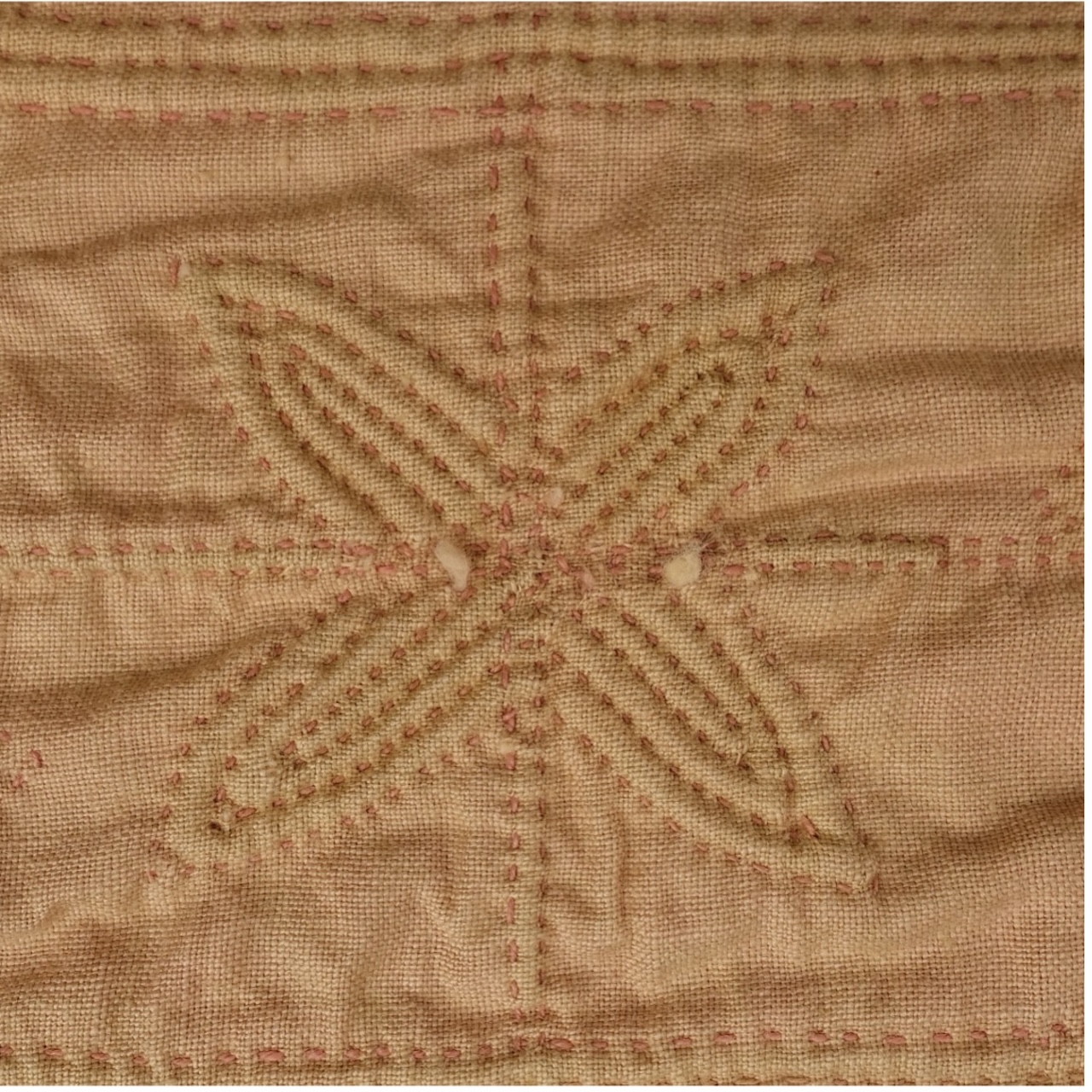 Dinolite detail of the kaftan, TRC 2026.0841.The kaftan is made from pink silk satin, with an off-white (tabby weave) lining. The trapunto quilting technique has been used to stitch the two layers of cloth together and decorate the garment. This technique involves a thin roll of raw cotton being placed in the required position, between the two cloth layers, and then stitched on either side to keep it in place.
At first I thought it had been machine-stitched because of the regular nature of the small running stitches. But the reverse side of the cloth quickly proved it was hand stitched using a pink cotton thread. The pattern consists of a repeating, quatrefoil motif, perhaps based on stylised leaves. The consistency of the pattern’s layout, stitching and general appearance indicate it had been drawn using a stencil and then worked by someone very experienced in this technique.. We are looking for more examples of quilted garments from Turkey as well as relevant information.