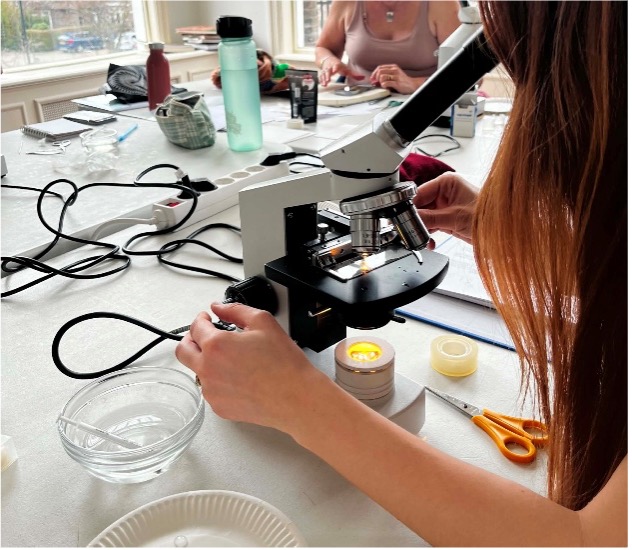
 Fig. 1. Observing the micro-structure of different textile fibers during a TRC course. Photograph by author.(Frieda Iting Chen, 11 July 2026) This February, I started my internship at the Textile Research Centre (TRC) Leiden as part of my master's programme. Coming from a background in anthropology and heritage studies, I was excited to gain hands-on experience in museum practice and to learn how textile collections are researched, documented, and presented to the public.
Learning through courses and workshops
During my internship, I participated in a variety of workshops and courses organised by the TRC. These activities introduced me to different aspects of textile studies, from textile production techniques to museum collections. Unlike university lectures, these sessions emphasise hands-on learning and allow participants to experience different textile techniques firsthand.
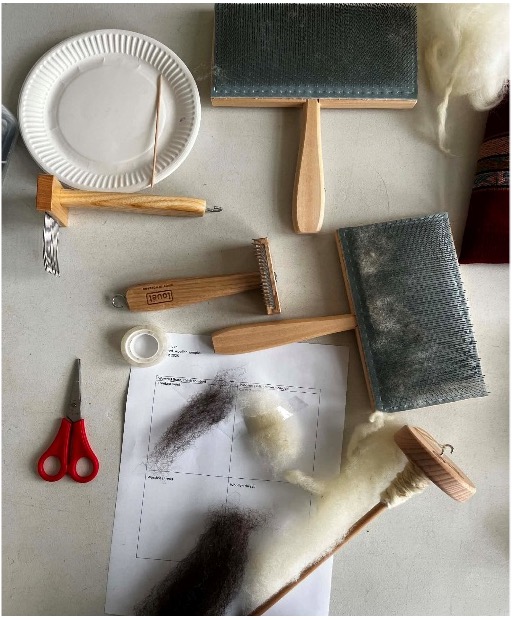 Fig. 2. Learning how to card raw wool before spinning it into yarn. Photograph by author.For example, during one of the courses, I had the chance to observe the microstructure of different textile fibres (Fig. 1). By observing cotton, wool, and other fibres under a microscope, I learned how their physical characteristics differ and how these differences influence the appearance, texture, and properties of textiles. This experience also helped me better understand how fibre identification is carried out in textile research.
Another memorable experience was wool processing. I learned how raw wool is prepared to align the fibres before being spined into yarn (Fig. 2). Although the process required patience and practice, it gave me a much deeper understanding of how wool textiles are made, from raw fibre to finished yarn.
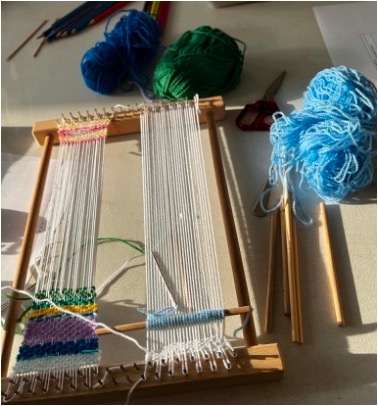 Fig. 3. Learning basic weaving techniques on a tabletop loom. Photograph by author.I also had the opportunity to learn basic weaving techniques using a small tabletop loom (Fig. 3). Through the weaving process, I came to understand how factors such as the tension of the threads, the density of the weave, and even the smallest adjustments can affect the appearance and texture of the final textile.
Together, these hands-on projects provided me with a much deeper understanding of textile production, from the microstructure of fibres to the processes of spinning and weaving. Besides learning about textiles only through books or museum displays, I was able to experience how they are actually made. This practical knowledge has also changed the way I observe textile collections, allowing me to better understand the techniques and decisions behind each finished piece.
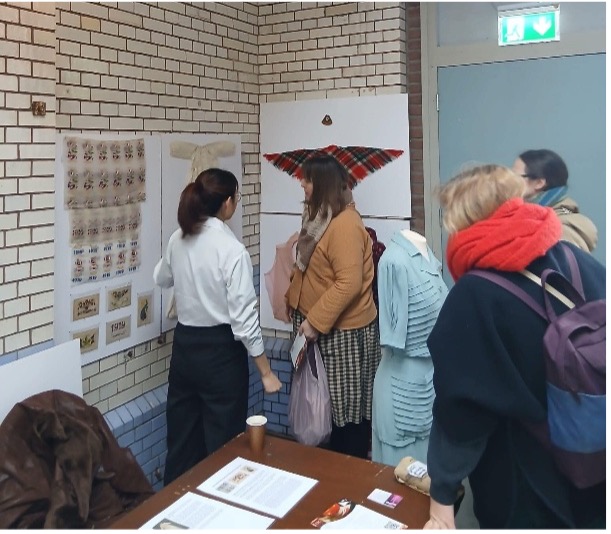 Fig. 4. Welcoming visitors to the TRC stand during Textile Inspiration Day.Textile Inspiration Day
Another memorable experience during my internship was participating in Textile Inspiration Day on 14 March, an annual event held in Leiden that brings together textile enthusiasts, artists, and organisations, it created a welcoming space where people with a shared interest in textiles could meet, exchange ideas, and learn from one another.
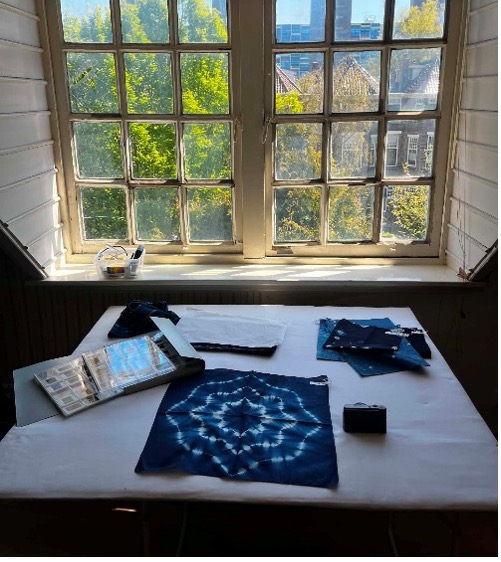 Fig. 6. Photographing a Japanese indigo-dyed handkerchief from the TRC collection. Photograph by author.During the event, I assisted with guided tours at the TRC stand, introducing visitors to TRC and some selected textiles produced betwee 1920 and 1945 and answering questions about us (Fig. 4). It was a really precious opportunity to communicate textile knowledge to the public.
What I enjoyed the most was seeing how textiles could bring people together. Visitors came from different backgrounds, but they shared a common curiosity about textiles. Some exchanged techniques, while others shared personal stories about weaving or sewing. It reminded me again that textiles are not only objects that are being worn or displayed in museums, but also a way of connecting people through shared interests and experiences.
Photographing the collection
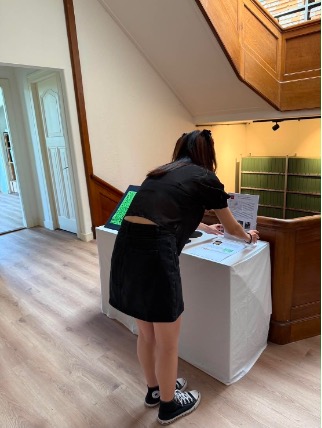 Fig. 6. Installing exhibition texts and making the final adjustments before the exhibition opening. Photograph by author.Besides participating in public events, I also had the opportunity to work behind the scenes by assisting with the photography of the TRC collection (Fig. 5). Before my internship, I had never considered how much preparation was involved in documenting museum collections. From setting up the lighting and background to carefully positioning each object, every step was important in creating clear and accurate images for the textile. This experience introduced me to an important part of the museum's daily work that visitors rarely get to see.
Curating an Exhibition and Guiding Visitors
One of the most rewarding parts of my internship was contributing to the preparation of a small exhibition under the guidance of Augusta de Gunzbourg, TRC's exhibition and education officer. We chose the Miao people from China as the exhibition theme, because the TRC has an extensive collection of Miao textiles, representing a wide range of regional styles and traditions. This experience allowed me to see how research could be transformed into an exhibition that is accessible and engaging for the public.
The preparation began with exploring the collection. I examined numerous storage boxes and carefully selected objects that best illustrated the diversity of Miao clothing. At the same time, I read many academic studies to identify the different Miao subgroups represented by each textile and to better understand their distinctive clothing traditions.
The exhibition was organised around three main themes: the construction and decorative elements of Miao dress, the diversity of Miao clothing traditions, and the ways contemporary Miao clothing incorporates influences from Han Chinese and Western fashions. Based on this research, I also wrote the exhibition texts to introduce the objects and provide visitors with cultural and historical context.
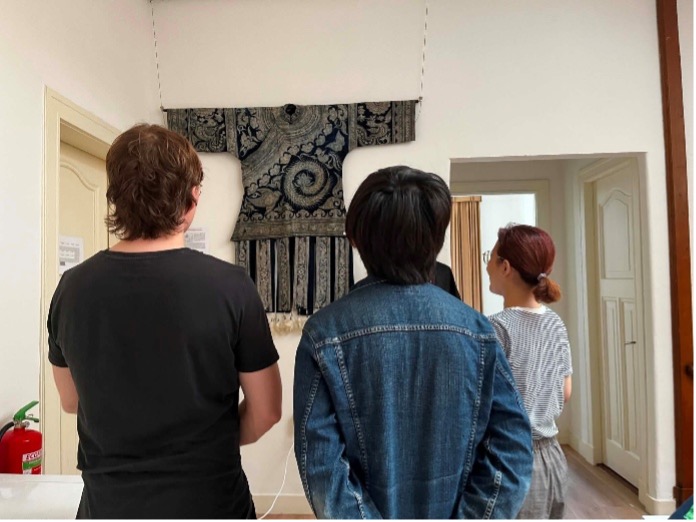 Fig. 7. Visitors exploring the exhibition and learning about Miao textiles through guided tours. Photograph by author.In addition to the research, I had the opportunity to participate in the practical side of exhibition preparation. I learned how to make display mounts for the textiles, installed the objects, and decided their placements within the exhibition space (Figs. 8-9). These tasks showed me that exhibition design is not only about presenting beautiful objects, but also about thinking carefully about how visitors move through a space and how stories can be communicated effectively.
Throughout the entire process, I was guided by Augusta, who generously shared her experiences in exhibition planning and museum practice. Working alongside her gave me valuable practical skills and a much better understanding of how object selection, exhibition design, and interpretation come together to create an engaging exhibition.
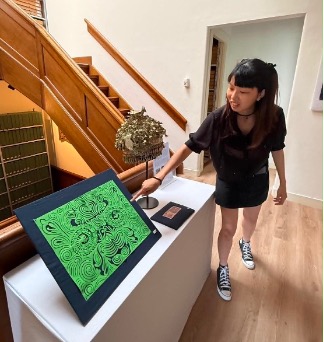 Fig. 8. Visitors exploring the exhibition and learning about Miao textiles through guided tours. Photograph buy author.At the end of the exhibition, I invited several of my fellow students from Leiden University to visit (Fig. 10-11). It was rewarding to share the exhibition with them and introduce them to the diversity of Miao textiles. Seeing their interest and hearing their questions made me realise how exhibitions can create meaningful conversations.
Conclusion
Looking back, what I will remember most is not only the textiles themselves, but also everything that happens behind the scenes, from research and documentation to exhibition design and conversations with visitors. This internship has shown me how museums connect collections, knowledge, and people, and it has inspired me to continue exploring museum practice in the future.
Finally, I would like to thank everyone at the TRC for creating such a supportive environment. I am especially grateful for their kindness, patience, and willingness to offer guidance whenever I needed help. Their support made this internship both an enjoyable and rewarding learning experience.