• F1
  • F2
  • F4
  • F3

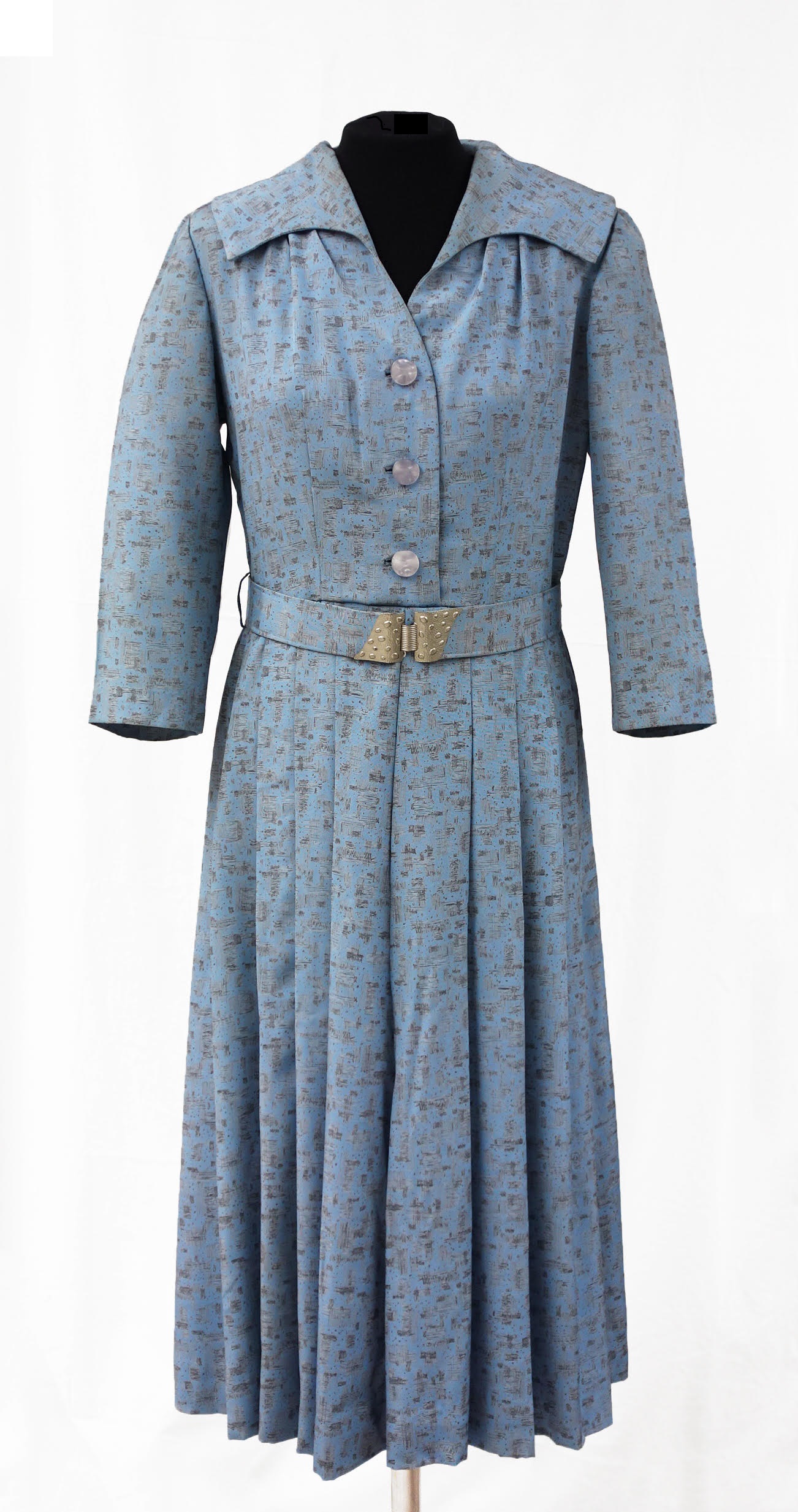
Over the last few months we have been working very hard on organising, preparing and setting up the TRC’s latest exhibtion, ‘Textile Tales from the Second World War’.

We had originally planned an official opening with a special guest, a large audience, a lecture, buffet meal, etc. Instead, and directly thanks to the covid-19 virus, we had to change our plans, but we still wanted to mark the event, so this afternoon there was a ‘non-opening opening’!

Because of social distancing and the general limit on the number of people who could be present in the TRC Gallery, we decided to celebrate the opening of the exhibition with representatives from the Mennonite community, the TRC Board and community, and those who have helped put up the exhibition. Seven people were at the opening and most had the chance to say a few words about the history of the exhibition, to make some general comments, as well as to provide more personal accounts about certain objects.

Cover of the booklet 'Merklappen. Oud en Nieuw' ("Samplers. Old and New") by Hillegonda Bottema (Kampen, 1942).Cover of the booklet 'Merklappen. Oud en Nieuw' ("Samplers. Old and New") by Hillegonda Bottema (Kampen, 1942).The new TRC exhibition, Textile Tales from the Second World War, opens next week (16th September 2020). The exhibition contains many objects, almost all of them with a story behind them, some of which are sad and moving, while others are deep, funny and/or intriguing.

Over the next few months we are going to publish a series of blogs about one or more items from the exhibition. These will be written by various people and cover a wide range of subjects.

Earlier in the year – before the start of the Corona-virus crisis, we added a ‘Dutch farmer’s wife’ outfit to the TRC Collection. The garments were made in 1945 for a parade in the De Sitterlaan, Leiden, to celebrate the liberation of Leiden by the Canadians and others in May 1945. The dress will feature in the forthcoming TRC exhibition 'Textile Tales from the Second World War', which will open on the 16th September.

Mw Tineke van der Staaij, 81 years old, sitting in front of the Volendam-style outfit (with the characteristic white cap) made for her by her mother when she was six years old. She wore the garments at a liberation parade in Leiden (May 1945).Mw Tineke van der Staaij, 81 years old, sitting in front of the Volendam-style outfit (with the characteristic white cap) made for her by her mother when she was six years old. She wore the garments at a liberation parade in Leiden (May 1945).The outfit was made by Mw. Van der Staaij for her daughter, Tineke, who was six years old at the time. The clothing was based on regional dress worn in Volendam in Noord-Holland and consists of a black blouse, bodice, scarf, white cap, as well as a striped skirt and apron (TRC 2020.0592a-f). All sorts of material were used to make the outfit, including part of a 19th century curtain for the apron. The family, so we heard, still treasures the sewing machine that was used for these and many other items.

This morning we welcomed two unexpected visitors – Tineke van der Staaij, who is now 81 years old, and her younger sister!

Although the exhibition is not quite finished, we did a special guided tour for them, including showing the ‘Volendam’ outfit which Tineke had worn as a little girl 75 years ago. She and her sister are going to come back after the opening on the 16th September, with more members of their respective families – it's not often that a six-year old Tineke is in an exhibition!

Gillian Vogelsang-Eastwood, 7th September 2020

The TRC in Leiden has a small collection of tapestry woven textiles, among which some early examples from Coptic Egypt. Tapestry weaving has a long and fascinating history, and we are pleased to publish a blog about contemporary tapestry weaving, written by Charles Knobler from Los Angeles. He writes:

"The Lady and the Unicorn: Desire." Tapestry in the Cluny Museum, Paris."The Lady and the Unicorn: Desire." Tapestry in the Cluny Museum, Paris.

To most people the term “tapestry” likely brings to mind the monumental medieval and renaissance woven wall hangings, such as “The Lady and the Unicorn”, which fills a room in the Cluny Museum in Paris. Such tapestries were designed by an artist and woven by teams of artisans.

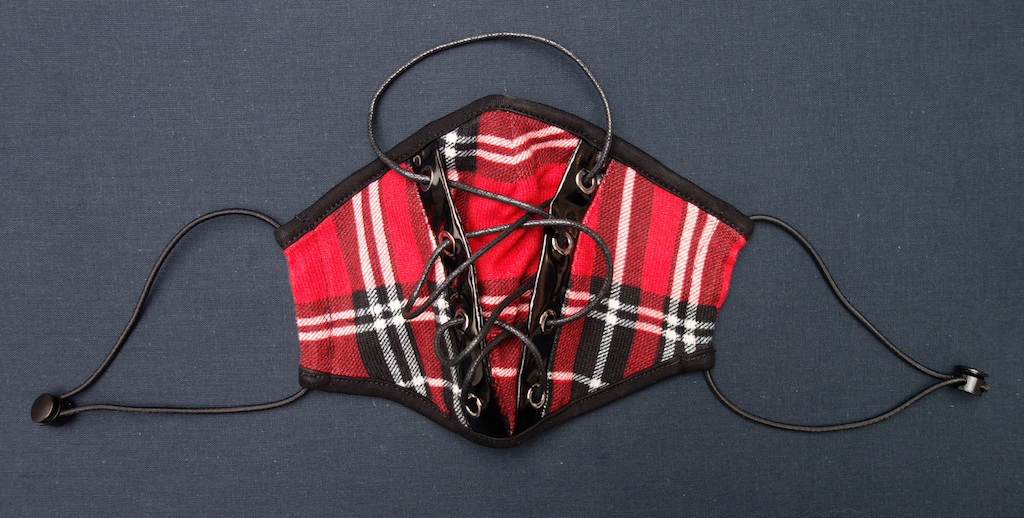
Due to the covid crisis, in April 2020 (it seems a very long time ago…..), I was working from home on a mini-project called ‘What is Gingham’, as part of our building up a reference collection of various types of cloth. It was published in a TRC Blog called ‘Gingham thoughts’ that appeared on the 10th April 2020.

Jane Hardy’s sampler made at the Burton Leonard School, North Yorkshire (1872; TRC 2020.1606).Jane Hardy’s sampler made at the Burton Leonard School, North Yorkshire (1872; TRC 2020.1606).

In the same month we also added a sampler (TRC 2020.1606) to the TRC Collection that was made by Jane Hardy of Burton Leonard, North Yorkshire (England). The sampler was dated to 1872 when Jane was ten years old. We contacted the Burton Leonard Church of England school where she had made the sampler to see if they had any further details about her. This led to emails between the school and a local historian called Vivienne Rivis, who was very excited about the sampler, as it is one of the few items made by pupils that have survived from this period.

Poster announcing the new TRC exhibition about the Second World War. The poster photograph in the centre, showing garments from the exhibition, was taken by Joost Kolkman.Poster announcing the new TRC exhibition about the Second World War. The poster photograph in the centre, showing garments from the exhibition, was taken by Joost Kolkman.During the last five days the TRC in Leiden has been very busy with (finally) taking down the American Quilt exhibition, which we put up in February, took down in March, put back up again in June up and now it is finally down.

Together with Lies, Sophie and Augusta, three of our dedicated volunteers, we cleaned the TRC Gallery and slowly started adding items for the new exhibition, including numerous panels, over twenty mannequins dressed in the relevant clothing from the 1930’s and 1940’s, photographs and many small items, ranging from lapel badges to heavy leather boots with massive wooden soles.

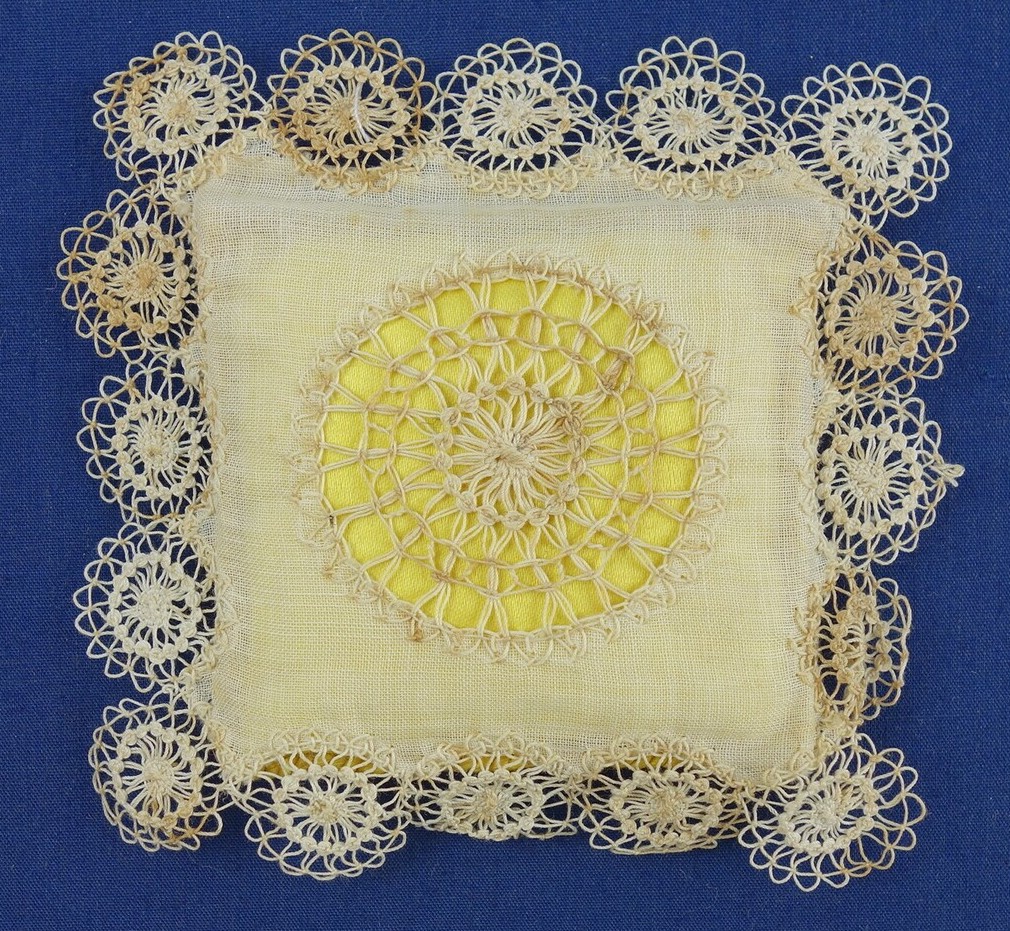
Embroidered sampler dated 1756, The Netherlands (TRC 2020.3683).Embroidered sampler dated 1756, The Netherlands (TRC 2020.3683).At the end of August 2020 the TRC was given some early samplers following the sad death of Mw. Trees Verberne-Van Hamersveld, The Hague. She wanted to leave the samplers to the ‘Leiden Textile Museum’ (the TRC Leiden is often called this). We would like to thank Mrs Verberne-Van Hamersveld and her family.

There are a total of six samplers that date from between the mid-eighteenth century and 1803. They all have linen grounds and are worked in polychrome silk yarns, most of which have now faded. In addition, some of the black yarns have bled leaving heavy stains.

Three of the samplers are conventional forms with many motifs embroidered in cross stitch, although one of them also in includes letters and a date in eyelet stitch. The other three samplers are darning samplers.

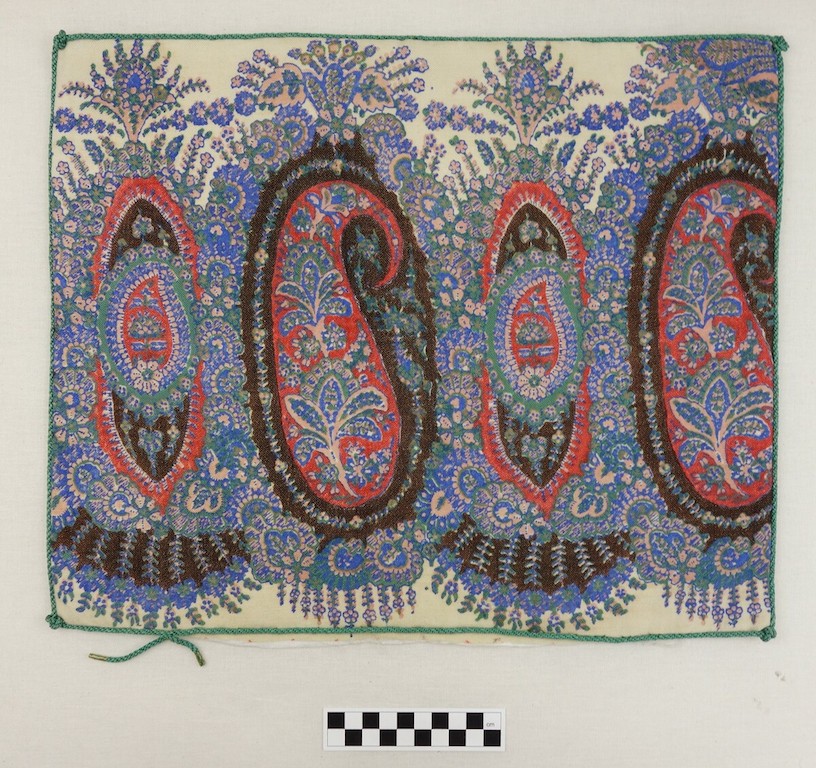
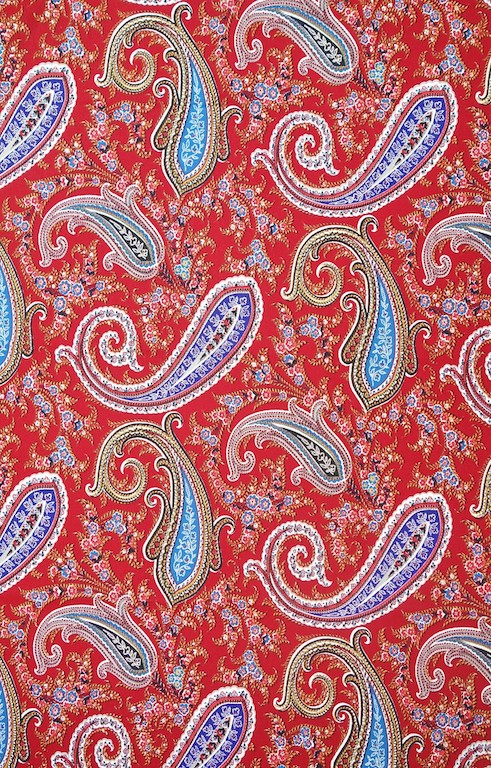
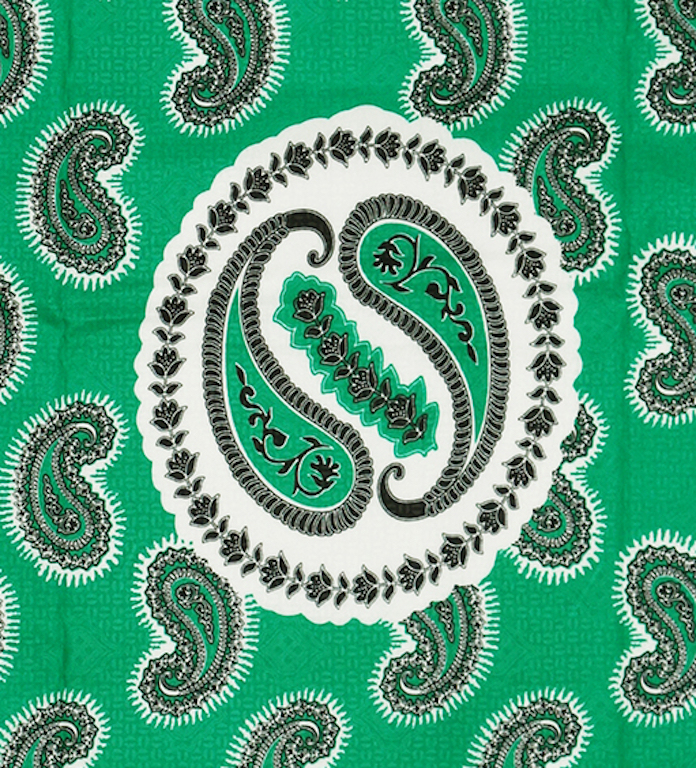
Women's jacket with printed Paisley motifs; The Netherlands, late 20th century (TRC 2016.1949).Women's jacket with printed Paisley motifs; The Netherlands, late 20th century (TRC 2016.1949).We are currently putting up the next TRC exhibition that is about textiles and clothing during WW2. It opens on the 16th September. But at the same time we are already working on the Paisley (buteh) exhibition, which was planned for the autumn of 2020, but because of the corona crisis was postponed to early 2021.

Part of the reason for actively working on Paisley/buteh motifs is that in October 2020 there will be a four-day online conference about the trade and movement of textiles in various parts of the world. It is being organised by the International Institute for Asian Studies in Leiden, in cooperation with the TRC and the Tracing Patterns Foundation in Berkeley, California.

Zoek in TRC website

Contact

Boerhaavelaan 6
2334 EN Leiden.
Tel. +31 (0)6 28830428  
office@trcleiden.org

Het TRC is elke dag geopend tussen 10.00 en 15.00 uur.

facebook 2015 logo detail


instagram vernieuwt uiterlijk en logo


Bankrekening

NL39 INGB 0002 9823 59, t.a.v. Stichting Textile Research Centre.

Financiële giften

Het TRC is afhankelijk van project-financiering en privé-donaties. Al ons werk wordt verricht door vrijwilligers. Ter ondersteuning van de vele activiteiten van het TRC vragen wij U daarom om financiële steun:

Giften kunt U overmaken op bankrekeningnummer (IBAN) NL39 INGB 000 298 2359, t.n.v. Stichting Textile Research Centre. BIC code is: INGBNL2A

U kunt ook, heel simpel, indien u een iDEAL app heeft, de iDEAL-knop hieronder gebruiken en door een bepaald bedrag in te vullen: 


Omdat het TRC officieel is erkend als een Algemeen Nut Beogende Instelling (ANBI), en daarbij ook nog als een Culturele Instelling, zijn particuliere giften voor 125% aftrekbaar van de belasting, en voor bedrijven zelfs voor 150%. Voor meer informatie, klik hier