• F3
  • F2
  • F1
  • F4

Carte de visite of a German sailor, late 19th century (TRC 2019.1823).Carte de visite of a German sailor, late 19th century (TRC 2019.1823).You’ve seen them in antique stores and second-hand shops. There is an air of melancholy around the old studio portraits of women, men or children. These late 19th to early 20th century photographs are mounted on cards, usually with the name of the studio or atelier on it in an old-fashioned script.

They are called cartes de visite (visiting cards) and the TRC has almost 200 in its on-line collection. And while the people in the photographs may be sadly forgotten, cartes de visite (CDV) are a wonderful source of information about fashion and dress history, revealing details on how garments were actually worn.

We can learn about occupational dress, like the German sailor with his black tie and narrow white bow (TRC 2019.1823), or the soldier (TRC 2020.0281), the diplomat (TRC 2019.1822) and the nun (TRC 2019.2280) in our collection. Regional dress is also depicted, like the CDV of a seated woman in Hungarian dress, her tools for spinning around her (TRC 2020.3127), or the Dutch woman in Zuid Holland Islands dress (TRC 2020.2986), with her lace cap and collar (called ‘galloon’).

A Romanian dress of the 1930s, altered in the 1960s (TRC 2020.3459).A Romanian dress of the 1930s, altered in the 1960s (TRC 2020.3459).A few weeks ago we were contacted by Liesbeth Eymundsson about an embroidered dress that her grandmother, from Oegstgeest in The Netherlands, had bought while visiting Romania in the 1930’s. Ms Eymundsson, who has a husband from Iceland, also offered an embroidered shawl that belonged to her grandmother. This morning the dress and the shawl arrived at the TRC Leiden and they have been added to the TRC Catalogue (nos. TRC 2020.3459 and TRC 2020.3460).

The shawl is a Chinese export item that was popular in the earlier part of the 20th century, a fascinating subject in itself. However, because the dress has an unusual, personal history we have decided to focus on this garment.

Photograph of an embroidery depicting a Covid-19 capsid; https://pixabay.com/nl/illustrations/coronavirus-corona-crona-covid-19-4882294/Photograph of an embroidery depicting a Covid-19 capsid; https://pixabay.com/nl/illustrations/coronavirus-corona-crona-covid-19-4882294/I am working on vol. 3 of the Encyclopedia of Embroidery (Bloomsbury, London) and have just been thinking about a new chapter for the volume, namely one on embroidery and the internet. In particular the role played by embroidery/internet during the Corona virus pandemic. I have been thinking about free embroidery charts, on-line workshops, free library downloads, online museum programmes, online embroidery contests, embroidered paintings of corona-related subjects, embroidered corona face masks projects, relaxation courses with embroidery (yoga-embroidery), etc.

Have you been working on a specific home-grown project? Or perhaps you set up or are involved in one that includes various people from around the world? We would like people to send in details concerning a project they know about or are involved in.

We need to know: · Name of project · Who is running the project · Where is it based · Aim of the project · What has been achieved · Website address (if one exists)

We cannot promise to include every single project, but it will be good to have a written record of various examples and how they have impacted your and other people’s (embroidery) lives.

Gillian Vogelsang, 5th July 2020, Dit e-mailadres wordt beveiligd tegen spambots. JavaScript dient ingeschakeld te zijn om het te bekijken.

Medieval scallop shell badge for a pilgrim to Santiago de Compostela (TRC 2020.3387).Medieval scallop shell badge for a pilgrim to Santiago de Compostela (TRC 2020.3387).For several years the TRC Leiden has been slowly building up its collection of religious items of dress and accessories. These range from an impressive collection of prayer beads (literally from Buddhist, Christian, Islamic to Neo-Pagan forms), to liturgical and monastic garments (especially from the Syriac and Coptic Orthodox churches).

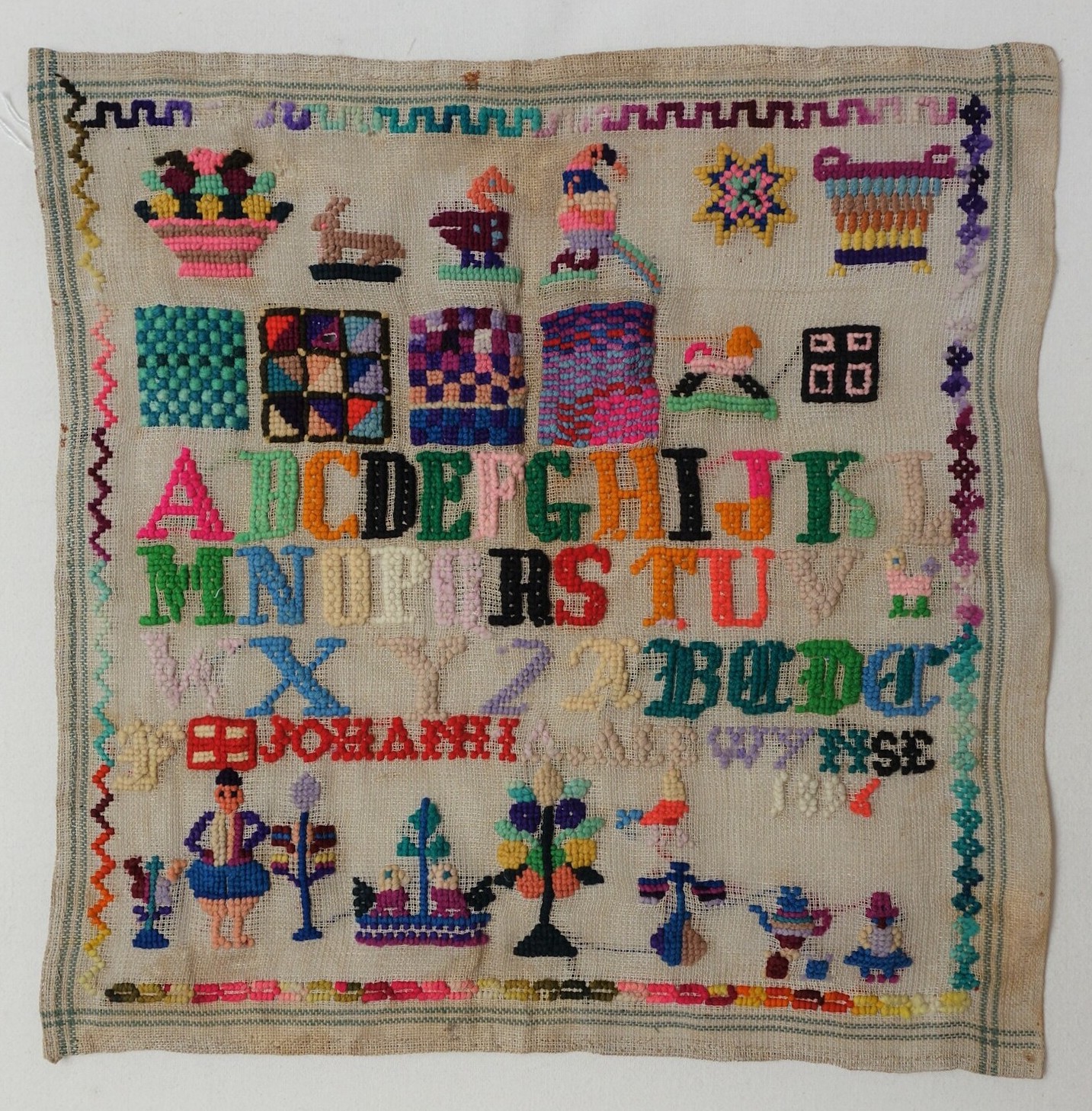
Within the last few weeks we have been given various items by the Bijbels Museum, Amsterdam, including embroidered samplers and paintings on Biblical and religious themes, as well as a bonnet for an officer in the Salvation Army (click here for more details).

Embroidered sampler worked by Elizabeth Brooks in England, in 1737, showing the two tablets with the Ten Commandments (TRC 2020.3317).Embroidered sampler worked by Elizabeth Brooks in England, in 1737, showing the two tablets with the Ten Commandments (TRC 2020.3317).Before Covid-19 turned the world upside down the TRC Leiden was in discussion with the Bijbels (Bible) Museum, Amsterdam, about a group of objects they were de-accessioning. They were reorganising their whole structure and way of working and numerous items were looking for new homes, including a variety of textiles and garments. Last week the objects in which we had shown an interest arrived and we were not disappointed.

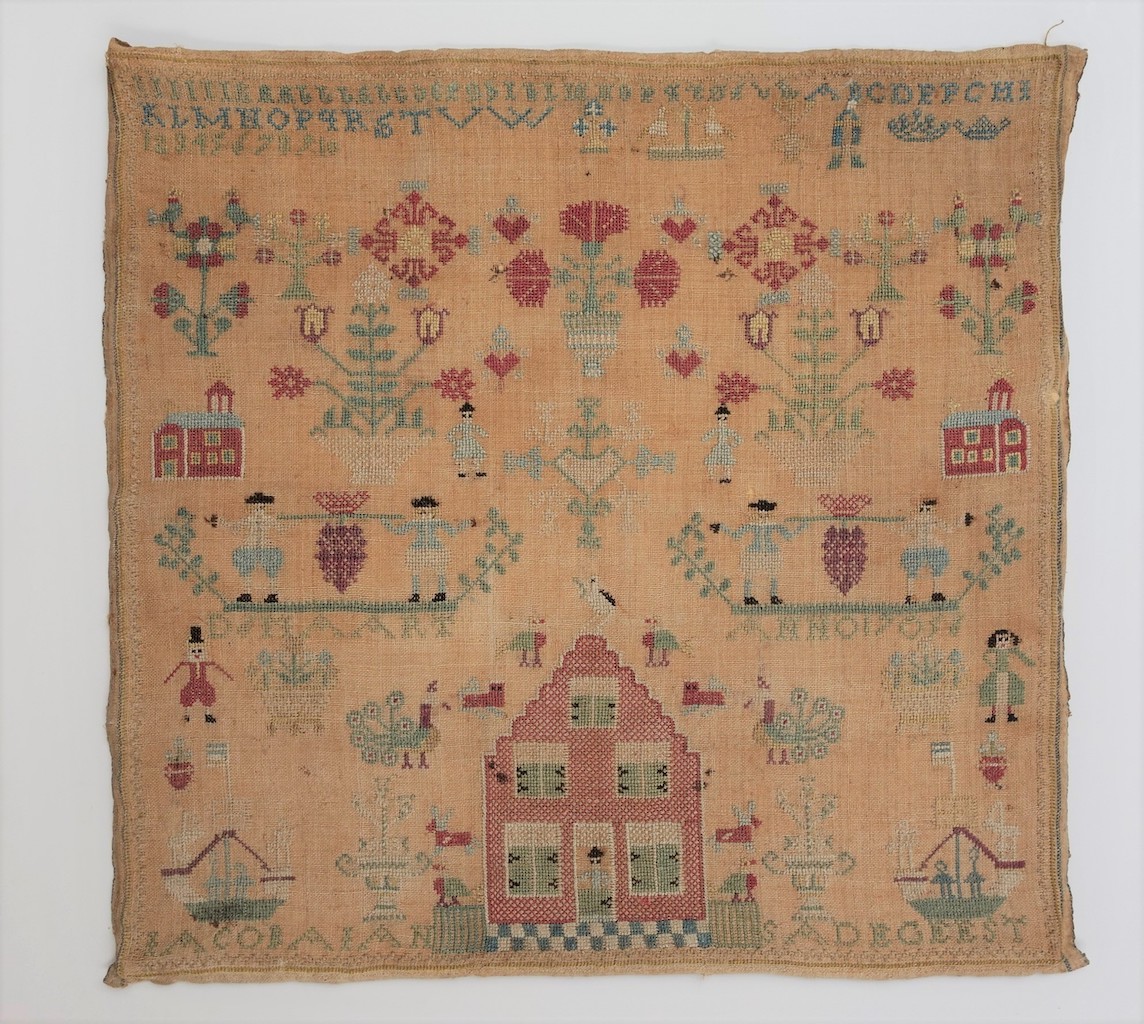
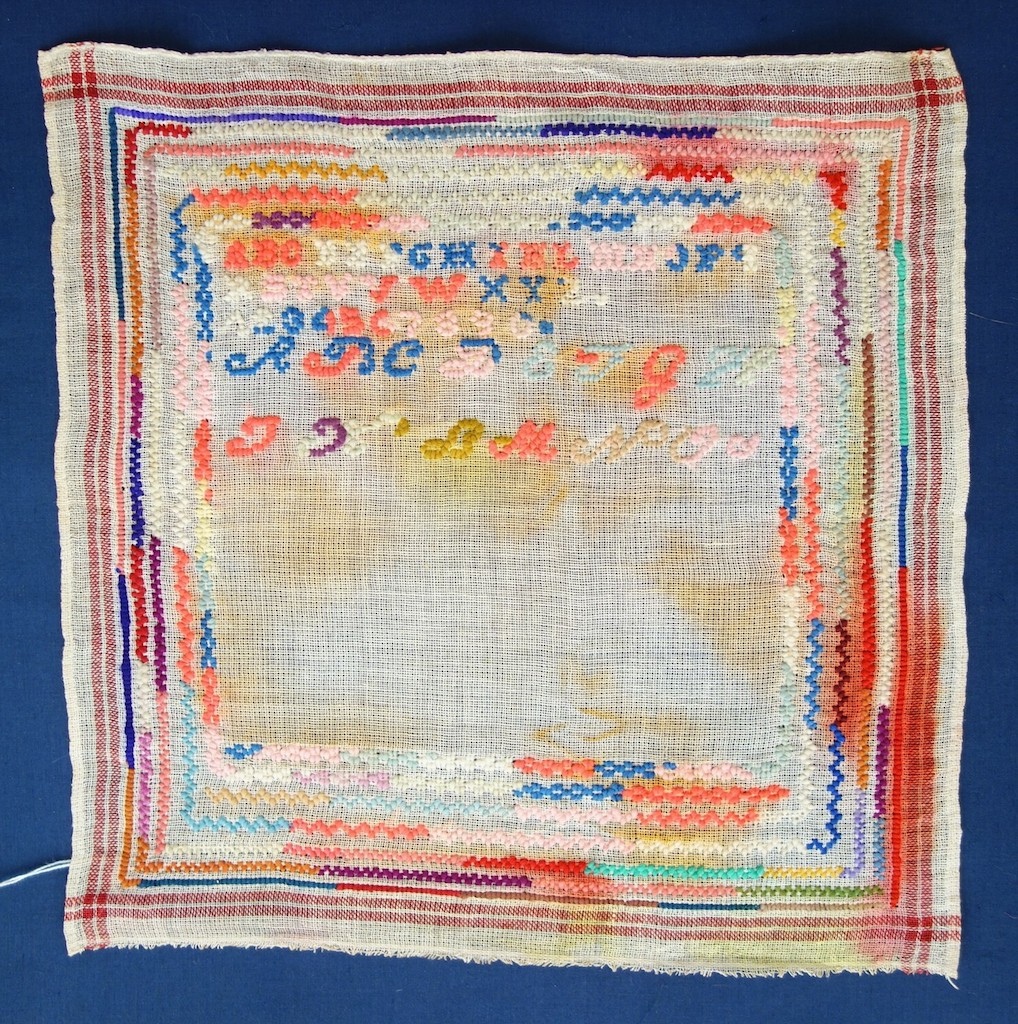
The objects include several 18th century samplers, notably a beautiful example (TRC 2020.3317) that dates to 1737 and has a central design of two stone tablets with the Ten Commandments (in English, and with embroidered corrections of the spelling), which are surrounded by embroidered flowers in silk.

The other sampler dates to 1793 (TRC 2020.3321) and depicts a range of plants, animals, birds and the image of two men carrying a large bunch of grapes (King James version, Numbers 13:23: “And they came unto the brook of Eshcol, and cut down from thence a branch with one cluster of grapes, and they bare it between two upon a staff; and they brought of the pomegranates, and of the figs.”).

Amber Butchart's 'Dirty Laundry'Amber Butchart's 'Dirty Laundry'For the last few years the TRC Leiden has been working together with British fashion and textile historian, Amber Butchart. She has visited the TRC on various occasions, including opening our exhibition about hand knitted socks and stockings (2019).

Amber gave a fascinating lecture at the opening on the use of decorative silk stockings by various European kings, notably fashion-conscious Louis XIV of France and Charles II of Britain. Her theme was how these kings used silk stockings to show off their power and virility (very masculine and well-defined legs).

Amber has a series of video blogs called 'Dirty Laundry" based on items in her wardrobe and collection. In these videos she explores the history and significance of the garments. The latest one is about an Uzbek tunic she bought in Istanbul and how it is not quite 'right'!

The TRC was involved in the production of this video. A link to Amber's video can be found here.  Well worth watching!

Gillian Vogelsang, 1st July 2020

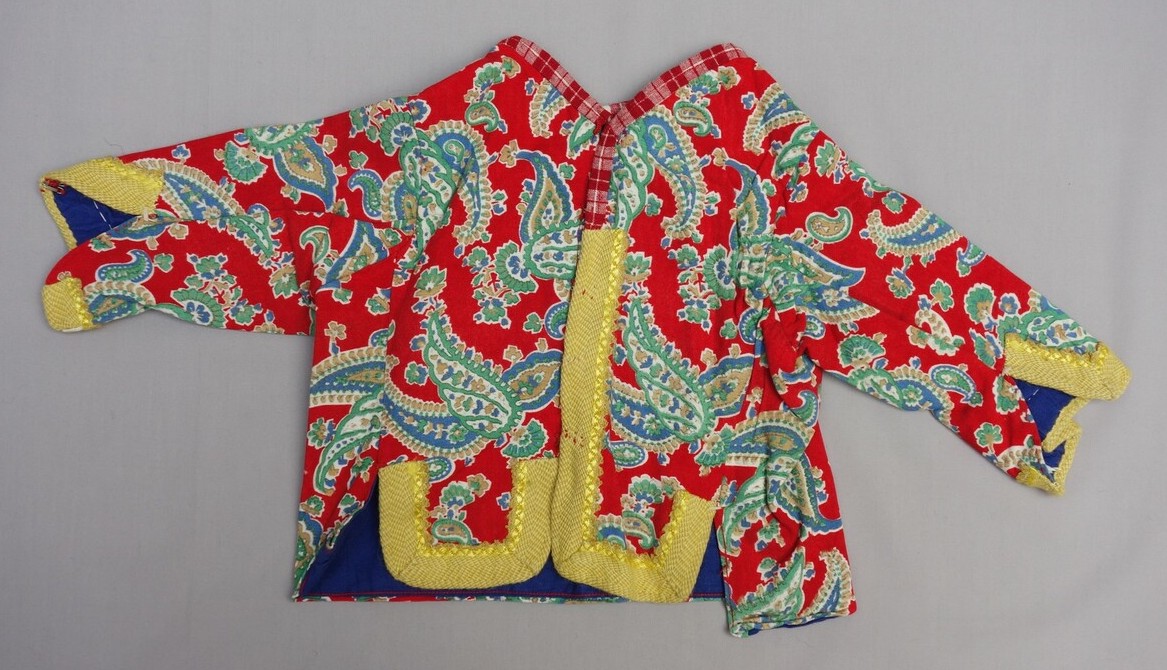
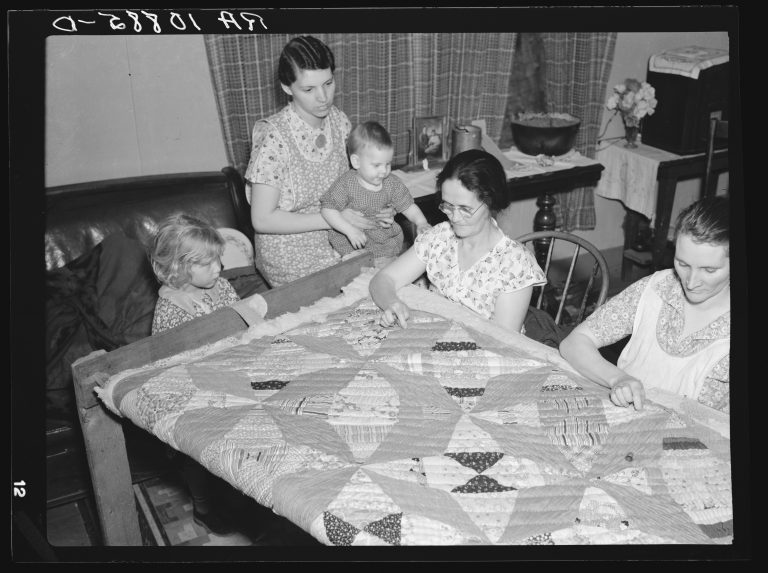
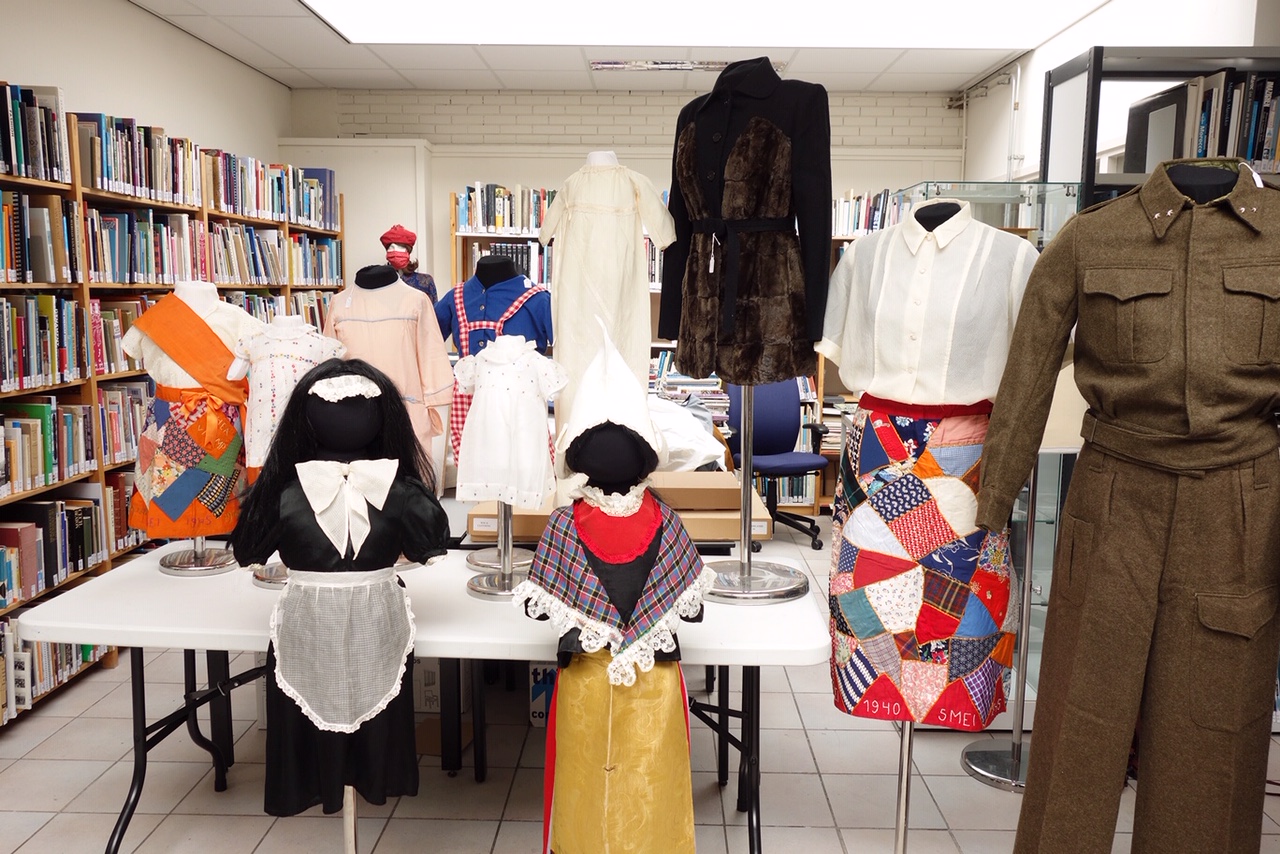
We are very busy working on the TRC’s next exhibition that is about the (domestic) history of the Second World War and The Netherlands told through the medium of textiles, dress and accessories. In addition, there will be a section on Mennonite relief quilts that were made in the USA and Canada and sent from 1945 onwards to war-torn Europe. The exhibition opens on the 16th September 2020.

Photograph of a woman displaying the Red Cross scarf designed by Prince Bernhard  (Rijksmuseum, Amsterdam, NG-1988-9-20).Photograph of a woman displaying the Red Cross scarf designed by Prince Bernhard (Rijksmuseum, Amsterdam, NG-1988-9-20). 

We have many items for the exhibition, but I have just read about a piece that would have a special place in the exhibition, but we do not have an example in the TRC Leiden collection!

The piece in question is a scarf whose design includes the emblems of the Dutch Navy, the Merchant Navy, Airforce and Army, as well as the texts: Je Maintiendrai and Nederland zal herrijzen. The scarf was designed by Prince Bernhard, the husband of the then Princess Juliana of The Netherlands (she became queen in 1948). The scarf was produced in 1945 as a means of raising funds for the Red Cross and for the Prins Bernhard Fonds.

So far we only have a photograph of the scarf, but if you have one you would be willing to donate to the TRC so that we can use it in our exhibition, please let me know as soon as possible! Our email address is Dit e-mailadres wordt beveiligd tegen spambots. JavaScript dient ingeschakeld te zijn om het te bekijken..

Gillian Vogelsang, Sunday, 28 June 2020.

Photograph of Annemro Sundbø, winner of the Sørlandets litteraturpris for 2020.Photograph of Annemro Sundbø, winner of the Sørlandets litteraturpris for 2020.It is lovely to have some good news in these strange times. We have recently heard that Annemor Sundbø, a frequent and popular visitor and lecturer at the TRC, has just won a major Norwegian literary prize for her book Koftearven: Historiske trader og magiske mønster (‘Cardigans: Historical trades and magical patterns’). More specifically: the prize is the Sørlandets litteraturpris for 2020. A video of the event can be seen here.

It is a beautifully illustrated book, which looks at many cardigans that come from various parts of Norway. We reviewed the book in the NewTextileBooks review series of the TRC. There are discussions about technical, historical and design aspects. The design section is the ‘magical’ element.

Zoek in TRC website

Contact

Boerhaavelaan 6
2334 EN Leiden.
Tel. +31 (0)6 28830428  
office@trcleiden.org

Het TRC is elke dag geopend tussen 10.00 en 15.00 uur.

facebook 2015 logo detail


instagram vernieuwt uiterlijk en logo


Bankrekening

NL39 INGB 0002 9823 59, t.a.v. Stichting Textile Research Centre.

Financiële giften

Het TRC is afhankelijk van project-financiering en privé-donaties. Al ons werk wordt verricht door vrijwilligers. Ter ondersteuning van de vele activiteiten van het TRC vragen wij U daarom om financiële steun:

Giften kunt U overmaken op bankrekeningnummer (IBAN) NL39 INGB 000 298 2359, t.n.v. Stichting Textile Research Centre. BIC code is: INGBNL2A

U kunt ook, heel simpel, indien u een iDEAL app heeft, de iDEAL-knop hieronder gebruiken en door een bepaald bedrag in te vullen: 


Omdat het TRC officieel is erkend als een Algemeen Nut Beogende Instelling (ANBI), en daarbij ook nog als een Culturele Instelling, zijn particuliere giften voor 125% aftrekbaar van de belasting, en voor bedrijven zelfs voor 150%. Voor meer informatie, klik hier