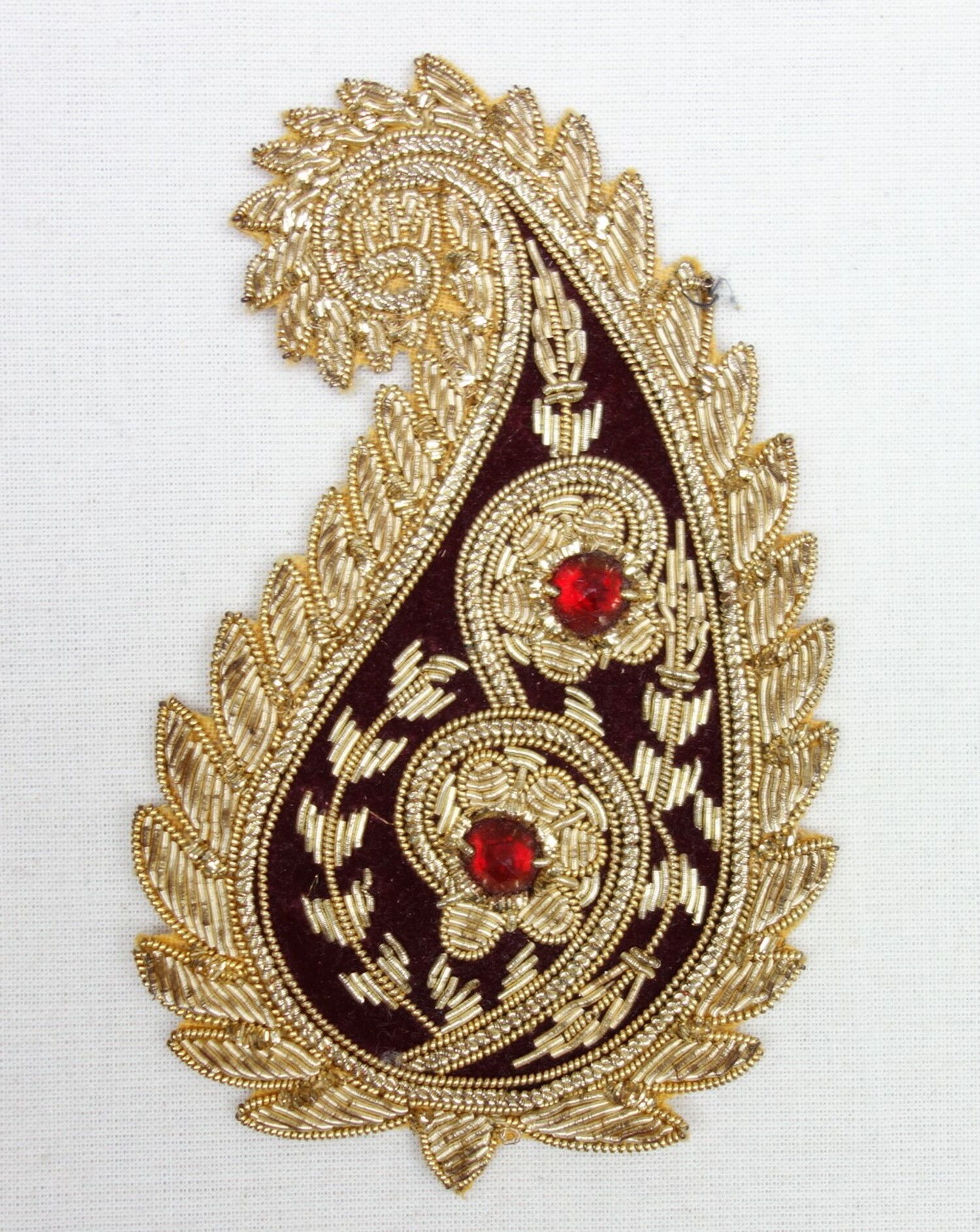
 Indian appliqué in the shape of an ornate paisley/buteh motif, hand embroidered in gold thread on a dark red velvet ground. Mid-20th century (TRC 2020.5154).It's raining paisley! Or so it felt the other day when six packages arrived at the TRC in Leiden, all at the same time. The parcels were from a variety of sources, and each one included one or more items covered with the paisley motif.
Paisley is that iconic Iranian/Indian motif (generally known as buteh) that was reproduced in the Scottish town of Paisley from the early nineteetnh century onwards. Hence the name. It is traditionally associated with Kashmir shawls, but the same motif can now be found everywhere.
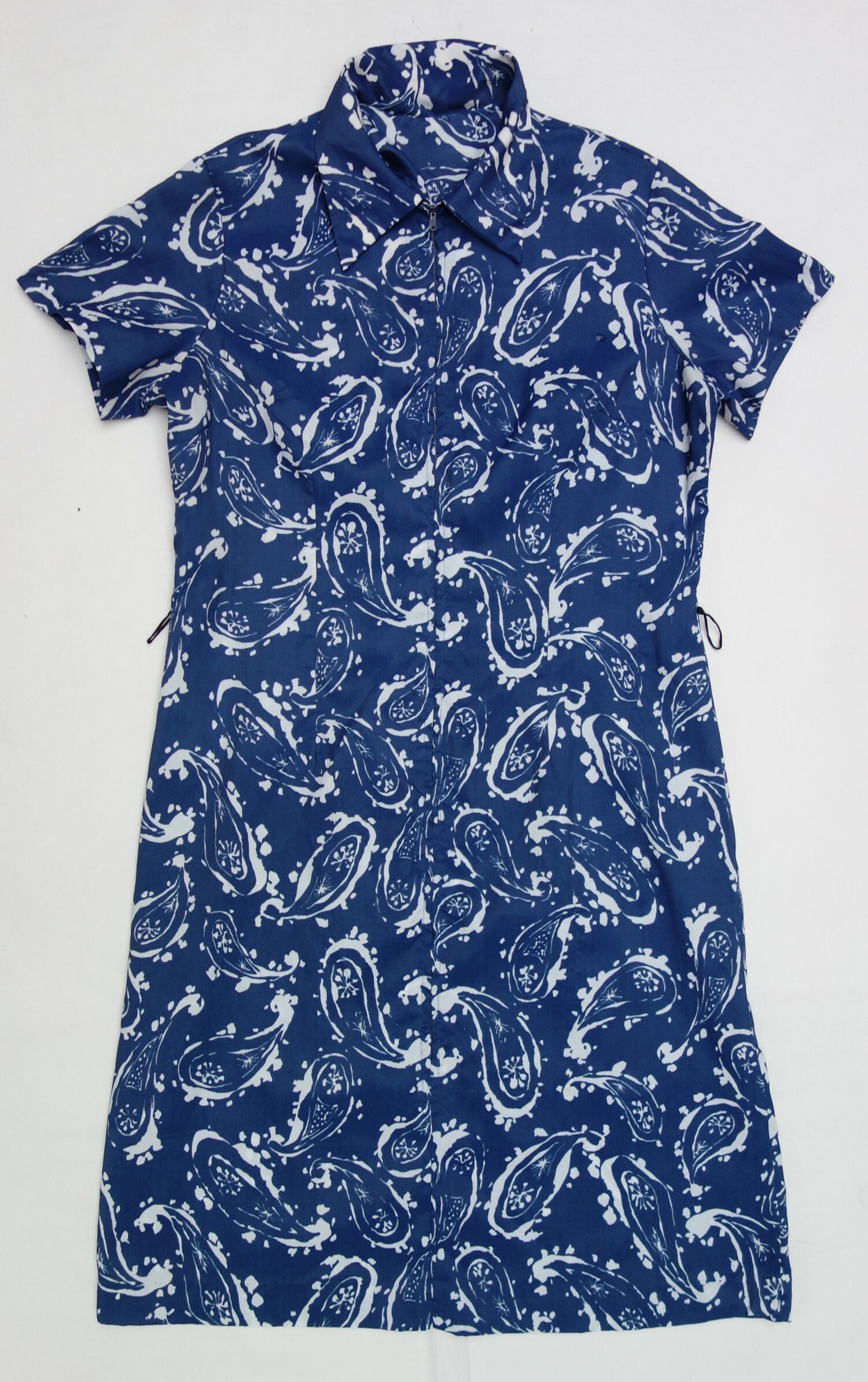
The six parcels included a coat, a bikini, a line dancing outfit, a cocktail dress, a length of West African cloth and an Iraqi-style embroidery from near Rotterdam, all decorated with variations of the paisley motif. In addition, a frequent visitor to the TRC has just donated an outfit that comes from the Estonian island of Kihnu, which, from the late 19th century, has developed a form of regional, daily dress dominated by paisley motifs!
All of these items were needed for and will be included in the TRC’s upcoming exhibition called From Buteh to Paisley: The history of a global motif.


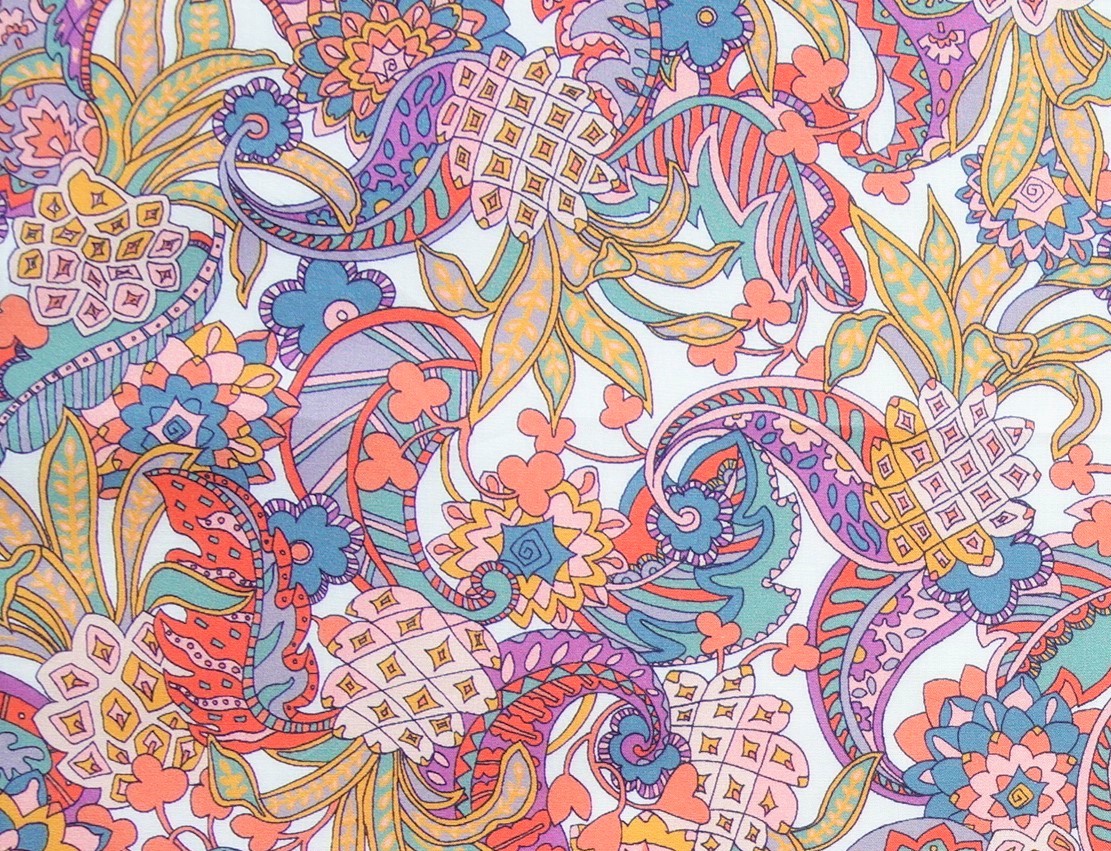 Detail of a sample of the Pineapple Paisley design, Liberty of London, c. 2020 (TRC 2021.0638).