Embroidered or not embroidered: the case of some Yemeni headdresses
The TRC in Leiden has just finished a 1-day study day on the theme of ‘What is embroidery’ (29 July 2020) and a 5-day intensive textile course (17-21 August), which also included a session about the basic nature of embroidery. What is actually required to make a piece of embroidery? What tools are needed? Which stitches are used? When is this form of decoration actually carried out? And what is it used for, and how?
The general consensus was that (technically) embroidery is worked on a finished piece of material (whether it is woven, non-woven, leather, etc), using some form of yarn, with one or more stitches, worked with a needle, a hook or a similar tool.
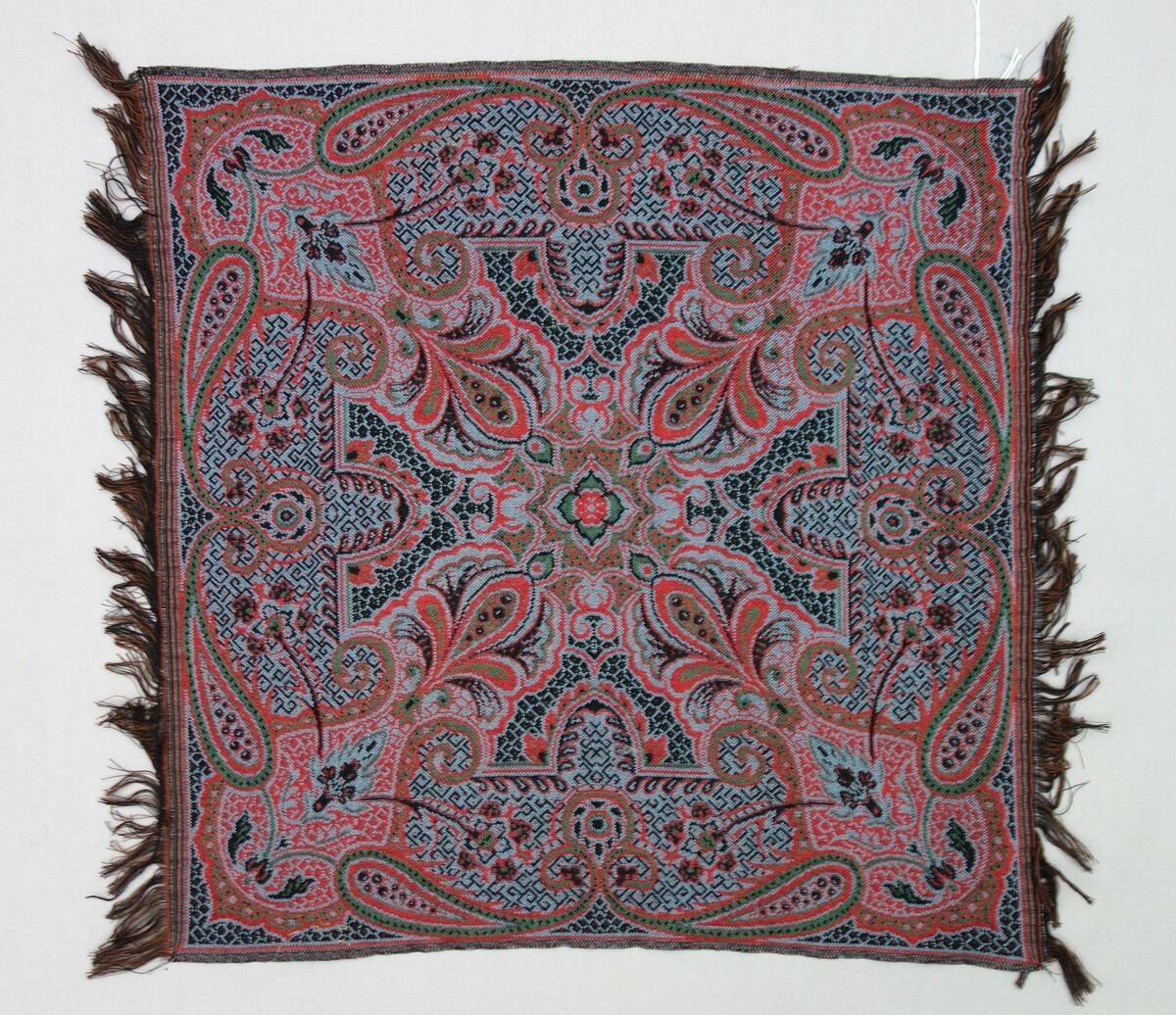
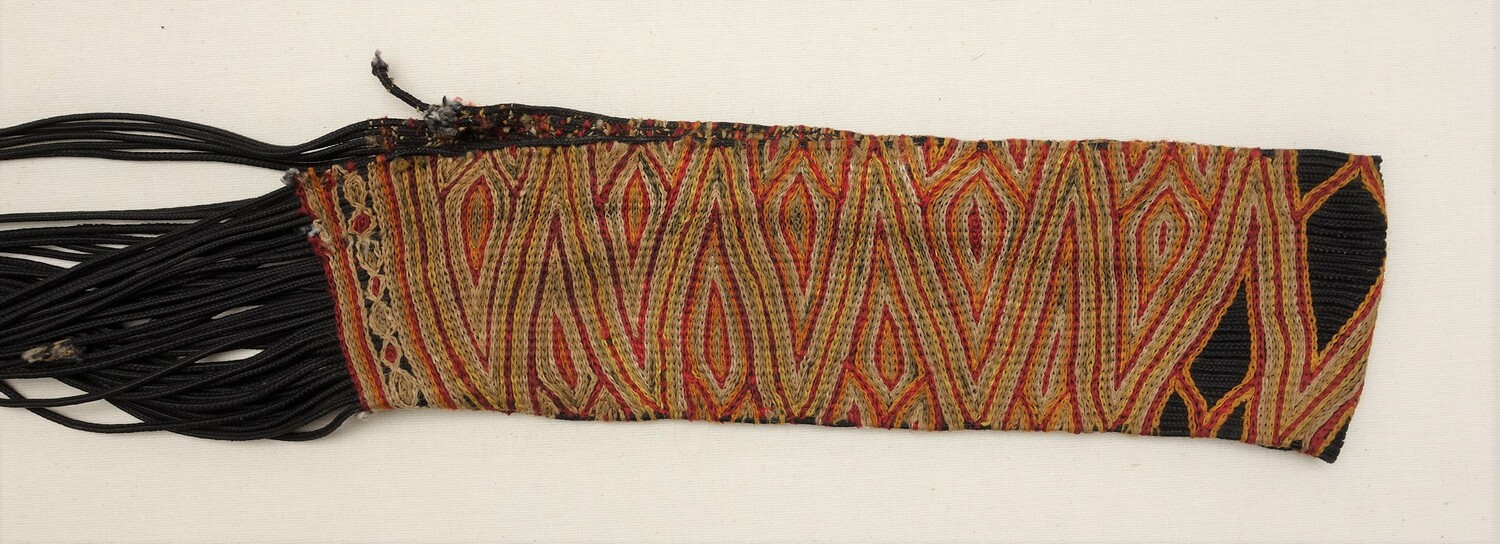 Embroidered part of a woman's headdress from late 20th century Yemen (TRC 2015.0610).
But there are always exceptions!