• F3
  • F2
  • F4
  • F1

On Thursday, 28th May, 2020, Gillian Vogelsang wrote:

As part of the further building up of the TRC’s velvet collection for teaching purposes, used for both the TRC's 5-day intensive course and the 1-day course on identitifying velvets, I recently bought online, from a respectable Dutch firm, six pieces of velvet.

Of the six "velvet" pieces ordered and received, two were not velvets – one was a cotton, twill weave with a raised surface (giving a suede effect), while the other was a printed satin! Admittedly, both materials feel soft and strokeable, but velvet: no.

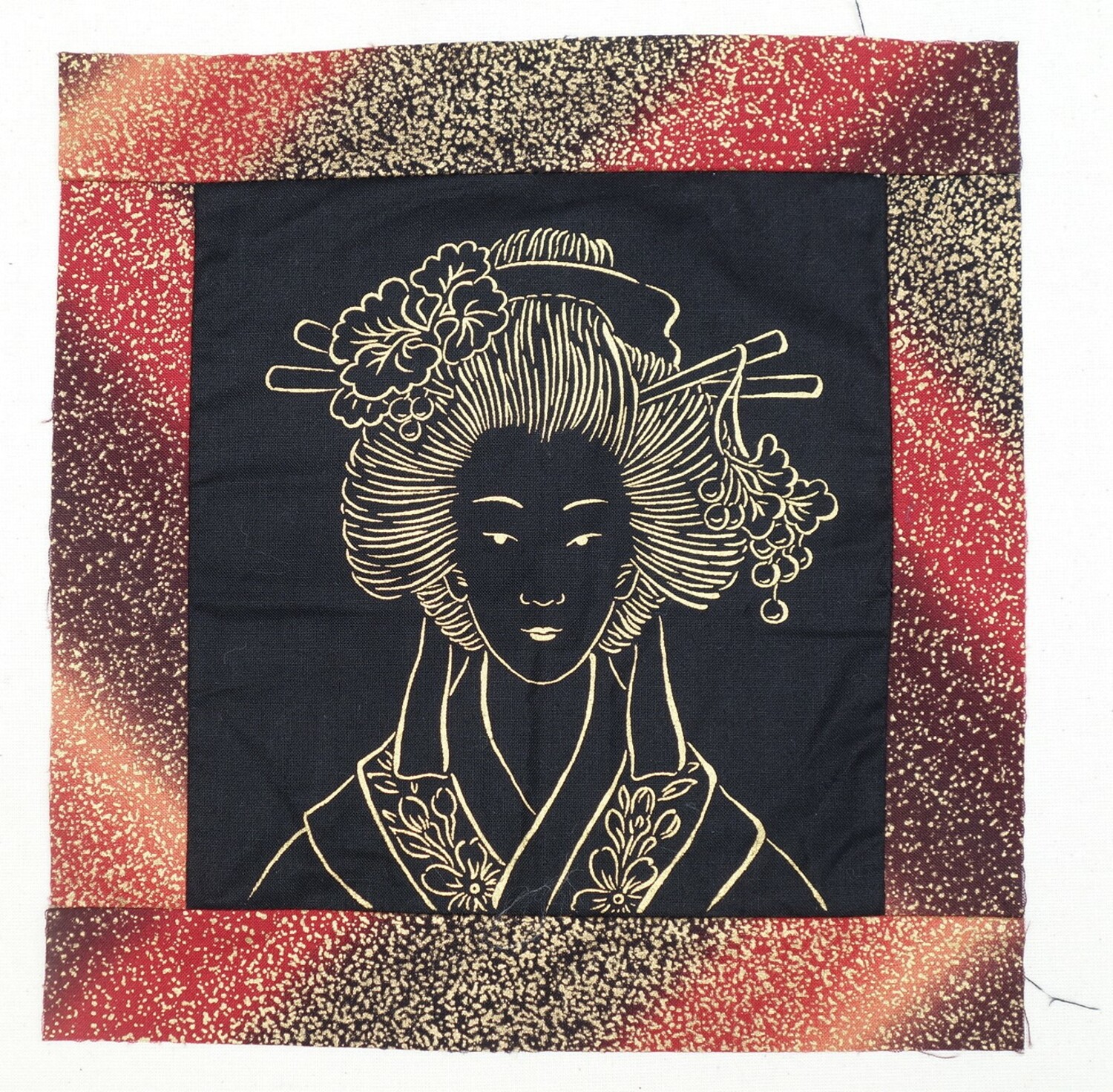
Piece of satin with a printed design of stylised flowers, sold online by a Dutch firm as velvet (TRC 2020.2506).Piece of satin with a printed design of stylised flowers, sold online by a Dutch firm as velvet (TRC 2020.2506).

I emailed to the shop (Textielstad, Tilburg) on the 12th May about the situation and this morning (28th May). I received a reply (in English) that has left me perplexed to say the least. Apparently the term velvet in the descriptions of the various types of cloth on sale was not a technical description, and here I quote: “The name can be more of a selling point than actually an indicator.”

Embroidered sleeve from a Bethlehem dress, mid-20th century (TRC 2020.2137).Embroidered sleeve from a Bethlehem dress, mid-20th century (TRC 2020.2137).Fatima Abbadi, a teacher in Middle Eastern embroidery from Capelle aan den IJssel, The Netherlands, writes about her experimenting with cord couching, which is characteristic for Bethlehem embroidery. May 2020.

For many years I have been practising the art of cross-stitching because it is the most common technique used both in Palestine and Jordan, these being the countries where my roots lie. During my childhood, cross stitching was taught at school and all the women in my neighbourhood practised it on a daily basis. However, over the years my interest in other forms and techniques grew rapidly, so much so that I decided to dive into the numerous and enchanting embroidery techniques that the Middle Eastern region is endowed with.

Starting from my surrounding area, I decided to begin by studying the cord couching technique first, because I’ve always been fascinated by the magnificence of Bethlehem’s traditional costume.

Around the 19th century, Bethlehem used to be a distinctive fashion hub of Palestine. The “malak” (in Arabic 'royal') bridal dress and its short jacket (taqsireh), both important female bridal pieces, were richly embroidered with silk, gold or silver cord couch embroidery on finely textured silk fabrics, and meticulously filled with satin stitch. As an output, this unique, fashionable and prestigious dress became a very desirable piece that every woman in Palestine wanted to purchase or they wanted at least a small element of their dress embroidered with THE couch stitch technique.

It is not often we are really puzzled at the TRC Leiden about an object (TRC 2020.2764). But something has just come in and we have no idea what it is! It has a complex, metal blade and a wooden handle. It was found in a box with weaving tools, including yarn bobbins and band weaving frames. Does anyone know what it is?

Gillian Vogelsang, Director TRC Leiden, 23 May 2020.

A weaving tool ? (TRC 2020.2764).A weaving tool ? (TRC 2020.2764).


The TRC has just been given a group of textiles that was collected by, and in some cases made by, the Dutch textile craftswoman, Hanne Mook-Andreae. She was a specialist in woven textiles, especially card woven forms (she had lessons from Peter Collingwood). The group includes textile samples from various parts of the world including Asia and the Americas. They will all be added to the TRC Collection database during the next few weeks.

Sample of ikat cloth from India, late 20th century (TRC 2020.2755).Sample of ikat cloth from India, late 20th century (TRC 2020.2755).

One textile (TRC 2020.2755), however, caught my eye, not because of an unusual technique, a particular design or a striking colour combination, but because it looked so familiar, but at the same time was not quite ‘right’.

On Thursday, 21st May, 2020, Gillian Vogelsang wrote:

At a time that the corona crisis is still spreading, more and more people are talking about sustainability, about the re-use of garments, and they are also wondering what will happen if this or that material is no longer widely available.

A wrap-over jacket made from bark bast, Sulawesi, Indonesia, 1940's (TRC 2018.0042).A wrap-over jacket made from bark bast, Sulawesi, Indonesia, 1940's (TRC 2018.0042).

On Wednesday, 20st May 2020, Willem Vogelsang wrote about an unusual type of face veil from nineteenth century Afghanistan:

Some weeks ago I wrote a short blog about a type of face veil that was worn in eastern Afghanistan by a slave woman from the Persian Gulf, around 1880. It was a battulah, the mask-type contraption that is sometimes called a Zorro mask and is still widely worn along both sides of the Gulf. I wrote about it mainly because it is so very different from the almost iconic, all-enveloping burqa type of veiling that by the late nineteenth century had become commonly worn by Afghan women and is still regarded by Muslim fundamentalists in the country as the age-old traditional, Islamically correct form of outside clothing for women.

Yet, the one-piece burqa as we know it today is probably a nineteenth century innovation introduced to the country from India, and, as it often goes, at first worn by the wives of well-to-do Afghans, and later adopted by their less fortunate sisters. During the early nineteenth century, the burqa as a one-piece garment replaced a set of garments, often also called a burqa, that consisted of a head cap, a face veil, and a body covering. This was until the early twentieth century still the normal set of clothing for a woman in Iran when going outside.

 “Cabul - Afghan and Kuzzilbash Ladies.” Coloured lithograph by Charles Haghe, after James Atkinson. Plate XIX in Hart 1843. Original size 25.5 x 38.5 cm.“Cabul - Afghan and Kuzzilbash Ladies.” Coloured lithograph by Charles Haghe, after James Atkinson. Plate XIX in Hart 1843. Original size 25.5 x 38.5 cm.

On Saturday, 16th May 2020, Beverley Bennett and Susan Cave wrote a blog about a particular American quilt in the TRC Collection (TRC 2019.2291) that testifies to a humanitarian disaster that took place almost 150 years ago.

Every now and then the TRC is fortunate enough to receive a quilt that has a provenance. Although many family quilts from the 19th century survive, the descendants have few clues unless a written account came with it. Our Rolling Star is a quilt we would describe as in ‘Fair’ condition. The back is rather ragged, the quilt has been cut down and re-bound in more recent times and it looks, well, brown, as though it has been in a river. Indeed.

A Rolling Star quilt, USA, c. 1870, a survivor of the disaster of 17 May 1874 (TRC 2019.2291).A Rolling Star quilt, USA, c. 1870, a survivor of the disaster of 17 May 1874 (TRC 2019.2291).

On Saturday, 16th May, Susan Cave writes:

The TRC is lucky enough to have a quilt (TRC 2018.2623) we know all about, that is, except for the name of the maker of the actual quilt top. With the calamitous economic downturn in the late 1920’s, quilt-making enjoyed a new revival and the TRC has a large collection from that era. We tend to think of feed-sack quilts being the prime examples, but lots of breezy pastels became very fashionable for those who could afford them. The ‘Jazz Age’ of the 1920’s prompted one Dr William Dunton, a self-described ‘physician to nervous ladies’, to advise that quilt-making was the ideal prescription for high-tension nerves. Perhaps this explains why so many quilters pieced blanket chests full of quilts their entire family could never sleep under during their lifetimes.

A 'sweet pea' quilt, USA. The top was made in the 1930's (TRC 2018.2623).A 'sweet pea' quilt, USA. The top was made in the 1930's (TRC 2018.2623).

Zoek in TRC website

Contact

Boerhaavelaan 6
2334 EN Leiden.
Tel. +31 (0)6 28830428  
office@trcleiden.org

Het TRC is elke dag geopend tussen 10.00 en 15.00 uur.

facebook 2015 logo detail


instagram vernieuwt uiterlijk en logo


Bankrekening

NL39 INGB 0002 9823 59, t.a.v. Stichting Textile Research Centre.

Financiële giften

Het TRC is afhankelijk van project-financiering en privé-donaties. Al ons werk wordt verricht door vrijwilligers. Ter ondersteuning van de vele activiteiten van het TRC vragen wij U daarom om financiële steun:

Giften kunt U overmaken op bankrekeningnummer (IBAN) NL39 INGB 000 298 2359, t.n.v. Stichting Textile Research Centre. BIC code is: INGBNL2A

U kunt ook, heel simpel, indien u een iDEAL app heeft, de iDEAL-knop hieronder gebruiken en door een bepaald bedrag in te vullen: 


Omdat het TRC officieel is erkend als een Algemeen Nut Beogende Instelling (ANBI), en daarbij ook nog als een Culturele Instelling, zijn particuliere giften voor 125% aftrekbaar van de belasting, en voor bedrijven zelfs voor 150%. Voor meer informatie, klik hier