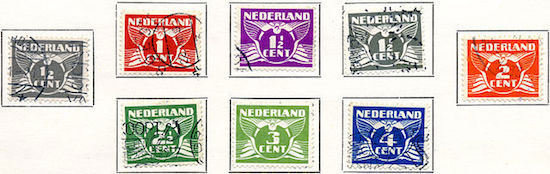
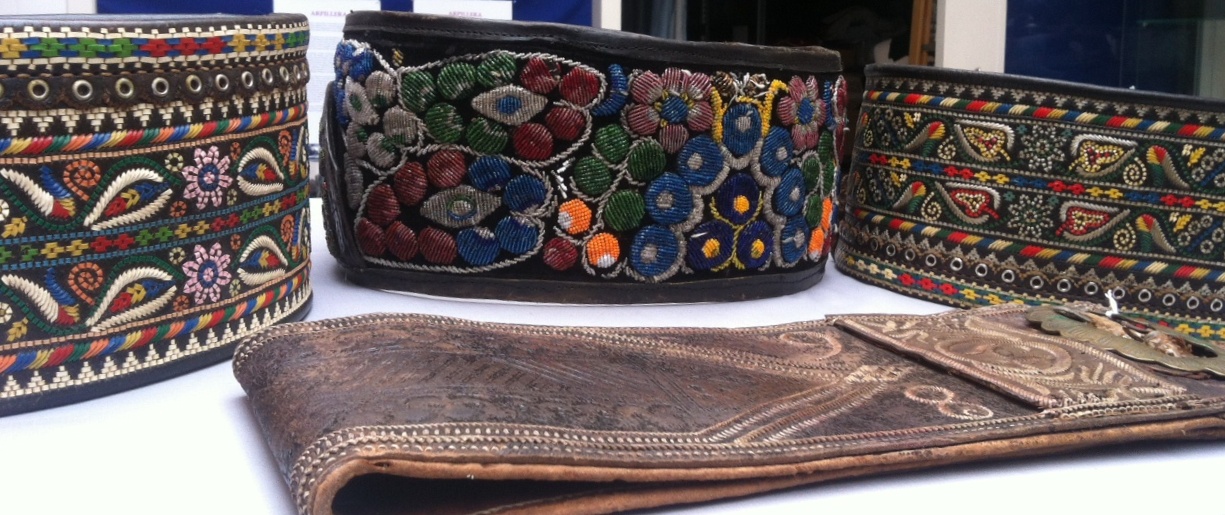
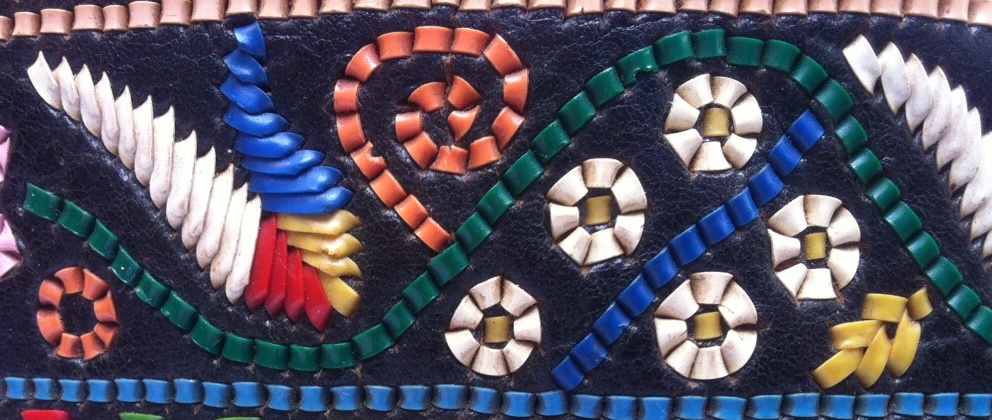
• F2
  • F4
  • F3
  • F1

Just had an exciting few days at University College London (UCL) and the nearby Petrie Museum. Friday 11th December consisted of a special workshop held in the Institute of Archaeology, UCL. The theme of the workshop was needlework in ancient Egypt. It was organised by Dr. Jan Picton of the Petrie Museum and led by myself. There was the chance to try out different seams and hems, mending, patching, as well as Egyptian and Mitanni style embroidery. In the afternoon, there was the chance to see various items of textile equipment and textiles now in the Petrie Museum, a teaching museum in the middle of the UCL, which has an amazing collection of antiquities from Egypt. The collection, as the name suggests, was built up by the early 20th century Egyptologist, Sir Flinders Petrie. The visit to the museum was followed by a workshop on appliqué techniques from ancient Egypt. There were fourteen participants at the workshop, which meant that those attending could ask many questions and have personal attention. It was great fun in other words. This workshop will form the basis for an Ancient Egyptian Sewing Bee that will be held at the TRC on Saturday 9th April (see here for more details).

The following day was again at the UCL and consisted of a full day about textiles and clothing in ancient Egypt. It went by the eye-catching title Tutankhamun’s Knickers and other Knotty Problems. Again the day was organised by Jan Picton and members of the Friends of the Petrie Museum. The day was divided into several sections, including a starting lecture about the production of textiles in ancient Egypt (myself), followed by a lecture on the textiles from the royal palace site of Gurob (Jan Picton). The morning was finished with a demonstration of various types of clothing worn in ancient Egypt (daily life garments by Janet Johnstone, and Tutankhamun’s royal clothing by myself). The afternoon then continued with a lecture on Tutankhamun’s clothing (again by myself) and ended with a lecture about draped and wrapped garments from ancient Egypt by Janet. There were many questions at the end of the day.

All in all a very pleasant and stimulating few days and I would like to thank Jan Picton and the Petrie Museum for inviting me to come to London to give these workshops/lectures. I really enjoyed myself meeting colleagues, talking about ancient Egyptian textiles and dress and hearing about new finds and ideas.

Gillian Vogelsang, 20 December 2015

The tent of Tipu Sultan, India, late 18th century. From: http://blog.toryburch.com/wp-content/uploads/2015/10/Blog_10.6_FabricsOfIndia_960_8.jpgThe tent of Tipu Sultan, India, late 18th century. From: http://blog.toryburch.com/wp-content/uploads/2015/10/Blog_10.6_FabricsOfIndia_960_8.jpgLast Sunday, 13th December, Gillian and I visited a marvellous exhibition in the Victoria and Albert Museum, London, that focused on handmade textiles and their production in the Indian subcontinent. And what we saw was more than the occasional sari ! The exhibition not only includes gorgeous examples of silk, cotton and woollen textiles and garments, often beautifully decorated, but also tells about technical details, as for instance the dyeing processes of the yarns and cloths, the weaving techniques that were used, the methods of decorating, and so forth. On display are garments from the Mughal period, but also medieval Indian textiles that were found in Egypt. Very spectacular is a tent that was used by Tipu Sultan, the Mysore leader defeated by the British in AD 1799. Something else that struck me was a copy of one of the 18 volumes of Sir John Forbes Watson's Collections of the Textile Manufactures of India (London, 1866). A brief entry to this remarkable publication, that includes actual samples of Indian textiles, is contained in TRC Needles (click here). Modern examples of Indian textile production, and the use made by modern Indian couturiers, are also displayed. In short, the exhibition provides a wealth of information, shows splendid textiles and garments, and is beautifully displayed. You can still go and see it, until 10th January. For more info, click here.

Willem Vogelsang, 15th December 2015

The last few days have been spent in Antwerp attending the 9th Textiles from the Nile Valley conference (27-28 November 2015) at the Katoen Natie Museum, Antwerp, Belgium. This is a biennial event that brings together specialists in many different fields, but all connected by their scholarly interest in the early history of Egyptian textiles. The range of papers presented was equally diverse and included excavation reports, particular textiles of note, art historical comparisons, museum collections, and the work of various people in the past, notably Louise Bellinger, a grand dame of textiles from the 1940s and 50s. Most of the papers referred to textiles from the first millennium AD, and in particular those linked to the Coptic period.

There was also a fascinating example of why replicas are important, both in terms of learning how they are made and how they are worn, namely in the form of a sprang cap that was re-created during the re-cataloguing of part of the Louvre Museums collection of Egyptian textiles. This talk (with practical demonstration) came shortly after a fascinating discussion about the history of nålebinding in Egypt and the making and repairing of socks made in this manner. Both of these talks stressed the importance of non-woven forms of decorative textiles within the textile repertoire of Egypt. Something that tends to be lost among the vast numbers of decorative woven forms, notably the so-called Coptic tapestries.

As with all conferences it was the chance to meet 'old' colleagues, as well as new ones, which played an important role in the event. It is good to know that there are so many students working at various levels who are opening up new areas of research within the field of Egyptian textiles. The conference papers are regularly published in a series of well illustrated volumes that are available from the Katoen Natie web shop. These are well worth having for the range of information presented in a 'proper' book form. A big thanks goes to both the staff of Katoen Natie, and Caroline Dekyndt and Cäcilia Fluck in particular for their organisation of such a pleasant, informative and inspiring weekend.

1 December 2015, Gillian Vogelsang-Eastwood

Photograph of Abdelhamid Abu Oud, wearing a pakol.Photograph of Abdelhamid Abu Oud, wearing a pakol.Following the horrific attacks in Paris last week Friday, photographs were published in the media of the alleged ring-leader, someone called Abdelhamid Abu Oud, of Belgian/Moroccan origins. He seems to have been killed by the French police, last Wednesday in Saint-Denis. What struck me, when looking at some of the photographs of him taken in Syria or Iraq in the company of his ISIS friends, was his headgear. He is shown wearing a pakol, which is a cap with a rolled brim. It has an interesting history in the Afghanistan/Pakistan borderlands, a background which is not really in line with Abdelhamid's radical beliefs. But I am sure he had no idea.


Because of its likeness to the typical headgear of the ancient Macedonians, the pakol has actually often been Ahmad Shah Massud, wearing a pakol, killed on 9 September 2001 by (apparently) Moroccan followers of Osama bin Laden, carrying Belgian passports.Ahmad Shah Massud, wearing a pakol, killed on 9 September 2001 by (apparently) Moroccan followers of Osama bin Laden, carrying Belgian passports.described as a relic of the distant past, which was allegedly brought to the East by the soldiers of Alexander the Great. The idea is not as weird as it sounds, since many leaders in this part of the world used to tell the British conquerors that they descended from the terrible Alexander. Actually, Marco Polo who may have crossed these lands in the late 13th century, mentions the same thing.

But fortunately for the ISIS adherents, the cap does not have a western origin. The pakol was first introduced in Afghanistan among the Nuristanis, in the late 19th or early 20th centuries. Nuristan is a mountainous and very secluded part of Afghanistan, in the extreme east of the country, northeast of the capital Kabul. The pakol cap derived from the mountain valleys in the extreme north of neighbouring Pakistan. It soon became the 'national' dress of the people of Nuristan (who converted to Islam, not entirely voluntarily, after 1896 when they were subdued by the Afghan amir). The pakol, which basically is a tube of wool that is rolled up around the head, was later also adopted by many Westerners working in the 'golden age' of Afghanistan, in the 1960s, and also among the Tajiki people living in the Panjshir valley north of Nuristan.

When the Soviet Union invaded Afghanistan at Christmas 1979, and a wide-spread revolt broke out all over the country, the people of the Panjshir took a leading role under Ahmad Shah Massud, who became an iconic leader of the Afghan resistance, the so-called Mujahedin. His headgear, the pakol, was subsequently adopted by many of the (young) Afghans of all ethnic backgrounds, all over the country, who were fighting the communist regime and the Red army (I donned it as well when I walked around there with the Mujahedin in the 1980s, so much easier to put on than the turban). Among many of the (young) Pashtuns, the dominant ethnic group of Afghanistan, the pakol slowly replaced the turban, as it also did among the Pashtuns living in neighbouring Pakistan.

Now when the ultra-conservative Taliban in Afghanistan, most of whom were Pashtuns, overran the country after 1994, their fiercest Afghan opponents were the non-Pashtuns in the north of the country, among whom the Panjshiris under Ahmad Shah Massud (he was eventually killed two days before 9/11 in a suicide attack by some (apparent) Moroccans with a Belgian passport....). The Panjshiris, who live just north of Nuristan, and many of their allies, were still wearing the pakol; the Taliban thereupon 'adviced' their Pashtun followers to stick to the turban. Actually, in many places, including Kabul, the wearing of a pakol was forbidden when the Taliban were controlling the town between 1996 and 2001. This only changed again when in late 2001 the Taliban were defeated, and people in Kabul in large numbers started wearing a pakol again, discarding the turban (and shaving off their beards).

And now I see an ISIS follower in the Middle East wearing the pakol ! Abdelhamid is unlikely to have had any knowledge of the history of his headgear, but he may not have liked the idea that the Taliban in Afghanistan regarded the pakol as the typical cap worn by their Western-supported opponents. Beware what you wear.

Willem Vogelsang, 19 November 2015

HELP!

A dress from Socotra, Yemen. TRC collectionA dress from Socotra, Yemen. TRC collectionA friend of the TRC came to see the current exhibition about Yemeni garments and jewellery. In addition, she came with three dresses and a child’s cap from Yemen as a gift for the TRC. One of the dresses in particular is special. It comes from the island of Socotra, which lies several hundred kms south of Aden. The garment comes from the city of Hadibu. It was acquired in 2006 actually on the island by the donor and her husband. The dress is made of green satin and decorated with broad, silver coloured bands. The garment reaches to just above the knees, but it has a very long train, and our question is HOW WAS IT WORN?

My first reaction was to have the train at the back; it could then be lifted as a headcovering, but I was told that by the donor this was wrong. So how was it worn? Another possiblity was that the train could be wrapped around the lower body to make a skirt, but how was it fixed in place? A telephone call to her husband led to the information that the train was at the front of the garment, and that it went between the legs to create a pair of very loose, knee-high ‘trousers.’ The rest of the train was placed over the right shoulder. Is this correct? We would like to find photographs of women wearing this type of garment to confirm all the details, or better still someone who has worn such a garment or knows it well, so that we can drape it correctly.

Gillian Vogelsang-Eastwood, 4 November 2015

TRC volunteer Shelley Anderson continues her blog about her recent visit to China and the Silk Road: Famen Temple lies some 100 kilometres outside the busy city The Famen pagoda, south of Xi'an, China. Photograph Shelley AndersonThe Famen pagoda, south of Xi'an, China. Photograph Shelley Andersonof Xi’an, China. It is a huge complex of modern-day Buddhist temples, a college and conference centre. It also includes a restored ancient pagoda, or Buddhist temple, that was first founded during the Eastern Han dynasty (25-220 CE). This pagoda has been destroyed and rebuilt many times in its history. During the Tang dynasty (618-907 CE) it enjoyed royal patronage, as the imperial capital was based in Chang’an, now modern-day Xi’an. Chang’an is considered the starting point westward for the Silk Road, where the huge international trading network for textiles, especially silk, and other valuable commodities began their journeys to India, Persia, Damascus and Rome. Thanks in no small part to this trade, China during the Tang dynasty was one of the most powerful and richest countries on earth.

A chance discovery in the ancient Famen pagoda helps to illustrate just how wealthy the kingdom was. In April 1987, during the pagoda’s rebuilding, a remarkable archaeological discovery was made. A forgotten underground chamber was discovered, full of Tang-era treasures, including glassware imported from the Middle East, over 100 gold and silver objects — and over 700 silk textiles. Many of the textiles had been folded and bundled together. Due to the damp inside the stone chambers, the textiles in the outer layers were decomposing and in very poor condition. There were damasks, leno, gauzes, brocades, plain silks and embroideries, all over 1,000 years old. A small silk blouse (6.5 cm in length, with 4.1 cm long sleeves), made to adorn a statue, was found with couched gold embroidery. The average diameter of the gold thread (made of extremely fine gold foil, wrapped around silk fibres) was 0.1 mm.

Also discovered was the reason for the collection of goods. A relic, a finger bone of the Buddha, was discovered in a niche in the last chamber. The bone was found inside a series of nested boxes, the last a small box of white jade. There were traces of gold thread from the embroidered silk cloth the box had been wrapped in. The rich goods were all offerings by worshippers to the Buddha, in order to ensure good luck and to gain merit for future lives. Two stone steles were also in the chambers, one of which was an inventory with a list of all the textiles, their names and weight, and the names of their donors on it.

The silks can be divided roughly into two categories: silk garments that had been offered by members of the imperial court (including an embroidered skirt given by the Empress Wu Zetian [624-705 CE], China’s only female ruler), and silks used to wrap other precious objects. Some of the silk fragments and other artifacts are on display at the nearby Famen Pagoda Museum. The bundles, however, are still being separated, layer by layer, at the Shaanxi Provincial Institute of Archaeology.

It was a privilege to meet Associate Researcher Lu Zhiyong, head of the Institute’s Scientific Research Management Department, in a special laboratory for the silks built in collaboration with a German institute. “This is a unique case,” he said of the find. “The textiles were folded layer on layer and were most tightly packed. Our first job was to refrigerate the silks, to preserve them and to deal with a heavy mould problem. There were gold threads, samite, twills and tabbies. There were also a leather boot and lots of coins. We tried to X-ray the bundle but it was too thick—only the boot or coins or bamboo could be seen. So there was no new information from that.”

According to the stone stele, the Buddha relic was removed from the chamber every thirty years and taken by ceremonial procession to Chang’an. On its three-day journey back to the pagoda, offerings were presented. People were probably still trying to catch glimpses of the relic as the chamber was being shut. Many coins were found just inside the sealed chamber, possibly thrown in by poorer people who could not afford to offer textiles, Lu explained. All the textiles seem to date to the same period in the 9th century. “The chamber was last closed in the year 874. We don’t know why. There have been surprises: some of the cloth is printed, not embroidered. The textiles include early examples of the use of gold thread in weaving. There is a very early example of silver thread, too. The silver thread has a paper substrate. We have found socks, trousers, a skirt, a hat — these are high quality textiles, that all belonged to the Emperor’s family.” The silks used to wrap other objects are “not as high quality as the costumes,” Lu said. One such wrapper, used to cover a sutra (Buddhist scripture), was a silk gauze with a silk floss embroidered phoenix outlined in couched silver thread. Lu and a German colleague use flat Teflon sticks in the slow task of separating the layers. No chemicals are used. If they find they cannot separate a layer “we stop. We focus on climate control, on conserving the textiles and we wait for new techniques. I don’t do this work just for me but for other generations.”

Shelley Anderson, 1 November 2015

Banner for the conference "Silks from the Silk Road". Photograph: Shelley AndersonBanner for the conference "Silks from the Silk Road". Photograph: Shelley AndersonTRC volunteer Shelley Anderson writes: There were many textile moments on a recent visit to China, where I attended the symposium “Silks from the Silk Road: Origin, Transmission and Exchange”, organized by the China National Silk Museum in collaboration with, among others, the Danish National Research Foundation’s Centre for Textile Research (CTR). The symposium opened with a weaver weaving damask silk on a large hook-shaft pattern loom, with a connecting rod. This sophisticated loom was built based on the remains of four model looms, made from wood and bamboo, uncovered in a Chinese tomb in 2012. This remarkable discovery included baskets of silk threads and dyes, and several wooden figurines that represent weavers. The artifacts have been dated to the Han dynasty, or late second century BCE. It’s a “truly exceptional” find, said CTR Director Marie-Louise Nosch. “It’s unique because finding organic matter so well preserved is rare. It bridges many gaps in our knowledge, as until now we did not know what type of looms were used. This shows the high technology of Han China, and will become a landmark in archaeology and textile research.”

Beautiful examples of silk fragments and textile tools were also on display in a special exhibition in the West Lake Museum (Hangzhou, China), where the symposium took place. Silk was a vital part of early Chinese economy, and the economies of other cultures that lived along the Silk Road. It was durable and light-weight, unlike dried fruits or gold, which were also traded up and down the Silk Road, along with jade, furs, spices and other commodities. You could buy camels, horses, slaves or servants with bolts of silk; soldiers’ salaries were paid in silk and debts settled with the textile.

One highlight of the exhibition for me was Yingpan Man. This richly dressed corpse was discovered in the abandoned city of Yingpan in 1995. Yingpan was an important Silk Road trading centre until it was destroyed by Genghis Khan’s troops. The arid desert atmosphere mummified the corpse and preserved the textiles he was buried in. And what textiles they are! He has a long double weave red woolen robe over purple silk trousers, another light yellow silk robe, and felt socks. He wears a funerary mask with a gold diadem, and a miniature silk caftan of embroidered damask silk had been placed on his chest. The motif of his red robe (of bulls and naked putti) leads some scholars to believe it was produced in the eastern part of the Roman empire. DNA tests, his brown hair and height (he is over six feet tall), and the non-Han Chinese custom of a funerary mask, point to European ancestry.

Shelley Anderson, 30 October 2015

Monument in Leiden along the Vliet, marking embarkation point of the Pilgrim Fathers leaving Leiden for Plymouth, and hence to America, in 1620.Monument in Leiden along the Vliet, marking embarkation point of the Pilgrim Fathers leaving Leiden for Plymouth, and hence to America, in 1620.I have lived on and off in Leiden for more than forty years, and regularly take groups of foreign friends and colleagues through this beautiful town. Perhaps it helps that my office is right in the centre of town, along the magnificent Rapenburg canal. When doing so, I always tell people about the (English) Pilgrim Fathers who in the early seventeenth century fled to Leiden and lived here for some time before boarding the Mayflower and sailing to America. I show them the places where they lived, and died. I also show them the various plaques in Leiden dedicated by American descendants to commemorate the stay of their ancestors (real or imaginary) in my town.

Two weeks ago I walked with one of my colleagues along the canals. I noticed a new monument, marking the spot where in 1620 some 102 Pilgrim Fathers boarded a boat to take them to the nearby North Sea, and ultimately to America. The monument also bears the names of the families that were involved. I spotted one name in particular: Standish. I had been looking for references to that man for some time. I knew he was one of the Englishmen who stayed in Leiden and left for America. He was called Myles Standish, and he eventually became the military commander of the new colony, a function he held until his death in 1656. He is, you will be thrilled to know, the main character, although highly romanticised, of Longfellow's narrative poem, The Courtship of Myles Standish (1858).

But what has this to do with textiles? Myles Standish was the father of Loara Standish, who was born in America and died before 1655. Around 1640 she made a sampler which has become the oldest extant example in the USA (for more information, click here). It is now kept in the Pilgrim Hall Museum, Plymouth, Massachusetts. It is embroidered on fine linen (c. twenty threads per cm) using blue, green, pink and red silk thread. It is 60 x 18.5 cm in size. The sampler is decorated with bands of stylised flowers (roses and carnations), acorns and intertwined ‘s’ designs. Stitched at the
bottom is:

"Loara Standish is my name Lorde guide my hart that I may doe thy will also My hands with such Convenient skill as may Conduce to virtue void of Shame and I will give The glory to thy name."

Loara Standish is believed to have died young, but exactly when is unknown. She lies buried, as far as can be ascertained, in the Myles Standish Burial Ground, Duxbury, Massachusetts, USA. The sampler was kept in her brother Josiah’s family until it was donated to the Pilgrim Hall Museum in Plymouth, Massachusetts in 1844.

Willem Vogelsang, 28 October 2015

Zoek in TRC website

Contact

Boerhaavelaan 6
2334 EN Leiden.
Tel. +31 (0)6 28830428  
office@trcleiden.org

Het TRC is elke dag geopend tussen 10.00 en 15.00 uur.

facebook 2015 logo detail


instagram vernieuwt uiterlijk en logo


Bankrekening

NL39 INGB 0002 9823 59, t.a.v. Stichting Textile Research Centre.

Financiële giften

Het TRC is afhankelijk van project-financiering en privé-donaties. Al ons werk wordt verricht door vrijwilligers. Ter ondersteuning van de vele activiteiten van het TRC vragen wij U daarom om financiële steun:

Giften kunt U overmaken op bankrekeningnummer (IBAN) NL39 INGB 000 298 2359, t.n.v. Stichting Textile Research Centre. BIC code is: INGBNL2A

U kunt ook, heel simpel, indien u een iDEAL app heeft, de iDEAL-knop hieronder gebruiken en door een bepaald bedrag in te vullen: 


Omdat het TRC officieel is erkend als een Algemeen Nut Beogende Instelling (ANBI), en daarbij ook nog als een Culturele Instelling, zijn particuliere giften voor 125% aftrekbaar van de belasting, en voor bedrijven zelfs voor 150%. Voor meer informatie, klik hier