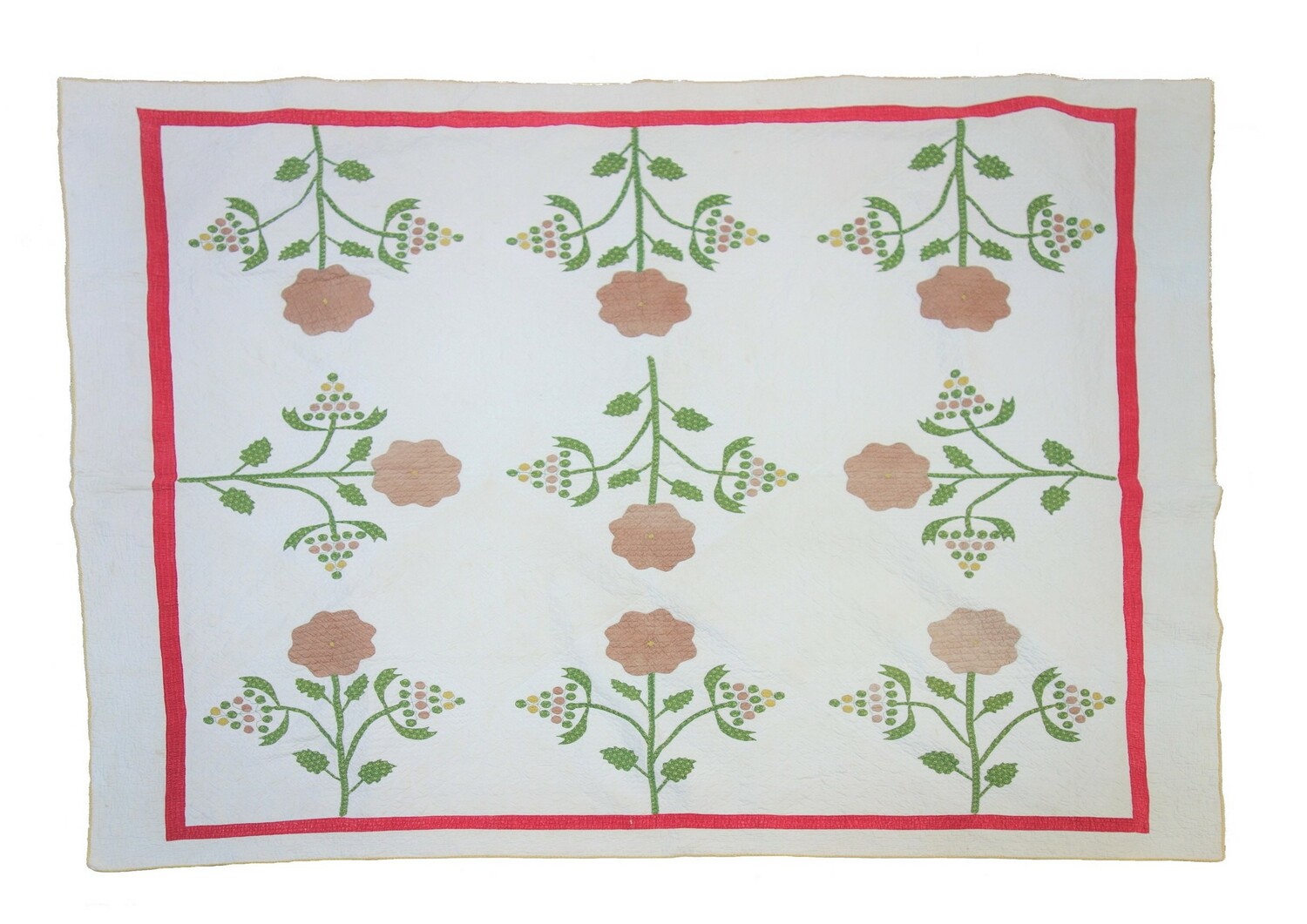
 A quilt made c. 1850 in the USA, possibly by a slave (TRC 2019.2402).Earlier this year the TRC published a blog on an American quilt (TRC 2019.2402), dated to c. 1850s, which was probably produced by an enslaved person (see the TRC blog 'A slave quilt in the TRC collection?". The TRC collection also contains a sample of Dammur cloth from Sudan (TRC 2016.0034; see also the TRC blog 'Dammur cloth from Sudan' and 'Dammur cloth from Sudan, continued'). This was a type of locally made, relatively rough, cotton material used by Arab merchants for dressing slaves, as well as being a currency to buy them. These finds took me on a search to find out more about the role of textiles in the slave trade.
Textiles were one of the main currencies during the transatlantic slave trade, and were part of an international trade system that also saw Virginian tobacco, Danish guns, Spanish wines and cowrie shells from the Maldives traded for the lives of African men, women and children.
Patterned textiles, usually from India, were the most popular trade item for European slavers along the African coast. They were often used by European and Arab traders as currency to buy slaves. Ukawsaw Gronniosaw (1705-1775), whose autobiography made him the first published African in Britain, explained how he was enslaved as a child: “A few days after, a Dutch ship came into the harbour, and they carried me on board, in hopes that the Captain would purchase me. – As they went, I heard them agree, that, if they could not sell me then, they would throw me overboard…as soon as ever I saw the Dutch Captain, I ran to him, and put my arms round him, and said, “father, save me.” …And though he did not understand my language, yet it pleased the ALMIGHTY to influence him in my behalf, and he bought me for two yards of check, which is of more value there, than in England.”
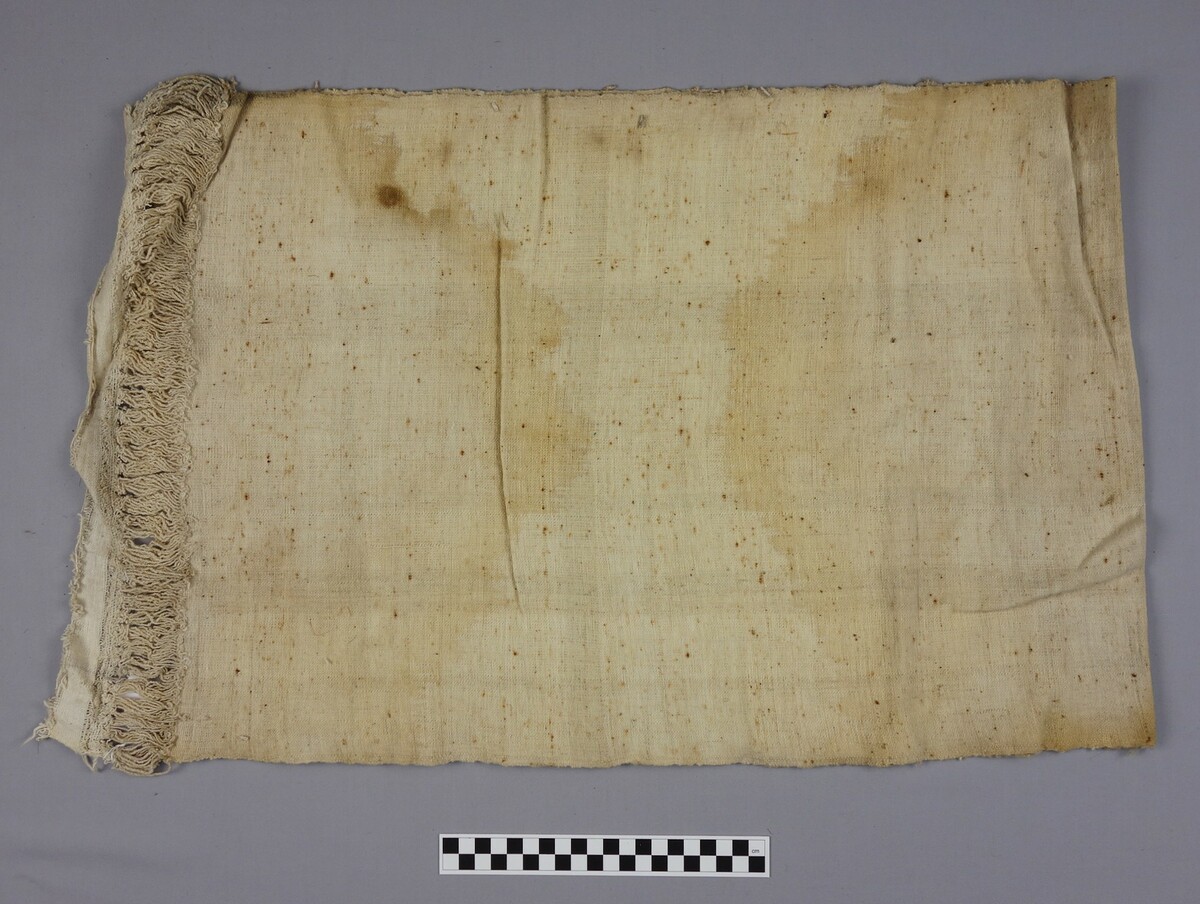 A piece of Dammur cloth from Sudan, 1920's. This type of cloth was widely used in the Arab slave trade (TRC 2016.0034).Traders had to be aware of regional preferences, both in patterns and colours, and of changes in African tastes. It was important to know the local value of specific textiles that were used as currency. Any mistake in choosing which textiles to trade could result in a financial loss and European slave traders gave very specific orders to their suppliers. In 1781, a Liverpool supplier named William Davenport rejected a shipment of textiles because, “The kind we want must be in colours mostly red, on blue ground with red & blue stripes as they are for Old Callabarre [Old Calabar, in modern Nigeria] & you must well know the patterns”.
Perhaps surprisingly, in additional to cotton fabrics, wool was also imported and used to dress slaves. In 1773 the British botanist Henry Smeathman described a game of golf with slave traders at a slave trading post in what is now Sierra Leone. “The sportsmen,” he writes, “were dressed in white cotton shirts and trousers brought from India in the factory proprietors’ ships. They were attended by African caddies, draped in loincloths of tartan design made from wool that had been woven in one of the partners’ industrial ventures, a wool factory near Glasgow.”
Source: FutureLearn on-line course “History of Slavery in the British Caribbean” from the University of Glasgow and The University of the West Indies (November 2020).
By Shelley Anderson, 23 December 2020.