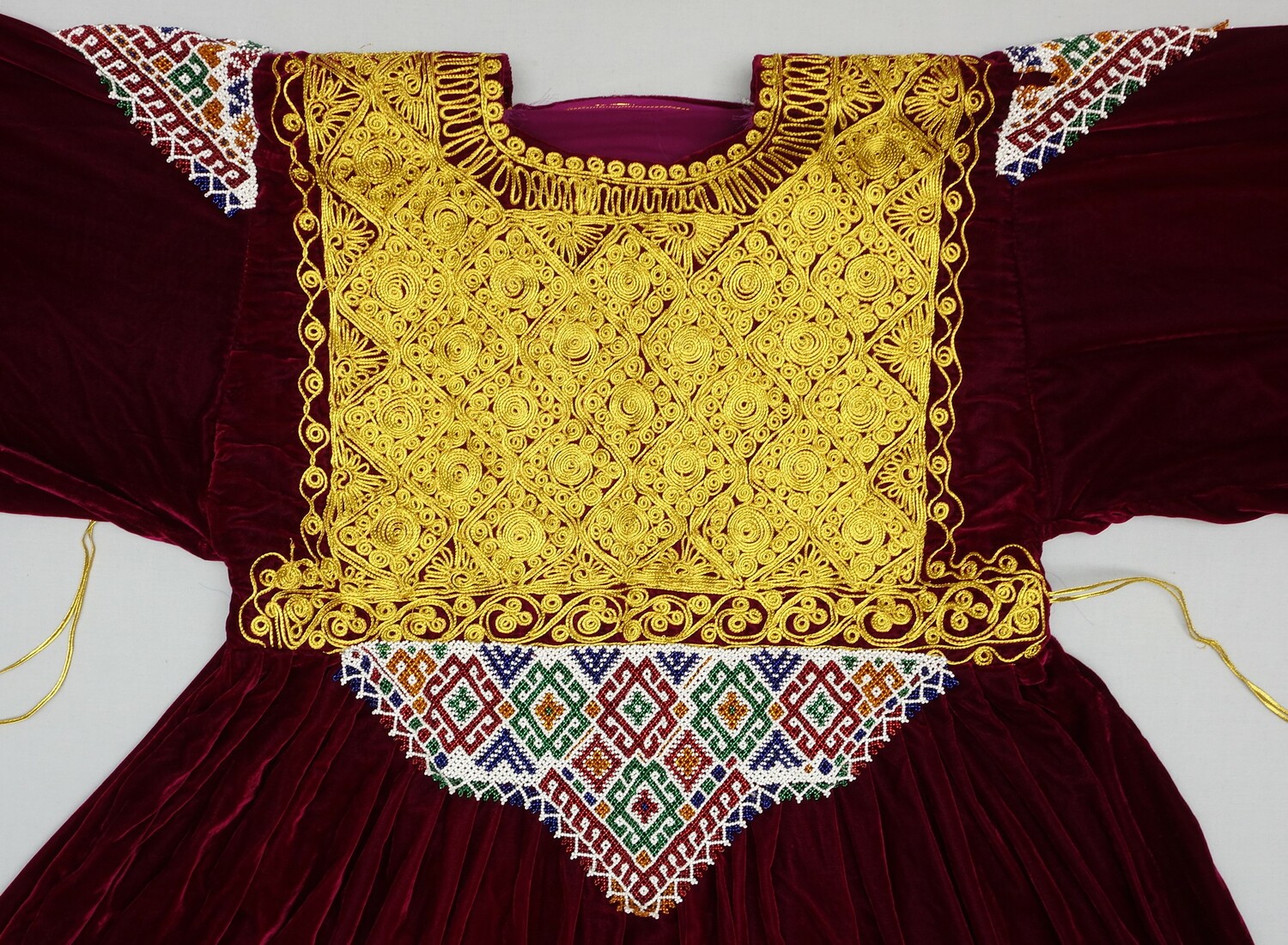
 A detail of an Afghan/Pashtun bridal dress in velvet, with extensive gold thread embroidery, 2004 (TRC 2005.0251b).The TRC collection includes some stunning examples of gold thread embroidery. They include a Yemeni dagger belt (TRC 2012.0392), an Indonesian ikat (TRC 2013.0290), an Afghan wedding dress (TRC 2005.0251b), Indian zari work (including an example of the iconic buteh/paisley motif, TRC 2020.5154), a pair of slippers from Singapore (TRC 2009.0117a-b), and much more.
No one knows for sure when working with metallic thread began, either for weaving or embroidering. Some people have suggested that the technique may have originated in China and spread from there, but this is by no means certain. The oldest recorded instance in Europe and the Middle East dates to the Roman period. It is likely that the technique of using gold thread was developed independently in various places.
In any case, I now have another textile museum to visit, once travel becomes safe and is allowed: Maison des Grenadières, in the French village of Cervières. This museum tells the story of the local Grenadières. Its adjoining atelier conducts gold thread embroidery workshops that last from one and a half hours to up to four days.
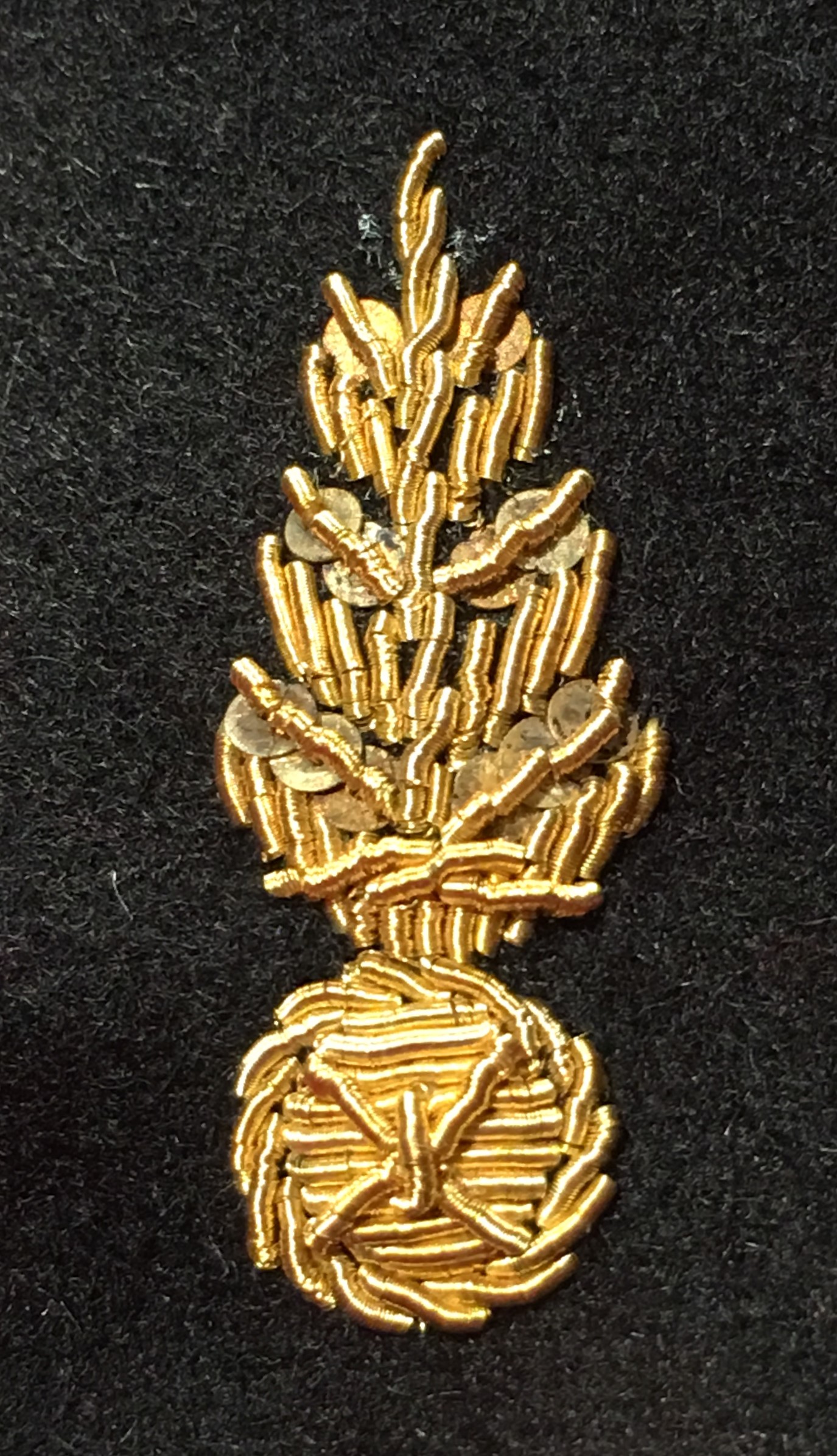 Pinecone (fragmentation) grenade motif, worked in gold thread, from the Maison des Grenadières, Cervières, France.The Grenadières themselves were local female gold thread embroiderers who worked throughout villages in the Haut-Forez region, west of Lyons. The women worked from home, usually during the winter, in order to make money for their families. They embroidered one particular motif—a grenade—in gold thread (mainly purl) for the uniforms of the French military. It was piece work and usually bought by the main French uniform manufacturer, the textile conglomerate now called Marck & Balsan.
During the First World War an estimated 80 percent of the military’s gold insignia came from these women. The grenade continues to be the insignia of France’s firefighters and police.
The story began in the late 19th century when the Chauvel sisters from Saint-Julien-la-Vêtre returned from Paris, after learning the trade there. By the end of the Second World War there were some 500 Grenadières, involving almost a quarter of the region’s working female population.
A decline began in the 1970s, as machine embroidery became common, and gold thread embroidery was outsourced, especially to India and Pakistan. By 2002 there were only 13 Grenadières left. The local tradition died when these Grenadières retired.
Today, embroidery graduates from other French training centres (in Paris, Rochefort-sur-mer, Sartrouville and Luneville) are hired to work in the Maison’s atelier.
For more information (in French or English) see: 'House of the Grenadières, or the art of stitching gold', included in the Le temps de Broder website; or the Maison des Grenadieres website.
Shelley Anderson, 15 March 2021.