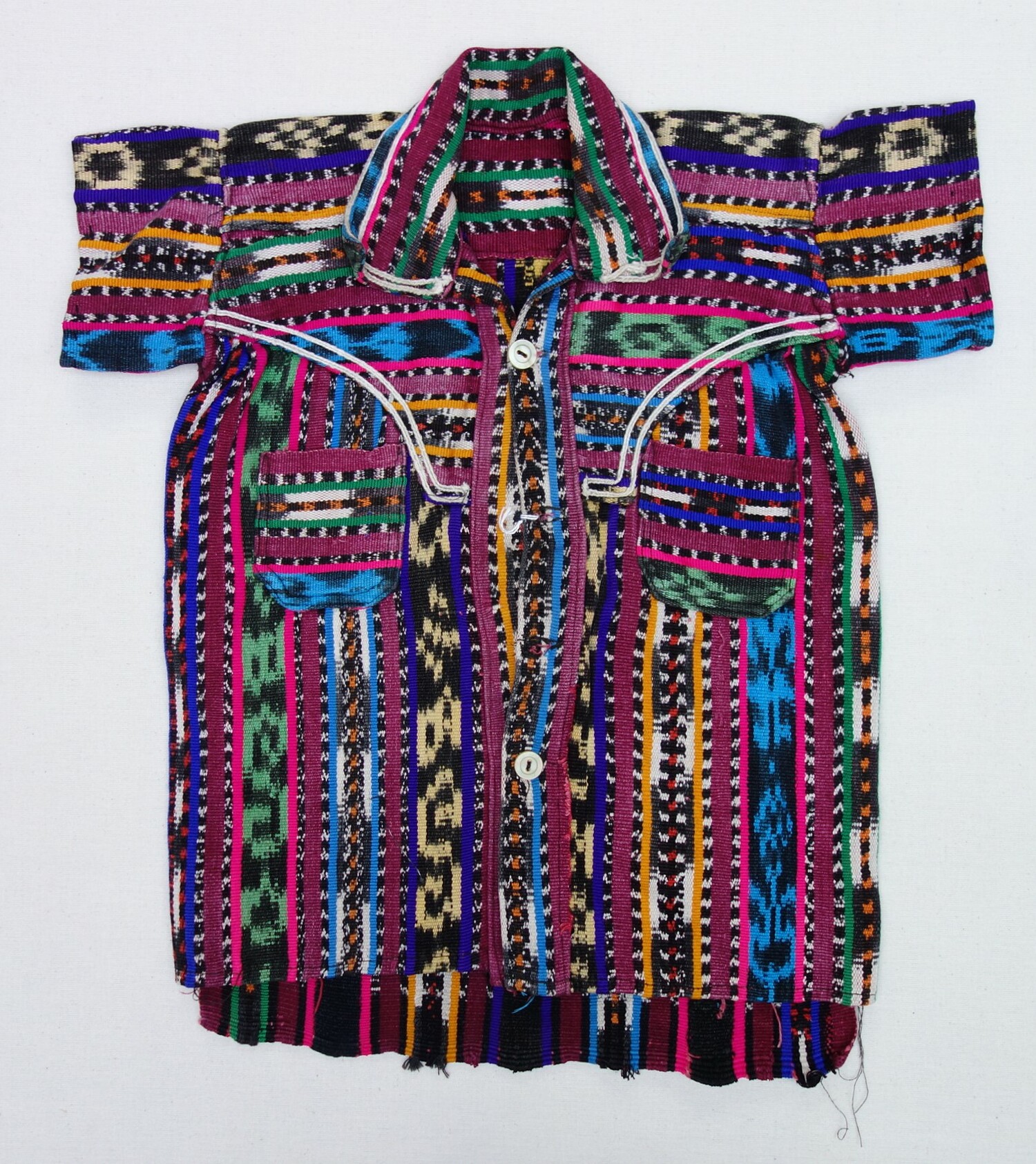
 A young boy's shirt from Guatemala, with ikat stripes, late 20th century (TRC 2020.4573).As part of our planning for the next six months, we are working on the next TRC exhibition, which will open at the end of September 2021 (all being well).
One of our MA student volunteers, Francesco Montuori, is fascinated with ikats. So he has asked if we could do an ikat exhibition, not just Indonesian forms as so often happens in the Netherlands, but from all over the world, and with all the different terms, names, and techniques.
So we have been looking at the TRC Collection and have identified examples from Guatemala, Ecuador, France, India, Indonesia, Iran, Japan, Syria, Tajikistan, Thailand, and Uzbekistan. So yes, we can do an exhibition that reflects the diverse nature of this historic textile technique, and many of its variations, including the chiné a la chaîne cloth from France in the 1920's and 1930's (see a special blog dated 22 September 2015).
In addition, some years ago, a group of ikat weavers from Indonesia gave some workshops at the TRC (see a blog of 12 August 2017) and very kindly left nine frames behind showing step by step how they make ikat. These will make a very impressive display.
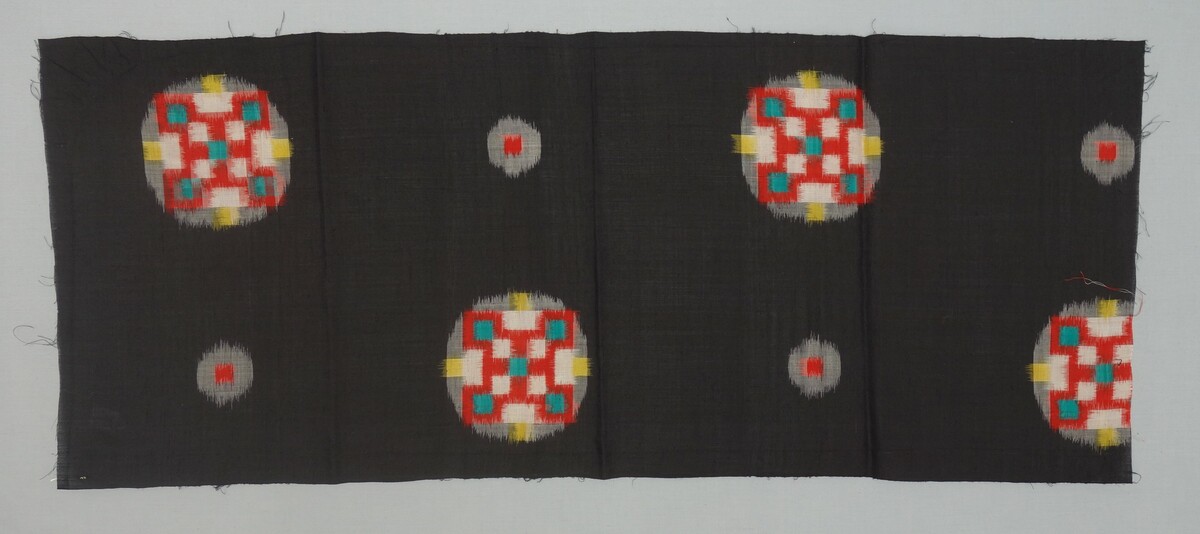 Sample of cloth with ikat roundels, Japan, late 20th century (TRC 2017.1457).
We also have some 1930's samples of ikat (known locally as tarbit) from Syria that were sent to the famous textile historian, Mrs. Grace Crowfoot, plus a letter describing the ikat production process in Aleppo (compare a blog on the subject of 19 May 2018). These pieces have never been displayed and now provide a poignant reminder of a textile tradition that has been lost due to the conflict that has devastated this country.
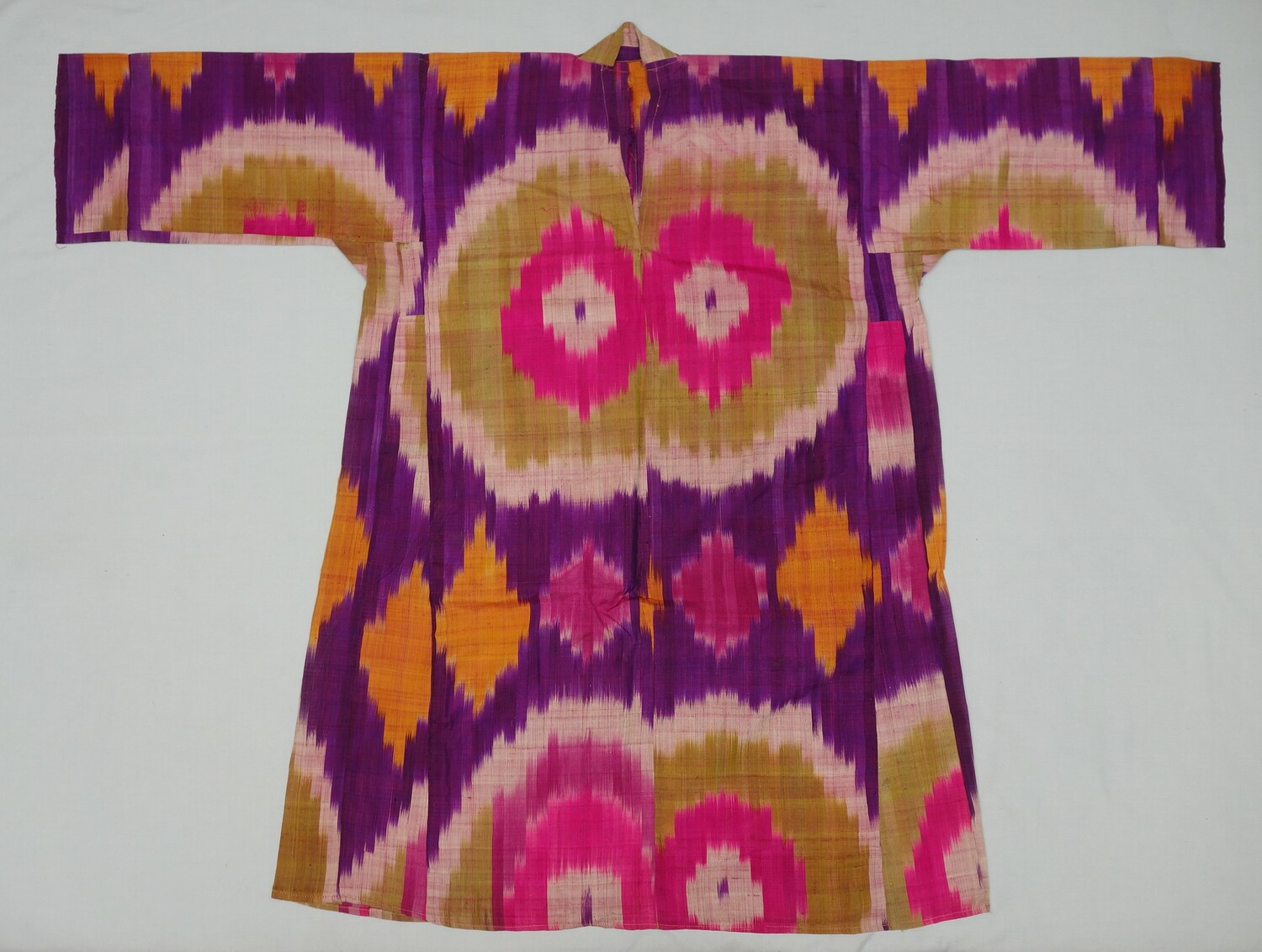 Kaftan with ikat patterning, Uzbekistan, early 20th century (TRC 2007.1125).So we are now looking for more examples of ikat from around the world! Especially (small) looms with ikat cloth being woven on it, garments made from ikat, photographs of people wearing ikat, etc.
If you have any items you are willing to donate, please get in contact with me at This email address is being protected from spambots. You need JavaScript enabled to view it. Suggestions are more than welcome!
Gillian Vogelsang, 19 March 2021