Detail of dress ‘Sahraouia gandoura’ by Kenza Bennani, New Tangier, 2024. Photograph by Christina de Korte.The exhibition MODA: Moroccan Fashion Statements at the Centraal Museum in Utrecht (in collaboration with DAR Cultural Agency) includes artists and designers from Morocco and the Moroccan diaspora in the Netherlands. The title of the exhibition, moda, is the Moroccan-Arabic word for fashion (from French: mode).
The exhibition is divided into several themes, such as ‘Monumental’, ‘Cosmopolitan’, ‘Amazigh Hair Heritage’, ‘Friendship’, and ‘Artists & Artisans’.
An interesting element of this exhibition, and one of the common themes, are the photographs that are spread throughout the exhibition, originating from residents from Utrecht, visitors to the museum, and the participants of the MODA exhibition. In addition, all the exhibition texts are displayed in Dutch, English, and Arabic, with some titles even in Tamazight.
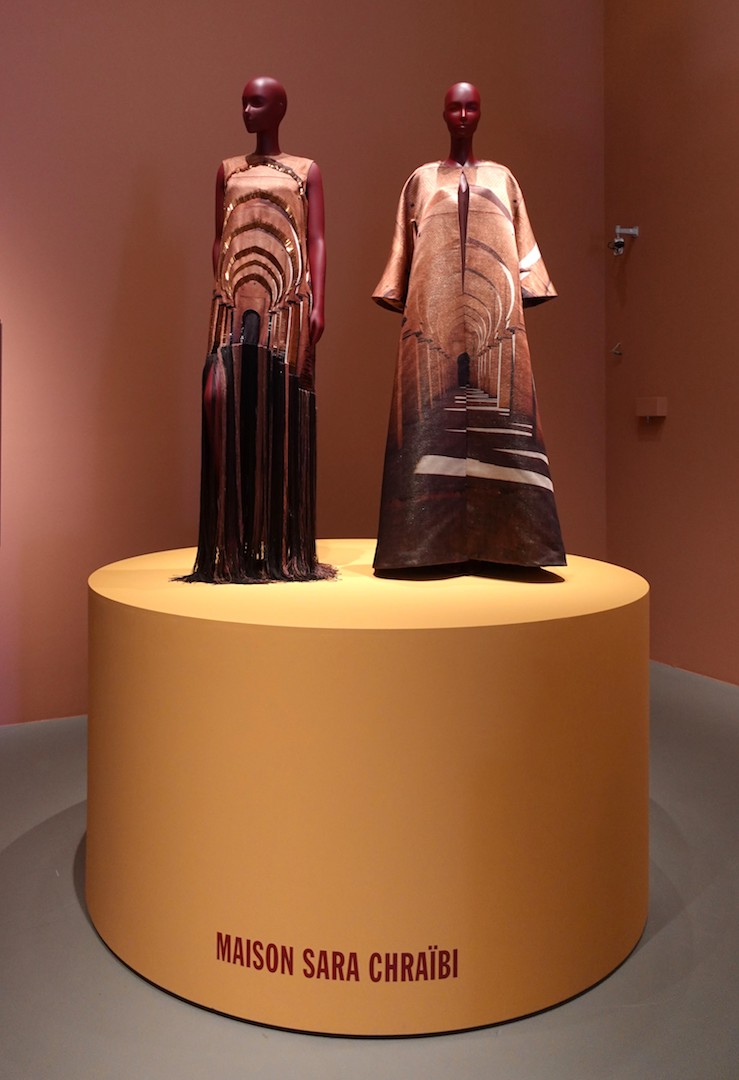 A dress and cloak by Maison Sara Chraïbi, 2024. Photograph by Christina de Korte.When I entered the first exhibition room, ‘Monumental’, the first piece that caught my attention was Sahraouia gandoura, a flowy silky dress in muted earth tones designed by Kenze Bennani, founder and creative director of the fashion label New Tangier.
This piece is part of a collection called Afra, which is based on the outfits of the Sahrawi, who are living in what is generally called the Western Sahara.
The collaboration with Moroccan artisans, who have knowledge and technical skills, is a main theme in the exhibition. In multiple exhibition texts, it is stated that crafts need to be taken seriously and that Moroccan art and design should not be seen solely as “traditional, folksy or Oriental”, with which I could not agree more!
In the same room there are a dress and cloak made by Maison Sara Chraïbi, which played into this discussion. At first glance, the printed fabric depicting a mosque could result in stereotyping a visit to Morocco.
The architecture of Morocco plays an important role in objects that portray Morocco, such as postcards, as can be seen in some examples of the TRC collection, for example, TRC 2017.1614 or TRC 2018.0455.
Postcards of this type often lack information about the location and are more focused on communicating a certain Orientalist view. However, in the case of the dress and cloak, the combination of the printed fabric, its embellishments, and the silhouette of the outfit create their own story. Furthermore, the pieces are a homage to the Tinmel Mosque from the 12th century, which was damaged by an earthquake on 8 September 2023.
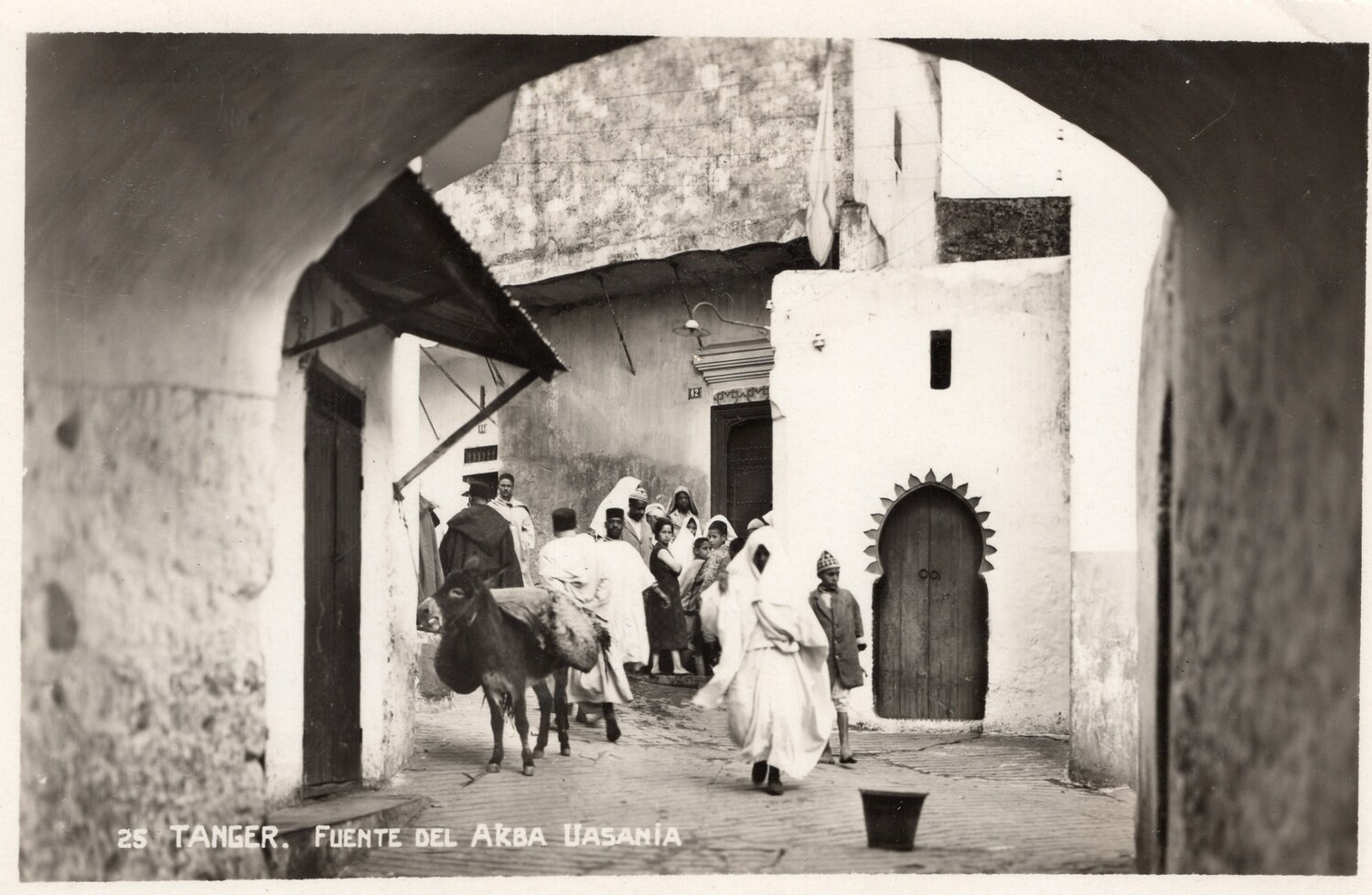 Postcard from Tanger, Morocco, mid-20th century (TRC 2018.0455).
Another issue that was touched upon was the problem of the ‘Western’ based fashion history and the exclusion of ‘non-Western’ designers, for example, the story of fashion designer Tamy Tazi, who is seen as a big name in Moroccan fashion. However, her story is often neglected in the wider framework.
Several of her kaftans and dresses are presented with beautiful techniques, such as chbika, in which silk thread is used to make knots that result in a mesh-like structure. This technique regained popularity when Tazi used it in her designs. Tazi was born in 1937, so her choice to use this technique is intriguing, because, in the late nineteenth and early twentieth century, many Moroccan embroidery techniques stopped being made.
The room called ‘Going Local in the Global’ showed the work of a wide diversity of artists, from recently graduated, social projects and more well-known artists. One of my personal highlights was a woollen tapestry by Samira Charroud, which was inspired by Amazigh poet, Fadma El Ouariarchi.
 Woollen tapestry ‘Yemma #5: Roots of Life’, Samira Charroud, 2024. Photograph by Christina de Korte.
The poem mirrors how women from the Riff tell their histories through weaving. For this work, Charroud used wool that was spun by her Dutch grandmother, connecting her Dutch and Moroccan background into this artwork.
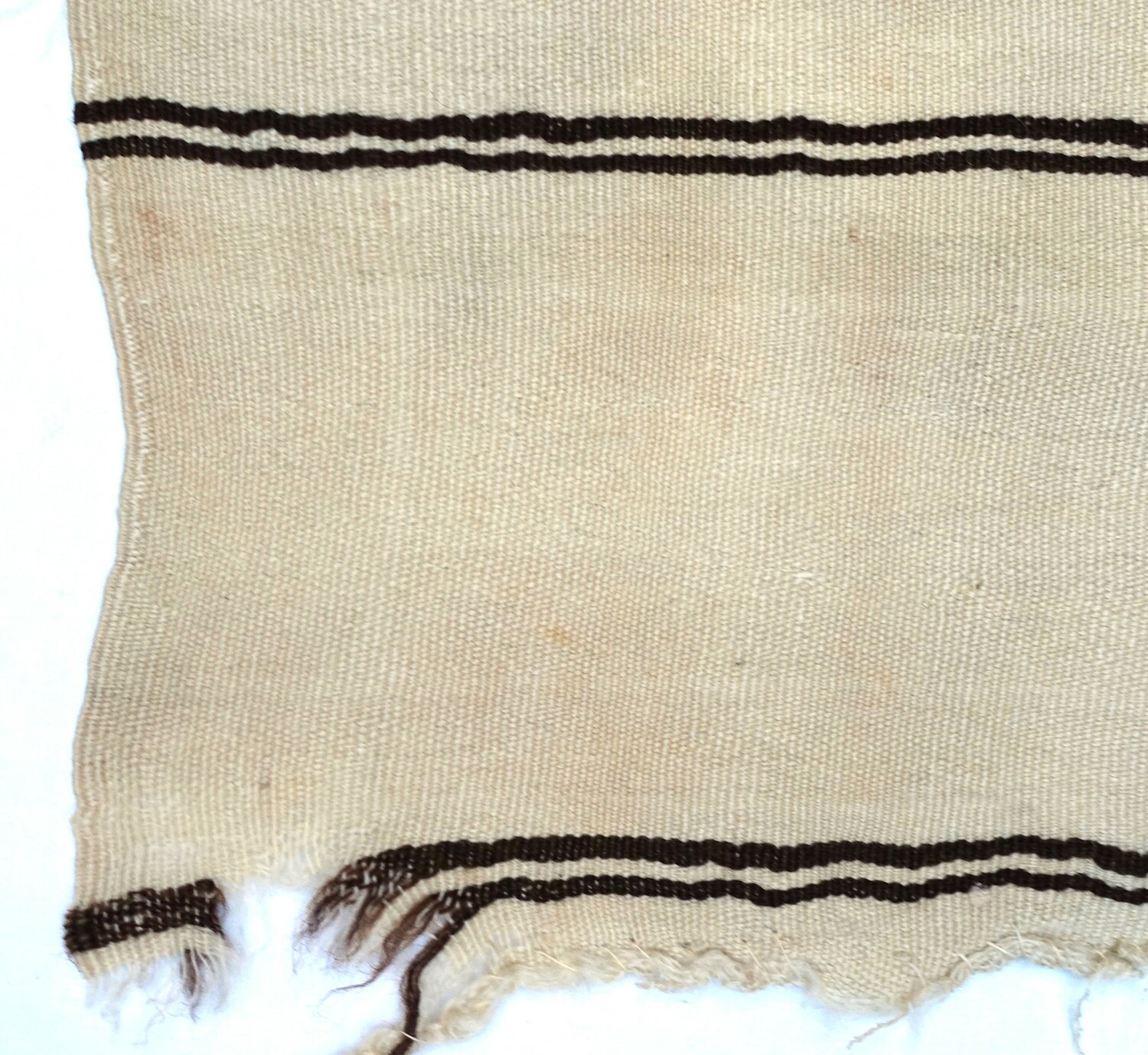 Woollen blanket from the Riff, Morocco, 20th century (TRC 2024.3201).Interestingly, the TRC received a blanket from the Riff Valley last month, which was made out of hand-spun thread and handwoven with undyed wool (TRC 2024.3201). However, the visual language of the pieces is completely different, since the work by Charroud is machine woven and dyed.
Another important room in the exhibition was ‘Artists & Artisans’, emphasizing the equal importance that both actors have. In the room, three videos were played on a loop which showed various crafts. Additionally, on the other side, there were several outfits and objects on display.
An object that brought the craft and art together was a dress by Said Mahrouf, made with Ismail Ouariagli Essafi, who is one of the last gold brocade weavers. However, this dress is more of an art installation, since the ends faded away in unwoven pieces of thread, which were hanging from the ceiling.
Furthermore, I was surprised to find out there were two tables in this room filled with stunning jewelry, such as a Tawnza headpiece with tikhorssin earrings, and a pair of tizerzai fibula (a more recent example of a fibula is TRC 2014.0993), both from the 19th century.
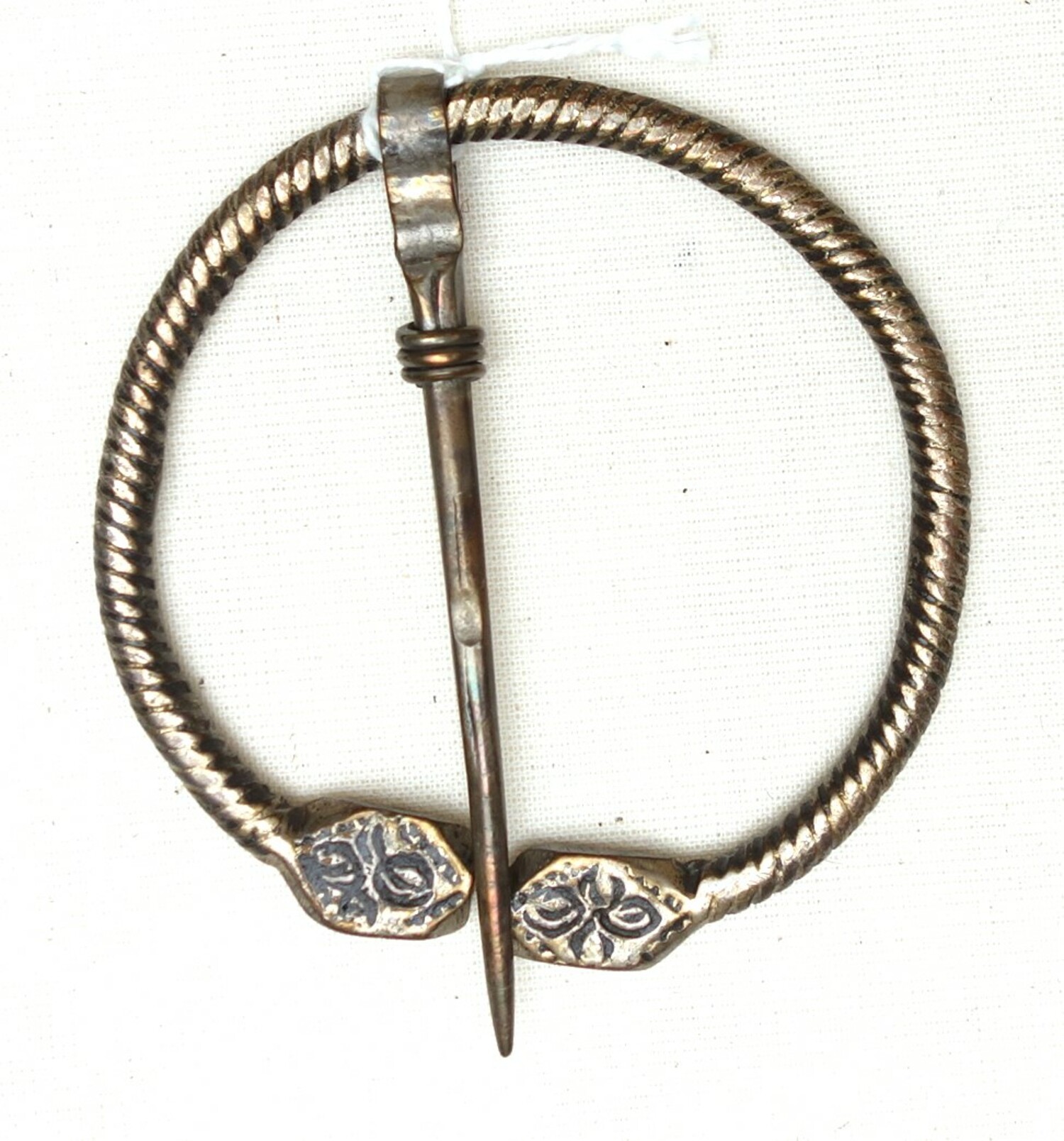 Amazigh fibula, Morocco, 1995 (TRC 2014.0993).
Furthermore, in the middle of the exhibition, there was a salon, completely covered in the work of Hassan Hajjaj. Hajjaj created an installation that was covered in a design based on the Arabic traffic stop sign. In this installation was a selection of books on textile and fashion, including the book about this exhibition.
All things considered, this exhibition gave insight into Moroccan (diasporic) designers on the basis of a wide variety of objects. The photographs that are spread throughout the exhibition give a personal touch and help to re-adjust (the often) prevailing Orientalist view. It was great to see how throughout the exhibition attention was paid to the origin of inspiration by the artists and designers.
The exhibition MODA: Moroccan Fashion Statements at the Centraal Museum in Utrecht is on view until 2 March 2025. For more information, click here.
Christina de Korte, 16 December 2024