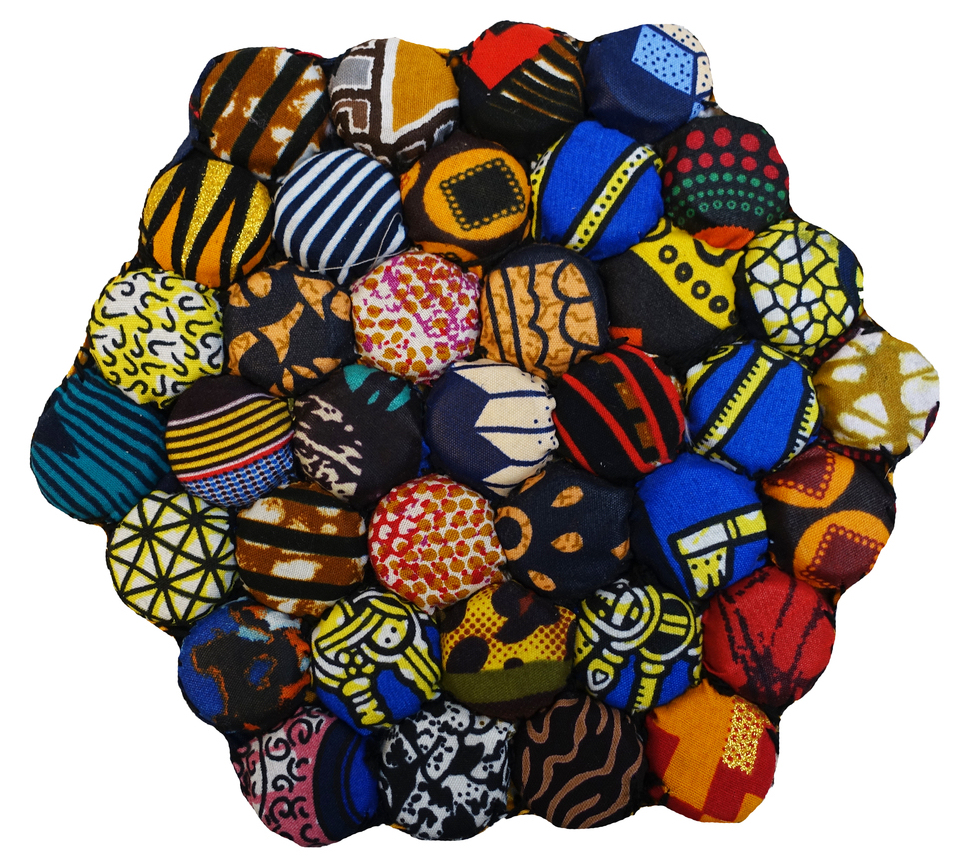
 Multi-coloured mat from Namibia, 2024, made out of metal bottle caps. Each cap is covered with different, wax-printed fabrics individually cut out and then hand sewn together in an octogonal shape (TRC 2024.3444).This year (2024) has seen various developments with regards the TRC's cooperation with Leiden University.
Thanks to Prof. Annetje Ottow, Chair of the Leiden University Board and a supporter of the TRC through the donation of family garments from the Dutch East Indies, we were put in contact with Alexander Mouret, Regional Partnering Manager Artificial Intelligence at LURIS, the Knowledge Exchange Office of Leiden University. On 12-13 September this year he organized a symposium in Leiden on 'Indifference', where I had the honour to present a paper on 'Indifference to .... textiles'.
Alexander is helping us to find more routes and channels between the TRC, the University, and the commercial world, while at the same time exploring possible donors and sponsors, and indeed how we can all work together.
Alexander was also the organizer of a Memorandum of Understanding (MoU) between the University and the TRC, which was signed on the 24th November 2024.
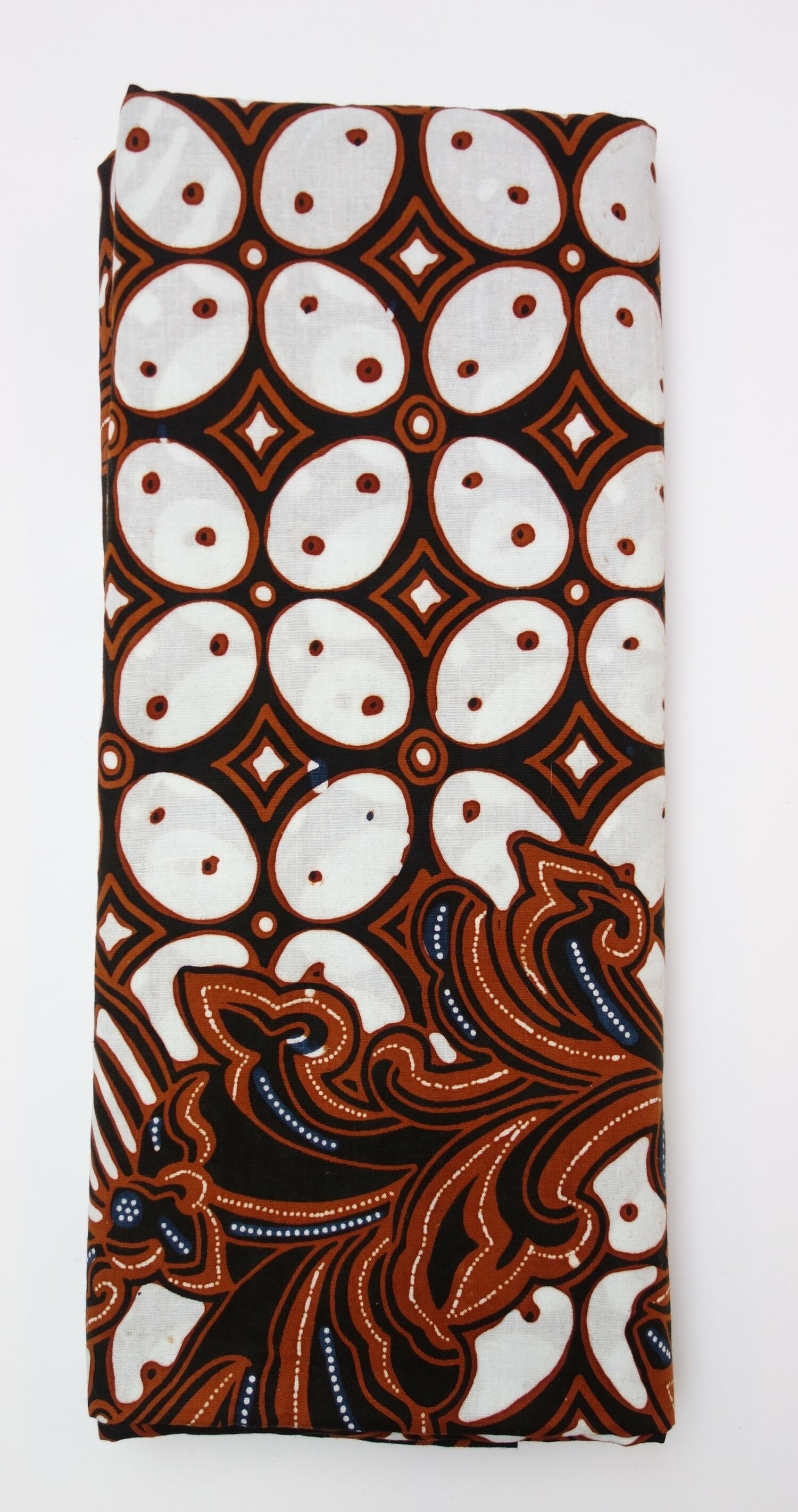 Batik cloth from Indonesia (TRC 2024.3446). In the near future a team of Indonesian researchers will again travel to the TRC in Leiden to study the TRC collection. Their research is partly financed by the Dutch embassy in Jakarta.In the past, the TRC has signed MoU’s with individual Leiden University departments, such as the LDE Centre for Global Heritage and Development, but this new MoU is university wide and means that it will be easier for students and others to work at the TRC, to join as interns, carry out research and embark on specific projects.
In 2024 we already had various interns and volunteers from Leiden University, including Olivia Buchan, who worked on the TRC’s lace collection, and a number of students from the Archaeology department, such as Emilie Lambert, Héloïse Bellouard, Tamar van Meerkerk, and Sophie Hayda. A recent intern from Utrecht University, Christina de Korte, wrote a blog about her experiences at the TRC.
We also welcomed various student groups, notably from Anthropology and Critical Heritage Studies of Asia and Europe. We are expecting to take on two more Leiden students in February 2025 as interns.
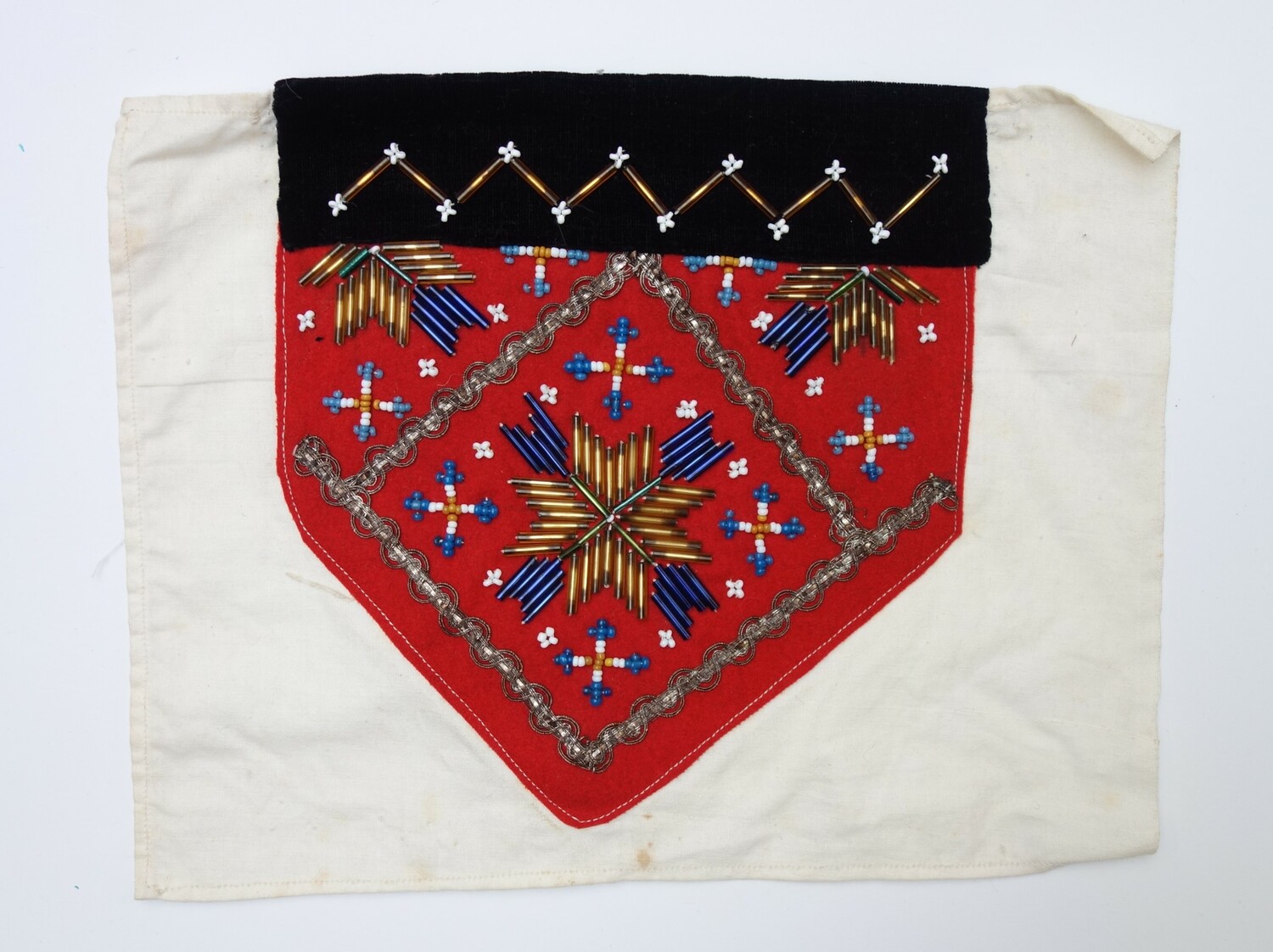 Beaded chest panel of a woman's outfit from the Hardanger region in Norway, 1927 (TRC 2024.3442c). Worn by Hermine (7 years old) Krieger, daughter of Prof. C. C. Krieger, Utrecht University (1884-1970).Over the years we have also had various staff members of the University attending the TRC’s 5-day intensive textile course. The December 2024 course, for example, included Prof. Ann Brysbaert, Professor Ancient Technologies, Materials and Crafts, Dept. of Archaeology, and we are talking with her about how to work closer together over the next few years. Prof. Brysbaert has offered to write a report about her experiences on the course, which will be published shortly as a TRC Blog.
Yesterday (20th December 2024) we had an unofficial meeting with Prof. Ottow, in which we talked about the current situation with regards Leiden Council and our search for larger premises (looking good, but we are keeping our fingers crossed). We also discussed the MoU mentioned above, accommodating a wider group of students who are interested in textiles, clothing and accessories in all their many forms, joint exhibitions, and a range of other possibilities for how we can work together.
 Fragment of woollen cloth from Quernmore, UK, c. 700 AD (TRC 2016.0200).The idea of a textile garden for growing plants associated with fibres (flax, hemp, ramie, cotton?), dyes (everything from alkanet to woad) not to mention teasels for the weaving process (other suggestions most welcome in due course), was also discussed briefly.
We also talked about the need for new members for the TRC Board, and Prof. Ottow is going to talk with friends and colleagues to see who might be suitable. More specifically, we are looking for somebody from the commercial world who understands how the cultural world works and is willing to help the TRC grow and develop.
Next week I have a meeting with Jacqueline Looijen from the WEEFNETWERK, about the setting up of one or two-year programmes for teaching weaving to people who want to set up artisan workshops.
 Guatemalan pair of man's trousers, locally dyed (ikat) and woven, hand embroidered, 2011 (TRC 2019.2835).Prof. Ottow was also interested in this idea, so who knows, perhaps we can do this in conjunction with Leiden University. In other words: lots to think about, while working towards 2025.
And all of this in the context of “LEIDEN: CITY OF TEXTILE KNOWLEDGE”!
Dr Gillian Vogelsang-Eastwood, Director, 21 December 2024.