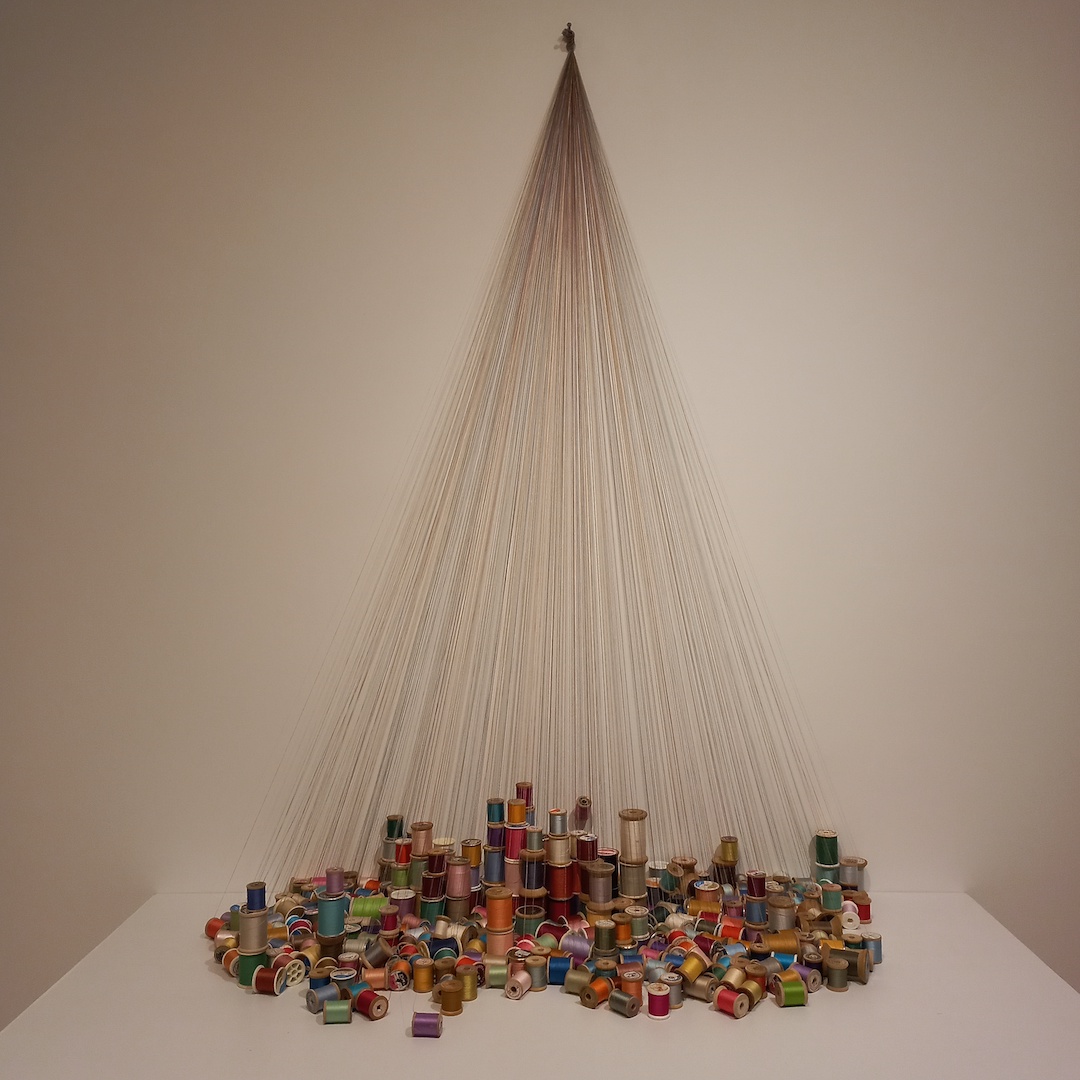
 'Colorial', with 300 bobbins with threads of different colours. 2014. Artist: Natalia Villanueva Linares.Willem and I are just back from a few days in Paris (a birthday present from our two sons and their partners), going to museums, galleries, and generally relaxing. Last Tuesday, 7th January, we wanted to go to the Musée Orsay to see some of the impressionist paintings, but while walking there we spotted an exhibition at the Maison de l’Amérique Latine ('Une brève histoire de fils (de 1960 à nos jours)', which was about various Latin American textile artists and their work. So we popped in.
A very wide range of cloth and thread-based work was on display, some of which very detailed, while others were large and thought-provoking, but nearly all well-made by people who understood what is a thread/cloth. One or two items were less so, but it it inevitable in an exhibition of this nature that some items appeal and others do not.
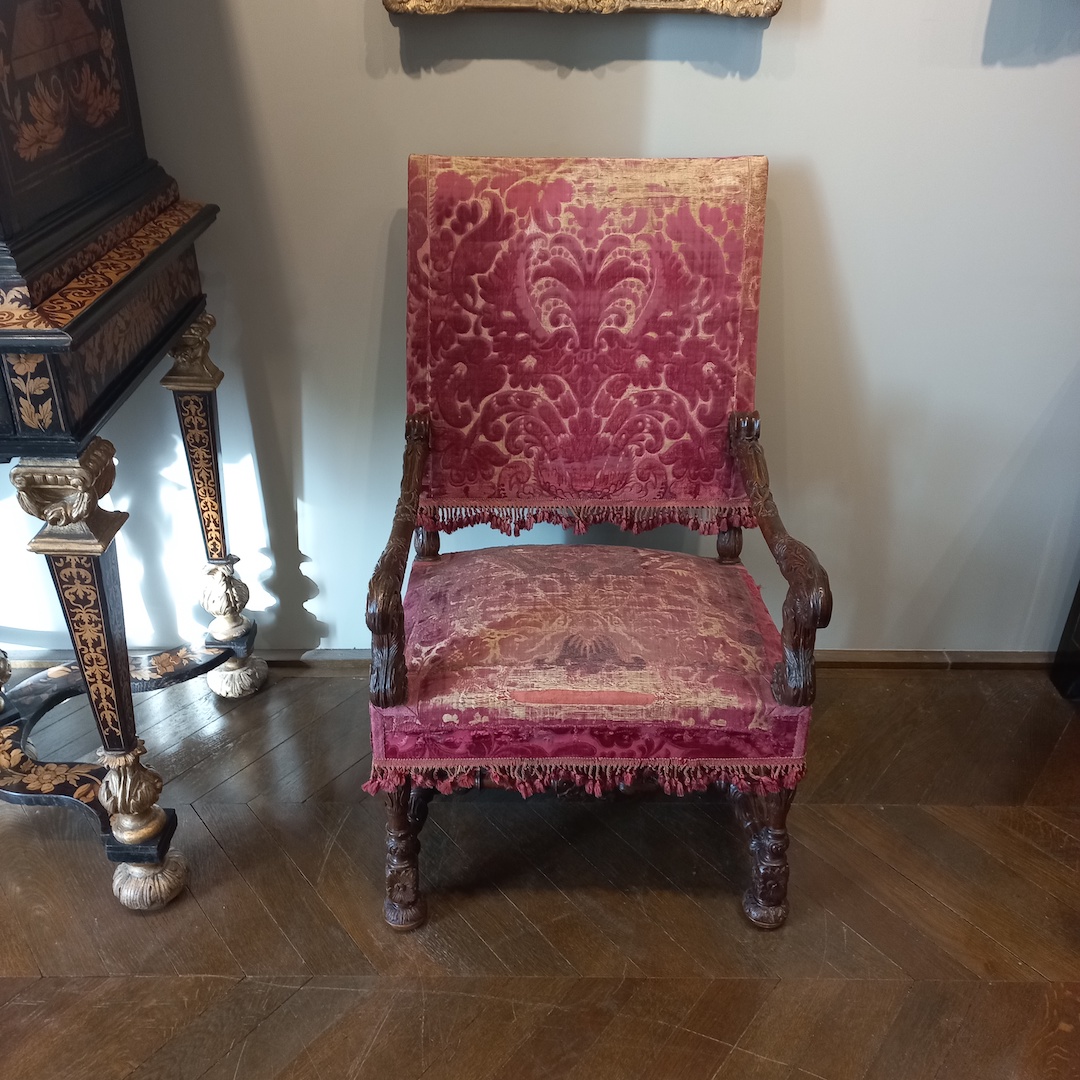 French chair, about 1550. Wooden frame, voided velvet, with cut and uncut silk velvet on a linen ground.
Then we walked on and came to the Musée Orsay, but even just a few minutes after the official opening hour of the museum there were already four very long queues (for people with and without tickets). We had been to the museum many times before, so we just marched on. We are really starting to understand the anti-tourism movement.
Instead we went to the nearby Musée des Arts Décoratifs, a museum I had not been to in years. It was lovely, gentle and not crowded. The many permanent galleries are well set up with interesting and useful information in both French and English. We walked around the galleries in order to gain a better idea of how French interiors, including the textiles, had changed over the last 500 or so years.
The displays helped me to make sense of some pieces of velvet we have in the TRC Collection and how they were used to upholster chairs of various types. There was also one particular room with 17th century embossed leather wall covering (and yes we have some pieces at the TRC), and we were shown, in another room, how this practice was ousted by textile wall coverings in the 18th century.
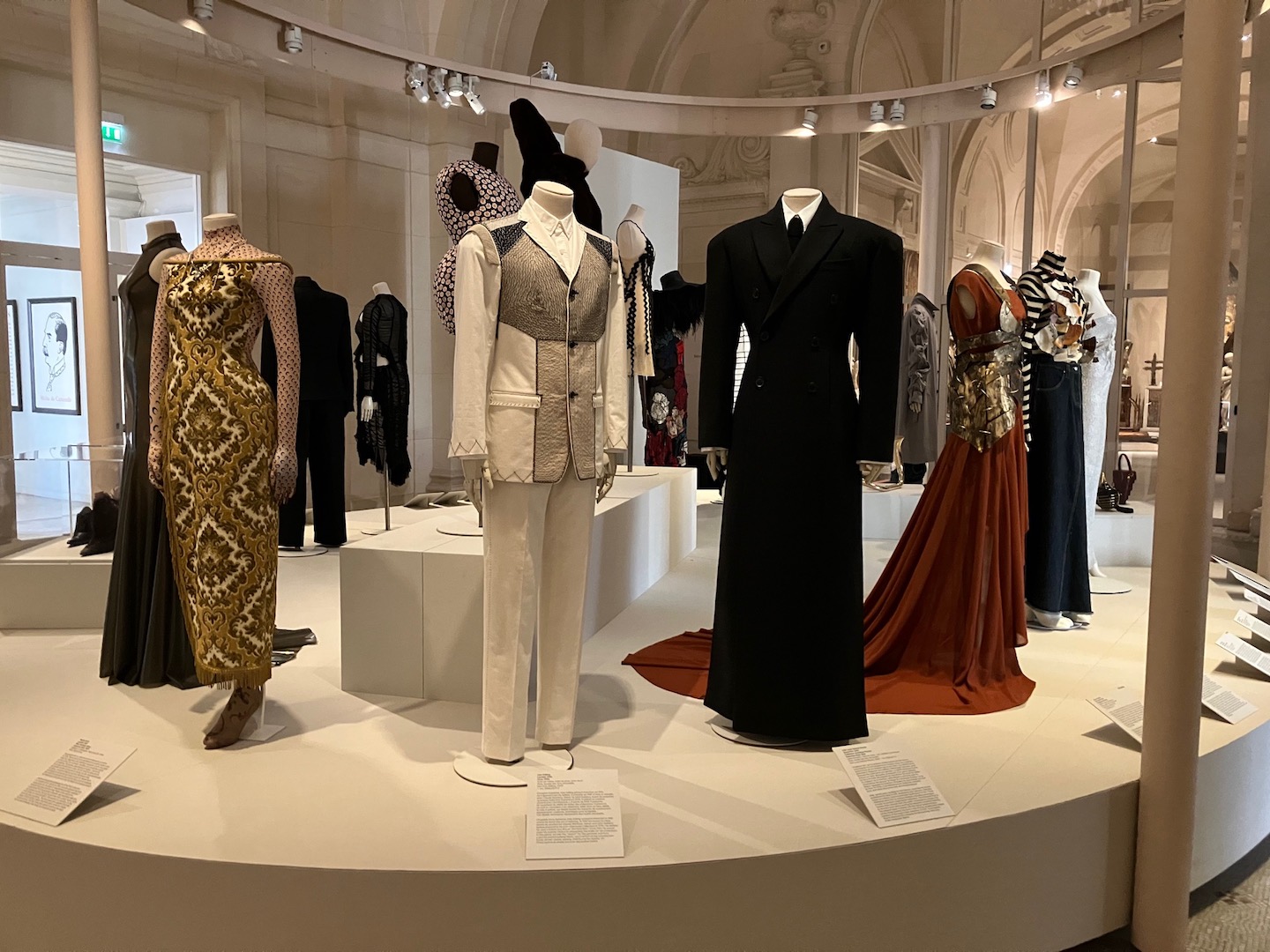 'Mode, Nouvelles générations: 35 ans de l’ANDAM'. Temporary exhibition at the Museum of Decorative Arts, Paris.
We ended up looking at three temporary exhibitions. The first was called 'Mode, Nouvelles générations: 35 ans de l’ANDAM' (Fashion, new generations: 35 years of the ANDAM; National Association for the Development of the Fashion Arts) and was about some recent young fashion designers who had won ANDAM fashion awards. There were some really interesting and contrasting items, some students going for shocking, over the top, while others went for wearable, but with a twist.
We then went to see another temporary exhibition, still in the same building, called 'La mode en modèles. Photographies des années 1920-1930' (Fashion in the making: Photographs of the 1920s and 1930s) about French fashion in the early twentieth century and the problems with copyright, the copying of other people's designs, as well as deliberate fraud, namely the selling of goods using fake fashion labels and logos.
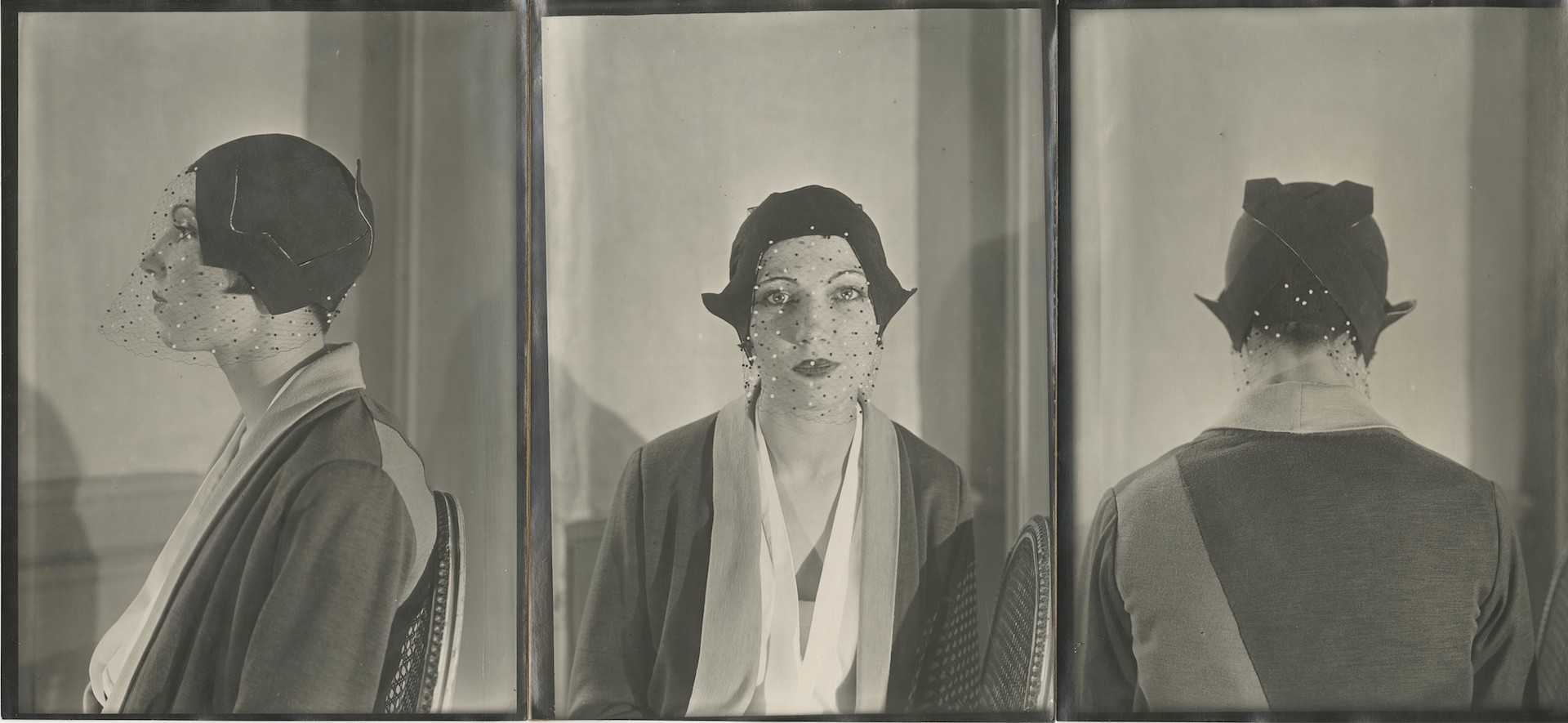 LA MODE EN MODÈLES. PHOTOGRAPHIES DES ANNÉES 1920-1930.
There was a display about the problems encountered by the French fashion industry to be taken seriously by the legal/ copyright profession, as the industry was not regarded a utility (useful service) industry, and it was very difficult to document copyrights, and how measures that had to be taken to register, photograph and describe a patterned cloth, garment, pair of shoes or a hat. Photographs, for example, were taken of models wearing such garments: these photographs look like prison mug shots, with the front, sides and back of the garment on the model. And who were the models? They are now simply unknown men and women, and who took the photographs? Questions that were thought irrelevant, if not very strange, at the time. It is interesting to note that the same problems of copying and fraud remain a serious threat in the early 21st century, and may only be solved with AI programmes designed to quickly identify potential copies, etc.
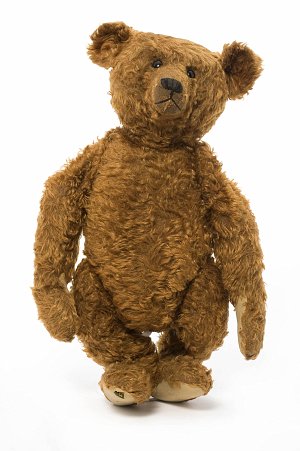 Stuffed bear, 1910-1912, from the Steiff company. © Les Arts Décoratifs / Jean TholanceThe third exhibition in the museum was not one I had particularly thought about or indeed expected to visit, but it was again very interesting. It was called 'Mon ours en peluche' (My teddy bear), which was about the history and role of teddy bears in 20th century life. They began in Germany in the early 20th century and were made and sold by the German company of Steiff (Margarete Steiff and her nephew Richard Steiff).
Fluffy bears became very popular in America after a hunting incident of the American president, Teddy Roosevelt, hence the name ‘Teddy Bear’. The stuffed toy changed the image of the bear, from a fierce wild animal to a creature with a shaggy warm fur and childhood memories of comfort. The role of the bear and its piled, textured fur and its psychological benefits were discussed in detail.
When the word bear is mentioned to you, do you think of a fierce, big and very strong animal, or of a rounded, yellow Winnie the Pooh, or perhaps even Paddington Bear having tea with Queen Elizabeth.
It turned out that in the 1990s the museum had made another exhibition about teddy bears and various French fashion designers had created outfits for teddy bears. New fashion designer outfits were created for this exhibition.
We then walked to the Notre Dame to see the recent renovations (another super busy venue). It was marvellous! Then we went onto the relative quiet of the Musée Cluny to specifically see the Lion and the Unicorn tapestries that date to c. 1500. I go to the Cluny to see these amazing textiles every time I am in Paris.
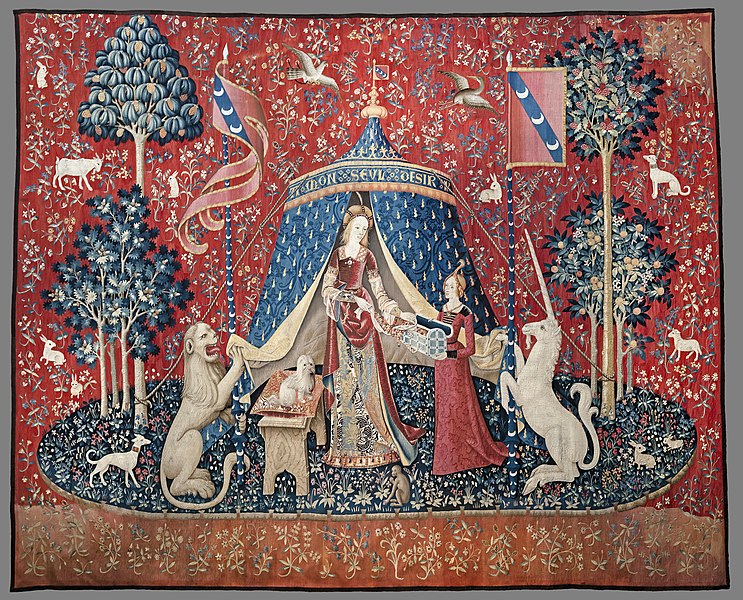 Mon seul désir. La Dame à la licorne. One of the six Unicorn tapestries. Musée de Cluny, Paris.
Paris can be so cold and wet! Fortunately the next morning (8th January) was spent at the warm and dry Le 19M Gallery, which is c. 10 minutes by train (getting off at station Rosa Parks) from the Gare de Nord, followed by a short walk. The 19M is an artisan centre for those wanting to develop craft skills on a professional level. The motivation behind the Gallery is to support local artisans and initiatives and they have a huge building with many ateliers where craftsmen and women can work on a wide range of forms and types of materials, including textiles and embroidery.
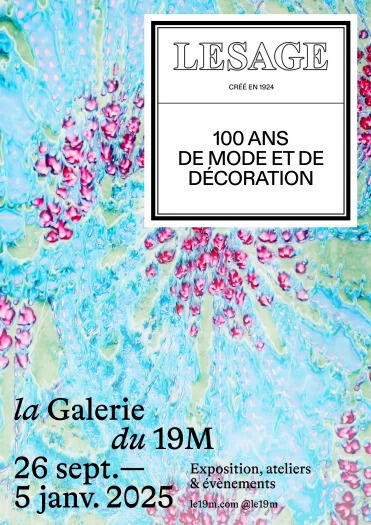 ‘Lesage, 100 Years of Fashion and Decoration’. Exhibition at La Galerie du 19M.Willem and I were there in particular to see the exhibition ‘Lesage, 100 Years of Fashion and Decoration’, which officially ended on the 5th January, but had been extended to the 26th January. The exhibition was about the work of the professional embroidery company of Lesage and their interaction with Parisian fashion houses, such as Chanel (famous for their tweed garments, a form that was also emphasised and included in the exhibition).
I actually went round the exhibition twice, which is unusual for me, but it was so full of interesting details, textiles, textboards, and garments designed by Chanel, Schiparelli, Lagerfeld and others, with embroidery (needle and tambour forms, the latter often known in France as Lunéville work), by the Lesage company.
Most of the embroidery was from the traditional commercial world of embroidery. Other, more modern pieces were from the art world, including some large installations. Interestingly, the exhibition clearly made a difference between the two worlds, arts and crafts – they can be combined, they have shared interests, but they are not the same. Sound familiar? It is more than possible for them to work together, but the transformation of embroidery from a craft to a so-called Art is being closely monitored by groups such as Lesage.
The exhibition emphasised that skill and creativity need to be in balance, according to the exhibition textboards. Good embroidery is basically closer to engineering and mathematics than painting!
Wednesday afternoon we boarded the train back to Leiden. A lovely trip!
Gillian Vogelsang-Eastwood, 9 January 2025