• F1
  • F2
  • F3
  • F4

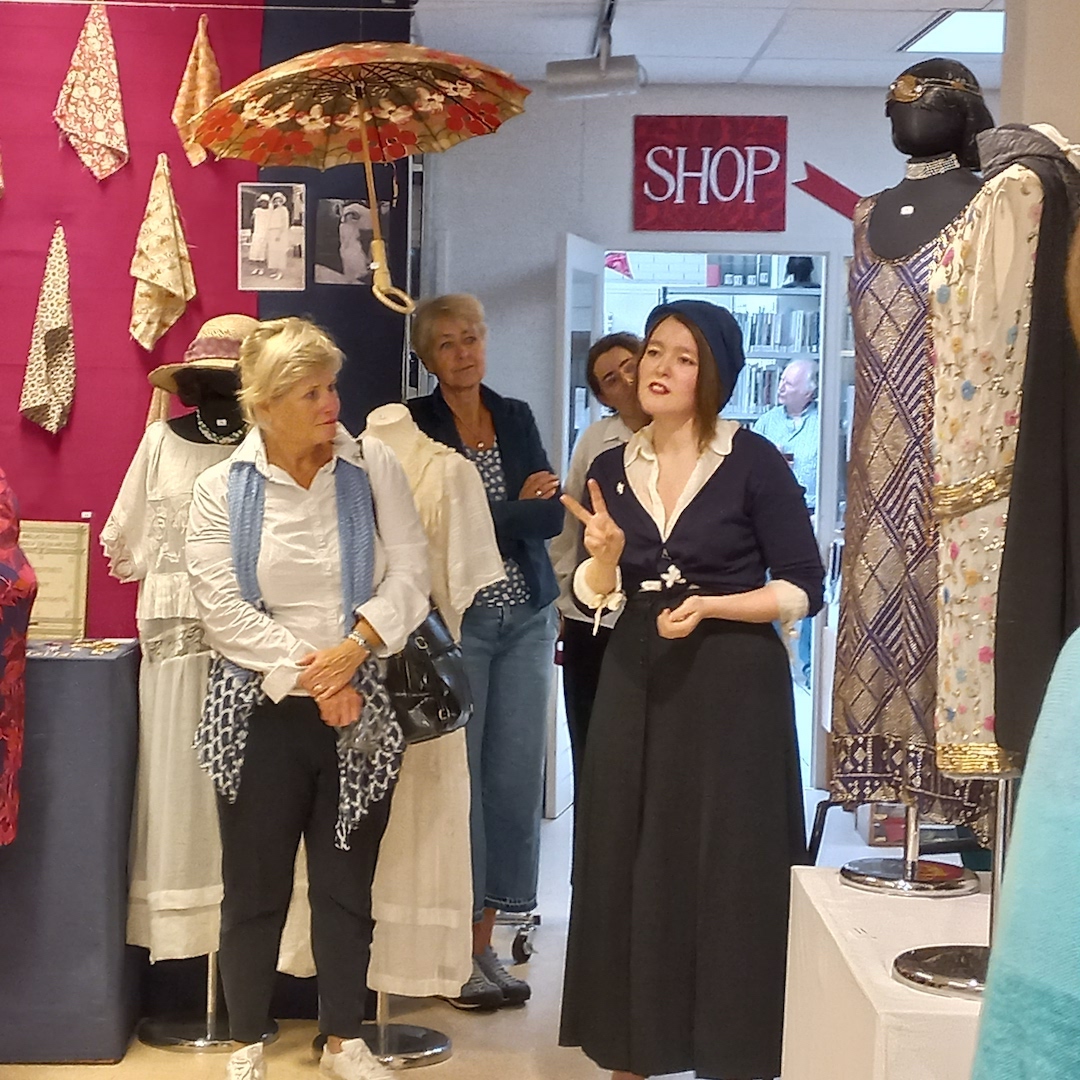
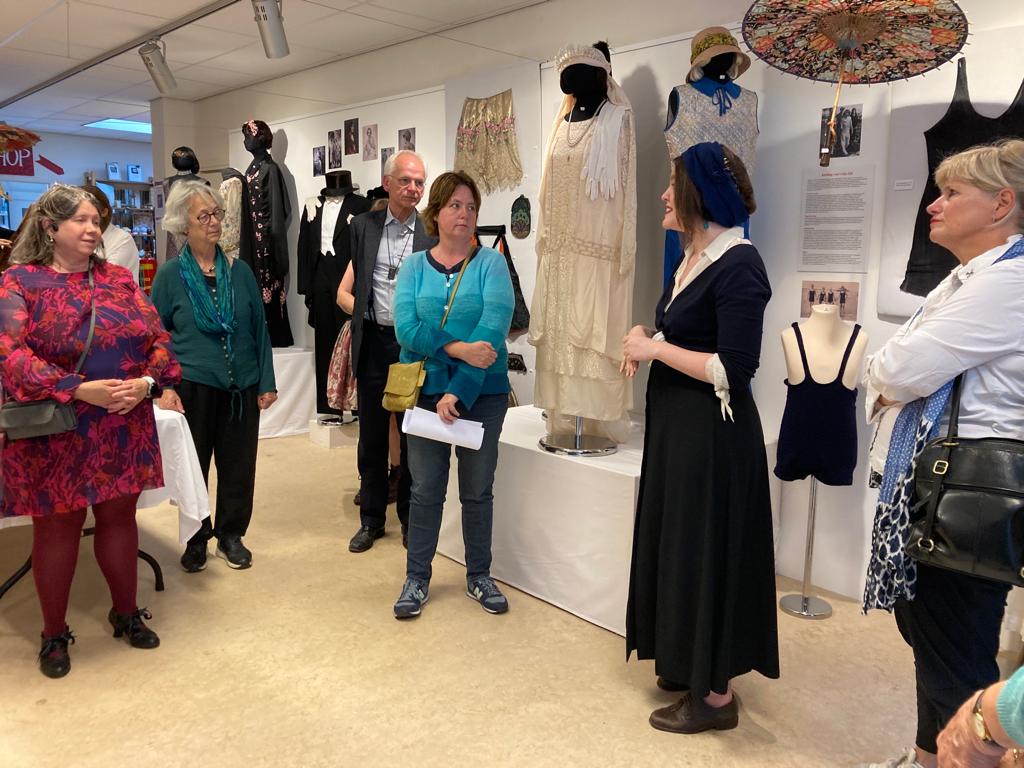
Clothing of the 1920s. The Costume Museum, Avallon. Photograph: Willem Vogelsang.Clothing of the 1920s. The Costume Museum, Avallon. Photograph: Willem Vogelsang.Last Sunday, 11th June, Gillian and I visited the Costume Museum in Avallon, France. It was like stepping back in time.

The museum is run by two sisters, Agnès and Sylvie Carton, who have managed, with their mother Pauline, over many years to fill a large 17th century building (some 1000 square metres) in the centre of town with an amazing collection of paintings, garments and textiles (including some 3000 complete costumes), four-poster beds, glass work and porcelain, and anything else that you may associate with domestic material culture in France from the 18th to the 20th century.

Medieval statue of the Virgin Mary being taught by St Elizabeth (?). Troyes Cathedral. The statue  shows the rich garments of Mary and her teacher. Photograph by author.  Medieval statue of the Virgin Mary being taught by St Elizabeth (?). Troyes Cathedral. The statue shows the rich garments of Mary and her teacher. Photograph by author. Develop an interest (translation: obsession) in textiles and see the world! Well, perhaps not the whole world, but the study of textiles and building up the TRC Collection are certainly taking me to a variety of different countries and more is to come over the next few years.

This blog is being written during a trip to France, more specifically Troyes. Willem and I are en route to some friends who are making a donation of textiles, clothing and looms from the Philippines, Indonesia and Belgium! More about the donation in another blog.

We have just had some very interesting visitors at the TRC, namely Keiko Okamoto and her mother, Nobuko (Tsugita) Okamoto, who are on their way from Japan to the International Textile & Garment Technology Exhibition (ITMA), in Milan, Italy, but they first wanted to come to Leiden to see what we are doing and why. They also wanted to see Leiden itself and especially the Siebold Huis, an international centre for Japanese studies, based on the famous Siebold collection of 19th century Japanese items. Both Augusta de Gunzbourg and myself were very pleased to welcome them at the TRC.

From left to right: Augusta de Gunzbourg, Keiko Okamoto, Nobuko (Tsugita) Okamoto, and the author. Monday 5 June 2023.From left to right: Augusta de Gunzbourg, Keiko Okamoto, Nobuko (Tsugita) Okamoto, and the author. Monday 5 June 2023.

Over the last month or so we have had various questions about the TRC Reference Collection, and in particular how it is organised and used. These questions have come from individuals as well as various museums and groups, notably one in Kortrijk, Belgium, as well as Arraiolos (Portugal) and Lucknow, (India). So this blog is about the TRC Reference Collection and its function(s).

Sample of needle lace, the Netherlands, 20th century (TRC 2007.0559).Sample of needle lace, the Netherlands, 20th century (TRC 2007.0559).

As part of building up the TRC’s reference collection, today Renske, a TRC colleague, and I went to a special textile market in Leiden (29th May) – it occurs twice a year and includes many stalls selling a wide range of woven and printed textiles, tulle and net, machine laces and embroideries, haberdashery (from pins to buckles, via threads of many kinds), knitting yarns, as well as one stall selling leather. Great fun! For the market of 30 October last year we published another blog.

Announcement for the 29 May textile market in LeidenAnnouncement for the 29 May textile market in Leiden

Author in front of Durham Cathedral, 25 May 2023. Photograph: Willem VogelsangAuthor in front of Durham Cathedral, 25 May 2023. Photograph: Willem VogelsangI am looking out of my hotel window at the spectacular sight of the towers of the medieval cathedral of Durham and neighbouring castle; a building complex with over a thousand years of history. I could sit here for a very long time! However, this blog is about saints and embroidery, not early medieval buildings.

In previous blogs Willem and I have talked about our visits to look at the St Petrock’s altar cloth in Exeter Cathedral, England, and also about the embroideries associated with Frankish St Harlindis and St Relindis in Maaseik, Belgium, about St Thomas Becket’s garments and embroideries in Sens, France  and the embroidered cope associated with St Thomas Becket in Kortrijk, Belgium.

Double Wedding Ring quilt from Canada, 1930s (TRC 2023.0626).Double Wedding Ring quilt from Canada, 1930s (TRC 2023.0626).Quilts and the TRC have been the focus of various discussions!

We recently welcomed, for example, various visitors who came to examine our collection of American quilts, two of them were Americans who came a few days ago.

At the same time we had a material culture group from Heidelberg University, Germany (a blog about this visit will be published shortly), who came to see Asian textiles and garments. Their tutor (who is a quilter) and some of the students, however, spotted the quilts and wanted to see and know more about them as well.

I have just come back (10th – 16th May 2023) from an intense, yet relaxing time spent in Estonia looking at embroidered textiles for information and inclusion in Vol 5 of the Bloomsbury World Encyclopedia of Embroidery.

In addition, Willem and I were able to see and hear about a far wider range of textiles, dress and their uses, both in Estonia and in neighbouring countries. We also came away very impressed with the country, its museums and indeed, its food and countryside.

Merle Ernits and Gillian Vogelsang at the Heimtali Museum, Estonia; in the background a garden fence painted with knitted socksMerle Ernits and Gillian Vogelsang at the Heimtali Museum, Estonia; in the background a garden fence painted with knitted socks

Search in the TRC website

Contact

Boerhaavelaan 6
2334 EN Leiden.
Tel. +31 (0)6 28830428  
office@trcleiden.org 

facebook 2015 logo detail 

instagram vernieuwt uiterlijk en logo


Bank account number

NL39 INGB 0002 9823 59, in the name of the Stichting Textile Research Centre.

TRC closed until 4 May 2026

The TRC is closed to the public until Monday, 4 May 2026, due to our move to the Boerhaavelaan. The TRC remains in contact via the web, telephone and email. For direct contact and personal visits, please contact the TRC at office@trcleiden.org, or by mobile, 06-28830428.

Donations

The TRC is dependent on project support and individual donations. All of our work is being carried out by volunteers. To support the TRC activities, we therefore welcome your financial assistance: donations can be transferred to bank account number (IBAN) NL39 INGB 000 298 2359, in the name of the Stichting Textile Research Centre. BIC code is: INGBNL2A.

 You can also, very simply, if you have an iDEAL app, use the iDEAL button and fill in the amount of support you want to donate: 


Since the TRC is officially recognised as a non-profit making cultural institution (ANBI), donations are tax deductible for 125% for individuals, and 150% for commercial companies. For more information, click here