• F1
  • F3
  • F4
  • F2

Big changes are hard. Whether it is moving to a new building or about thirty years of revolution and regime changes, change requires flexibility. One object from our collection knows all about change, the Leiden journeyman hat (Fig. 1; TRC 2010.0056a).

Fig. 1. Miniature bicorn hat in beaver (?) fur with a silk band, made for a journeyman's examination. Leiden, The Netherlands, 1796 (TRC 2010.0056).Fig. 1. Miniature bicorn hat in beaver (?) fur with a silk band, made for a journeyman's examination. Leiden, The Netherlands, 1796 (TRC 2010.0056).

This little hat, 30 cm in length, was made for the examination of apprentice hatmaker Hendrik Visser, member of the Leiden hatmaker’s guild. It is made of fur, probably beaver, with a silk band on one side. The small size of the hat proved that Hendrik Visser was a capable hatmaker and was therefore awarded the title of journeyman hatmaker. In 2010, the hat was professionally conserved after a public appeal to raise the required funds.

The TRC is officially shut until the beginning of March because of its move to new premises. But this does not mean that TRC activities have stopped. We are all carrying on from home and meeting in Leiden several times a week to discuss the current situation, work and projects.

Fig. 1. Long, dark red cloth, decoratively woven with narrow mid-red stripes at regular intervals. Across the middle of the cloth there is a broad band of silver thread embroidery with stripes of repeating, geometric motifs. Tunisia, first half 20th century (TRC 2026.0187).Fig. 1. Long, dark red cloth, decoratively woven with narrow mid-red stripes at regular intervals. Across the middle of the cloth there is a broad band of silver thread embroidery with stripes of repeating, geometric motifs. Tunisia, first half 20th century (TRC 2026.0187).

by Emilie Lambert, TRC collection manager, 23 January 2026

Fig. 1. Egyptian woven fragment from the 1st millennium AD, with stylised figures and waves, all in dark purple on an unbleached linen ground (TRC 2023.0073).Fig. 1. Egyptian woven fragment from the 1st millennium AD, with stylised figures and waves, all in dark purple on an unbleached linen ground (TRC 2023.0073).One of the most common phrases heard at the TRC is that the collection holds textile items from prehistory to today. To visitors, this point emphasises our understanding of the value of historical textiles as well as the cultural relevance of a modern fast-fashion collection.

Due to preservation and availability, most of the TRC collection postdates the 17th century. There is, however, a considerable medieval collection and a significant collection of Coptic textile fragments from the first millennium AD (Fig. 1). But there are textiles even older than that! The oldest textile at the TRC, and indeed one of the oldest preserved textiles in the world comes from Çatalhöyük (Fig. 2).

The site can be found under many spellings, Catal Hoyuk, Catalhoyuk, and more recently Çatalhöyük. As an archaeology student it was impossible not to hear about this site regularly.

The proud author with her first copy of The Atlas of World EmbroideryThe proud author with her first copy of The Atlas of World EmbroideryA very proud author, Friday 16th January 2026.

Gillian Vogelsang-Eastwood, director TRC, today received her author's copies of The Atlas of World Embroidery: A Global Exploration of Heritage and Styles (Princeton University Press).

"A visually captivating, deeply informative overview. . . . An exquisite, fascinating volume."—Kirkus, starred review

"Emphasizing the spectacular visual diversity of the art form, Vogelsang-Eastwood illuminates embroidery’s global history."—Kate Mothes, Colossal

The book will officially come out on 17 February. Copies can be ordered here. For Amazon.nl, click here.

A Dutch version of the same book, published by WBooks, has the title: Atlas van de borduurkunst: Een wereldreis langs erfgoed en stijlen. It comes out on 19 February. For Amazon.nl and the Dutch version of the book, click here.

Quite a day: The book arrived on the same day that Gillian closed the doors of the 'old' TRC building along the Hogewoerd in Leiden, where the TRC has worked since September 2009. The TRC will soon, in early March, move to a beautiful urban villa just behind the Leiden railway station, along the Boerhaavelaan. A new future for the TRC, and more publications, more workshops and courses, and all sorts of textile events.

Fig. 1. Padded container for a glass kohl bottle. Palestine, early/mid 20th century  (TRC 2005.0086).Fig. 1. Padded container for a glass kohl bottle. Palestine, early/mid 20th century (TRC 2005.0086).The announcement in December 2025 that kohl is now included in the UNESCO Representative List of the Intangible Cultural Heritage of Humanity sent me immediately to the TRC’s on-line catalogue in order to learn more. What exactly is kohl and what role does it play in dress and identity?

The UNESCO description states that “Arabic Kohl is both a craft and a social practice that is integral to the lifestyle of Bedouin and nomadic tribes, as well as rural, marshland, and fishing communities in the Arab region.... In addition to being a symbol of community identity and a key part of daily beauty routines, kohl is used as a physical and spiritual healing remedy."

The UNESCO text continues: "[Kohl] promotes dialogue and fosters meaningful exchanges between nations and communities of women. Kohl-rimmed eyes also serve as a strong form of female expression, particularly in societies where only eyes are visible due to face coverings."

Boreray Ram. Commons Wikimedia.Boreray Ram. Commons Wikimedia.It’s a good feeling to think that the TRC’s next Intensive Textile Course (23-27 February, 2026) will take place in our new home. One of the most enjoyable parts of that course was the section about fibre identification. The chance to see, touch and smell the incredible variety of plant and animal fibres that have been turned into textiles is amazing.

The TRC has samples of a wide range of animal fibres in its collection, from alpacas, camels, goats, horses, llamas, seals, silk worms (both wild and cultivated) and, of course, sheep.

The TRC recently received a donation of wool from a very rare breed of sheep—the Boreray (TRC 2025.1854a) The wool is very soft, lanolin-rich, with colours that range from white to light grey. It was collected this summer by a friend of mine, from one of the several small herds in the Orkney Islands. Because she is a spinner, she also donated some spun Boreray wool (TRC 2025.1854b).

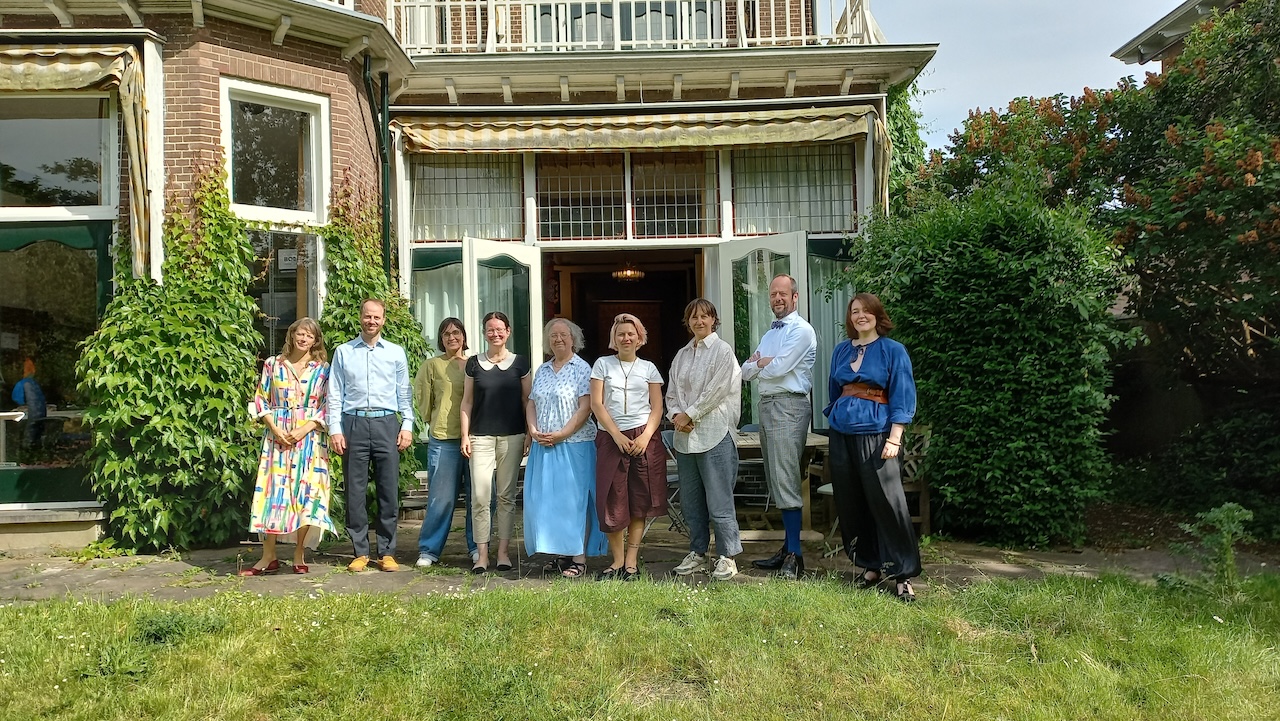
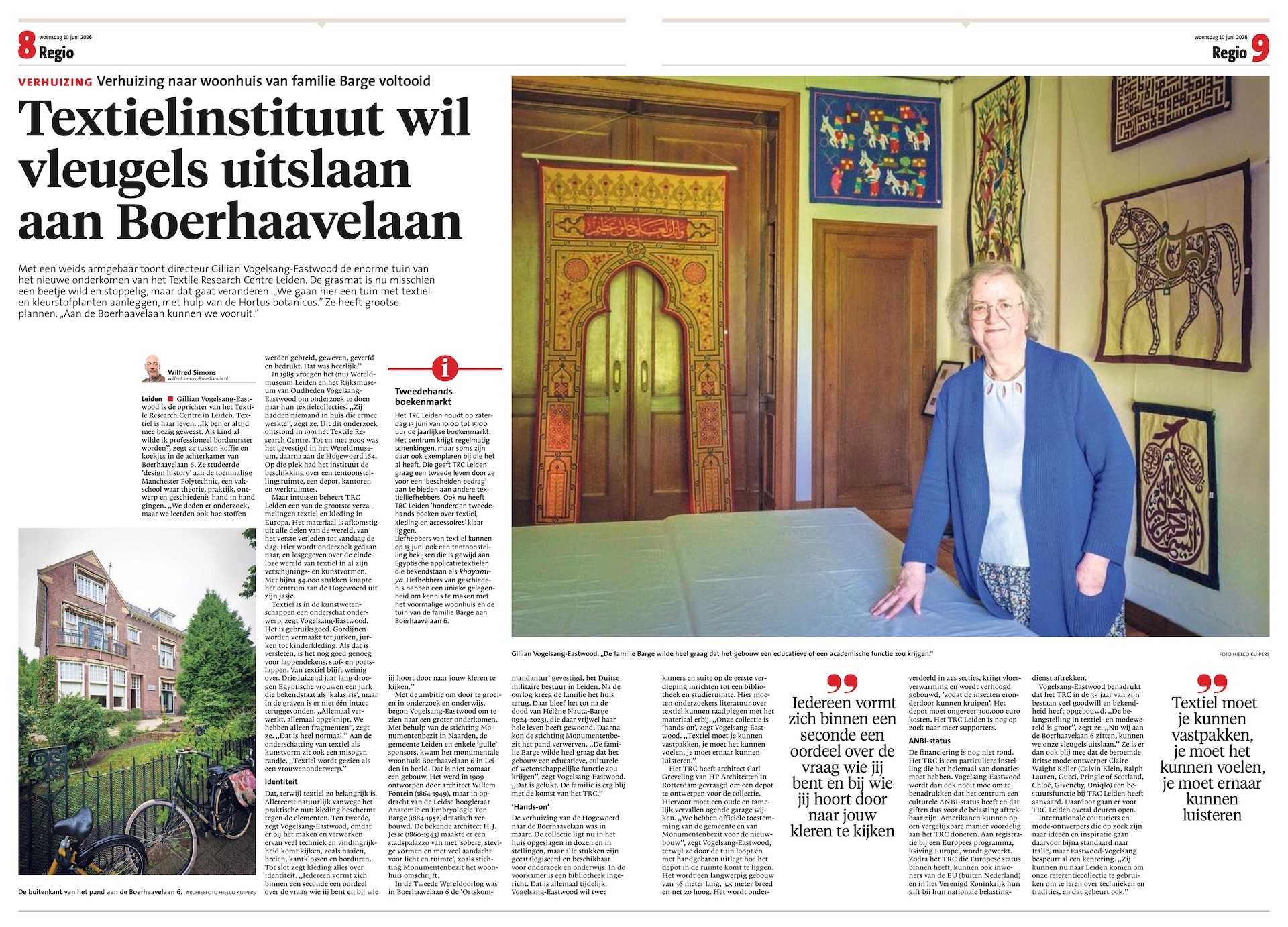
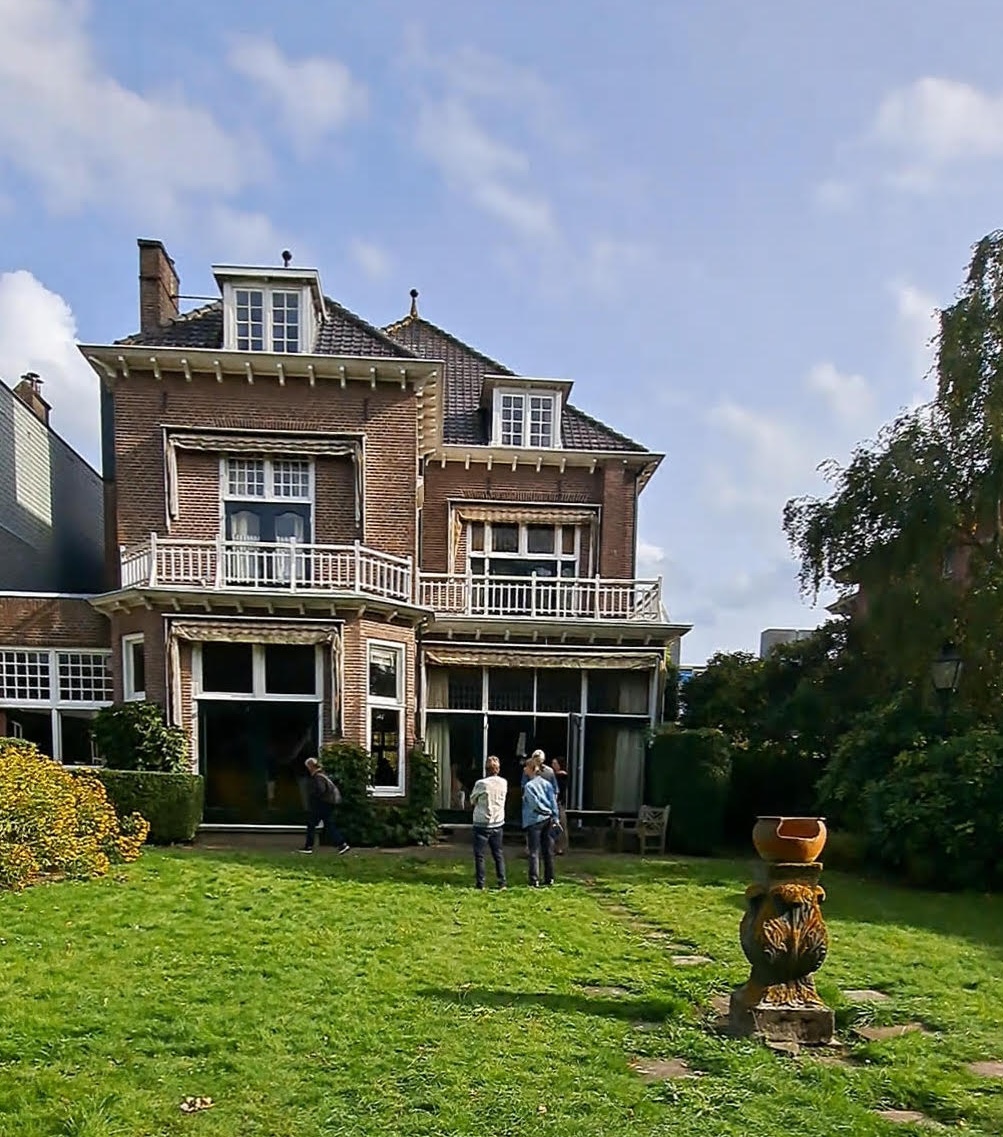
As you will have seen from the various TRC blogs, the TRC is moving to a large urban villa dating from 1909 on the Boerhaavelaan (no. 6), just behind Leiden Central Railway Station. The house used to be owned by the Barge family (Prof. Barge was a Rector Magnificus of Leiden University). It is now the property of the Stichting ('Foundation') Monumentenbezit, a national organisation for the upkeep of monumental buildings in The Netherlands.

The main exhibition rooms downstairs getting a face-lift, Boerhaavelaan 6, Leiden, December 2025. Photograph Willem Vogelsang.The main exhibition rooms downstairs getting a face-lift, Boerhaavelaan 6, Leiden, December 2025. Photograph Willem Vogelsang.

Search in the TRC website

Contact

Boerhaavelaan 6
2334 EN Leiden.
Tel. +31 (0)71 5134144 (office hours)  
office@trcleiden.org 

The TRC is open every day from 10.00 to 15.00

facebook 2015 logo detail 

instagram vernieuwt uiterlijk en logo


Bank account number

NL39 INGB 0002 9823 59, in the name of the Stichting Textile Research Centre.

Donations

The TRC is dependent on project support and individual donations. All of our work is being carried out by volunteers. To support the TRC activities, we therefore welcome your financial assistance: donations can be transferred to bank account number (IBAN) NL39 INGB 000 298 2359, in the name of the Stichting Textile Research Centre. BIC code is: INGBNL2A.

 You can also, very simply, if you have an iDEAL app, use the iDEAL button and fill in the amount of support you want to donate: 


Since the TRC is officially recognised as a non-profit making cultural institution (ANBI), donations are tax deductible for 125% for individuals, and 150% for commercial companies. For more information, click here