• F1
  • F4
  • F3
  • F2

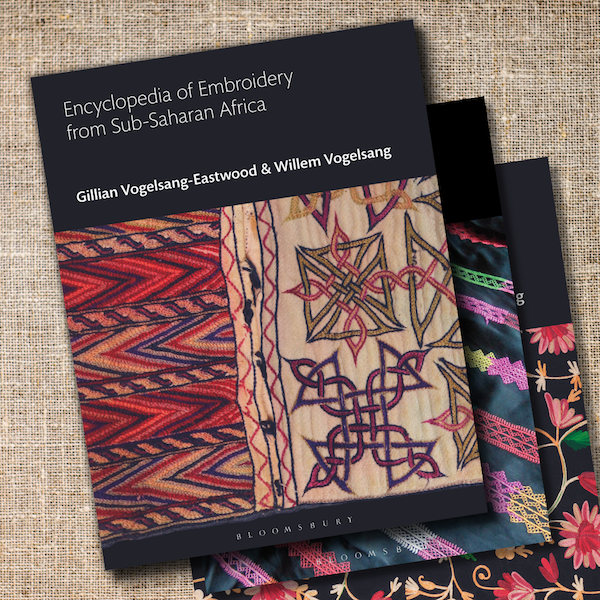
Detail of a Carrickmacross lace shawl, Ireland, mid-19th century (TRC 2008.0453).Detail of a Carrickmacross lace shawl, Ireland, mid-19th century (TRC 2008.0453).We are working hard on the 4th volume of the Bloomsbury World Encyclopedia of Embroidery, which is about Scandinavian and West European embroidery (due out in 2024). We have nearly finished the draft text for the chapter on Irish embroidery and embroidered laces, but it is noticeable that there we have very few copyright free / open access illustrations (two to be exact, including a map).

So we are looking for actual examples for inclusion in the TRC Collection or copyright free images of the types listed below. If you can help with any of these please get in contact with us at This email address is being protected from spambots. You need JavaScript enabled to view it.

For more information, see below. Many thanks!

Johanna Elizabeth van NieropJohanna Elizabeth van NieropIn early November 2022 the TRC was approached by Henk van Nierop about a small group of lace samples (TRC 2022.3134TRC 2022.3155) and a lace notebook (TRC 2022.3156) that had been collected by his aunt, Johanna van Nierop.

It turns out his aunt’s lace story was much more complicated and interesting than we initially thought. The following blog is by Henk van Nierop.

****

Johanna Elisabeth van Nierop (nicknamed 'Zus' in the family) was born in Amsterdam on November 16, 1882, the youngest of six children. Her father, Frederik Salomon van Nierop, was a wealthy lawyer and banker ¬– he was the founder (in 1871) and director of the Amsterdamsche Bank – as well as a liberal member of the Amsterdam municipal council, the Provincial States of Noord-Holland, and the Upper House (Eerste Kamer) of the Netherlands' Parliament.

Liturgical garments (including a cope) from the upstairs wardrobe in the Basilica di Santa Maria Maggiore, Rome.Liturgical garments (including a cope) from the upstairs wardrobe in the Basilica di Santa Maria Maggiore, Rome.(Gillian Vogelsang, 29 December) Willem and I have just got back from a few days in Rome, a trip to get away from the cold and rain of the Netherlands, to follow the ‘red thread’ of seeing textiles and dress, and to work on the Bloomsbury Encyclopedia of Embroidery.

We went to Rome mainly with the intention of seeing the embroidered liturgical garments in the Basilica di Santa Maria Maggiore. The various garments we wanted to see are in a locked off area and you need to go with a guide (it is well worth doing the guided tour in order also to see the medieval mosaics on the [former] outside of the front facade).

The embroidered vestments are displayed in two giant wardrobes in a room upstairs in the basilica as well as in the museum in the crypt area. Most of the pieces are 18th century and later in date, but present a variety of silk and metal thread techniques that I found really interesting to see.

The TRC is 31 today!

I know it is a cliché, but time really does fly. The TRC started off as a result of an informal discussion over tea and coffee with the then curator for Africa, Rogier Bedaux, at the Volkenkunde Museum, Leiden. At the time I was the editor (and founder) of the ATN (Archaeological Textiles Newsletter, which later became the Archaeological Textiles Review) and was interviewing Rogier about medieval textile finds from the Tellem in Mali, West Africa.

Romanian/Ukrainian waistcoat with white sheep's fleece lining, edged with black looped embroidery. 20th century (TRC 2022.0390).Romanian/Ukrainian waistcoat with white sheep's fleece lining, edged with black looped embroidery. 20th century (TRC 2022.0390).

I mentioned the need for an office, as I had been approached by various students from the archaeology department of Leiden University about the teaching of textiles and he suggested that if I set up a stichting (non-profit organisation), he would organise a room at the museum. The rest, as they say, is history.

The Volkenkunde Museum and the Museum van Oudheden kindly agreed to pay for the legal costs of setting up the TRC, in return the TRC was to help them with questions about textiles and dress. The various pieces of legal paperwork were signed on the 19th December 1991 and the Stichting Textile Research Centre was born.

In 2020, the German Lower Saxony Ministry of Culture approved funding from the UN Sustainability and Development Goals Fund for the international cooperation project "Narrative material - research-based notes on the vestmental memory of the German and Dutch clothing collection in the Textile Research Centre, Leiden" - a project of the Department of Textile Design at the University of Osnabrück and the Textile Research Centre (TRC), Leiden.

The focus was on items of clothing of German and Dutch provenance housed at the TRC. As part of the project, a number of students of Osnabrück University wrote German-language essays on specific items from the TRC collection. A paper brochure will be published shortly; in the meantime, PDF files can be downloaded below.

Jacke (buisje) von der Insel Marken, die Niederlande (TRC 2006.0106).Jacke (buisje) von der Insel Marken, die Niederlande (TRC 2006.0106).

Dress from Namibia (TRC 2022.3119a).Dress from Namibia (TRC 2022.3119a).by  Ann Cable, 13 December 2022

When I mentioned to Gillian, the director of the TRC in Leiden, that I was returning to Namibia for a visit this year, she commented that the TRC had almost nothing from there, and so I started a fascinating journey into the history of a particular style of Namibian dress.

My husband and I have a very good friend in Namibia, Vincent, who has guided us on all our visits and he and his wife, Jacoline, arranged to have a dress made especially for the TRC. He educated us about the traditions behind it too. In pre-colonial times the various people living in Namibia wore skins, but with the coming of Christian missionaries in the late 19th century, this was frowned upon. It became the practice to adopt the clothing of the missionaries in your particular region.

17th century portrait of Adriana van Nesse, a sister of Maria van Nesse, painter unknown. Photograph by Shelley Anderson.17th century portrait of Adriana van Nesse, a sister of Maria van Nesse, painter unknown. Photograph by Shelley Anderson.By Shelley Anderson, 14 December 2022. 

The TRC’s Van Gerwen Collection includes silk velvet samples from the 17th century. I had some of these beautiful velvet patterns in mind when I visited a new exhibition at the Alkmaar Stedelijk Museum (City Museum) in the northern Dutch town of Alkmaar.

“Rich and Independent: Maria van Nesse’s Memory Book” is a small exhibition dedicated to a very unusual 17th century woman. Maria van Nesse (1588-1650), born and raised in Alkmaar, was unusual for several reasons: she was a Roman Catholic in a Protestant town and she was fabulously wealthy. At her death she possessed 78,000 guilders, or 800,000 euros in today’s currency. But most of all, she was an unmarried, independent woman, who spent her money as she wanted.

What Maria wanted, it seems, were fashionable clothes, expensive shoes, and fine paintings. We know this because Maria kept a ‘memory book’, a combination account book/diary in which she recorded the details of every purchase she made between 1623 to 1646.

We have just been to Copenhagen for a two-day conference entitled ‘Current Research in Textile Archaeology along the Nile’ (5-6 December 2022). The conference was organised by the Centre for Textile Research (CTR), part of the Saxo Institute, the University of Copenhagen. More specifically, it was organised by Chiara Spinazzi-Lucchesi. I was invited to be the key-note speaker to round off the first day.

Replica of a beaded  tunic with discs, reconstructed with the help of Jolanda Bos. The original was discovered in the tomb of Tutankhamun. Part of TRC-led project on the study of Tutankhamun's wardrobe. Photograph courtesy Textile Museum of Sweden.Replica of a beaded tunic with discs, reconstructed with the help of Jolanda Bos. The original was discovered in the tomb of Tutankhamun. Part of TRC-led project on the study of Tutankhamun's wardrobe. Photograph courtesy Textile Museum of Sweden.

Search in the TRC website

Contact

Boerhaavelaan 6
2334 EN Leiden.
Tel. +31 (0)6 28830428  
office@trcleiden.org 

facebook 2015 logo detail 

instagram vernieuwt uiterlijk en logo


Bank account number

NL39 INGB 0002 9823 59, in the name of the Stichting Textile Research Centre.

TRC closed until 4 May 2026

The TRC is closed to the public until Monday, 4 May 2026, due to our move to the Boerhaavelaan. The TRC remains in contact via the web, telephone and email. For direct contact and personal visits, please contact the TRC at office@trcleiden.org, or by mobile, 06-28830428.

Donations

The TRC is dependent on project support and individual donations. All of our work is being carried out by volunteers. To support the TRC activities, we therefore welcome your financial assistance: donations can be transferred to bank account number (IBAN) NL39 INGB 000 298 2359, in the name of the Stichting Textile Research Centre. BIC code is: INGBNL2A.

 You can also, very simply, if you have an iDEAL app, use the iDEAL button and fill in the amount of support you want to donate: 


Since the TRC is officially recognised as a non-profit making cultural institution (ANBI), donations are tax deductible for 125% for individuals, and 150% for commercial companies. For more information, click here