• F4
  • F1
  • F2
  • F3

“A World of Feathers” is the latest exhibition at the Ethnographic Museum (Museum Volkenkunde) in Leiden (the Netherlands, click here), which runs until 5 March 2017. It showcases an impressive collection, mostly of headwear, but also capes and haute couture gowns and scarves. One room is devoted to an amazing variety of birds whose feathers are used, from pheasants (think Queen Maxima’s stylish hats), eagles and owls (North American medicine men’s healing sticks and war leaders bonnets), to peacocks and the lowly chicken, whose dyed feathers trim an Aztec-inspired Mexican concheros dancer’s skirt.

The variety of feathers is enormous, as are the contexts the garments are used in. Whether it’s a chic Parisian wedding or a boy’s initiation rite in New Guinea, feathers are used to decorate and distinguish the human body, to show status and identity. As such, they can also be political: indigenous activists in the Amazon are now wearing traditional feathered headdresses to show pride in their roots—and to make a statement about protecting their land against deforestation. There is a short video with a Cherokee scholar, Dr. Adrienne Keene of Brown University (USA), who explains why many Native Americans are offended when non-Indians wear war bonnets at football games or in fashion shows.

The exhibition uses many excellent short videos to go deeper into the theme. My favorites included an interview with a Hawaiian woman who makes traditional leis (garlands) from thousands of small feathers. And an interview with an employee at Maison Lemariè, the only remaining plumassier in Paris. There, over 1000 ostrich feathers were being added, by hand, to a gown. It can take over 200 hours to steam (a process which adds sparkle) and apply feathers to a single dress. But it is the objects themselves which evoke interest. There is a seal skin and eider down cap from Greenland. A head dress made from plastic drinking straws, to replace a ritual feathered head dress that was destroyed, in Brazil. Also on display is a coil of up to 60000 red cardinal feathers, from the Solomon Islands. This is called tevau, and such coils were used as money up to the 1980s.

Last but definitely not least, there is a feathered cloak from the Chancay culture, excavated from a coastal grave in Peru, from circa 1100 to 1450. The feathers were collected from Amazonian birds, hundreds of miles and over the Andes mountains away. Fortunately anyone who wants to see this worthwhile exhibition doesn’t have to travel that far.

Shelley Anderson, 10 December 2016

One of the participants of the Veils and Veiling workshop on 4-5 November, wrote to us with the following brief account:

Over a two-day span a small group came together at the TRC to listen and learn about veils with the TRC director, Dr. Gillian Vogelsang-Eastwood. The workshop in early November was called Veils and Veiling and the premise was to understand the notion of veiling from various perspectives. We looked at the history and variety of veils from northern Africa to Central Asia. We were able to touch and try-on all the versions of veils that covered the head and torso, specifically focusing on the face veil.

The participants in the group were diverse mix ranging from students to instructors from as far as Japan and the United States. Each member of the small group brought their own curiosity and insight on the subject, asking questions and sharing ideas in a very casual and organic manner. Over the course of the two days, as the Leiden rain drizzled outside, we were absorbed in the samples Dr. Vogelsang presented to us. The hours flew by as she told of the cultural significance and the context the garments were worn in. Her captivating stories of princesses and nomads whisked us through centuries and danced us across the globe. Over tea and coffee, we reflected on and discussed how our perceptions had changed since the start of the workshop. Being able to try on the countless garments and to ask questions about the construction and the function of the pieces were thoroughly beneficial. The Centre is an invaluable resource that must be venerated for the scale of its collections as well as the wealth of knowledge its director brings to the community. Truly, an enriching two days. Best, Hawa

Hawa Stwodah, USA, 14 November 2016

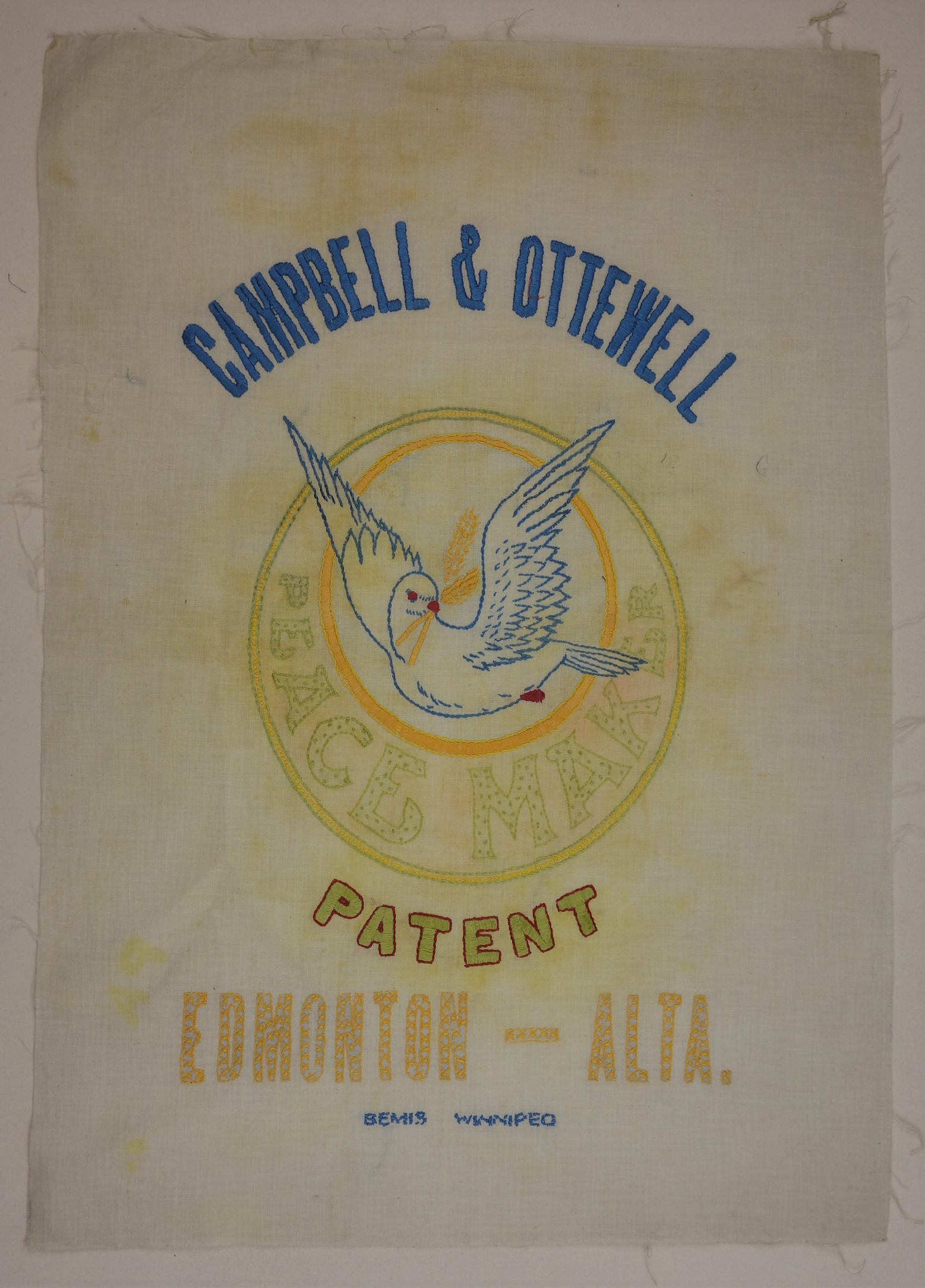
Detail of knitting sampler dated AD 1791. TRC 2016.2261Detail of knitting sampler dated AD 1791. TRC 2016.2261Work on the online catalogue of the TRC collection is getting well on the way. Perhaps you should have a look. Click here. For instance, one of the latest acquisitions to the collection is a knitting sampler that is dated AD 1791. The TRC recently obtained it together with a collection of embroideries from Hungary. This knitting sampler may be one of the oldest, and securely dated knitting samplers ever found in Europe. You can see the sampler in our online catalogue, click here.


Hungarian cushion cover, TRC 2016.2246. Click on photograph for PDF-file.Hungarian cushion cover, TRC 2016.2246. Click on photograph for PDF-file.A few months ago the TRC announced that it had the chance to acquire a small collection of Hungarian textiles, mainly embroideries. Thanks to the help of various people the items arrived at the TRC last week and we have been busy photographing and cataloguing them (they are now all online in the TRC Collection, nos. TRC 2016.2237 to 2016.2261).

The textiles include a variety of different embroidery techniques and designs. Over the next few weeks we will be putting various charts online via the TRC Blog. In fact, the first of these Hungarian designs (TRC 2016.2246) is now available (click image) and consists of an eight-pointed star set within a diamond-shaped trellis work. It is worked on an even weave cotton material using a mid-blue stranded cotton thread. The design is worked in cross stitch. The pattern comes from a cushion cover that dates to the latter half of the twentieth century.

Among the Hungarian objects was something we had not expected. We knew the new acquisitions Knitting sampler dated AD 1791, TRC 2016.2261Knitting sampler dated AD 1791, TRC 2016.2261included a knitting sampler (TRC 2016.2261) and we had presumed it was early twentieth century in origin. On closer inspection, however, we found that there was a date, namely 1791, which would make it one of the earliest known dated knitting samplers from Europe.

The textile takes the form of a narrow band sampler and is knitted using a linen thread. The top half of the sampler follows a classic needlework sampler format, namely it has various initials, a date, the alphabet, followed by 0-10 in numbers. The rest of the sampler is divided into two vertical rows with numerous lacy knitting patterns. We are now looking for someone who would be willing to translate these patterns into charts so that they can be published online for everyone to enjoy!

Gillian Vogelsang-Eastwood, 12 November 2016

Tunic and stola with embroidery, TRC collection.Tunic and stola with embroidery, TRC collection.As part of the huge Kircher collection of European regional dress aand textiles, we also received two particular ecclesiastical garments with embroideries. We are not exactly sure where these two come from, but they are a stola (click here) and a short tunic with wide sleeves (click here).

The garments smelt of incense when we unpacked them (and still do!). The embroidery is worked in a dull red cotton perlé using a simple cross stitch. There are two similar, but not identical, designs, which makes us wonder if these two garments were originally meant to be worn together or not. The stola design is the simpler of the two.

Gillian Vogelsang-Eastwood, 11 November 2016


Face veil from the Sinai, Egypt, mid-20th century (TRC 2004.0066).Face veil from the Sinai, Egypt, mid-20th century (TRC 2004.0066).A two-day Veils and Veiling Workshop was held at the TRC on 4-5 November. It was a great pleasure to give as well as, for me, being instructive, thanks to the range and depth of the questions raised by the participants. The workshop was a mixture of practical and theoretical details concerning the history, use and social/cultural contexts of head, body and face veils of many different types and groups. The meaning of the head and its symbolic use for power was discussed in detail, but one of the questions was not easy to answer and needs further thought - what is the symbolic meaning of the nose!

Attention was paid to what was the difference between the main types of face veils - batullah, burqa, niqab, qina, etc., how they differ with respect to materials, construction and decoration, and whether this was a religious, social and/or economic indicator(s). We also looked at the various types of veils to be found in North Africa, the Eastern Mediterranean, the Middle East, the Arabian Peninsula, the Iranian world, as well as Central Asia and the northern Indian subcontinent. There was the opportunity to try on various forms from Egypt, Saudi Arabia, Yemen, Iran, as well as Afghanistan. The various forms of burqa and chadari associated with Afghanistan and Pakistan were discussed and then tried on, as it is so important to understand something of how it feels to wear these garments, rather than seeing them as abstract items in a photograph.

And this is one of the strengths of the TRC's ever growing collection and workshops - the chance to see, feel and discuss actual examples.

Gillian Vogelsang-Eastwood, 10 November 2016

Nuihaku met maanbloemen en takkenbossen, Japan, 1700-1800, collectie Okura Museum of ArtNuihaku met maanbloemen en takkenbossen, Japan, 1700-1800, collectie Okura Museum of ArtRefinement and elegance are two words that come to mind when I think of Japanese textiles. A small exhibition now on display in Amsterdam’s Rijksmuseum highlight this point. Kimonos from the Okura Collection (running from now until 13 December 2016 in the Museum’s Asian Art department) features seven 18th to 19th century kimonos used as costumes in Noh theatre.

This type of theatre began in Japan in the 14th century and continues until today. It is very stylized, with stock characters, and combines song, dance and music. It was popular with the Japanese aristocracy. The colours and quality of the costumes (and masks, some examples of which are also on display) helped with characterization. Costumes became more luxurious, decorated in gold and silver leaf, over the centuries, reflecting more elite clothing as the rich flocked to Noh theatre.

On display, for example, is a kariginu, an outer garment worn by noblemen when they were hunting. It is fastened on the side with a thick multi-coloured cord. This cord, which also appears on the sleeve openings, looked to me like kumihimo, a Japanese braiding technique. (There are numerous YouTube tutorials on kumihimo, see here). This garment, like all of the textiles on display, is made of silk, and decorated with gold leaf. Another garment, used to represent an aristocratic woman in Noh theatre, is a 19th-century karaori. This silk costume is beautifully decorated in gold thread with good luck symbols, such as red poppies and mythological birds.

Karaori means ‘Chinese style textile’ and originally referred to a type of richly-decorated fabric (silk, often in a twill weave) that looked embroidered, but was in fact woven. This technique first appeared around the end of the 14th century in Japan. Similarly, another kimono (weft-dyed, 18th century, green silk) on display looks to be decorated with lovely blocks of patchwork, but is woven. It was fashionable in the 15th century to re-use old brocade for patchwork in kimonos—until weavers learned to imitate the look.

One stunning textile, at least, appeared to be designed specifically for the theatre. This is a hangiri, a sort of pants suit. It has a deep red colour with two large dragons in gold brocade. Also on display is a choken, an unlined outer garment of silk gauze, decorated in a purple wisteria and gold fan motif, which much have looked beautiful when danced in. Last but not least there are two nuihaku, kimonos worn by younger actresses. One is an 18th century silk damask embroidered with moonflowers and red brushwood, a literary reference to the classical Japanese novel Tale of Genji. This textile is considered the highlight of the exhibit. I found all of the textiles very beautiful. The only disappointment was the fact that not more costumes were on display.

Shelley Anderson, 8 November 2016

Small display of T-shirts with political slogans for US presidential elections. October/November 2016, TRC, Leiden.Small display of T-shirts with political slogans for US presidential elections. October/November 2016, TRC, Leiden.November 8 is Election Day in the US, when a new President and Vice-President will be elected. To mark the occasion the TRC has mounted a small exhibition of T-shirts that promote or mock different candidates from America’s two major political parties, the Republican Party and the Democratic Party. The nine T-shirts on display are typical examples of American political textiles. They portray the candidate’s face and a slogan. This slogan either casts the candidate as a responsible leader or as a foolish incompetent.

Slogans from successful past presidential campaigns might also be evoked, such as the “Give ‘em hell, Harry!” T-shirt (cotton/polyester, Honduras, 2016) on display. This was the 1948 campaign slogan of President Harry Truman. The donkey on the T-shirt is a symbol of the Democratic Party, and so shows the wearer’s affiliation to the party.

Search in the TRC website

Contact

Boerhaavelaan 6
2334 EN Leiden.
Tel. +31 (0)71 5134144 (office hours)  
office@trcleiden.org 

The TRC is open every day from 10.00 to 15.00

facebook 2015 logo detail 

instagram vernieuwt uiterlijk en logo


Bank account number

NL39 INGB 0002 9823 59, in the name of the Stichting Textile Research Centre.

Donations

The TRC is dependent on project support and individual donations. All of our work is being carried out by volunteers. To support the TRC activities, we therefore welcome your financial assistance: donations can be transferred to bank account number (IBAN) NL39 INGB 000 298 2359, in the name of the Stichting Textile Research Centre. BIC code is: INGBNL2A.

 You can also, very simply, if you have an iDEAL app, use the iDEAL button and fill in the amount of support you want to donate: 


Since the TRC is officially recognised as a non-profit making cultural institution (ANBI), donations are tax deductible for 125% for individuals, and 150% for commercial companies. For more information, click here