Traditional lace caps from Leiden and the Rijnland
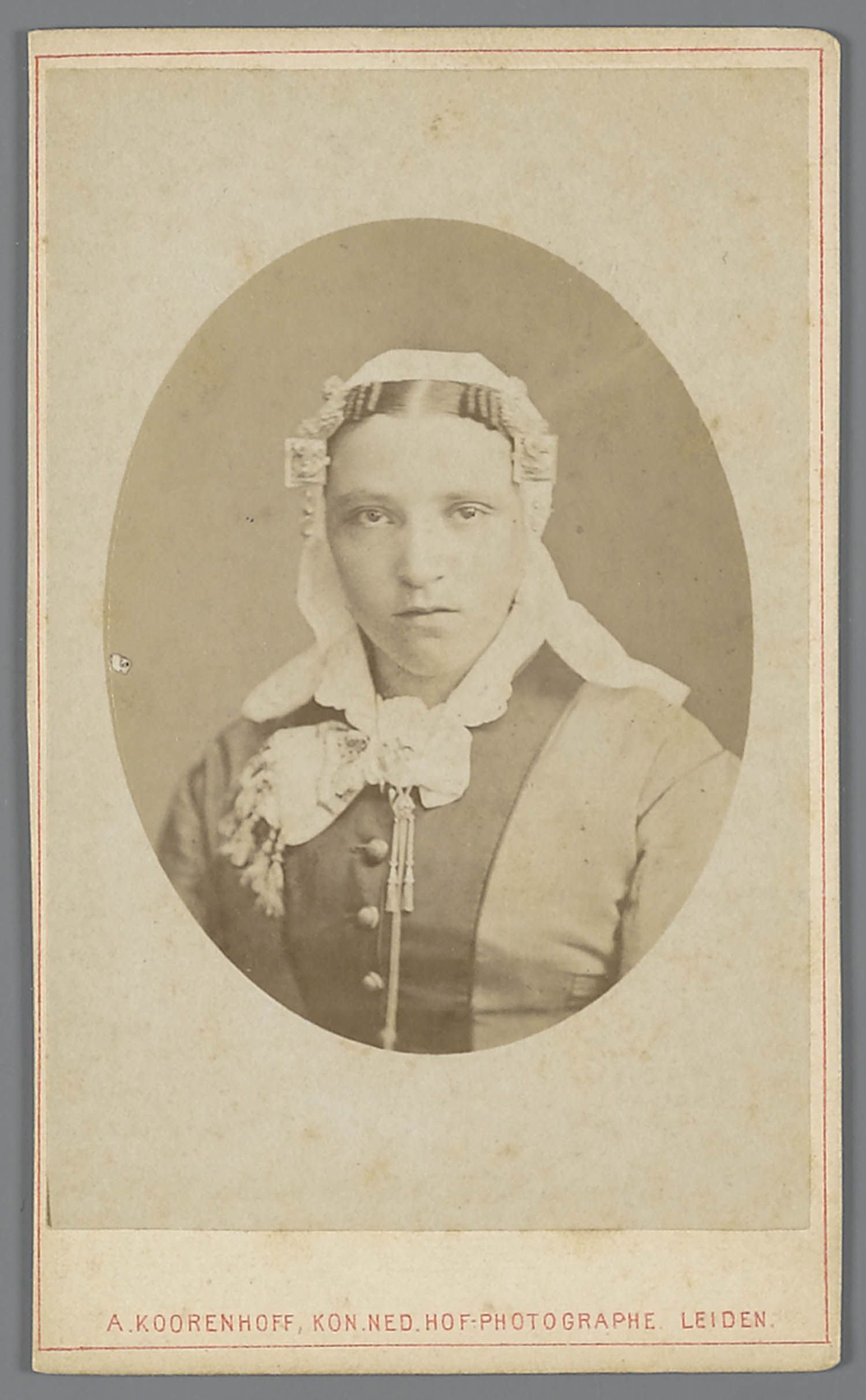
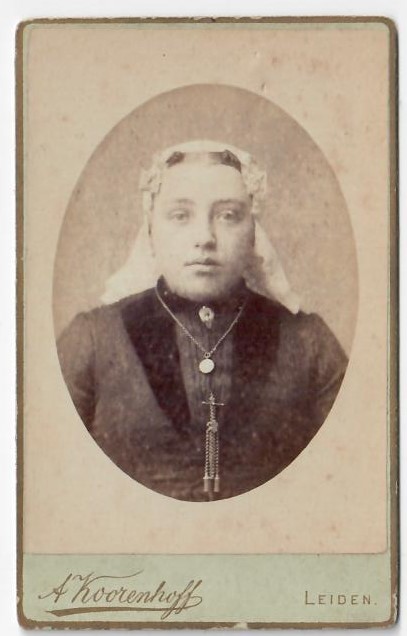 Photograph of a young woman wearing a so-called lange cap (long cap) from the Rijnland region, c. 1888 (TRC 2021.2439f). The photograph was taken by Abraham Koorenhoff from Leiden.Rijnland is the name for part of the Netherlands that lies around the ancient city of Leiden. It used to have a special dress tradition, marked by lace caps for women.
Last week I was wondering how to present an exhibition on Rijnland caps and the women wearing them, and would we find that elusive rode draad (‘red thread’ in Dutch, which is appropriate for a textile tale) to hold the story together? We put out a call for help and the response has already been very fruitful. We now have many different aspects we can and will pursue, in fact there are enough potential stories to make a booklet, as well as a small exhibition!
What has happened? Well, thanks to the generosity, for example, of Nel de Wit, we have been given a photo album with images dating from the late nineteenth century, all of them, so it appears, showing men and women from the Van den Akker family from Zoeterwoude and beyond, just to the east of Leiden. Nel de Wit grew up on the farm Cronesteyn, near Lammenschans, and the farm is still there, now being used as a health centre. Her mother, Marijtje de Wit, née Rijnsburger, was born in Weipoort, a small village now part of Zoeterwoude. The images include people with a wide variety of ages, wearing Sunday best outfits, but also daily forms and dress for wearing when in mourning, not to mention men in regional and urban dress and in military uniform. Some of these people are named and it has been possible to identify them.