• F3
  • F4
  • F1
  • F2

Late 19th century military style jacket for a young woman, the Netherlands (TRC 2021.0191).Late 19th century military style jacket for a young woman, the Netherlands (TRC 2021.0191).The TRC in Leiden recently received from the Van Lonkhuijzen family in Haarlem, the Netherlands, a lovely late-19th century red cotton jacket (TRC 2021.0191). It is lined with white cotton and is fastened with buttons that sport a crown and anchor motif. The jacket has a military cut to it. Along with the naval inspired buttons, the jacket might have been worn by a Dutch woman or girl to show their patriotism.

Military-style clothing worn by civilians has a long, and lasting history. The TRC’s Dutch jacket might have been influenced by the British spencer, a short-waisted jacket worn by men and women in the late 18th and early 19th century. The name comes from George, the 2nd Earl Spencer (1758-1834), who reportedly started the style after the long tails on his jacket were burnt when he stood in front of his fireplace, so he cut them off. The style was adopted as a mess jacket for semi-formal occasions by the British military, and soon spread to other countries. It is still part of the uniform in many militaries today.

Erfgoed Alkmaar ('Heritage Alkmaar') publishes an excellent newsletter about the archaeology and history of this town in the north of the Netherlands. In its most recent issue (No. 59, winter 2020/2021) there was an interesting article on 17th century fans.

'De Modese Waayer' ('The fashionable fan'). Mid-18th century advertisement from Utrecht, the Netherlands, showing a fan and instruments to make and repair fans. Underneath the print is the text: FRANS BENEVELT Woont op het oude kerkhof Te Utrecht Childert, Maakt, Verstelt, en Verkoopt, alle soort van Waijers Soo Wel Engelse, Fransse als Heel Ivoore, bij het stuk en Doesijn Alles tot een Civiele Prijs. Utrecht: Centraal Museum, acc. no. 2127.'De Modese Waayer' ('The fashionable fan'). Mid-18th century advertisement from Utrecht, the Netherlands, showing a fan and instruments to make and repair fans. Underneath the print is the text: FRANS BENEVELT Woont op het oude kerkhof Te Utrecht Childert, Maakt, Verstelt, en Verkoopt, alle soort van Waijers Soo Wel Engelse, Fransse als Heel Ivoore, bij het stuk en Doesijn Alles tot een Civiele Prijs. Utrecht: Centraal Museum, acc. no. 2127.

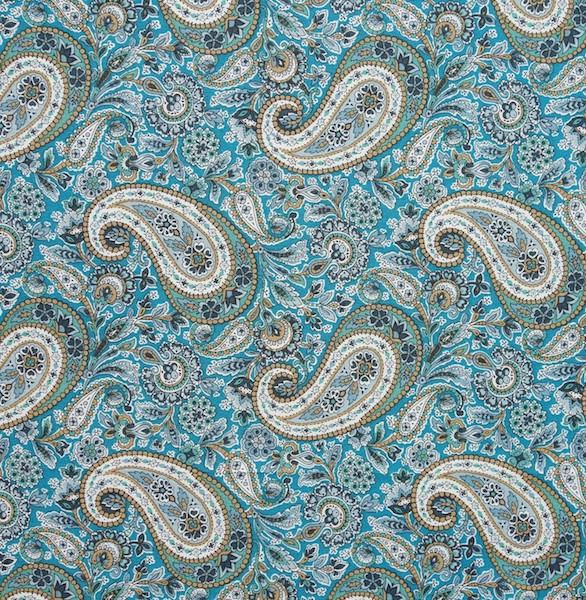
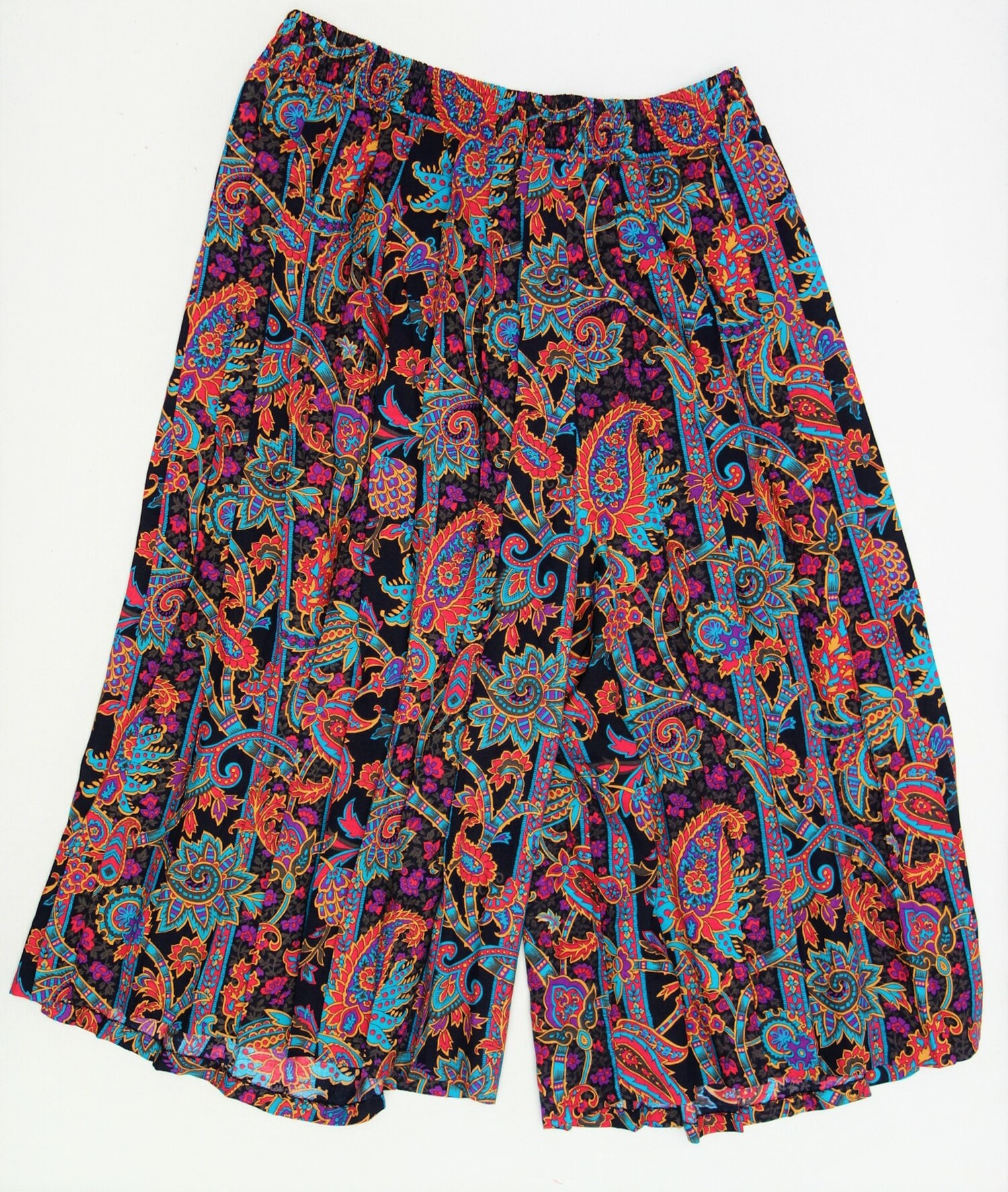
Kimono decorated with the paisley motif (TRC 2021.0062).Kimono decorated with the paisley motif (TRC 2021.0062).For the last year or so the TRC Leiden has been very busy researching and collecting items for an exhibition on the history and world-wide popularity of the paisley (buteh) motif. One of the people who is helping with the work is Naoko Kikuchi, who is a former TRC volunteer who returned to Japan some seven years ago, but who has never really ‘left’.

Naoko has just written a short blog about a kimono (TRC 2021.0062) that she donated to the TRC Collection and which has a printed design that includes the paisley motif. Here is her report about the kimono and the background to the paisley motif used in Japan:

This is a casual kimono of the type that could be worn by a woman on a daily basis while at home or going out for shopping. It has a printed design that includes a mixture of Western patterns, including the paisley motif, which have been modified to fit modern Japanese taste.

Woman's ikat coat from Uzbekistan, early 20th century (TRC 2017.0932).Woman's ikat coat from Uzbekistan, early 20th century (TRC 2017.0932).The only travel I can enjoy lately is via books, thanks to the lockdown. I’ve been enjoying Christopher Aslan Alexander’s A Carpet Ride to Khiva: Seven Years on the Silk Road (2010). In it, Alexander writes about falling in love with the city and crafts of Khiva, once a trading stop on the ancient Silk Road, in modern-day Uzbekistan. There are many wonderful details as he describes setting up a carpet weaving workshop, then another workshop for suzani embroiderers.

Wanting to learn more about Uzbek textiles, I started exploring the TRC’s on-line collection. The TRC collection includes some stunning silk Uzbek ikat garments, such as TRC 2007.1125 and TRC 2017.0932. Even better is a whole on-line exhibition called “Dressing the 'Stans': Textiles, dress and jewellery from Central Asia”, with more beautiful textiles.

Tapa is a non-woven cloth made from the inner bark of trees, especially the paper mulberry tree (Broussonetia papyrifera), or more occasionally from the wild fig or breadfruit tree. It’s most commonly found in Pacific Ocean island nations such as Tonga and Tahiti, but also in parts of South America and Africa. Tapa can be strong and long lasting, but it does have some disadvantages: producing tapa is very labour intensive, and it mildews and becomes weak when wet.

Bark cloth sample from Samoa, 1990's (TRC 2015.0070).Bark cloth sample from Samoa, 1990's (TRC 2015.0070).

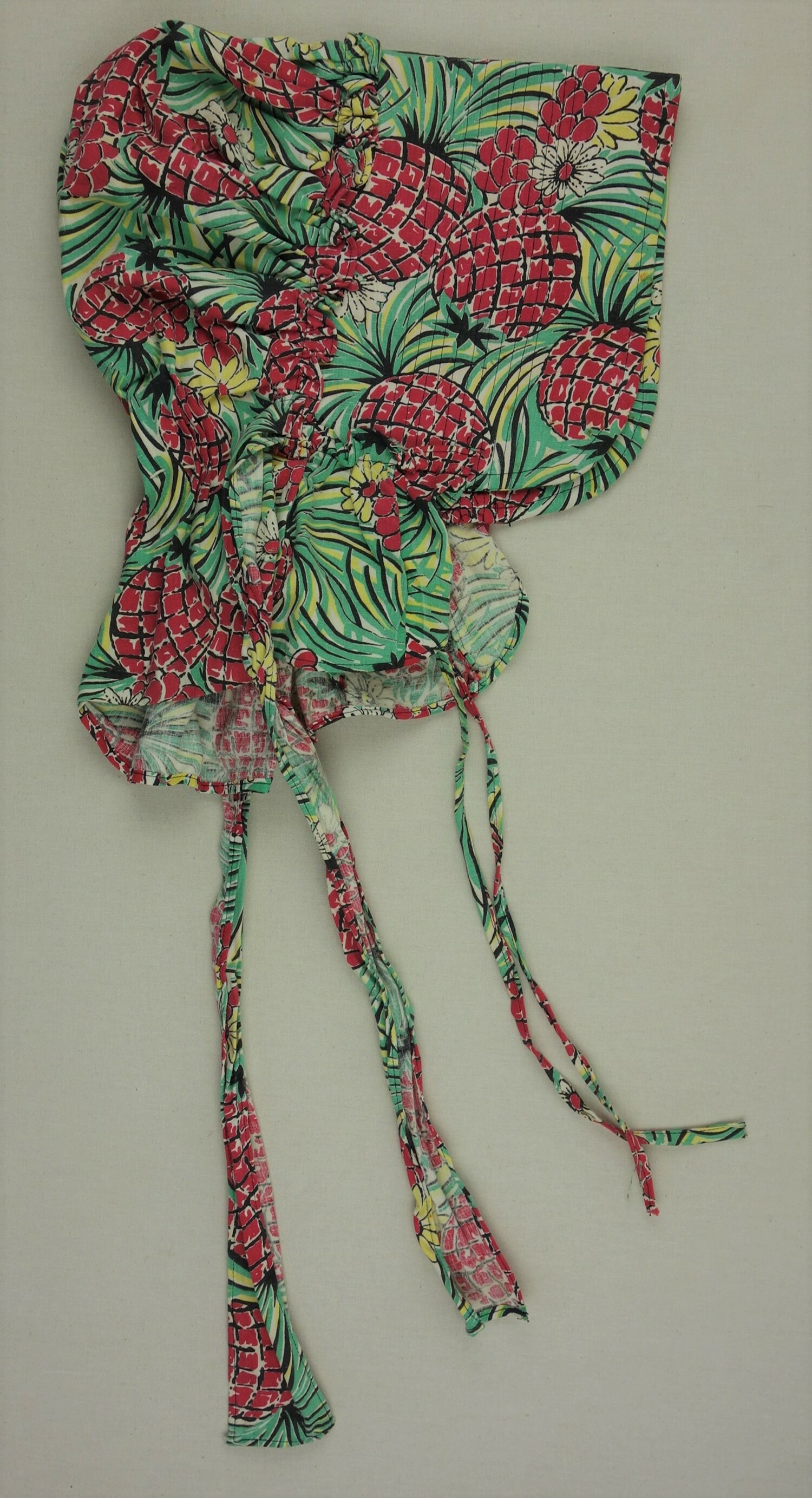
Bonnet for a woman of the Salvation Army, the Netherlands, 20th century (TRC 2020.3332a).Bonnet for a woman of the Salvation Army, the Netherlands, 20th century (TRC 2020.3332a).We have just added two Dutch army uniforms to the TRC Collection. One of them (TRC 2020.5144a-c) was for a captain (ritmeester) in the Dutch cavalry, which was worn by Boudewijn Wilmer (1943-2019) and given to the TRC Leiden by his family. The other uniform (TRC 2020.5149a-f), for a corporal in the reserves, was worn by Kees van der Zwan, who in 1995 accompanied veteran Allied airmen when they toured Holland.

As a result of these and similar donations in the past, such as the police uniform (TRC 2007.1145a-h) worn by Paul van Musscher, a former highly placed police officer here in Leiden, or the set of army officer's uniforms (TRC 2019.0091-3), some of which worn by my husband when he served in Afghanistan, we have been asked if we are going to deliberately collect military and police uniforms?

Many museums and similar institutions, as well as private collectors, are concerned with The Beautiful, with rare, aesthetically pleasing items that stimulate the delicate feelings of the connoisseur. I have to confess to something that may shock you a little, but the TRC in Leiden does not work with the criteria of ‘The Beautiful’. Instead, we are collecting and studying items that are interesting, namely textiles and garments that reflect technical developments and/or illustrate stories that provide information about past, present and future aspects of social, economic, religious, personal and group identity. And all the many variations that come with this vast concept.

So what has all this to do with a very recent acquisition of the TRC Leiden? Well, it's a Christmas jumper, which is a story in itself. You can hardly describe it as beautiful and aesthetically pleasing. To the contrary, it is, for many of us, simply ugly. But it is meant to be!

A 'wrong', and 'orrible Christmas jumper, the latest addition to the TRC collection (TRC 2020.5178).A 'wrong', and 'orrible Christmas jumper, the latest addition to the TRC collection (TRC 2020.5178).

Zoek in TRC website

Contact

Boerhaavelaan 6
2334 EN Leiden.
Tel. +31 (0)6 28830428  
office@trcleiden.org

Het TRC is elke dag geopend tussen 10.00 en 15.00 uur.

facebook 2015 logo detail


instagram vernieuwt uiterlijk en logo


Bankrekening

NL39 INGB 0002 9823 59, t.a.v. Stichting Textile Research Centre.

Financiële giften

Het TRC is afhankelijk van project-financiering en privé-donaties. Al ons werk wordt verricht door vrijwilligers. Ter ondersteuning van de vele activiteiten van het TRC vragen wij U daarom om financiële steun:

Giften kunt U overmaken op bankrekeningnummer (IBAN) NL39 INGB 000 298 2359, t.n.v. Stichting Textile Research Centre. BIC code is: INGBNL2A

U kunt ook, heel simpel, indien u een iDEAL app heeft, de iDEAL-knop hieronder gebruiken en door een bepaald bedrag in te vullen: 


Omdat het TRC officieel is erkend als een Algemeen Nut Beogende Instelling (ANBI), en daarbij ook nog als een Culturele Instelling, zijn particuliere giften voor 125% aftrekbaar van de belasting, en voor bedrijven zelfs voor 150%. Voor meer informatie, klik hier